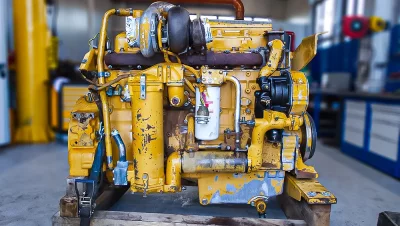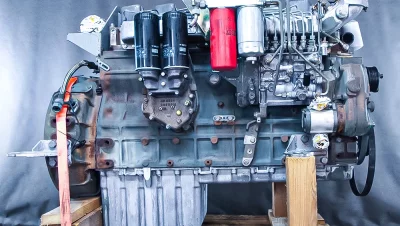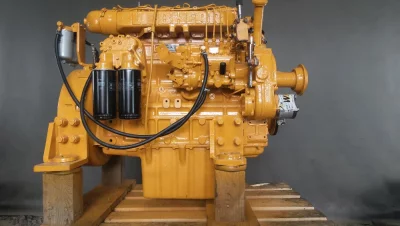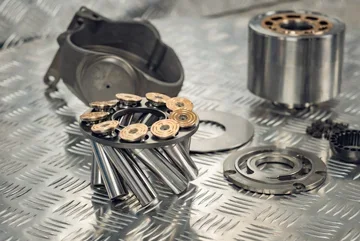


John Deere 4045HF285 Engine Overhaul in a John Deere 524K Wheel Loader
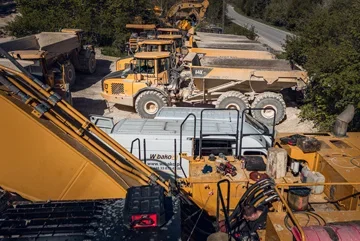
The John Deere 524K wheel loader is a machine designed for intensive work involving loading, material handling, and the operation of construction sites and industrial facilities. Under these conditions, the diesel engine must deliver adequate power, respond efficiently to changes in load, and operate reliably during many hours of continuous use. The power unit is one of the machine's most important components, which is why its technical condition directly affects work efficiency and operational continuity.
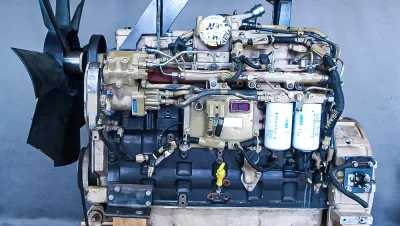
In this case, the work concerns the John Deere 4045HF285 engine, a four-cylinder, 4.5-litre diesel unit from the PowerTech family. Engines in this series are used in industrial applications where structural durability, suitable torque characteristics, and the ability to handle variable loads are particularly important. In the drivetrain of a wheel loader, these characteristics are especially significant when scooping material with the bucket, moving off with a load, and performing repetitive loading cycles.
At WIBAKO, we provide diagnostics, repairs, and comprehensive overhauls of diesel engines used in construction machinery. The repair process includes assessing the technical condition of the unit, dismantling it, thoroughly inspecting its components, carrying out the necessary reconditioning work, professional assembly, and load testing on an engine dynamometer. This allows the engine to be tested before it is reinstalled in the machine.
For a power unit operating in a John Deere 524K, it is important not only to eliminate the immediate cause of the failure. It is equally important to inspect the associated components that may have experienced accelerated wear during operation. Only a comprehensive assessment makes it possible to determine the actual scope of the overhaul and prepare the engine for further operation under load.
Diagnostics of the John Deere 4045HF285 Engine Before Overhaul
One possible reason for requiring an overhaul of a diesel engine is wear of the cylinders, pistons, and piston rings. These components operate under demanding thermal and mechanical conditions, and their condition gradually changes as the engine accumulates operating hours. In a power unit used in a wheel loader, wear of the piston and crankshaft assembly can lead to deteriorating performance, increased engine oil consumption, and reduced compression.
The initial diagnosis of the John Deere 4045HF285 engine should begin with a discussion with the machine operator to establish the symptoms occurring during operation. Important information includes starting difficulties, changes in oil consumption, exhaust smoke colour, uneven engine operation, and any reduction in the loader's performance. The history of previous repairs, oil and filter replacement intervals, and the conditions in which the machine has been operating should also be taken into account.
The next stage involves inspecting the engine while it is installed in the machine. The mechanic checks for visible engine oil and coolant leaks, examines the condition of hoses, connections, and intake system components. The cooling system is also inspected because inadequate heat dissipation can accelerate engine component wear and cause additional damage.
Depending on the condition of the unit, compression pressure measurements, cylinder leak-down tests, and inspections of the cylinder interiors using an endoscopic camera may be carried out. The results help determine whether the problem may be caused by worn pistons, piston rings, or cylinder working surfaces. If the engine can be started safely, its behaviour during operation is also analysed, with particular attention to engine speed stability, exhaust smoke, and any unusual noises.
Not every symptom means that a complete overhaul is necessary. Similar symptoms may occur due to faults in the fuel system, intake system, or turbocharger. For this reason, diagnostics should identify and confirm the actual cause of the problem rather than focus solely on observing the symptoms.
If measurements indicate significant mechanical wear and the engine needs to be dismantled, the next step is to remove the unit and transport it to the workshop. Only after disassembly and a thorough inspection of the individual components can the full scope of the overhaul be determined.
Removing the Engine from the John Deere 524K Wheel Loader
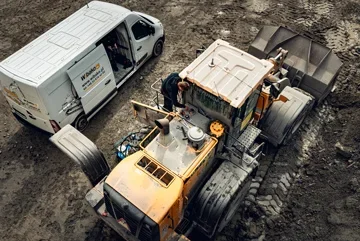
Removing the engine from a John Deere 524K wheel loader requires proper machine preparation, securing the systems, and carefully planning the sequence of operations. Due to the weight of the power unit and the limited space in the engine compartment, the work is carried out using a crane provided by the customer. Before lifting begins, access to the lifting points must be checked, and it must be ensured that the equipment will not interfere with the machine's structural components.
First, the machine is positioned in a properly prepared work area, secured against accidental movement, and the electrical power supply is disconnected in accordance with the service procedure. The mechanics then prepare the engine for removal by identifying the hoses, connections, and components that need to be disconnected. Depending on the loader's configuration, access to the engine compartment may require removing selected covers and components that obstruct the removal process.
Before disconnecting the cooling system hoses and other operating system connections, the relevant systems must be properly secured. Fluids are drained in a controlled manner, and open hoses and ports are protected against contamination. This is particularly important for the Common Rail fuel system, where even small contaminants can cause problems with the operation of precision fuel injection components.
The intake system connections, electrical wiring, accessories, and engine mounting components are then disconnected. Every connection should be checked before lifting begins. Particular attention is paid to hoses and wiring harnesses that may remain partially hidden behind the engine or beneath its accessories. Lifting the unit prematurely without checking all connections can damage the installation or other machine components.
Once the engine has been prepared, the mechanics attach the lifting slings to the appropriate points and check the stability of the entire lifting arrangement. The unit is raised gradually while checking for tension in the hoses, contact with the frame, or resistance from mounting components. The engine is then removed from the compartment and prepared for transport to the WIBAKO workshop in Kojszówka.
After removal, it is also worth assessing the condition of the components that remain in the machine. These include, in particular, engine mounts, cooling hoses, electrical wiring, intake connections, and other associated components. Detecting wear or leaks at an early stage makes it easier to plan the installation work and reduces the risk of further downtime after the overhaul is completed.
Inspection of John Deere 4045HF285 Engine Components in the Workshop
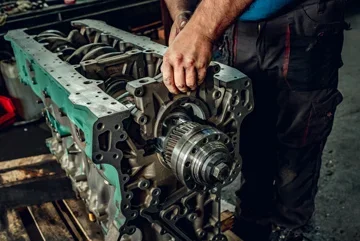
Once the power unit has been delivered to the workshop, a detailed technical inspection begins. The engine is prepared for disassembly, and the individual components are removed in a way that allows their wear to be assessed and any damage to be identified. The parts are washed, cleaned of operating deposits, and inspected by the mechanics. The objective is to determine which components can be reused, which require reconditioning, and which must be replaced.
When wear of the piston and crankshaft assembly is suspected, particular attention is paid to the condition of the cylinders, pistons, and piston rings. Working surfaces are inspected for scratches, signs of overheating, uneven wear, and other irregularities. The dimensions of the components are also checked to determine whether they fall within the permissible limits specified for the particular engine.
The inspection is not limited to the components directly associated with the failure symptoms. The mechanics also inspect the crankshaft, connecting rods, and bearing shells. The crankshaft is examined for cracks, signs of overheating, and journal wear. Appropriate measurements are taken, including crankshaft runout checks and an assessment of the oil passages. Connecting rods are checked for deformation, surface damage, and the condition of their bolted connections.
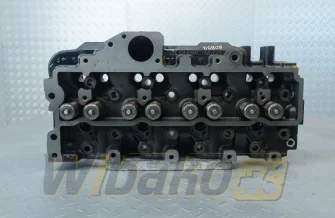
The cylinder head is another important component to inspect. The condition of the valves, valve seats, guides, and mating surfaces is checked. If necessary, a cylinder head pressure test is performed. During this test, the cylinder head is immersed in heated water while compressed air is introduced into the passages being checked. Any bubbles that appear may indicate a leak and provide grounds for further assessment of the component.
The timing system, turbocharger, and engine accessories must also be inspected. The camshaft is visually assessed, and its working surfaces are measured. The turbocharger rotor is inspected, and its axial and radial play is checked. The scope of further work depends on the results of the visual inspection and measurements, rather than solely on the engine's operating hours.
In an engine equipped with a Common Rail injection system, the condition of the fuel system components must also be verified. Uneven operation, excessive smoke, or starting difficulties may be associated with incorrect fuel delivery. Depending on the symptoms identified and the diagnostic results, the injectors and other fuel supply system components may need to be inspected.
Once the inspection has been completed, the scope of the overhaul can be determined. It takes into account the actual condition of each component, the parts required, and the necessary reconditioning procedures. This approach makes it possible to focus on the cause of the failure while ensuring that components whose wear could affect the durability of the repaired engine are not overlooked.
Overhaul of the Piston and Crankshaft Assembly
The piston and crankshaft assembly converts the energy generated during fuel combustion into the rotational movement of the crankshaft. In the John Deere 4045HF285 engine, its condition directly affects power output, cylinder sealing, oil consumption, and operational stability. In the John Deere 524K wheel loader, the proper functioning of these components is particularly important during tasks involving frequent load changes.
If cylinder, piston, or piston ring wear is confirmed during the inspection, the scope of the repair is determined based on measurements and an assessment of the technical condition. Not all components require the same treatment. Parts that retain the required specifications may be reused after inspection, while components that fail to meet the requirements must be replaced or subjected to appropriate machining, provided that the engine design and technical documentation permit it.
Piston inspection includes checking the crowns, guiding surfaces, ring grooves, and areas that work in conjunction with other components. Particular attention is paid to signs of overheating, cracks, and mechanical damage. Piston rings are inspected for wear and their ability to provide proper sealing. Their condition affects both compression retention and engine oil consumption control.
The cylinder surfaces must also be assessed. Excessive wear, scratches, or incorrect geometry can impair sealing and increase the amount of combustion gas escaping into the crankcase. Depending on the design and measurement results, a decision is made whether to replace the cylinder liners or use another permitted method of restoring the required specifications.
The crankshaft and connecting rods require thorough inspection because damage to these components can lead to serious engine failure. The condition of the journals, bearing contact surfaces, and connections is verified. The oil passages are also checked for unobstructed flow. If measurement results indicate that the crankshaft requires reconditioning, the machining process must comply with the technical requirements for the specific engine.
When assembling the piston and crankshaft assembly, the cleanliness of all components is particularly important. Residual contaminants can accelerate wear on mating surfaces and cause bearing shell damage. The mechanics pay attention to the correct positioning of components, maintaining the required clearances, and applying the appropriate tightening torques to bolted connections.
The objective of a comprehensive overhaul of the piston and crankshaft assembly is to restore the engine's proper operating conditions. The final result depends on the quality of the parts, the accuracy of the measurements, and the care taken during every operation. That is why at WIBAKO, we do not limit an overhaul to replacing a single component without checking the other parts that affect engine durability.
Inspection and Repair of the Engine Cylinder Head
The cylinder head is responsible for proper gas exchange in the cylinders and for sealing the combustion chamber from the other passages. Its condition affects compression, combustion efficiency, and engine operating stability. During an overhaul of the John Deere 4045HF285, the cylinder head must be thoroughly cleaned and inspected before a decision is made to reuse it.
The mechanics assess the condition of the cylinder head surfaces, valves, valve seats, and guides. They also check for signs of overheating, cracks, or other damage that could affect sealing. If there are indications of a leak, an appropriate inspection test is performed.
A pressure test using heated water and compressed air makes it possible to identify locations through which air may escape. If a leak is detected, further assessment is required to determine whether the cylinder head can be repaired or must be replaced. It should not be assumed that every component can be safely reused regardless of the type of damage.
The scope of reconditioning depends on the inspection results. It may include resurfacing, replacing valve guides and valves, and carrying out work to restore the correct interaction between components. Once machining is complete, the cylinder head must meet the required geometry and sealing specifications.
During cylinder head installation, particular attention is paid to the cleanliness of the mating surfaces, correct positioning of the gasket, and the tightening procedure. Errors at this stage can lead to gas leakage, loss of sealing, or cooling system problems. For this reason, all operations are performed in accordance with the technical requirements for the specific engine version.
Inspection of the Common Rail Fuel System and Engine Accessories
The Common Rail fuel system is responsible for delivering fuel to the cylinders with precision. Its proper operation affects starting, engine smoothness, fuel consumption, and engine performance. During an overhaul of the John Deere 4045HF285, the fuel system inspection should consider both the condition of the engine's mechanical components and the possibility of an independent fuel injection fault.
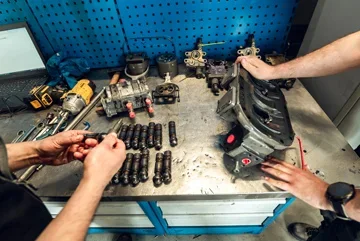
Depending on the diagnostic results, the injectors and other fuel system components are inspected. If incorrect fuel delivery is suspected, appropriate testing on specialised equipment is recommended. This makes it possible to assess component performance and determine whether repair, reconditioning, or replacement is required.
Maintaining cleanliness during disassembly and assembly is particularly important for Common Rail systems. Contaminants entering the lines or injection components can cause incorrect operation or even damage precision components. Connections must be installed correctly, and hoses and seals must meet the requirements of the specific engine.
The turbocharger is also inspected. Its function is to deliver the appropriate amount of air to the cylinders, which means that intake leaks or excessive play in rotating components can negatively affect engine operation. The inspection includes a visual assessment, clearance checks, and examination of the connections. If any irregularities are found, a decision is made regarding the necessary repairs.
In addition to the turbocharger, the starter motor, alternator, and accessible electromechanical accessories are checked. The inspection also covers wiring, connectors, and components whose failure could make starting difficult or cause incorrect operating parameter readings. Proper preparation of these components facilitates the subsequent installation of the engine in the loader.
Professional Engine Installation After Overhaul
Once the overhaul work has been completed and all designated components have been checked, the John Deere 4045HF285 engine is prepared for installation in the John Deere 524K wheel loader. This stage requires the same level of care as the repair itself. Even a properly reconditioned unit may not operate correctly if inspection procedures are omitted during installation, connections are left leaking, or the cooling system is not properly prepared.
Installation begins with preparing the engine compartment and checking the components that will be reused. The mechanics inspect the mounts, accessible hoses, electrical connectors, and connections to associated systems. If wear is identified in any installation components during removal, it must be addressed in the work plan before the engine is lowered into the compartment.
The engine is lifted using a crane provided by the customer and gradually positioned in place. During lowering, the mechanics check the position of the unit relative to its mounts and other components. Stress and accidental contact with hoses, electrical wiring, or structural elements must be avoided. Once the engine is positioned, the mounts are installed and tightened according to the appropriate technical procedure.
The cooling, intake, fuel, and electrical systems are then reconnected. Air hoses must be installed in the correct positions, and their connections must be securely fastened. Checking the intake system for leaks is particularly important because uncontrolled intake of air containing contaminants can damage the engine. The cooling hoses and connections that could cause operating fluid leaks must also be inspected.
Cleanliness must be maintained when connecting the fuel system, and all hoses and connectors must be correctly seated. The electrical system must be connected in accordance with the markings and technical documentation. The mechanics check that wiring harnesses are not exposed to abrasion, contact with hot surfaces, or excessive tension during machine operation.
After installation is complete, the engine is prepared for its first start. The procedure includes checking fluid levels, preparing the lubrication and fuel systems in accordance with the service procedure, and verifying that all components are securely fastened. Filters that require replacement as part of the work are replaced. Before starting the engine, it is necessary to ensure that no tools or other objects have been left in the engine compartment that could compromise safety.
The first start takes place under the supervision of service technicians. The mechanics observe the engine's behaviour, paying attention to operational stability, unusual noises, warning lights, and possible leaks. Where possible, basic operating parameters, including oil pressure and temperature, are monitored. Any irregularities must be investigated before proceeding to the next stage.
After the initial inspection, functional tests are carried out on the machine in the presence of the operator. The engine's response to changes in load and its interaction with the loader's other systems are checked. Tests are performed gradually, without subjecting the unit to unjustified excessive loads at the beginning of operation. It is also important to check the connections after the engine has warmed up, as temperature changes may reveal leaks that were not visible while the machine was stationary.
A positive inspection result, the absence of concerning symptoms, and correct engine operation allow the installation process to be completed. The work performed and the inspections carried out are documented in an installation report. This provides the user with information about the work completed and establishes a basis for further engine servicing.
Testing the John Deere 4045HF285 Engine on an Engine Dynamometer
One of the important stages of an engine overhaul is testing on an engine dynamometer. At WIBAKO, we use a dynamometer to test engines after repairs before they are reinstalled in machines. This makes it possible to assess engine behaviour under controlled conditions and monitor its operating parameters under load. It is an important complement to the inspections performed after the engine has been assembled.
For the John Deere 4045HF285 engine intended for the John Deere 524K wheel loader, load testing makes it possible to check whether the unit operates steadily after the overhaul and whether its behaviour indicates any problems with the lubrication, cooling, or fuel supply systems. Workshop conditions allow the engine's response to changes in load to be observed without having to perform every test in the working machine.
Before testing begins, the engine is prepared for safe operation. Operating fluid levels, engine mounting, system connections, and the correct installation of measuring equipment are checked. The mechanics also verify the basic operating conditions that are important for safety and reliable observations. Only after these preparatory operations have been completed does the running-in and gradual loading procedure begin.
After an overhaul, the engine should not immediately operate at full load for an extended period. In accordance with the procedure used at WIBAKO, the initial test stage lasts a minimum of 16 operating hours and is conducted under light load, at approximately 20-30% of the rated load. This period allows the mating surfaces to begin bedding in and makes it possible to monitor the engine's behaviour after repair.
During the initial test phase, it is important to monitor oil pressure, operating temperature, and parameter stability. Any leaks, unusual noises, changes in engine operation, and symptoms that could indicate incorrect operation of any component are also observed. If concerning symptoms appear, the test should be stopped and their cause identified rather than continuing to load the engine.
If the engine maintains the correct parameters after operating under a light load, the next stages of testing can begin. The load is increased gradually, and the unit is repeatedly checked under different operating conditions. This makes it possible to assess its response to changing power demands and determine whether any problems appear only at higher loads.
The dynamometer also makes it possible to compare the observed parameters with the technical requirements applicable to the particular engine variant. Its configuration, application, and characteristics specified by the manufacturer must be taken into account. An assessment should not be based solely on a single reading. The engine's behaviour throughout the test, temperature stability, proper lubrication, and response to load changes are all important.
Particular attention is paid to the lubrication system during testing. Oil pressure is one of the basic parameters indicating the operating conditions of mechanical components. Its behaviour must be analysed in relation to oil temperature and engine speed. Monitoring engine temperature is equally important because problems with heat dissipation may become apparent during prolonged operation under load.
The inspection also covers the engine's overall running characteristics. Uneven operation, excessive vibration, or unusual noises may indicate the need for further inspection. For engines with electronic control systems, diagnostic signals must also be taken into account, and the engine should be checked for any operating warnings.
The test results can be documented in a test report. Depending on the scope of measurements, the documentation may include graphs of operating parameters such as oil pressure, temperature, and power output under load. These data make it easier to assess the engine's performance after the overhaul and provide a record of the tests performed.
It is worth emphasising that dynamometer testing does not replace proper engine installation or subsequent inspection in the machine. However, it provides an additional verification stage that makes it possible to identify certain potential problems before the loader is put back into service. Once testing is complete, the unit can be prepared for installation, and subsequent operation should follow the recommendations for running-in and post-overhaul maintenance.
Post-Overhaul Engine Maintenance and Service Recommendations
Proper servicing after the overhaul of the John Deere 4045HF285 engine has a significant impact on the durability of the work performed. Even a correctly reconditioned unit requires inspection during the initial period of operation. This applies to lubrication quality, system sealing, hose condition, and the proper interaction between the engine and the other components of the John Deere 524K wheel loader.
At WIBAKO, we recommend carrying out the first inspection after 50 operating hours from the engine's initial start. Our service team can visit the customer to inspect the unit after its first period of operation under real working conditions. The inspection is not limited to replacing filters. It also includes checking the sealing of connections, inspecting hoses and mounts, and assessing the overall condition of the accessories.
During the 50-hour inspection, the mechanic checks for engine oil or coolant leaks, verifies that the intake system connections remain airtight, and checks hoses for signs of abrasion. The engine's behaviour during operation is also analysed. An early inspection makes it possible to identify problems that may not have been present during the first start or dynamometer test.
After the first inspection, further checks should be performed every 250 operating hours, but no less frequently than once every three months. This schedule should also be adjusted to the engine and machine manufacturer's recommendations and the actual operating conditions. A loader working in a dusty environment or performing intensive loading cycles may require particular attention to the intake, cooling, and filtration systems.
The operator should regularly check operating fluid levels, pay attention to unusual noises, and monitor any changes in the machine's behaviour. If exhaust smoke, starting difficulties, increased oil consumption, or abnormal operating parameter readings occur, diagnostics should be carried out without unnecessary delay. A prompt response can limit the extent of potential damage.
Regular diesel engine servicing is particularly important in machines where downtime causes delays in completing work. Systematic post-overhaul inspections help maintain engine performance and make technical maintenance easier to plan. WIBAKO provides service support and diagnostics for engines used in construction machinery, including John Deere units.
John Deere 4045HF285 Engine in Working Machines
The John Deere 4045HF285 belongs to the family of 4.5-litre industrial diesel engines. Units in this group are used in various industrial applications, and their exact configurations and specifications depend on the engine variant and intended application. Correct identification of the engine model and its specifications is essential when selecting parts, diagnosing faults, and planning an overhaul.
For the John Deere 524K wheel loader, overhaul parts should be selected based on the details of the specific engine. The machine model alone is not always sufficient to confirm the compatibility of all components. The engine serial number, its configuration, and the markings on the identification plate may also be important.
Correct engine identification is particularly important when ordering pistons, piston rings, bearing shells, seals, cylinder head components, and fuel system parts. It helps reduce the risk of errors and shortens the time required to prepare for the repair. If there is any uncertainty, it is worth providing the service team with a photo of the engine identification plate, the engine number, or the available part markings.
WIBAKO provides support for engines used in construction and industrial machinery. Our services include diagnostics, repairs, and overhauls of diesel power units. In addition to the repair itself, component inspection and dynamometer testing are also important, provided that the scope of work and the engine design allow such testing to be carried out.
Summary of the John Deere 4045HF285 Engine Overhaul
Overhauling the engine in a John Deere 524K wheel loader requires a comprehensive approach that includes diagnostics, removal, component inspection, repair of mechanical parts, inspection of accessories, and correct installation. Every stage is important for the engine's subsequent operation and for reducing the risk of another failure.
Inspecting the piston and crankshaft assembly, cylinder head, fuel system, and turbocharger makes it possible to determine the actual scope of the repair. Engine dynamometer testing, in turn, allows the unit's behaviour under load to be checked before it is reinstalled in the machine. After the work is completed, a controlled first start, functional tests, and an inspection after 50 operating hours are also important.
WIBAKO provides support for diesel engine overhauls for construction machinery. By combining workshop repairs, dynamometer testing, and post-installation service, we offer a comprehensive approach to power unit repairs. When planning an overhaul of the John Deere 4045HF285 engine, it is worth preparing the engine identification details and basic information about the failure symptoms to facilitate diagnostics and the selection of the appropriate scope of work.
More information can be found in our resources on diesel engine overhauls, engine dynamometer testing, and mobile construction machinery service.
Need a John Deere Engine Overhaul?
Looking for support with diagnostics or an overhaul of the John Deere 4045HF285 engine in a 524K wheel loader? Contact WIBAKO. We carry out diesel engine repairs, component inspections, and engine dynamometer tests. We will help determine the scope of work and select the right service solution.