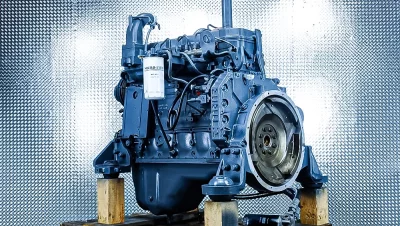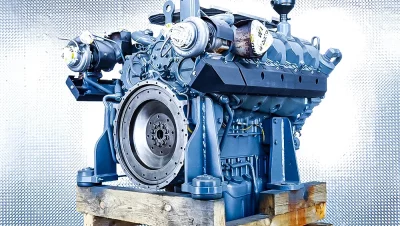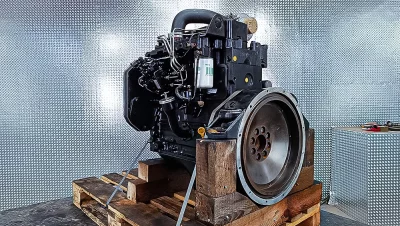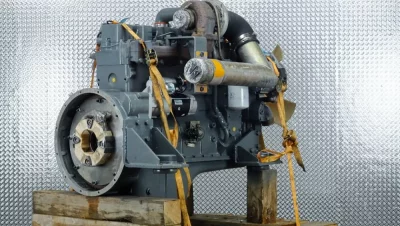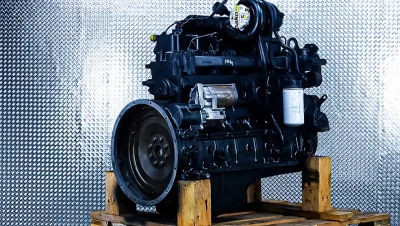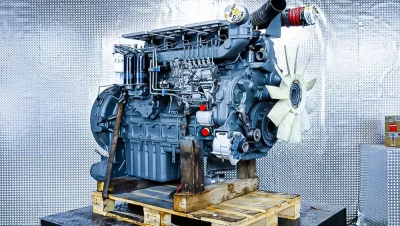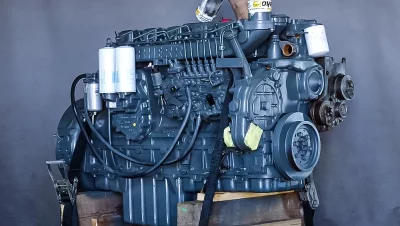


Cummins QSB 4.5 Engine Overhaul in a JLG 1055 Telehandler
A JLG 1055 telehandler cannot afford long downtime[cite: 1]. When the engine starts losing power, running unevenly, and clearly straying from its factory specs, continued operation can quickly turn into a major failure[cite: 1]. In the case of this machine, the issue involved the Cummins QSB 4.5 engine, requiring a thorough diagnostic process followed by a comprehensive overhaul of the power unit[cite: 1].
The JLG 1055 is a telehandler built for demanding tasks where both adequate power and smooth engine response to load changes are essential[cite: 1]. The Cummins QSB 4.5 is a diesel engine used in many construction and industrial machines[cite: 1]. The design of this engine allows it to operate under harsh conditions; however, natural component wear or improper operating conditions can still lead to a loss of performance[cite: 1].
In this case, we decided to perform a complete overhaul of the Cummins QSB 4.5 engine[cite: 1]. The work included diagnostics while the unit was still in the machine, engine removal, thorough inspection of all key components, repair of the crank-piston assembly, head and accessory checks, professional assembly, and a load test on an engine dynamometer[cite: 1]. Only after successfully passing these tests was the engine prepared for reinstallation into the JLG 1055 telehandler[cite: 1].
Initial Diagnostics of the Cummins QSB 4.5 Engine in the JLG 1055
We begin every engine overhaul by identifying the root cause of the problem as accurately as possible[cite: 1]. Removing the engine without prior diagnostics would mean losing crucial information about its behavior under actual operating conditions[cite: 1]. Therefore, before removing the Cummins QSB 4.5 from the JLG 1055 telehandler, our mechanics carried out basic in-machine diagnostics[cite: 1].
For this telehandler, the reason for the overhaul was natural engine wear due to high operating hours[cite: 1]. Symptoms of gradual engine wear can initially be relatively easy to overlook[cite: 1]. The engine still starts and allows the machine to work, but over time, a noticeable loss of power occurs, oil and fuel consumption increase, and load response becomes sluggish[cite: 1].
First, we checked engine behavior during startup[cite: 1]. It was essential to determine whether the unit starts correctly and maintains a stable idle speed afterward[cite: 1]. Next, we observed engine operation across various RPM ranges and while applying load to the machine[cite: 1]. This made it possible to evaluate whether the issue was limited to a specific operating range or was more general in nature[cite: 1].
Key operating parameters were also inspected[cite: 1]. We checked oil pressure and the performance of the lubrication system[cite: 1]. An important part of the diagnostics was evaluating the intake and exhaust systems, as well as inspecting the accessories working alongside the engine[cite: 1]. For an engine with many operating hours, diagnostics cannot be limited to a single component[cite: 1].
The next phase was diagnostic testing to confirm the extent of engine wear[cite: 1]. Measurements taken and operational observations indicated that the problem was mechanical and could not be resolved with simple adjustments or by replacing a single accessory[cite: 1]. Consequently, we decided to remove the Cummins QSB 4.5 and conduct a complete engine inspection in our workshop[cite: 1].
Removing the Cummins QSB 4.5 from the JLG Telehandler
Following initial diagnostics, we prepared the JLG 1055 telehandler for engine removal[cite: 1]. Removing a power unit requires a strict sequence of actions—it is not just a matter of unbolting the engine mounts[cite: 1]. Prior to removal, all wiring, lines, and hoses must be properly disconnected, and the components remaining in the machine must be secured[cite: 1].
The Cummins QSB 4.5 engine was prepared for extraction from the engine compartment[cite: 1]. Electrical connections, cooling lines, intake components, and lines necessary to safely separate the engine from the rest of the telehandler's subassemblies were disconnected[cite: 1]. Special care was taken to protect intake and cooling system components from contamination[cite: 1].
To lift the engine, we used a crane provided by the client[cite: 1]. Once properly prepared, the Cummins QSB 4.5 unit was suspended and maneuvered out of the JLG 1055 engine bay[cite: 1]. Mechanics monitored the entire process to prevent stress on hoses, electrical cables, or other components remaining in the machine during the lift[cite: 1].
Once removed, the engine was secured and prepared for transport to our main facility in Kojszówka[cite: 1]. There, the main phase of the overhaul began: teardown and detailed inspection of the Cummins QSB 4.5 components[cite: 1].
Engine Inspection of the Cummins QSB 4.5 in the Workshop
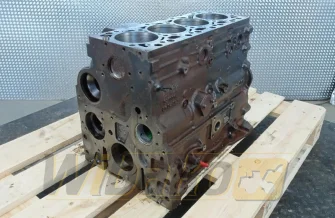
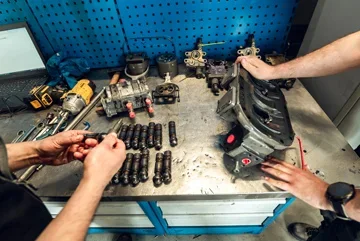
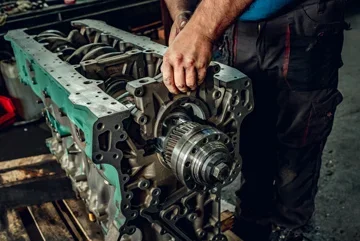
After the engine arrived at our workshop, we began teardown[cite: 1]. For a unit classified as requiring an overhaul, the engine is completely disassembled into individual components, which are then thoroughly washed and inspected by mechanics[cite: 1]. This approach allows us to evaluate the actual condition of the engine rather than relying solely on symptoms observed during operation[cite: 1].
First, we evaluated external components and prepared the unit for further disassembly[cite: 1]. We then worked through the engine step by step, inspecting parts for signs of wear, overheating, mechanical damage, and improper interaction between subassemblies[cite: 1].
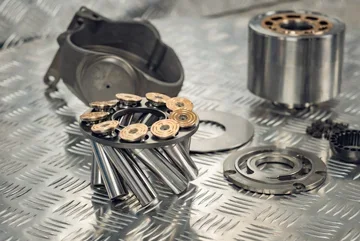
The crank-piston assembly was inspected with particular care[cite: 1]. We checked the condition of the crankshaft, connecting rods, pistons, rings, cylinder liners, and bearings[cite: 1]. The crankshaft underwent visual inspection as well as precise measurements[cite: 1]. Journal dimensions, runout, and the condition of oil galleries were checked[cite: 1]. These measurements determine whether the crankshaft can be reused or requires reconditioning[cite: 1].
Connecting rods were evaluated for wear, cracks, signs of overheating, and deformation[cite: 1]. Their dimensions and bolt conditions were also verified[cite: 1]. Pistons and rings were checked for wear, while cylinder liners were inspected for working surface condition and dimensions[cite: 1].
The cylinder head was also subjected to detailed inspection[cite: 1]. We checked the condition of valve seats, valves, and valve guides[cite: 1]. The head requires careful checking because even minor sealing issues can affect overall engine operation[cite: 1]. As part of the inspection, head leak testing is performed by submerging the head in heated water and applying compressed air, allowing us to detect any hidden cracks or leaks[cite: 1].
We also inspected the camshaft[cite: 1]. Inspection includes a visual assessment as well as dimensional checks of journals and lobes for wear[cite: 1]. The turbocharger required separate verification, focusing primarily on axial and radial play[cite: 1].
This thorough inspection confirmed that the cause of the issues was progressive operational degradation of internal engine components[cite: 1]. The condition of individual parts indicated the necessity of a comprehensive overhaul rather than limiting repairs to a single damaged component[cite: 1].
Crank-Piston Assembly Overhaul for the Cummins QSB 4.5
The most critical part of the overhaul involved the crank-piston assembly[cite: 1]. The harmonious interaction of the crankshaft, connecting rods, pistons, rings, liners, and bearings determines the proper transfer of combustion energy to the machine's powertrain[cite: 1].
After thorough cleaning, every single component was subjected to dimensional measurements[cite: 1]. The crankshaft was checked for journal wear and runout[cite: 1]. For components requiring reconditioning, the scope of work is tailored to the actual condition of the part[cite: 1]. Reconditioning the crankshaft involves grinding the journals to specification and fitting correctly sized matching bearings[cite: 1].
Connecting rods, pistons, and cylinder liners were also verified[cite: 1]. In an engine with high operating hours, one cannot assume all parts remain serviceable just because the engine was still running before removal[cite: 1]. Wear across individual components can be uneven, so each part requires an individual evaluation[cite: 1].
During the overhaul, special attention was paid to the precise fitment of all crank-piston components[cite: 1]. New or reconditioned parts must operate together within strict factory tolerances[cite: 1]. Following this work, all parts were prepared for assembly according to proper engine-building procedures[cite: 1].
Cylinder Head Repair and Verification
The Cummins QSB 4.5 cylinder head was thoroughly cleaned and evaluated for continued use[cite: 1]. Inspection covered the condition of valve seats, valve guides, valves, and overall seal integrity[cite: 1].
Depending on the level of wear, head reconditioning involves resurfacing (planing) as well as replacing valve guides and valves[cite: 1]. The goal is to achieve flawless sealing and proper working conditions for the valvetrain[cite: 1].
Once work was completed, the cylinder head was verified again[cite: 1]. This is crucial for an engine destined to operate under heavy load in a telehandler[cite: 1]. The JLG 1055 engine must respond smoothly both during light duty and when the operator demands maximum performance from the machine[cite: 1].
Fuel System and Accessory Inspection
During the overhaul, we did not limit our work to internal engine block components[cite: 1]. The fuel system and external accessories working with the Cummins QSB 4.5 were also verified[cite: 1]. In a diesel engine, proper fuel system operation directly impacts combustion quality, power output, and overall running stability[cite: 1].
Fuel system components underwent thorough inspection[cite: 1]. If indicators suggested a need for closer examination during verification, injection components could be tested on a test bench[cite: 1]. This allows us to verify their true operational condition rather than assessing them purely by visual appearance[cite: 1].
The turbocharger was also checked[cite: 1]. We measured axial and radial play and evaluated its overall condition for continued operation[cite: 1]. Electrical and mechanical accessories were inspected as well to ensure seamless integration with the newly overhauled power unit[cite: 1].
Professional Assembly of the Cummins QSB 4.5 Engine
Following verification and component preparation, we began reassembling the Cummins QSB 4.5 engine[cite: 1]. Rebuilding an engine after an overhaul requires adhering to a strict work sequence and meticulous accuracy at every connection[cite: 1]. Replacing worn parts is not enough—the entire engine must be assembled to guarantee smooth collaboration between all subassemblies[cite: 1].
During assembly, we focus closely on mating surface conditions, correct alignment, and proper torque values for all fasteners[cite: 1]. The crank-piston assembly must be built within exact dimensions and tolerances[cite: 1]. Properly sized main/rod bearings, pistons, rings, and other parts specified in the overhaul scope are systematically installed[cite: 1].
Concurrently, the cylinder head and valvetrain components are prepared[cite: 1]. Once the head is mated to the engine block, accessories, intake, exhaust, cooling, and lubrication components are installed[cite: 1]. Every joint must be inspected, as a subsequent leak in an oil, fuel, air, or coolant line could compromise operational safety[cite: 1].
For an engine returning to a telehandler, preparing it not just to start, but to perform under real work conditions is paramount[cite: 1]. Therefore, prior to delivering the unit for installation in the JLG 1055, we perform a comprehensive completeness check on the engine and all installation hardware[cite: 1].
After assembly, the Cummins QSB 4.5 was prepared for startup and testing on our engine dynamometer[cite: 1]. This represents one of the most vital stages of the entire overhaul process[cite: 1].
Cummins QSB 4.5 Dyno Testing
Simply having an engine start after an overhaul does not mean the repair is complete[cite: 1]. That is why we place great emphasis on testing units on an engine dynamometer[cite: 1]. Dyno testing allows us to evaluate engine performance under load before it is ever reinstalled into a machine[cite: 1].
After initial startup, the reconditioned Cummins QSB 4.5 is not immediately subjected to maximum load[cite: 1]. An overhauled engine must first break in under controlled conditions[cite: 1]. For a minimum of 16 hours, it runs under a light load of approximately 20-30% of rated capacity[cite: 1]. This stage allows new components to settle smoothly while basic operating parameters are continuously monitored[cite: 1].
During dyno operation, we track unit performance, operating temperatures, oil pressure, and load responsiveness[cite: 1]. We also inspect for potential leaks or unusual symptoms[cite: 1]. The dynamometer provides the ability to conduct these tests in a controlled environment without needing to install the engine in the machine just to verify post-overhaul functionality[cite: 1].
Upon completing the initial trial period and confirming stable operation, load is gradually increased[cite: 1]. Further tests are conducted with the engine operating under higher loads repeatedly[cite: 1]. This verifies how the Cummins QSB 4.5 handles changing conditions and whether parameters remain nominal at full operating temperature[cite: 1].
Dyno testing also serves as an additional quality control step for the overhaul[cite: 1]. Should an issue arise during testing, we can address it immediately before dispatching the engine to the client and prior to mounting it in the JLG 1055[cite: 1]. This eliminates the risk of discovering an issue after installation that would require removing the engine a second time[cite: 1].
The capability to perform load testing is a cornerstone of our engine overhaul process[cite: 1]. A dyno verifies the unit under conditions far closer to actual field work than simply starting an engine on a static stand[cite: 1]. For engines powering construction equipment and telehandlers, this is especially critical given their variable and demanding load cycles[cite: 1].
Following successful completion of dyno tests, the Cummins QSB 4.5 engine was prepared for transport and reinstallation into the JLG 1055 telehandler[cite: 1].
Installing the Overhauled Engine in the JLG 1055
After passing dyno testing, it was time to reinstall the Cummins QSB 4.5 into the JLG 1055 telehandler[cite: 1]. Engine installation is just as critical as the overhaul itself[cite: 1]. Even a perfectly rebuilt engine can experience operational issues if installed incorrectly or if its connections to the machine's systems are not thoroughly verified[cite: 1].
Our mechanics prepared the mounting bay in the engine compartment and proceeded to guide the unit into place[cite: 1]. A crane provided by the client was used for lifting and positioning[cite: 1]. The process was executed carefully to avoid damaging hoses, mounts, or other components located in the engine bay[cite: 1].
Once the engine was positioned correctly, it was secured to its mounts[cite: 1]. Next, wiring and plumbing systems were reconnected[cite: 1]. We paid close attention to the cooling system, lubrication system, air intake, exhaust, and electrical wiring[cite: 1]. Every connection must be precise, as even a minor intake leak can affect performance, and a coolant leak can lead to severe consequences during operation[cite: 1].
During installation, we also inspected hard piping and flexible hoses[cite: 1]. If lines or connections showed signs of wear, they were serviced or replaced accordingly[cite: 1]. This applied particularly to air intake hoses and cooling system lines[cite: 1]. Once all systems were connected, routing was double-checked to prevent chafing or contact with moving parts[cite: 1].
Prior to initial startup, pre-start procedures were carried out, including replacing relevant filters and checking fluid levels[cite: 1]. All connections made during installation were inspected again[cite: 1]. Only after completing these checks was it safe to start the engine[cite: 1].
Upon starting, the Cummins QSB 4.5 was initially run without load so mechanics could inspect its behavior with all systems reconnected[cite: 1]. Our team monitored operating parameters and inspected cooling, intake, exhaust, and lubrication connections for leaks[cite: 1].
We then proceeded to field testing the JLG 1055 under operational conditions[cite: 1]. The machine operator participated in these tests, as their experience helps assess machine responsiveness and engine behavior during typical work cycles[cite: 1]. We checked RPM response and engine performance under increasing load[cite: 1].
Testing was performed incrementally[cite: 1]. We first evaluated basic engine operation before moving to more demanding trials[cite: 1]. We verified that the engine handled load properly without unusual noises, vibrations, or leaks[cite: 1]. Additionally, all installation joints were re-checked for tight sealing[cite: 1].
Only after successful field tests was the installation deemed complete[cite: 1]. Once proper operation was confirmed and no leaks were detected, an installation report was completed[cite: 1].
Post-Overhaul Engine Maintenance
The overhaul of a Cummins QSB 4.5 engine does not end the moment the JLG 1055 starts up[cite: 1]. Following a major repair, proper maintenance during the initial break-in period is crucial[cite: 1].
We recommend conducting the first service inspection at 50 operating hours (mth) after engine startup[cite: 1]. This service is performed by our field technicians, who can travel directly to the customer site[cite: 1]. It goes beyond a simple filter change[cite: 1]. Technicians check the overall condition of accessories, engine running parameters, and connections between the engine and the machine[cite: 1].
After the initial 50 hours of operation, minor leaks that may have developed during normal work can be identified[cite: 1]. Catching these early allows for quick resolution and prevents major failures down the road[cite: 1].
Subsequent service inspections are recommended every 250 operating hours (mth), or at least once every 3 months[cite: 1]. Regular maintenance keeps track of engine health and enables prompt responses to changes in performance[cite: 1].
Which Machines Use the Cummins QSB 4.5 Engine?
The Cummins QSB 4.5 is a common power unit in off-highway machinery[cite: 1]. Engines from this family can be found in wheel loaders, excavators, screeners, crushers, rollers, dumpers, and other heavy equipment[cite: 1]. However, specific engine configurations can vary depending on the equipment manufacturer, build version, and installed accessories[cite: 1].
Therefore, when ordering parts or planning an overhaul, you should not rely solely on the engine model name[cite: 1]. In practice, part numbers, data plate details, engine serial numbers, and machine configuration are essential[cite: 1]. This applies directly to the JLG 1055 powered by the Cummins QSB 4.5[cite: 1].
Based on engine data, we can define the required scope of work and select the correct parts[cite: 1]. For an overhaul, this minimizes the risk of using components that do not match the specific engine configuration[cite: 1].
Construction Equipment Service and Diesel Engine Overhauls
The Cummins QSB 4.5 overhaul from the JLG 1055 telehandler demonstrates why a comprehensive approach to engine repair matters[cite: 1]. Diagnostics starting inside the machine clarify the repair strategy, while teardown and precision measurements in the workshop verify the true condition of components[cite: 1].
WIBAKO provides construction machinery service, engine removal and installation, and complete overhauls of power units used in off-highway equipment[cite: 1]. Our mobile service team can perform work directly at the customer's site, and removed engines can be transported to our headquarters in Kojszówka for detailed inspection and repair[cite: 1].
For Cummins engines, correctly identifying the specific engine build is critical[cite: 1]. The QSB 4.5 exists in various applications, which is why we analyze all available engine and machine data before commencing work[cite: 1].
A comprehensive overhaul gives clients more than just repaired parts; it provides proof of performance before the engine ever returns to the machine[cite: 1]. Load testing on our dynamometer validates the engine under load and provides an extra tier of quality assurance[cite: 1].
Summary of the Cummins QSB 4.5 Overhaul in the JLG 1055
The JLG 1055 telehandler has been reunited with a fully reconditioned Cummins QSB 4.5 engine ready for work[cite: 1]. The overhaul was preceded by in-machine diagnostics, after which the engine was removed and transported to our facility in Kojszówka[cite: 1].
In our workshop, we tore down the engine and performed a thorough inspection[cite: 1]. We checked the crank-piston assembly, crankshaft, connecting rods, pistons, rings, liners, bearings, cylinder head, fuel system, and engine accessories[cite: 1]. Based on measurement results, necessary overhaul work was executed[cite: 1].
Following assembly, the unit was started and dyno tested[cite: 1]. It was first run under light load conditions and then progressively loaded to verify performance under heavy duty[cite: 1]. Only after passing these tests was the engine reinstalled into the JLG 1055[cite: 1].
Post-installation, we thoroughly checked all connections, mating systems, and seals for leaks[cite: 1]. Operational field tests were then conducted alongside the machine operator[cite: 1]. After confirming proper engine performance and no leaks, installation was finalized[cite: 1].
Following an overhaul, we recommend a first inspection after 50 operating hours[cite: 1]. Our service team can travel to the client site to inspect the engine and related machine components[cite: 1]. Subsequent inspections should occur every 250 operating hours or at least every 3 months[cite: 1].
If you require a Cummins QSB 4.5 engine overhaul, engine diagnostics, or JLG telehandler service, we can handle the entire process—from diagnostics and removal, through engine rebuilding and dyno testing, to final reinstallation into your machine[cite: 1].
Related Materials and Information
Construction Machinery Service
Mobile Service for Construction Machinery
Engine Dynamometer - Engine Load Testing
Contact Us
Need a Cummins QSB 4.5 engine overhaul or service for a JLG 1055 telehandler? Contact us—we offer comprehensive repairs, installation, and engine load testing on our dynamometer.