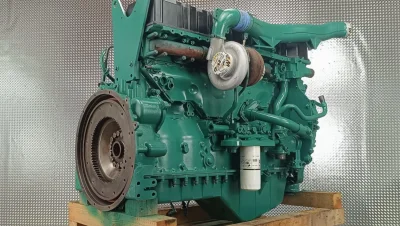


Volvo D12D Engine Overhaul in a Volvo A35D Articulated Hauler
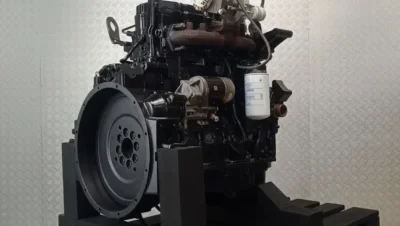
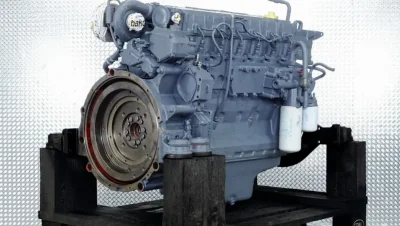
Articulated haulers operate in conditions where the engine is constantly exposed to heavy loads. Transporting material over uneven terrain, frequent starting with a full load, working on inclines and long operating cycles mean that any power unit failure can quickly lead to serious downtime of the entire machine. In the case of the Volvo A35D articulated hauler with a Volvo D12D engine, comprehensive diagnostics and an overhaul of the power unit were required.
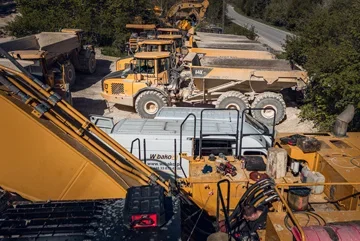
The Volvo A35D is a machine designed to transport materials in demanding off-road conditions. The hauler's construction is designed to handle heavy loads, while the articulated connection between the machine sections allows efficient movement over uneven terrain. Power is provided by the Volvo D12D diesel engine, a unit used in heavy-duty industrial and off-highway applications. In this type of application, engine performance has a direct impact on the efficiency of the entire hauler.
In this case, the reason for sending the engine for overhaul was wear of the crankshaft bearings and components working with the crankshaft. The first symptoms indicated problems with maintaining the correct oil pressure as well as unusual noises appearing during engine operation. Instead of limiting the work to replacing individual components, we decided to carry out a comprehensive inspection of the Volvo D12D engine. This approach makes it possible to check not only the area where the failure occurred, but also the condition of other components that may have been worn as a result of operation.
Diagnostics of the Volvo D12D engine installed in the Volvo A35D
Diagnostics began while the power unit was still installed in the machine. When carrying out an engine overhaul, it is very important to determine what symptoms occurred during operation and whether the problem concerned only the power unit or could also be related to other machine systems. We analyzed information concerning engine behavior during starting, idling and operation under load.
One of the basic parameters that needed to be verified was oil pressure. Low oil pressure can have many causes, so the measurement result alone is not sufficient to make a final diagnosis. It may be caused by worn bearings, problems with the lubrication system, wear of cooperating components or incorrect operation of the oil pump. In the case of the Volvo D12D, it was particularly important to compare the measurement results with the other symptoms.
We also checked the condition of the engine oil and oil filter. The presence of metallic contaminants or particles may indicate progressive wear of mechanical components. When bearing problems are suspected, not only the amount of contaminants but also their nature and location are important. Such observations help mechanics determine whether a complete engine teardown is required.
After completing the basic diagnostics, it was possible to confirm that further operation of the engine without removing it and carrying out a detailed inspection would be risky. In the case of wear of components in the crankshaft-piston system, continued operation may lead to further damage to the crankshaft, connecting rods and bearings, and in extreme cases to complete engine seizure. Therefore, the Volvo D12D engine was designated for removal and detailed inspection in the workshop.
Removal of the Volvo D12D engine from the articulated hauler
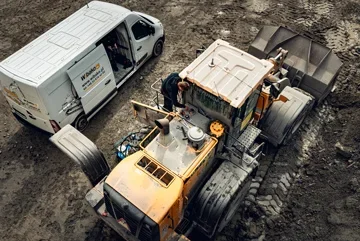
Removing an engine from an articulated hauler requires appropriate preparation of both the power unit and the machine itself. The work was carried out by our service team using a crane provided by the customer. Before the actual removal process began, the work area was secured and all components that needed to be disconnected were prepared.
First, the lines and connections that could prevent safe removal of the unit were disconnected. These included the electrical system, cooling system lines, fuel lines, air intake components and connections to the exhaust system. All disconnected components were protected against contamination and damage. This is particularly important for lines and fittings into which contaminants could have entered during machine operation.
Before lifting the engine, the mounting points were checked and the unit was prepared for suspension. Engine mounting bolts and other securing elements were removed, and the unit was properly secured for lifting. Using the crane, the engine was gradually lifted while checking whether any connections remained attached.
It was also important to secure the cooling system and air intake. Openings and lines were protected so that contaminants could not enter the systems during engine transport and further workshop work. Once safely removed, the Volvo D12D engine was prepared for transport to our headquarters in Kojszówka, where a detailed inspection and overhaul were carried out.
Inspection of the Volvo D12D engine in the workshop
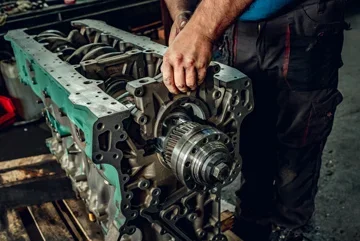
After delivery to the workshop, the engine was prepared for disassembly. Engine inspection is not limited to finding one damaged component. The objective is to determine the actual condition of all major components and identify which can be reused, which require remanufacturing and which need to be replaced.
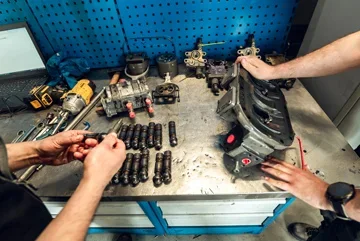
The engine was disassembled into individual components. The parts were progressively cleaned and washed, followed by inspection. Particular attention was paid to the components of the crankshaft-piston system because the initial diagnostics indicated problems related to oil pressure and bearing wear.
The crankshaft underwent a detailed visual inspection and measurements. Its condition was checked for signs of wear, overheating and possible damage. Measurements of the journals and crankshaft runout were carried out. An important part of the inspection also involved the oil passages, as their condition affects proper lubrication of the bearings and other cooperating components.
The connecting rods were also inspected. They were visually checked for cracks, signs of overheating and wear, followed by appropriate measurements. The inspection includes checking the connecting rod geometry, twisting and longitudinal bending. The condition of the connecting rod bolts was also checked, as these components operate under significant loads.
The inspection was not limited solely to components directly associated with the original failure. The condition of the pistons, piston rings, cylinder liners and other crankshaft-piston system components was also checked. This comprehensive approach helps avoid a situation in which, after repairing one component, another significantly worn component is left in the engine.
Repair of the crankshaft-piston system
The crankshaft-piston system is one of the most important assemblies in the Volvo D12D engine. This is where the energy generated during fuel combustion is converted into rotational movement of the crankshaft. The components operate at high temperatures and under significant mechanical loads, so their condition has a direct impact on the durability of the entire power unit.
As part of the overhaul, the crankshaft, connecting rods, pistons, piston rings, cylinder liners and bearings were thoroughly inspected. Components whose wear exceeded acceptable values were appropriately repaired or replaced. Depending on its condition, the crankshaft may require remanufacturing, meaning grinding. Before making such a decision, however, measurements and an assessment must be carried out to determine whether the crankshaft can be correctly prepared for further operation.
The bearings were treated as one of the key components of the overhaul. Their purpose is to ensure appropriate operating conditions between the crankshaft and the connecting rods and engine block. Bearing wear can lead to increased clearances, reduced oil pressure and further wear of cooperating surfaces. Therefore, during the overhaul, both the bearings themselves and the crankshaft surfaces were thoroughly inspected.
The condition of the cylinder liners and pistons was also checked. Wear of the cylinder surfaces can cause problems maintaining correct operating parameters, increased oil consumption and deterioration of combustion chamber sealing. The piston rings must also retain their proper properties in order to work correctly with the liner and limit the amount of oil entering the combustion chamber.
Inspection and remanufacturing of the engine cylinder head
At the same time as work on the lower part of the engine, the cylinder head was inspected. The cylinder head is responsible, among other things, for the correct gas exchange process and for sealing the combustion chamber. Its condition can have a direct impact on compression, engine smoothness and power unit durability.
Inspection of the cylinder head includes checking valve seats, guides, valves and sealing. If necessary, the cylinder head can undergo remanufacturing. The process includes, among other things, resurfacing and replacement of worn valve guides and valves. The scope of work always depends on the actual condition of the component after disassembly and measurement.
An important part of the inspection is also a cylinder head leak test. During this process, the cylinder head is immersed in heated water and compressed air is supplied to the appropriate passages. Observing any escaping air makes it possible to determine whether there are leaks in the structure of the cylinder head indicating a crack.
After all work has been completed, the cylinder head is prepared for reassembly. All mating surfaces must be properly cleaned and the components installed in accordance with the technical requirements for the specific unit.
Fuel system and accessories of the Volvo D12D engine
During a comprehensive engine overhaul, the fuel system and accessories cannot be overlooked. Even a mechanically correctly rebuilt engine will not operate properly if the components responsible for supplying fuel or air do not function correctly.
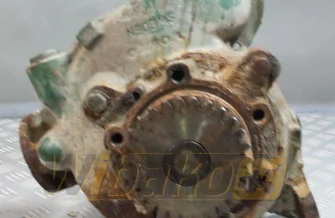
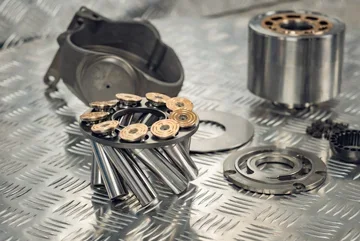
The fuel system components were subjected to appropriate inspection. Depending on the condition of individual components, they may undergo further remanufacturing or replacement. The injection pump, if it requires detailed inspection, can be tested on a test bench. This makes it possible to verify its operation outside the machine and reduces the risk of reinstalling a component whose parameters differ from the required values.
The engine accessories were also checked, including the turbocharger. Turbocharger inspection includes checking axial and radial play. In the case of electrical components such as the starter and alternator, it is also important to confirm their correct operation before completing the overhaul.
This approach helps reduce the risk of additional problems occurring after the engine has been installed in the machine. An engine overhaul should include not only the components that were directly damaged, but also those whose condition may affect further operation.
Professional assembly of the Volvo D12D engine
After the inspection and preparation of the individual components had been completed, the engine assembly stage began. This is the moment when the accuracy of the mechanics' work is particularly important. A properly carried out overhaul does not end with replacing parts. All components must be properly prepared, cleaned and installed in the correct order.
During assembly of the crankshaft-piston system, particular attention is paid to the correct installation of bearings, connecting rods, pistons and piston rings. The crankshaft must be installed in a way that ensures proper operating and lubrication conditions. Clearances and mating surfaces are also checked.
Before closing the individual assemblies, all components are checked for cleanliness. A rebuilt engine must not contain accidental dirt, machining residue or contaminants that could enter the lubrication system. Thorough cleaning of the oil passages is particularly important here.
The subsequent engine components are then installed, including the cylinder head, timing system, fuel system components and accessories. Each stage is performed while maintaining the required sequence and appropriate assembly parameters. The correct positioning of cooperating components is also checked.
After the engine has been assembled, all external connections are inspected. Particular attention is paid to the cooling system, air intake, fuel and lubrication systems. Lines and air piping components are also replaced or prepared where their condition does not allow safe further use.
In the case of the air intake system, sealing is particularly important. A leak between the turbocharger, air lines and engine can cause problems with the proper supply of air. Therefore, the connections and their sealing are checked before and during testing.
After assembly has been completed, the engine is prepared for starting and further testing. This means that the Volvo D12D engine does not go directly into the machine after overhaul without first having its operation checked.
Testing the Volvo D12D engine on an engine dynamometer
One of the important stages of the entire process is testing the Volvo D12D engine on an engine dynamometer. The ability to test the power unit outside the machine is a major advantage when carrying out comprehensive overhauls. It makes it possible to verify engine operation under controlled conditions and under load before the unit is installed again in the Volvo A35D articulated hauler.
After starting, the engine is not immediately subjected to maximum loads. In the case of engines after overhaul, we begin with operation under light conditions, with a load of approximately 20-30% of the nominal value. The engine operates under these conditions for a minimum of 16 hours. This stage allows us to observe the behavior of the unit after rebuilding and monitor its basic operating parameters.
During the test, engine operation and the behavior of its individual systems are monitored. Particular attention is paid to operating stability, temperature, oil pressure and engine behavior under changing load conditions. Possible leaks and irregularities that could indicate a problem requiring additional inspection are also checked.
The dynamometer makes it possible to perform a test under conditions that cannot always be safely achieved during the first start-up of an engine installed directly in the machine. The unit can be gradually loaded while mechanics observe its behavior during successive stages of the test.
After the required period of operation under light conditions, provided that the engine maintains its basic operating parameters, further tests are carried out with increased load. The unit is repeatedly loaded to check its correct response to changing operating conditions. This makes it possible to assess whether the engine maintains stable parameters when a greater part of its capabilities is required.
Dynamometer testing is particularly valuable for engines used in heavy-duty machines. An articulated hauler such as the Volvo A35D can operate for many hours under significant load, so before reinstalling the engine, we want to have a high degree of confidence that the unit is prepared for further operation.
The dynamometer is also a diagnostic tool. If irregularities appear during the test, the process can be stopped and an additional inspection can be carried out before the engine is sent to the customer. In practice, this means that a problem can be detected at the workshop stage rather than after the engine has been installed in the machine.
Only after successfully passing the successive stages of testing is the engine prepared for transport and installation in the machine. This means that the overhaul of the Volvo D12D unit includes not only mechanical work, but also verification of engine operation under load.
Installation of the Volvo D12D engine in the Volvo A35D
After the overhaul was completed and the engine successfully passed the dynamometer tests, the Volvo D12D engine was prepared for reinstallation in the Volvo A35D articulated hauler. Installation is a stage that is just as important as the overhaul itself. Even a correctly rebuilt engine may experience operating problems if it is incorrectly connected or if components affecting its operation are omitted during installation.
Our service carries out engine removal and installation in construction machinery. In this type of work, mechanics prepare the machine for reinstalling the power unit and then, using a crane provided by the customer, position the engine inside the engine compartment. The process is carried out gradually, with the position of the unit and mounting points being checked.
Once the engine is correctly positioned, the mounting brackets and other securing elements are installed. Connections to the drivetrain and other machine systems are then made. Cooling system, fuel, lubrication and air intake lines are connected. Exhaust system connections and electrical system connections are also checked.
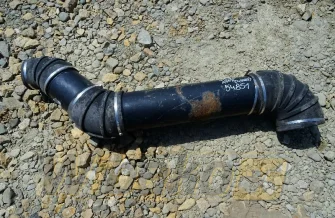
Particular attention is paid to the air piping. Each connection must be properly fitted and secured. We check the condition of the lines and connections because leaks in the intake system can negatively affect engine operation. The cooling system and fuel line connections are also checked for leaks.
Before the first start, the appropriate filters are replaced and the necessary preparatory procedures are carried out. Mechanics check fluid levels and the correctness of all connections. The engine is then started and observed to verify correct operation.
The first machine tests are carried out with the operator present. This is important because the operator knows how the specific articulated hauler normally operates and can provide information about machine behavior under normal operating conditions. During testing, engine behavior under different operating conditions, response to increased load and interaction between the engine and the other machine systems are checked.
We also check whether the connections remain sealed after the engine has warmed up and during operation. Lines and connections in the cooling, intake and fuel systems are inspected. Only after the tests have been successfully completed and correct machine operation has been confirmed can the installation process be completed.
After the work has been completed, an installation report is prepared. It documents the work performed and confirms correct engine operation after installation. This approach allows full control over the process from engine rebuilding through to its restart in the machine.
Engine maintenance after overhaul
The overhaul of the Volvo D12D engine does not end when the Volvo A35D is started. Proper maintenance of the power unit after overhaul is important for its continued durability. Therefore, we recommend carrying out the first inspection after 50 operating hours from engine start-up.
The 50-hour inspection is carried out by our service team and includes more than just replacing filters. Mechanics check the general condition of the engine and accessories after the initial operating period. Connections, system sealing and correct engine operation are inspected.
During the first operating hours, minor leaks or the need for additional connection checks may become apparent. Connections that were correct during installation are subsequently exposed to vibration, temperature changes and loads during operation. Early detection of such problems makes it possible to respond quickly and reduce the risk of a more serious failure.
We recommend carrying out subsequent inspections every 250 operating hours, but no less frequently than every 3 months. Regular maintenance makes it possible to monitor the condition of the engine and respond to emerging signs of wear before they lead to more serious damage.
Volvo engine and construction machinery service
The overhaul of the Volvo D12D installed in the Volvo A35D articulated hauler demonstrates how important a comprehensive approach to power unit repair is. Diagnostics, removal, detailed inspection, repair of the crankshaft-piston system, cylinder head and accessory inspection, engine assembly, dynamometer testing and professional installation in the machine form one coherent process.
WIBAKO provides diesel engine service and repairs of power units used in construction and industrial machinery. Our mobile service can carry out engine removal and installation work directly at the customer's site. After removal, the engine can be transported to our headquarters in Kojszówka, where workshop work and testing are carried out.
Our services include diagnostics, engine overhauls, component inspection, remanufacturing of selected components and preparation of power units for reinstallation. The possibility of testing the engine on an engine dynamometer also allows us to verify the unit before it returns to the machine.
Our services also cover construction machinery equipped with Volvo engines. In the event of an engine failure or suspected wear, it is important to quickly determine the cause of the problem. The earlier diagnostics are performed, the greater the chance of limiting the extent of damage and costs associated with machine downtime.
Volvo A35D articulated hauler after engine overhaul
The comprehensive rebuilding of the Volvo D12D engine prepared the power unit for further operation in the Volvo A35D articulated hauler. The key was not only to eliminate the original cause of the problem, but also to inspect the remaining components, test the engine on the dynamometer and correctly install the engine back into the machine.
This type of overhaul gives the customer greater control over the condition of the power unit and helps reduce the risk of another failure occurring immediately after the engine is installed. Load testing is particularly important because it allows the behavior of the unit to be verified under controlled conditions before the machine returns to normal operation.
In the case of heavy transport machinery, engine performance has a direct impact on productivity. Therefore, when overhauling engines used in articulated haulers, it is not worth limiting the work to replacing one damaged component. Comprehensive diagnostics and inspection make it possible to assess the actual condition of the engine and appropriately plan the scope of work.
Summary of the Volvo D12D engine overhaul
The overhaul of the Volvo D12D engine installed in the Volvo A35D articulated hauler was carried out as a comprehensive process including diagnostics, engine removal, component inspection, repair of the crankshaft-piston system, inspection of the cylinder head and accessories, engine assembly and testing on an engine dynamometer.
The reason for the repair was wear of components working with the crankshaft, which was confirmed during diagnostics and the subsequent engine teardown. Detailed inspection made it possible to assess the condition of the other engine components and properly prepare the power unit for further operation.
An important part of the entire process was dynamometer testing. Thanks to this, the Volvo D12D engine was tested under controlled conditions and gradually subjected to load. Only after successful verification was the unit sent for reinstallation in the Volvo A35D.
After installation, machine tests were carried out with the operator present and the sealing of the completed connections was checked. The next stage of maintenance is the 50-hour inspection, during which our service team checks the condition of the engine and accessories and performs the required service work.
If you need a Volvo D12D engine overhaul, Volvo A35D articulated hauler service or comprehensive engine repair for construction machinery, we can carry out the entire process from diagnostics and removal, through engine overhaul and dynamometer testing, to engine installation in the machine and subsequent service.
Related materials and service
Construction machinery service
Mobile construction machinery service
Contact us
Do you need a Volvo D12D engine overhaul or Volvo A35D articulated hauler service? WIBAKO provides comprehensive engine repairs, engine removal and installation in machinery, as well as engine dynamometer testing. Contact us to determine the required scope of work.