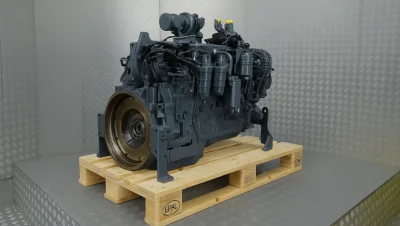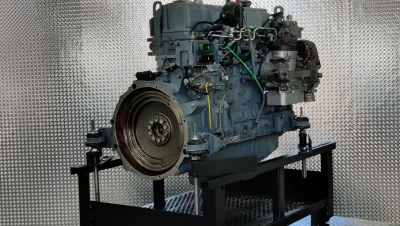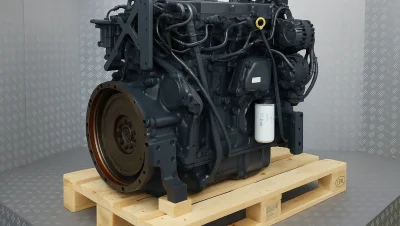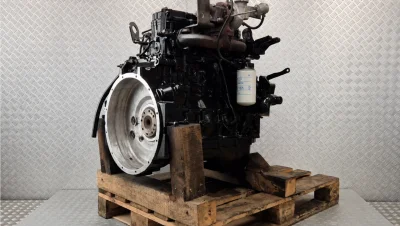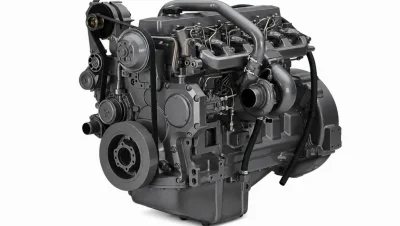


Volvo D12E Engine Overhaul in a Volvo A40E Articulated Hauler
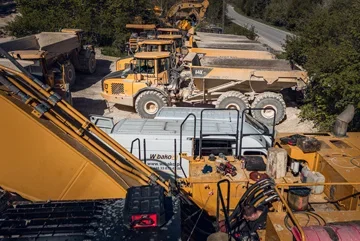
The Volvo A40E articulated hauler operates under conditions where the internal combustion engine must cope with heavy loads, variable terrain, and long working hours every single day. In the case of one of the machines operating in the Kraków region, a gradual loss of performance in the Volvo D12E engine became increasingly noticeable. Initially, the symptoms did not point to a single specific fault. The engine continued to run, but its performance parameters deviated from expectations, and both oil and fuel consumption began to rise.
In such situations, simply addressing a single symptom often does not solve the problem. With high mileage and years of operation, several engine components can undergo wear simultaneously. Therefore, before deciding on an overhaul, it was necessary to perform a thorough diagnostic of the Volvo D12E unit installed in the Volvo A40E articulated hauler.
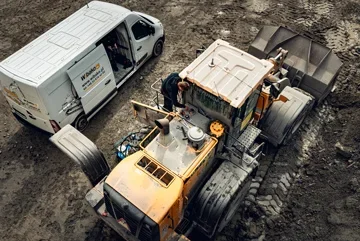
WIBAKO service was responsible for diagnostics, disassembly, and subsequent engine reconstruction. Our mobile service can perform engine removal and installation directly at the customer's site; after removal, the unit is transported to our headquarters in Kojszówka. There, the engine is disassembled, washed, measured, and inspected by mechanics. This allows us to assess the actual condition of the components and determine the scope of necessary work.
In this case, the main cause of the overhaul turned out to be natural engine wear resulting from high mileage and intensive operation. However, this did not mean an automatic replacement of all components. Each part was evaluated individually, and components intended for reuse had to meet the required dimensions and technical condition standards.
Diagnostics of the Volvo A40E and D12E Engine Prior to Removal
We began diagnostics by checking the behavior of the Volvo D12E engine directly in the machine. This was crucial because, prior to dismantling the unit, its real-time operating behavior could be evaluated. High mileage does not always mean an immediate need for an overhaul. First, it must be determined whether symptoms indicating wear on key engine components are present.
First, we checked the starting behavior, idling, and performance when revving up. Next, we observed the engine's response under load. An important part of the diagnostics was also checking operational parameters and inspecting the lubrication and cooling systems.
In the case of a high-mileage engine, we pay special attention to several groups of symptoms. A gradual loss of power, increased oil consumption, higher fuel consumption, or degraded engine smoothness can indicate natural wear of the piston-crank assembly components. However, it should not be assumed that the issue lies solely in the cylinders or pistons. Similar symptoms can also be related to the cylinder head, fuel system, or engine accessories.
Therefore, the diagnostics were carried out in stages. After basic checks, we proceeded with a more thorough assessment of the engine condition. We checked oil pressure and other parameters necessary to evaluate the health of the unit. Subsequently, after confirming the symptoms of wear, we decided to remove the engine and send it for comprehensive workshop verification.
Removal of the Volvo D12E Engine from the Articulated Hauler
Removing the engine from a Volvo A40E articulated hauler requires proper preparation. The power unit is connected to many machine systems; therefore, before extraction, all elements that could impede removal or suffer damage during work must be properly secured and disconnected.
Disassembly is carried out by our mobile service directly on-site at the customer's location. A crane provided by the customer is always used to lift the engine out. Before lifting begins, we prepare the engine for safe removal from the engine compartment. Electrical harnesses, cooling lines, air intake components, exhaust system parts, and other structural connections are disconnected.
We pay special attention to the cooling system. Lines and connections are secured to prevent any uncontrolled spillage of residual coolant during removal. We handle air intake components and air lines similarly. Their condition is evaluated later, as any intake leak during reinstallation can affect engine operation.
After disconnecting all necessary elements, we inspect the mounts and lifting points. The engine is then lifted out of the machine using the crane. At this stage, precise positioning relative to surrounding components is essential to avoid damaging other parts in the engine bay.
Once removed, the Volvo D12E engine was prepared for transport to our facility in Kojszówka. There, we initiated the next stage of work—a thorough verification of the unit after disassembly.
Workshop Verification of the Volvo D12E Engine
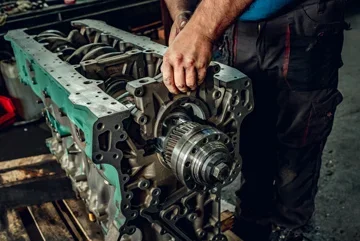
Upon arrival at the workshop, we began dismantling the engine. For a unit classified for overhaul, parts are removed and evaluated by mechanics in real time. Components are thoroughly washed, as proper condition assessment is only possible once dirt and oil residue are removed.
The inspection confirmed that the primary issue was widespread operational degradation of the power unit. At high mileage, individual parts do not wear at the exact same rate. Thus, we do not assume upfront that every single component needs replacement. The scope of the overhaul is determined by measurement results and the physical condition of each specific part.
First, the engine block was inspected. We checked the mating surfaces for the cylinder liners and the condition of the mounting locations for various components. Next, we proceeded to verify the piston-crank assembly.
Piston-Crank Assembly – Crankshaft, Connecting Rods, Pistons, and Liners
The piston-crank assembly is one of the most critical areas during a Volvo D12E engine overhaul. The components in this group bear the massive loads generated during engine operation. For a high-mileage engine, detailed inspection is necessary even if no sudden catastrophic failure occurred.
The crankshaft underwent visual inspection and dimensional measurements. We checked the main and rod journals, bearing mating surfaces, and oil galleys. Crankshaft runout was also measured. These measurements determine whether the crankshaft can be reused or requires reconditioning/regrinding.
We also inspected the connecting rods. Each element was checked for wear, cracks, and signs of overheating. Measurements included checking for bend, twist, and bolt condition. For parts operating over tens of thousands of hours, these measurements are vital.
Next, we evaluated the pistons, rings, and cylinder liners. High wear on these components can lead to loss of combustion chamber sealing, elevated oil consumption, and progressive performance loss. Mating surfaces were thoroughly checked, and components that failed to meet safety standards for continued operation were designated for replacement.
As part of the overhaul, the piston-crank system was rebuilt using carefully selected replacement parts. Installing new wear components restores proper operational clearances for key engine parts. All assembly procedures are performed in accordance with proper sequencing and technical specifications.
Inspection and Reconditioning of the Cylinder Head
The next step involved the Volvo D12E cylinder head. The cylinder head was thoroughly cleaned and inspected. Among other checks, we verified the condition of valve seats, valve guides, and valves. A key part of the process was performing a pressure/leak test.
Pressure testing the cylinder head involves submerging it in heated water, applying compressed air, and checking for escaping bubbles that would indicate cracking or porosity. This test reveals defects that cannot always be detected during standard visual inspections.
Depending on the level of wear, cylinder head reconditioning includes proper surface preparation, resurfacing (decking), and replacing worn valve guides and valves. The objective is to restore proper sealing and smooth valve operation during engine running.
Volvo D12E Fuel System
During a comprehensive overhaul, the fuel system cannot be overlooked. Even a mechanically flawless engine will not perform properly if the fuel delivery system fails to meet required parameters.
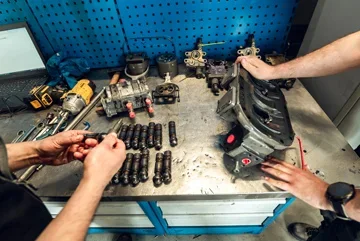
Fuel system components were inspected according to their design and condition. Particular attention was given to components responsible for precise metering and injection of fuel into the cylinders. Components requiring deeper diagnostic testing were tested on dedicated test benches.
Verifying the fuel system is also important because its condition directly affects engine running smoothness, fuel efficiency, and combustion temperatures. Incorrect fuel parameters can cause rough idling, power drops, and excessive exhaust smoke.
Verification of Engine Accessories
Engine accessories were also inspected during the overhaul. This verification includes components whose condition directly impacts subsequent engine performance on the machine. Key items checked include the turbocharger, starter, alternator, and electromechanical components.
For the turbocharger, checking axial and radial play is critical. A worn turbocharger negatively impacts engine power and efficiency; therefore, its condition must be fully verified prior to final engine assembly.
The condition of hoses, piping, and connections is equally important. Ducting showing signs of wear or improper sealing is replaced during assembly. This applies especially to intake air ducting and cooling lines, as leaks in these systems can cause issues immediately upon engine startup.
Professional Assembly of the Volvo D12E Engine
Following verification and preparation of individual components, we began assembling the Volvo D12E engine. An engine overhaul goes beyond replacing worn parts; the preparation and assembly methodology are equally critical. Therefore, during assembly, we maintain correct torque sequences, clean mating surfaces, and perform required checking measurements at every step.
Before installing piston-crank assembly components, all surfaces are properly prepared. The crankshaft, connecting rods, pistons, liners, and bearings must be installed to ensure proper lubrication film and fitment during initial start-up. Fasteners and threaded connections are also strictly verified.
When assembling the cylinder head, we focus on surface cleanliness and proper valve system installation. All components must fit precisely, and torque procedures follow strict technological specifications.
Installing accessories is another key phase. The turbocharger, alternator, starter, and auxiliary parts must be correctly fitted, as the engine will be tested under load on the dynamometer. Any assembly discrepancy will quickly manifest during dyno testing.
Once assembled, we verify all line connections and prepare the engine for firing up. Lubrication, cooling, air intake, and electrical interfaces are re-checked for integrity.
Volvo D12E Engine Dynamometer Testing
One of the most crucial phases of the Volvo D12E engine overhaul is testing on an engine dynamometer. This is essential for power units destined for heavy machinery like the Volvo A40E articulated hauler. Simply starting a rebuilt engine and idling it provides incomplete data regarding its performance under actual load.
The dynamometer allows us to test the engine under conditions mimicking actual field operation. The unit is started and run initially under light load (~20-30% of nominal rating). Following an overhaul, the engine operates under these conditions for a minimum of 16 hours. This break-in period allows us to monitor operational stability and baseline parameters.
Throughout the test, we monitor engine behavior and check for anomalies. Parameters under scrutiny include power output, load response, operating temperatures, and pressure stability. We also strictly inspect for fluid leaks and ensure all systems interact seamlessly.
Dyno testing offers another key advantage: progressive loading. Following the initial break-in period, we can step up load levels and observe how the engine responds to increasing torque demands. Once baseline parameters are confirmed stable, the engine is subjected to multiple full-load test cycles.
This method exposes issues that would remain hidden during unloaded operation. An engine may idle smoothly without obvious symptoms, yet fail to hold parameters under heavy strain. For an engine operating in an articulated hauler in quarries, gravel pits, or construction sites, high-load reliability is critical.
Thus, the dyno is more than a test bench for first startup; it is a full diagnostic facility where the entire rebuilt power unit is validated before installation back into the machine. This guarantees that the customer receives an engine fully tested prior to field deployment.
Upon successful completion of the test cycle and parameter validation, the Volvo D12E engine was prepped for transport and reinstallation in the Volvo A40E hauler. Completing this rigorous testing cycle offers complete assurance that the engine is ready for heavy duty.
Installation of the Overhauled Engine in the Volvo A40E
After completing the overhaul and dyno testing, we proceeded with installing the Volvo D12E engine back into the Volvo A40E articulated hauler. As with disassembly, installation can be performed on-site by our mobile service team. The unit is maneuvered into the engine bay using a crane provided by the customer.
The installation process demands high precision. The engine must be properly aligned with frame mounts and drivetrain components. Once seated, mounts are torqued, and re-connection of electrical, hydraulic, cooling, and exhaust systems begins.
Cooling lines, air intake piping, exhaust connections, and control harnesses are reconnected. Particular care is given to air intake ducting—every connection must be perfectly seated and airtight. Intake leaks directly degrade engine performance and longevity, so every joint is verified.
Coolant hoses are also checked. After hookup, system integrity is checked and filled. Worn hoses or clamps are replaced to eliminate potential future failure points in the machine.
Prior to initial startup, pre-commissioning checks are performed. New filters are fitted, fluid levels verified, and all machine-to-engine interfaces checked. A final visual inspection of the engine compartment is conducted.
Once started, the next verification phase begins. The engine initially runs unloaded while mechanics monitor performance. We check for oil or coolant leaks, verify hose connections, and check throttle response across RPM ranges.
An essential step involves testing alongside the machine operator. After initial static checks, the operator exercises various Volvo A40E hydraulic and drive functions while mechanics observe the engine under actual operating conditions. This confirms not only engine health, but also its integration with all hauler systems.
During these trial runs, engine behavior is monitored across various load conditions. We check throttle responsiveness, heavy hydraulic load handling, and parameter stability while continuously checking for leaks.
Upon successful test completion and confirmation of leak-free, smooth performance, an installation protocol is completed. Only then is the engine overhaul and installation officially signed off.
Post-Overhaul Maintenance Guidelines
Overhauling and installing the Volvo D12E engine is only the beginning of its new service lifecycle. Following commissioning, adhering to the proper maintenance schedule is vital. The initial service inspection is performed after 50 operating hours (mth).
The 50-mth service is not limited to oil and filter changes. Our mechanics can travel to the client's site to conduct a complete inspection of the engine and accessories after its initial break-in period. We check torque on fittings, fluid tightness, running parameters, and any components that may have settled or developed minor weeping during initial work cycles.
This first service is critical. Even meticulous installation experiences operational stresses—vibration, thermal expansion, and dynamic shock loads—during actual machine work that cannot be fully replicated in static testing.
Following the 50-hour service, subsequent maintenance interval is recommended every 250 operating hours (mth), or at least once every 3 months. Regular maintenance catches minor issues early and prevents costly catastrophic failures.
Volvo D12E Engine – Applications
The Volvo D12E power unit is widely used in heavy Volvo machinery where high durability and continuous heavy-load capacity are required. Applications primarily include heavy off-highway machinery operating in demanding environments.
For Volvo engine servicing, proper identification of the exact engine model variant is essential. The general engine family designation alone is often insufficient for correct parts ordering and configuration. Therefore, verifying engine serial numbers and specific equipment specifications is recommended prior to service work.
WIBAKO specializes in overhauls and maintenance of engines used in construction machinery and heavy equipment. We offer both workshop repairs and mobile service for field removal and installation.
Comprehensive Service for Volvo Engines and Heavy Equipment
The overhaul of the Volvo D12E engine in the Volvo A40E articulated hauler highlights the importance of a comprehensive repair approach. For high-mileage units, replacing just one failed part is rarely sufficient; full component verification is required as wear accumulates simultaneously across multiple systems.
Hence, our process began with on-machine diagnostics, followed by removal, shop transport, teardown, cleaning, and precise dimensional verification. Subsequent steps included rebuilding the piston-crank assembly, reconditioning the cylinder head, fuel system testing, and accessory overhaul.
A major advantage of our service is full load testing of rebuilt engines on our in-house engine dynamometer. This allows the power unit to be fully validated under load before installation back into the machine, which is critical for heavy equipment where load performance directly impacts jobsite productivity.
We also handle field installation and follow-up maintenance. Our mobile service team travels to customer sites to conduct required work, including engine removal and transport to our Kojszówka facility when an overhaul is required.
Summary of the Volvo D12E Overhaul in a Volvo A40E Hauler
The Volvo A40E articulated hauler relies on a dependable power source. For the machine described, the overhaul was necessitated by high operating hours and natural wear of the Volvo D12E engine. Initial on-machine diagnostics followed by detailed workshop teardown enabled us to define the precise scope of repair.
The engine was fully dismantled, cleaned, and measured. We verified the piston-crank assembly, crankshaft, connecting rods, pistons, liners, bearings, cylinder head, fuel system, and accessories. Following necessary machining and parts replacement, the engine was professionally assembled and tested on the dyno.
Only after successfully passing dyno testing was the engine reinstalled in the Volvo A40E. Post-installation checks included leak tests, initial running, and functional tests with the operator, confirming flawless integration with the hauler's systems.
Following overhaul completion, we recommend a initial service check at 50 operating hours. Our mechanics can visit the client site to inspect engine status post-break-in. Subsequent services should occur every 250 hours or at least quarterly.
If you require a Volvo D12E engine overhaul, Volvo engine repair, or comprehensive service for a Volvo A40E articulated hauler, WIBAKO manages the complete workflow—from diagnostics and removal, through shop overhaul and dyno testing, to machine reinstallation and ongoing field maintenance.
Volvo Engine & Construction Machinery Service – Information
As part of our service offerings, we repair and overhaul engines used in construction equipment, haulers, wheel loaders, excavators, and other off-highway machinery. Depending on client needs, we provide field diagnostics, unit removal, workshop overhaul, engine dynamometer testing, reinstallation, and scheduled maintenance services.
Our complete facility allows us to manage the entire process under one roof. Mechanics oversee both mechanical rebuilds and machine integration prep, giving us strict quality control across every repair phase and mitigating risks of improper engine assessment.
Related Resources
Volvo Engine Overhauls
Volvo Equipment Service
Mobile Service for Construction Machinery
Engine Dynamometer Testing
Volvo Engine Parts