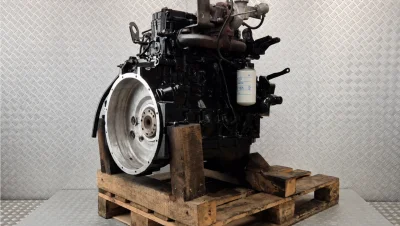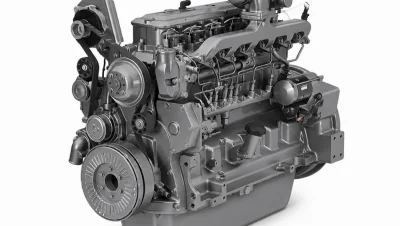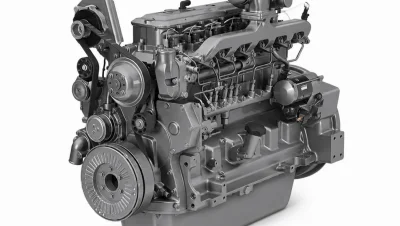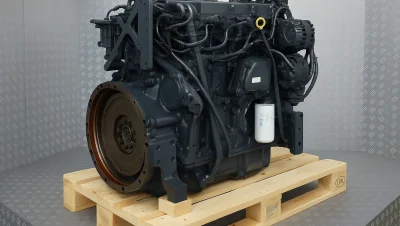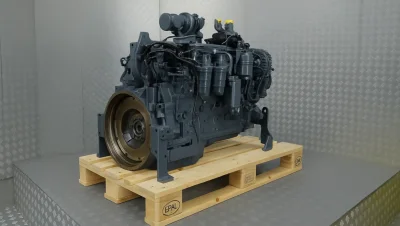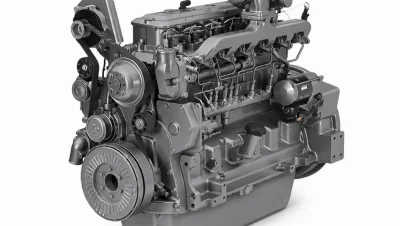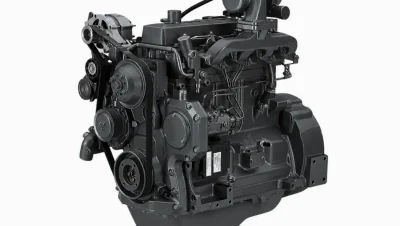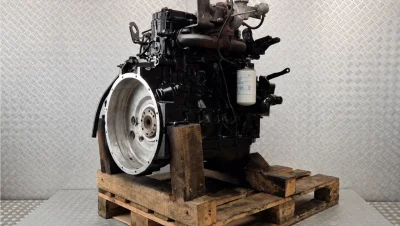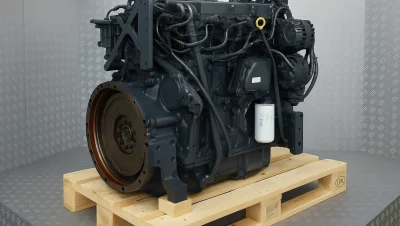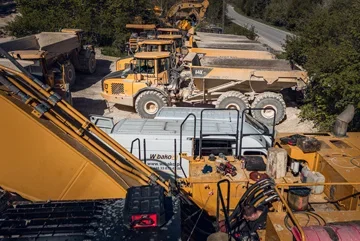


Deutz TCD 6.1 L6 Engine Overhaul in Kramer 8155 Wheel Loader
The engine began operating louder and louder, and the emerging concerning symptoms indicated that further operation of the loader could result in a much more serious breakdown. In the case of the Kramer 8155 machine, a decision was made to perform a thorough diagnostics of the Deutz TCD 6.1 L6 engine, followed by its comprehensive rebuild at our facility.
Kramer 8155 is a wheel loader designed for intensive work, where the efficiency of the drivetrain has a direct impact on the performance of the entire machine. Propulsion is provided by the Deutz TCD 6.1 L6 engine. It is a six-cylinder diesel unit whose correct operation is crucial during heavy-duty tasks using the loader.
WIBAKO carries out comprehensive repairs and overhauls of diesel engines used in construction and industrial machinery. We perform diagnostics, removal and installation of drive units, component verification, repairs of the crank-piston system, cylinder heads, and accessories. An important element of the process is also the ability to perform an engine test on a dynamometer before reinstalling it in the machine.
Diagnostics of the Deutz TCD 6.1 L6 Engine in Kramer 8155
The first stage of work was engine diagnostics directly in the Kramer 8155 loader. The reported symptoms pointed to potential issues with the bottom end of the engine. Concerning noises occurred during unit operation, which is why we did not limit ourselves to merely reading operating parameters. It was necessary to determine whether the source of the problem was indeed wear of the crank-piston assembly components, or if the cause lay in another component.
First, we evaluated the overall operating condition of the engine. We checked the unit's behavior during startup and operation, paying attention to unusual sounds, rough running, and engine response to load changes. A key element of the diagnostics was also checking oil pressure. Its value can provide important information regarding the state of the lubrication system and the wear of components mating with the crankshaft.
In cases of suspected bearing wear, checking the oil and oil filter for metallic contaminants is particularly important. Metal shavings can indicate progressive surface wear of mating components. However, the presence of disturbing noises alone is not a sufficient reason to determine the scope of an overhaul. Final assessment requires engine disassembly and thorough component verification.
The initial diagnostic results confirmed that further operation of the unit could lead to increased damage. We therefore decided to remove the Deutz TCD 6.1 L6 engine from the Kramer 8155 loader and transport it to our facility in Kojszówka, where full verification could be carried out.
Engine Removal from the Kramer 8155 Loader
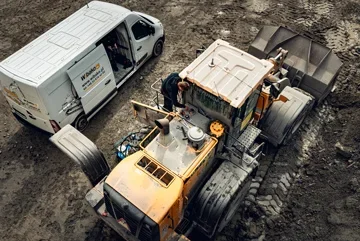
Removing a power unit in a construction machine requires proper preparation. In this case, the work was performed on-site by our mechanics in the Kraków region. A crane provided by the customer was used to lift out the engine. Thanks to the use of appropriate equipment, it was possible to safely lift the unit and extract it from the engine compartment.
Before starting the actual removal, we secured the machine and prepared access to the engine. Subsequently, successive systems and accessories were disconnected, which had to be unlinked before extracting the unit. We paid special attention to cooling system lines, air hoses, the fuel system, and electrical connections.
Proper sealing and protection of lines and openings after disconnection was also crucial. This minimizes the risk of contaminants entering the fuel system, lubrication system, or air intake. Components intended for reuse were properly labeled and protected.
After disconnecting all systems and mounting elements, we proceeded to prepare the engine for lifting. The crane provided by the customer was used to safely pull the unit out of the compartment. The engine was then prepared for transport to our workshop in Kojszówka.
Disassembly itself is only one stage of the job. For an engine intended for overhaul, the most critical information is obtained only after dismantling it. That is when it becomes possible to determine the actual degree of wear on the crankshaft, bearings, connecting rods, pistons, cylinders, and other components.
Deutz TCD 6.1 L6 Engine Verification in the Workshop
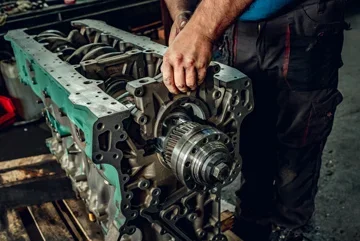
Upon arrival of the engine at our facility, we began its thorough inspection. If the unit's condition is not clear, the first step is to check whether the engine rotates freely and evaluate its overall mechanical condition. The engine is then disassembled, and individual parts are washed and inspected by mechanics.
For this engine, we paid special attention to elements related to the crank-piston assembly. Initial suspicions regarding crankshaft and connecting rod bearing wear required confirmation during teardown. The actual scope of repair cannot be determined solely based on symptoms observed in the machine.
After dismantling the engine, we carefully evaluated the crankshaft condition. Verification included a visual check for signs of overheating, wear, and potential damage. Next, runout measurements, journal dimensioning, and inspection of oil passages are performed. This check determines whether the crankshaft can be reused or requires reconditioning.
Concurrently, we checked the connecting rods. Visual condition, presence of cracks, signs of overheating, and other damages are evaluated. Measurements regarding twist and longitudinal bending are also performed. Connecting rod bolts are inspected as well.
Pistons, rings, and cylinders are also subject to verification. We inspect the wear level of working surfaces, condition of pistons and rings, and feasibility of further component use. If wear exceeds allowable tolerances, the component is designated for replacement or appropriate remanufacturing.
During an overhaul, we do not limit ourselves to a single damaged part. The engine is evaluated as a whole. This avoids a scenario where replacing bearings alone might restore unit operation short-term, while other worn components remain inside the engine.
Crankshaft and Connecting Rod Inspection
The crankshaft is one of the most critical engine components. It transfers forces generated during fuel combustion and converts the reciprocating motion of pistons into rotational motion. For the Deutz TCD 6.1 L6 engine, its proper condition is of particular importance due to the loads encountered during loader operations.
During verification, we checked journal surfaces and the condition of oil channels. Crankshaft runout was also measured. Based on these measurements, it can be determined whether the shaft qualifies for continued use or if grinding is required.
Bearings should not be treated as parts that can be replaced without inspecting their mating surfaces. That is precisely why measuring the crankshaft and inspecting connecting rods is so vital in a professional engine overhaul.
Connecting rods underwent detailed evaluation for wear and potential deformation. Visual condition, geometry, and fasteners were inspected. Only after completing all measurements could the scope of work required for a proper rebuild be established.
Crank-Piston Assembly Repair
Following verification, we began the actual overhaul of the Deutz TCD 6.1 L6 engine. The main focus area was the crank-piston system, as this was where we confirmed the root source of the problem.
The scope of work was set based on the actual condition of the components. For an engine undergoing overhaul, we do not follow a rule of automatically replacing all parts without prior inspection. Every element is evaluated, measured, and classified for reuse, reconditioning, or replacement.
In the case of the crankshaft, maintaining correct journal dimensions and proper geometry is essential. If measurements indicate that reconditioning is feasible, the shaft can undergo grinding. Afterward, its dimensions are checked once more.
Connecting rods and their interaction with the crankshaft are also checked. It is important to maintain correct geometric parameters and properly prepare the surfaces mating with the bearings.
Pistons, rings, and cylinders are subject to inspection as well. For components showing excessive wear, replacement is performed according to the scope determined during verification. The goal is to rebuild the unit in a way that allows its continued safe operation in working machinery.
Engine Cylinder Head Verification and Reconditioning
In parallel with work on the bottom end, we carried out cylinder head verification. A cylinder head is not automatically slated for replacement just because the engine requires an overhaul. First, it must be verified whether its structure permits further service.
Cylinder head verification includes inspecting valve seats, clearances, and tightness. A pressure test is also performed, during which the head is submerged in heated water and pressurized with compressed air. Observation identifies any areas indicating leaks or cracks.
Depending on the level of wear, cylinder head reconditioning may include resurfacing (surfacing/machining), replacing valve guides, and replacing valves. The scope of work always depends on the verification results.
This approach is particularly essential for engines operating in construction equipment. The power unit is subsequently subjected to loads that cannot be compared to the gentle operation of a passenger car engine. Therefore, every component affecting engine durability and sealing must be properly inspected.
Deutz Fuel System and Engine Accessories
During the overhaul, the condition of fuel system components and engine accessories is also evaluated. Depending on the configured system, elements responsible for proper fuel supply and delivery into cylinders are checked.
For elements requiring specialized verification, they may be tested off-site on dedicated test benches. This applies notably to injection system components if their condition requires more thorough testing.
The turbocharger is inspected as well. Verification includes checking axial and radial play. This assesses whether the turbocharger can be reused or requires further repair or replacement.
We also check other engine accessories, including electrical and electromechanical components. Depending on condition, the starter, alternator, and other auxiliary units mated to the engine may be inspected.
Professional Assembly of the Deutz TCD 6.1 L6 Engine
Following completion of all repair procedures, we proceeded with assembling the Deutz TCD 6.1 L6 engine. This is a stage where accuracy and adherence to proper procedures are paramount. Even correctly verified parts will not guarantee proper engine performance if assembly is carried out incorrectly.
During assembly, we use prepared and verified components. Individual crank-piston parts are installed while maintaining required specifications. We pay special attention to proper seating of bearings, connecting rod installation, and interaction of all components with the crankshaft.
Pistons, rings, and other parts qualified for reuse or replaced during the overhaul are installed. Simultaneously, remaining engine assemblies, including the cylinder head and accessories, are prepared.
At this stage, proper joint preparation is also crucial. Seals, lines, and mounting hardware must be adequately prepared prior to re-installing the engine into the machine.
Once assembled, the unit is prepared for startup and testing. However, we do not view initial startup as the end of the overhaul. It marks the start of the next phase: evaluating the engine under operating conditions.
Deutz TCD 6.1 L6 Engine Dynamometer Testing
One of the key advantages of our overhaul process is the ability to conduct engine testing on an engine dynamometer. This allows the Deutz TCD 6.1 L6 unit to be verified prior to reinstallation into the Kramer 8155 wheel loader.
The dynamometer allows testing the engine under load conditions. This is a significantly more valuable test than running the unit at idle. An overhauled engine might start fine and idle smoothly, but issues may arise only when subjected to heavier load. Therefore, performing a dyno test prior to machine installation provides additional quality control over the overhaul.
Upon completion of assembly, the engine is started and operated under controlled conditions. For remanufactured/overhauled engines, the initial part of the test is conducted under light load (approx. 20-30% of nominal rating). The engine runs under these conditions for a minimum of 16 hours.
This stage allows monitoring of unit behavior post-overhaul. Running stability, temperature, sealing, and core parameters are tracked. Observing engine behavior over extended operation rather than just a few minutes after startup is vital.
If the engine maintains standard baseline parameters after light operation, the next testing phase begins. The unit is subjected to repeated load testing to verify behavior under demanding conditions. This validates the proper functioning of the crank-piston assembly, lubrication, cooling, and auxiliary hardware.
Dynamometer testing is also important from a subsequent assembly perspective. If the engine passes inspection before being fitted to the machine, we can separate engine unit issues from potential system faults inherent to the machine itself. This distinction is critical in heavy equipment diagnostics, as engine performance is influenced by interaction with other machine systems.
The engine dyno allows controlled testing independent of the machine. For overhauled engines, this serves as an extra layer of verification, enhancing post-assembly reliability. For the customer, it ensures receiving an engine with proven functionality prior to returning to service.
A successful test result indicates that the engine can be prepared for reinstallation into the Kramer 8155. The unit is secured and prepared for transport or further installation procedures.
Engine Installation into the Kramer 8155 Loader
Following the overhaul and successful dyno testing, the Deutz TCD 6.1 L6 engine was prepared for installation in the Kramer 8155 wheel loader. Engine installation is just as critical as the overhaul process. A properly rebuilt engine must be correctly integrated with machine systems for safe operational startup.
Installation work is carried out by our field technicians. The engine is positioned into the compartment using the customer's crane. The unit is then aligned properly and secured to the machine structure. We pay close attention to correct alignment and securing of engine mounts.
The next step is connecting utility systems and accessories. Cooling lines, air ducts, fuel piping, and electrical harnesses are reconnected. If necessary, worn piping or hose components from years of operation are replaced. This applies especially to intake/air hoses and connections subjected to vibration and severe conditions.
Connections are thoroughly inspected before first startup. It is not just about connecting every line—leak tightness and proper routing are equally critical. Hoses and wiring must not suffer from chafing, excessive tension, or contact with elements that could cause damage.
Prior to startup, we prepare the machine for service. Maintenance tasks concerning filters and operating fluids are performed per specifications for the engine and machine. Mating components and joint stability are also reviewed.
First startup after installation is performed under strict supervision of our technicians. We monitor engine operation, watching for potential leaks, unusual sounds, and engine response to changing operating parameters.
Next, operational testing with the machine operator is conducted. This is a crucial installation phase because the operator provides feedback on loader performance during actual working functions. Machine operations are tested under various conditions, observing engine integration with secondary systems.
We also verify joint sealing once the engine reaches operating temperature and runs under load. Certain leaks only manifest after thermal expansion, so checks do not conclude immediately after initial turnover.
Upon successful testing and confirmation of flawless engine operation without leaks, an installation protocol is completed. This ensures the entire workflow—from overhaul to dyno testing to final commissioning—is properly documented.
Post-Overhaul Engine Maintenance
An engine overhaul does not end service care. After installation into the Kramer 8155, we recommend performing the first maintenance inspection after 50 operating hours. This inspection can be carried out by our field service directly at the customer's site.
During the 50-hour inspection, we do not limit ourselves solely to filter changes. General engine and accessory conditions are evaluated. Fasteners, lines, seal integrity, and operational behavior are thoroughly inspected after the break-in period.
This is a critical milestone, as field operation may reveal minor issues not observable during shop installation. That is why we recommend having this initial inspection performed by our team, which knows the exact scope of overhaul and installation.
We recommend subsequent service intervals every 250 operating hours, but no less than once every 3 months. Regular maintenance allows monitoring engine and component status, enabling early detection and resolution of any abnormalities.
Which Machines Use the Deutz TCD 6.1 L6?
Deutz TCD 6.1 L6 family engines are used in numerous off-highway applications. Units of this type power wheel loaders, construction equipment, agricultural machinery, and industrial applications depending on specific engine configuration.
When searching for an engine or spare parts for a specific machine, the engine model name alone is not always sufficient. Exact engine configuration, serial numbers, part numbers, and nameplate data play a crucial role.
Therefore, when selecting parts or planning a Deutz TCD 6.1 L6 overhaul, providing the engine serial number, machine number, or a photo of the nameplate is highly advised. This enables our technical advisors to accurately identify your unit's exact configuration.
Deutz Engine and Construction Equipment Service
The Deutz TCD 6.1 L6 overhaul in the Kramer 8155 highlights the importance of combining accurate diagnostics, meticulous component inspection, professional installation, and post-repair testing. For engines operating in heavy machinery, repairs should never be limited solely to the part that first exhibited symptoms of wear.
WIBAKO provides Deutz engine servicing and repairs for power units used in construction and industrial machinery. Our mobile service team performs engine removals and installations directly at customer locations. Disassembled engines can then be transported to our headquarters in Kojszówka for comprehensive inspection and overhaul.
Our work encompasses crank-piston assembly overhauls, cylinder head reconditioning, inspection of crankshafts, connecting rods, turbochargers, and other accessories. Upon overhaul completion, the engine can be tested on a dynamometer prior to reinstallation in the machine.
This end-to-end approach minimizes the risk of requiring repeat engine removal after a short operational period. Every phase matters—from initial machine diagnostics to precision part measurements during rebuilding, load testing on the dyno, and final post-assembly verification.
Summary of the Deutz TCD 6.1 L6 Overhaul in Kramer 8155
For the Kramer 8155 wheel loader, the root cause requiring a Deutz TCD 6.1 L6 overhaul was wear on crank-piston assembly components, specifically crankshaft and connecting rod bearings. Initial machine diagnostics established direction, while detailed post-removal inspection confirmed the need for a comprehensive repair.
The engine was dismantled, washed, and inspected. Crankshaft, connecting rods, pistons, rings, cylinders, cylinder head, and accessories were evaluated. Components approved for further service were prepared accordingly, while parts requiring replacement or reconditioning underwent appropriate procedures.
Following assembly, the Deutz TCD 6.1 L6 engine was started and tested on an engine dynamometer. Load testing verified unit performance before returning it to the machine. Subsequently, the engine was installed in the Kramer 8155, and all key connections and systems were checked.
After installation, machine operational testing with the operator and leak inspections were conducted. Positive test outcomes allowed handing over the wheel loader for continued operational service.
For an overhauled engine, ongoing maintenance is vital. We recommend an initial inspection at 50 operating hours (mth) and subsequent servicing every 250 mth (or at least every 3 months). Regular inspection keeps the engine in optimal condition and allows early response to potential issues.
Useful Information and Internal Links
Construction Equipment Service
Mobile Service for Construction Machinery
Engine Parts for Construction Machinery
Contact Us
Do you need a Deutz TCD 6.1 L6 engine overhaul or Kramer 8155 wheel loader service? WIBAKO provides comprehensive diagnostics, overhauls, engine dynamometer testing, and engine installation in construction machinery. Contact us to define the scope of work.