

John Deere 4045HF285 Engine Overhaul in Gipo Giporec R 100 FDR Impact Crusher
The Gipo Giporec R 100 FDR impact crusher operates under conditions where the combustion engine must continuously supply the appropriate amount of power to drive the entire working system. In this type of machine, any loss of engine performance can directly translate into reduced crushing efficiency, issues maintaining proper RPM, and downtime for the entire plant. That is why an engine overhaul requires not only a thorough mechanical rebuild, but also testing the engine under load.
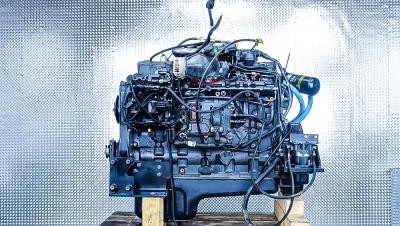
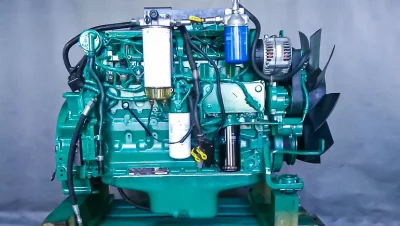
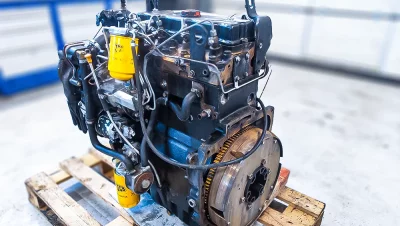
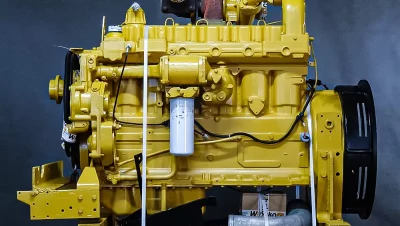
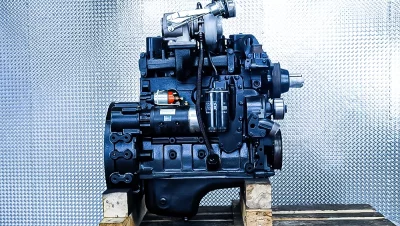
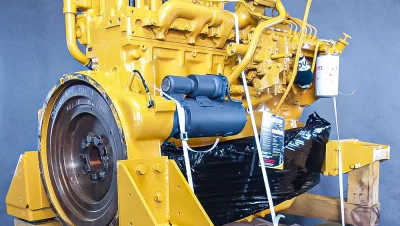
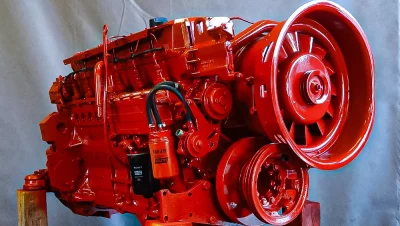
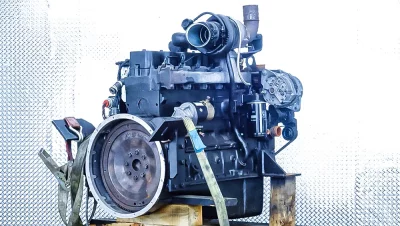
In this case, the subject of the work was a John Deere 4045HF285 engine, belonging to the PowerTech Plus family—4-cylinder diesel engines equipped with a Common Rail system and a VGT turbocharging system. This unit is installed in the Gipo Giporec R 100 FDR impact crusher, operating in demanding conditions associated with continuous loads during the material crushing process.
We began the overhaul with a thorough diagnostic of the engine mounted in the machine. Our goal was to determine the true source of the problem, and then confirm the diagnosis after removing the engine and inspecting its individual components. During the process, we paid attention to the crank-piston assembly components, as well as the cylinder head, fuel system, and engine accessories.
Diagnostics of the John Deere 4045HF285 Engine in the Gipo Giporec R 100 FDR Crusher
The reason for referring the engine for an overhaul was natural wear resulting from high operating hours and intensive use. In the case of an engine working in an impact crusher, one cannot look solely at the operating hour count. The operational pattern of the machine is also of significant importance. During normal operation, the crusher frequently varies the engine load, and the power unit must respond to momentary surges in power demand.
The first step was basic diagnostics prior to removal. We checked the startup behavior, idling, and engine response under increasing RPMs. Attention was given to operational stability, load responsiveness, noise levels, and potential symptoms indicating mechanical wear.
The next stage involved checking core operating parameters. We verified oil pressure as well as engine oil and filter condition. Special focus was given to detecting contaminants or metallic particles that could indicate wear on mating components. The cooling system and connection integrity were also inspected.
Given the nature of the issue, evaluating the condition of the crank-piston system was critical. Symptoms associated with natural engine wear can initially be minor, but gradually worsen over time. Reduced combustion efficiency, increased oil consumption, or deteriorating load response may indicate wear on pistons, rings, cylinder liners, or bearings.
Initial diagnostics confirmed that the engine required further, more detailed verification. In such cases, we do not limit ourselves to replacing a single component. The engine is removed, disassembled, and all key components are thoroughly checked. Only based on the actual condition of the parts do we decide whether to reuse, recondition, or replace them.
Removal of the Engine from the Gipo Giporec R 100 FDR Crusher
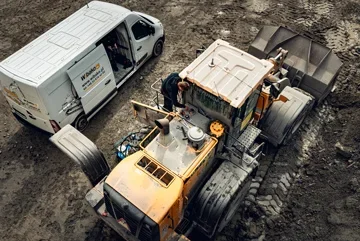
Following diagnostics, we proceeded with removing the power unit. On-site removal was carried out by our mechanics using a crane provided by the client. Before starting work, we properly prepared the work area and protected components that could be damaged during engine removal.
First, electrical wiring, fuel lines, and cooling system components were disconnected. Particular attention was paid to labeling lines and connectors. During reassembly, proper connection of all components is vital for smooth engine operation and control system communication.
Next, the intake system and air hoses were disconnected. All open lines were sealed to prevent contamination. This is especially crucial when dismantling an engine operating in harsh conditions, as dust and debris can easily enter the intake system.
After disconnecting peripheral equipment, we unbolted the engine mounts. The unit was properly suspended using the crane and carefully extracted from the engine compartment. Removal was executed to avoid damaging other machine components.
Once removed, the engine was prepped for transport to our facility in Kojszówka. There, we performed a detailed teardown, cleaning, and component inspection.
Workshop Inspection of the John Deere 4045HF285 Engine
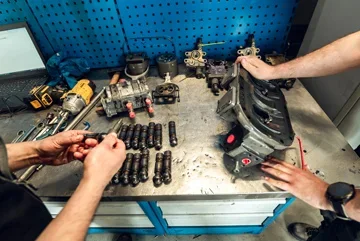
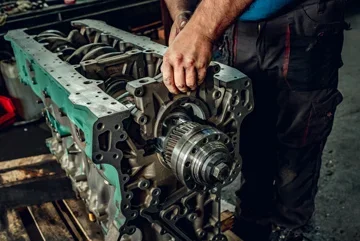
Upon arrival at our workshop, we began the teardown process. Each component was removed in a controlled manner and thoroughly cleaned. Cleaning parts is a vital step, as technical condition can only be properly evaluated after accumulated grime is removed.
We primarily inspected the crank-piston assembly. The crankshaft, connecting rods, pistons, rings, cylinder liners, and bearings were checked. The crankshaft underwent visual inspection for signs of wear, overheating, and potential damage. We also performed journal measurements, runout checks, and oil passage inspections.
Connecting rods were inspected for wear, cracks, and signs of overheating. Twist, bend along the longitudinal axis, and bolt conditions were also verified. These measurements determine whether components can be reused following the overhaul.
Pistons and cylinder liners were also thoroughly checked. We evaluated mating surfaces, wear patterns, and piston ring groove conditions. At high operating hours, even minor wear can impact combustion chamber sealing and overall engine efficiency.
Engine bearings were inspected separately. Their condition reveals much about operating conditions and lubrication performance. If wear is detected, we do not limit ourselves to replacing bearings alone; we also inspect the corresponding crankshaft surfaces and oil line clearance.
Cylinder Head Inspection and Reconditioning
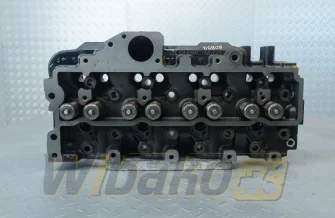
The next critical phase was cylinder head inspection. The head was thoroughly cleaned and examined visually for cracks, damage, or overheating signs.
As part of the head verification, we checked valve seats, valves, guides, and clearances. Pressure testing was also crucial: immersing the head in heated water, applying compressed air, and observing for air bubbles indicating leaks.
Depending on wear, the cylinder head may require reconditioning. This process includes resurfacing and replacing worn guides and valves, ensuring proper combustion chamber sealing and correct valve train operation post-repair.
Repair of the John Deere 4045HF285 Crank-Piston Assembly
Following measurements, we defined the scope of overhaul work. Maintaining exact tolerances of mating parts is essential in an engine overhaul. It is not just about replacing worn parts, but rebuilding the entire system so that all components work together seamlessly.
Depending on measurement results, the crankshaft is designated for continued use or reconditioning. Crankshaft reconditioning involves grinding to specified undersizes. Post-machining, dimensions and journal surface finishes are re-inspected.
In the crank-piston assembly, parts responsible for proper piston guidance and compression sealing are checked and replaced. This includes pistons, rings, cylinder liners, and bearings. Replacement extent always depends on individual engine inspection results.
During crank-piston assembly, cleanliness is paramount. Every oil passage and mating surface must be meticulously prepared prior to installation. Contaminants left inside the engine after an overhaul can cause premature wear on newly installed components.
Common Rail Fuel System
The John Deere 4045HF285 utilizes a Common Rail fuel system; therefore, special attention was given during the overhaul to components responsible for proper fuel metering and delivery.
The injection system was verified. Precision is critical for fuel system parts because incorrect dosing or improper injection timing can impact engine power, operational smoothness, fuel efficiency, and combustion temperature.
If necessary, fuel components are sent to a specialized facility equipped with dedicated test benches. After testing, we receive full diagnostic data on their actual technical state to decide which parts can be reused, repaired, or replaced.
This approach avoids situations where an engine has fully restored mechanics but continues to suffer from fuel delivery issues.
Inspection of Engine Accessories
During the overhaul, we also inspected engine accessories—components whose condition can affect proper engine operation once reinstalled in the crusher.
One key component checked is the turbocharger. Inspections include measuring axial and radial play. This check determines whether the turbocharger can be reused or if it requires reconditioning or replacement.
We also check the starter motor, alternator, and other electromechanical components. Verifying auxiliary equipment during an overhaul prevents unexpected downtime caused by component failure on a freshly overhauled engine.
Hoses, connections, and air intake components are inspected as well. Damaged or worn hoses are replaced. A sealed air intake system is critical for machines working in dusty environments.
Professional Engine Assembly After Overhaul
Upon completing the reconditioning of all approved components, we assemble the engine. This is one of the most critical stages in the entire process, as improper assembly can negate even the highest quality part reconditioning.
The engine is assembled following strict procedural sequences and specified torque/fit parameters. Before closing individual systems, surface cleanliness, oil passage openness, and component alignment are double-checked.
After assembling core mechanical components, engine accessories are installed. We connect the fuel system, cooling system, air intake, exhaust system, and electrical harness. All wiring and hoses are routed to ensure proper protection against chafing, high temperatures, and vibrations.
We pay special attention to the intake system piping. For a crusher operating in dusty surroundings, air system tightness is vital. Every connection must be thoroughly inspected, as leaks can lead to unfiltered air intake and accelerated engine wear.
Cooling system connections are also inspected. Hoses, clamps, fittings, and remaining connections are prepared prior to startup. Once filled, the system undergoes leak testing.
Following assembly, the engine is prepared for initial start-up. Filters and operating fluids are replaced according to the scope of work performed. Before the first start, oil levels, cooling system fill, and electrical connections are verified.
John Deere 4045HF285 Engine Testing on a Dynamometer
One of the most important aspects of our overhaul process is engine testing on a dynamometer. Thanks to the dyno, we are not limited to verifying if the engine simply starts after repair. We can evaluate its performance under load and observe operation across a much broader operational spectrum.
After assembly, the engine is started and prepared for testing. Initially, it operates under light load conditions at approximately 20-30% of nominal capacity. This step is especially important for an overhauled unit, as it allows all newly mated components to bed in smoothly.
The overhauled engine runs on the dyno for a minimum of 16 hours under light load. During this time, core operating parameters are monitored, and unit behavior is observed. We check operational stability, load step response, as well as lubrication and cooling system performance.
The dynamometer allows us to progressively increase load. This ensures the engine responds properly to varying working conditions. For an engine designated for an impact crusher, this step is paramount, as operational load in the field is dynamically fluctuating.
Following the initial light-load run, provided normal parameters are maintained, we advance to subsequent test phases. The unit is subjected to repeated load cycles while mechanics monitor behavior. This reveals irregularities that might remain undetected during brief, no-load runs.
During testing, operating temperature, oil pressure, cooling system behavior, and load response are closely monitored. Fluid leaks are also checked. Any anomaly is thoroughly analyzed before approving the engine for the next phase.
Dynamometer testing serves as our quality control check. Only after passing rigorous load testing can we be fully confident that the unit is ready to return to demanding field operation.
For an engine powering an impact crusher, this is vital. Machine downtime in production environments can halt an entire operation. Therefore, complete pre-installation verification is essential.
Installation of the Overhauled Engine into the Gipo Giporec R 100 FDR Crusher
Upon successful completion of dyno testing, the engine was prepared for installation in the Gipo Giporec R 100 FDR crusher. Our mechanics perform reinstallation using the client-provided crane. The engine is carefully lowered into the compartment and positioned.
Mounts and all mechanical connection elements between engine and machine are then secured. Precision alignment and proper torque on mechanical fasteners are critical. Every connection is systematically verified without rushing.
Once mounted, electrical wiring, fuel lines, cooling lines, and intake systems are reconnected. Air ducting is fitted and connection integrity checked. Any worn lines or fittings are replaced to eliminate potential failure points.
Next, operational fluids are topped up, and pre-start checks are conducted. Fluid levels, couplings, mountings, and wiring are verified. Upon startup, the engine idles while monitoring parameters before gradually increasing RPM.
Machine operational tests follow. We go beyond simple engine starting to verify performance under real crushing operational conditions. Tests are performed alongside the machine operator, whose experience helps quickly identify operational nuances.
We assess engine load response, RPM stability, and interaction with other machine systems. Operating temperatures and connection leak-tightness are continuously monitored.
Upon completing tests and confirming proper engine operation without leaks, an installation report is executed. Only then is the mounting process considered finalized.
John Deere Engine Service and After-Overhaul Maintenance
An engine overhaul does not end upon installation into the machine. Proper engine maintenance during initial operating hours is essential for long-term durability. Engines overhauled by us include warranty coverage, with ongoing maintenance available through our service team.
After the initial 50 operating hours, we recommend an inspection by our mechanics. This extends beyond a basic filter change: we inspect overall engine accessory condition, operation, and structural connections between power unit and machine.
This stage allows early detection of minor leaks or irregularities that may arise during initial real-world operation. Early intervention prevents minor issues from escalating into major failures.
Subsequent maintenance is recommended every 250 operating hours or at least every 3 months. Our mobile service team can travel directly to the client's site, performing required servicing without needing machine transport.
In Which Machinery is the John Deere 4045HF285 Engine Used?
The John Deere 4045HF285 belongs to a family of industrial diesel engines used across various off-highway applications. Specific engine configurations can vary by machine, making exact engine serial and specification verification crucial when selecting parts or overhaul scopes.
For service work, we do not rely solely on the engine name. During parts preparation, we verify engine markings, auxiliary specs, and mounting arrangements. This is especially vital for engines powering specialized machinery such as crushers or screeners.
If you require an overhaul for a John Deere 4045HF285 engine, we provide end-to-end service—from diagnostics and removal, transport to our facility in Kojszówka, teardown and reconditioning, through dyno testing and reinstallation in the machine.
Comprehensive Service for Construction Machinery and Diesel Engines
The Gipo Giporec R 100 FDR impact crusher project highlights why a full-process approach is necessary during an engine overhaul rather than simply replacing worn parts. Thorough diagnostics, meticulous part inspection, precise reconditioning, professional assembly, and dyno load testing form a single, cohesive workflow.
WIBAKO performs overhauls and repairs of diesel engines used in construction and industrial machinery. Our mobile service unit carries out on-site engine removals and installations, while engines undergoing full overhaul are transported to our headquarters in Kojszówka.
A major advantage in our process is full engine dynamometer testing. This allows the overhauled unit to be proven under load conditions before returning to the machine, minimizing the risk of installing an inadequately verified engine.
Our complete approach also extends to post-repair service. Following engine installation, we can perform a 50-operating-hour inspection followed by scheduled routine maintenance.
Summary of the John Deere 4045HF285 Engine Overhaul
The engine overhaul for the Gipo Giporec R 100 FDR impact crusher was executed as an end-to-end process incorporating diagnostics, removal, detailed component inspection, reconditioning, assembly, and load testing.
The primary goal was restoring full technical performance of the John Deere 4045HF285 unit, preparing it for long-term service in harsh conditions. Detailed examination of the crank-piston system, cylinder head, fuel system, and accessories allowed for a complete mechanical evaluation.
Dynamometer testing was a key element, confirming engine stability under load prior to re-installation in the crusher.
Following installation, detailed operational testing was conducted alongside the operator. Engine performance and machine integration were verified while checking connection seals and subsystem functions.
After the initial 50 operating hours, we recommend a follow-up inspection by our service team to evaluate post-break-in performance and catch any early anomalies.
Gipo Giporec R 100 FDR Service - Internal Links
Construction machinery service
Mobile service for construction machinery
John Deere 4045HF285 Engine Overhaul
Do you need an overhaul for a John Deere 4045HF285 engine powering a Gipo Giporec R 100 FDR crusher or another machine? WIBAKO provides end-to-end diagnostics, engine overhauls, on-site removal and installation, and engine dyno testing. Contact us to schedule service for your machinery.