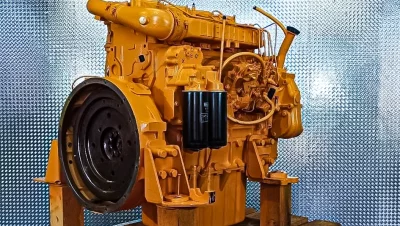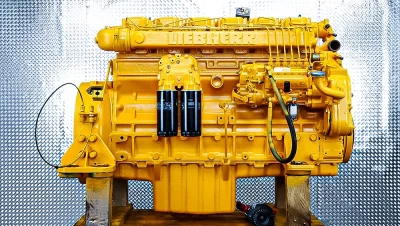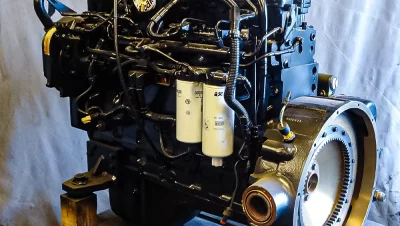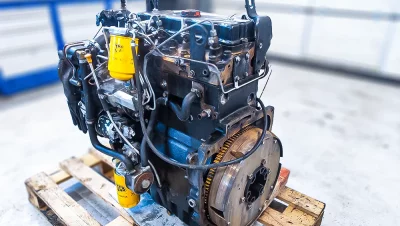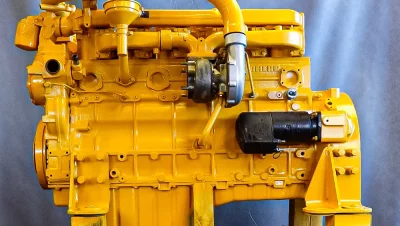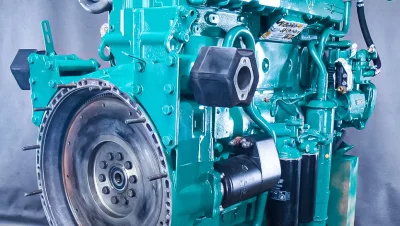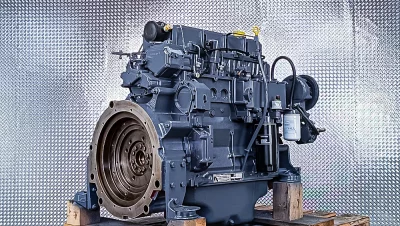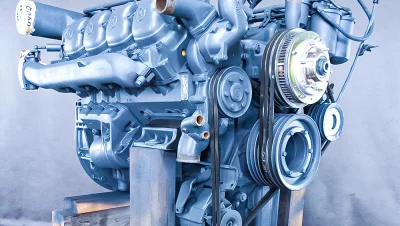


Deutz TCD 4.1 L4 Engine Overhaul in an Atlas 160W Wheeled Excavator
The engine starts losing power, the machine runs unevenly, and oil consumption is increasing? With heavy construction machinery, it is better not to wait until minor symptoms develop into a complete failure that stops work altogether. In the case of the Atlas 160W with a Deutz TCD 4.1 L4 engine, we started with a detailed diagnosis to determine the actual cause of the problem and establish whether the engine required an overhaul.
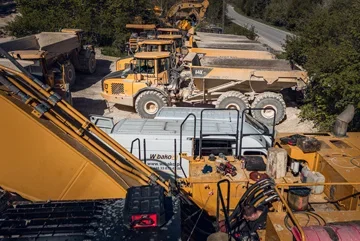
The work on this machine was carried out in the area of Krakow. Our mobile service team performed the initial diagnostics and prepared the machine for engine removal. After removing the engine, it was transported to our headquarters in Kojszowka, where we carried out a detailed inspection of its individual components.
The Atlas 160W is a wheeled excavator designed for demanding applications where both mobility and an efficient hydraulic system are essential. In machines of this type, the diesel engine is one of the most important components of the entire power system. Its role is not limited to driving the machine itself - the correct operation of the engine also determines the power available for performing working functions.
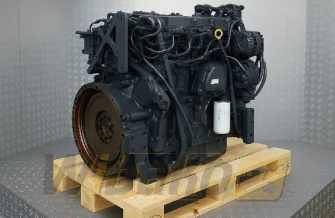
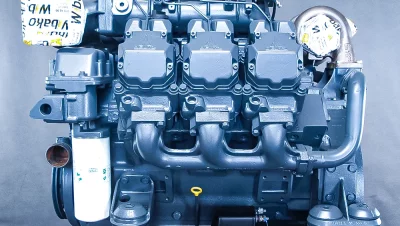
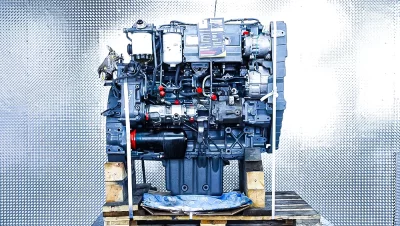
The machine described here was equipped with a Deutz TCD 4.1 L4 engine. Deutz engines are widely used in construction, agricultural and industrial machinery where long-term operation under load is required. Therefore, repairing such an engine requires not only replacing worn components, but also accurately determining their condition and correctly matching all parts during assembly.
Initial diagnostics of the Deutz TCD 4.1 L4 engine in the Atlas 160W
The first stage of the work was engine diagnostics directly in the machine. Before deciding to remove the power unit, we checked its basic operating parameters as well as its behaviour during starting and operation. This approach reduces the risk of starting an overhaul without first confirming that the actual problem is located inside the engine.
In this case, we observed symptoms indicating wear of the cylinders and pistons. The engine was no longer operating as it should, and its operating characteristics indicated a gradual loss of efficiency. With symptoms of this type, it is necessary to determine whether the cause lies in the crankshaft-piston system, fuel system, intake system or components associated with the cylinder head.
First, we checked the basic engine parameters and its behaviour during starting. We then carried out more detailed diagnostics aimed at confirming the condition of the cylinders. An important part of the process was checking compression and cylinder tightness. In an engine that is gradually losing performance, these measurements can indicate whether the problem concerns the combustion chamber and the components responsible for maintaining proper compression.
We also used the possibility of inspecting the inside of the cylinders. Endoscopic inspection allows us to assess the working surfaces of the cylinder liners and the condition of the pistons without immediately disassembling the entire engine. Based on the diagnostic results, we concluded that the engine required a detailed workshop inspection.
At this stage, we do not limit ourselves to replacing one component indicated by the symptoms. After removal, the engine is disassembled and its components are cleaned and inspected by our mechanics. Only then can we determine the actual scope of the overhaul and decide which components can be reused, which require reconditioning and which should be replaced.
Removing the engine from the Atlas 160W
After confirming the need for an overhaul, we began preparing the Atlas 160W wheeled excavator for engine removal. Removing a power unit from construction machinery requires careful preparation because the engine is connected to numerous systems that work together during everyday operation.
Our mechanics began by securing the machine and preparing all components that had to be disconnected. Electrical connections and components located directly around the engine were disconnected. Particular attention was paid to the coolant hoses and air intake components, which must be protected against contamination and damage.
The engine is always removed using a crane provided by the customer. After disconnecting the mounting points and the necessary connections, the unit was prepared for safe removal from the engine compartment. The mechanics monitored each stage of the lifting process to ensure that no hoses, wiring or other components that were still connected to the machine were subjected to excessive tension.
After removing the engine, we secured it for transport. The unit was transported to our headquarters in Kojszowka, where the main part of the overhaul process began. Thanks to this approach, the customer does not need to organise a separate workshop for engine disassembly and inspection. Our service can handle the entire process, from diagnostics in the machine, through the overhaul, to the final installation.
Inspection of the Deutz TCD 4.1 L4 engine in the workshop
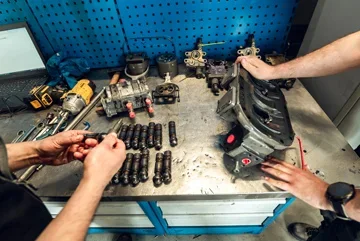
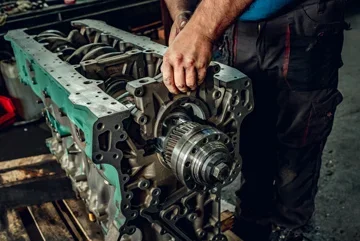
After the engine arrived at our workshop, we started a detailed inspection. The unit was disassembled into individual components, which were cleaned and assessed as the work progressed. Engine inspection is not simply a matter of automatically replacing every component. Each part must be assessed for wear, damage and its suitability for further use.
First, we carefully inspected the crankshaft-piston system. The crankshaft, connecting rods, pistons, piston rings, cylinder liners and bearings were all inspected. A particularly important part of the process was comparing the actual condition of the components with the required operating dimensions.
The crankshaft was subjected to a visual inspection. We checked it for signs of wear, overheating and possible cracks. We also measured crankshaft runout and journal dimensions and checked the oil passages. Such detailed inspection is important because even if a crankshaft appears visually correct, its actual condition must be confirmed through measurements.
The connecting rods were also inspected. We assessed their visual condition, looking for signs of overheating, cracks and abnormal wear. The inspection also includes checking connecting rod twist and longitudinal bending, measurements and inspection of the fastening components.
The cylinders and pistons were then inspected. The results of the earlier diagnostics in the machine indicated wear in these components, and the workshop inspection confirmed the need for repair work in this area. The condition of the working surfaces was carefully assessed, together with the pistons and piston rings.
Overhauling the crankshaft-piston system
When overhauling a Deutz TCD 4.1 L4 engine, particular attention must be paid to the crankshaft-piston system. This assembly converts the energy generated during combustion into mechanical movement, while its components operate under significant loads.
The scope of work was established based on the inspection results. Worn components were either replaced or reconditioned, depending on their condition. In the case of the crankshaft, we carried out a detailed dimensional inspection. If the condition of the working surfaces allows further use after appropriate machining, the crankshaft can be reconditioned by grinding it to the correct repair dimension.
The bearings were also inspected. Their condition directly affects correct lubrication and crankshaft operation. During engine assembly, it is not enough simply to install new components without checking how all parts work together. Correct dimensions and operating clearances must be maintained.
We inspected the pistons, piston rings and cylinder liners. Components showing excessive wear were replaced. The purpose of an overhaul is not simply to restore the engine's ability to start, but to rebuild its basic operating parameters and prepare the unit for further operation in construction machinery.
After completing the work on the crankshaft-piston system, all components were prepared for reassembly. Particular attention was paid to the cleanliness of the surfaces and oil passages. There is no room for contamination inside a rebuilt engine, as it could lead to accelerated wear of the components again.
Inspection and repair of the Deutz TCD 4.1 L4 cylinder head
At the same time, we carried out a detailed inspection of the engine cylinder head. The cylinder head requires particular attention because it is responsible, among other things, for correctly sealing the combustion chamber and works together with the valve system.
The cylinder head inspection includes checking the valve seats, clearances and overall tightness. We also carry out a leak test in which the cylinder head is immersed in heated water and connected to compressed air. Observing whether air escapes allows us to determine whether the component has cracks that could affect its further operation.
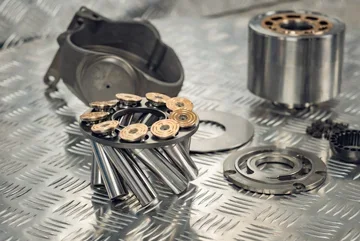
Depending on the degree of wear, cylinder head reconditioning can include resurfacing, replacement of valve guides and replacement of valves. Each of these operations is important for achieving proper sealing and correct engine operation.
We do not automatically assume that every cylinder head has to be replaced with a new one. If detailed inspection confirms that it can be reused, we carry out the necessary reconditioning work. This approach allows the scope of the overhaul to be adapted to the actual condition of the engine.
Inspection of the fuel system and engine accessories
During the Deutz TCD 4.1 L4 overhaul, we also inspected the fuel system components and engine accessories. Correct operation of the rebuilt engine depends not only on the condition of the pistons, cylinder liners and cylinder head. Proper preparation of the components working with the engine is equally important.
Fuel system components require detailed inspection because incorrect fuel delivery can cause uneven engine operation, increased smoke, higher fuel consumption or problems achieving the required operating parameters. Components requiring specialised testing are checked using appropriate test equipment.
The turbocharger was also inspected. The inspection includes checking axial and radial play. If the measured values exceed the permitted range or other signs of damage are found, the component requires appropriate repair or replacement.
We also inspected the remaining engine accessories, including electrical and electromechanical components. The goal is to prepare a complete engine that can be correctly started and tested after being reinstalled in the Atlas 160W.
Professional assembly of the rebuilt engine
After completing the inspection and all planned repair work, we started assembling the Deutz TCD 4.1 L4 engine. This is a stage where precision is just as important as replacing worn components. Even the highest-quality parts cannot guarantee correct engine operation if the unit is assembled incorrectly.
The components were installed only after cleaning and inspection. During assembly, we paid attention to the correct position of each component, proper fitting and maintaining the required dimensions and clearances. Particular attention was paid to the crankshaft-piston system because all of its components must work together correctly from the first start-up.
During assembly, sealing surfaces were also inspected. Components whose further use could create a risk of leakage were replaced. Proper sealing is important for the lubrication system, cooling system and air intake system.
After assembling the main engine systems, the required accessories were installed. All hoses and connections were prepared so that detailed testing could be performed after the engine was installed in the machine. Particular attention was paid to components that had been disconnected during removal.
The completed engine was then prepared for starting and testing on our engine dynamometer. This is one of the most important stages of the entire process because it allows us to test the engine outside the machine before reinstalling it in the Atlas 160W.
Testing the Deutz TCD 4.1 L4 engine on the engine dynamometer
The engine dynamometer is an important part of our quality control process for rebuilt engines. Being able to start the unit outside the machine and operate it under controlled conditions allows us to assess its behaviour more accurately before installation at the customer's site.
After completing the overhaul, the Deutz TCD 4.1 L4 engine was started on the dynamometer. Initially, the unit operates under light conditions, with a load of approximately 20-30% of its nominal value. This stage is not intended to subject the engine to maximum load immediately. Its purpose is to check the basic operating parameters after the first start-up and observe the behaviour of all components.
The rebuilt engine operates under these conditions for a minimum of 16 hours. During this time, we can monitor temperatures, operating stability and the behaviour of the unit under a constant, controlled load. Our mechanics can also identify possible leaks or irregularities that might not become visible during a short test.
After the initial operating period and confirmation of the basic parameters, the engine is repeatedly subjected to higher loads. Gradually increasing the load allows us to check how the unit responds to changing operating conditions. This is particularly important for an engine intended for a wheeled excavator, as the machine operates with different power demands during normal work.
Dynamometer testing also allows us to check the engine before sending it to the customer. If an irregularity appears during testing, we can diagnose it while the engine is still in the workshop. This eliminates the need to remove the engine from the machine again if a problem can be identified and resolved before installation.
For rebuilt engines, the dynamometer is therefore not simply a place for the first start-up. It is primarily a quality control tool. The engine is tested under load rather than only at idle speed. This allows us to assess its behaviour much more accurately before it is returned to service.
After successfully completing the tests, the engine was prepared for transport and installation in the Atlas 160W. Only after confirming correct operation on the dynamometer did we proceed to the next stage of the project.
Installation of the rebuilt engine in the Atlas 160W
After completing the overhaul and dynamometer testing, it was time to reinstall the Deutz TCD 4.1 L4 engine in the Atlas 160W. Installing a power unit is not simply the reverse of the removal process. Every connection must be checked again, and the components working with the engine must be properly prepared for start-up.
Our mobile service team returned to the customer's site to install the engine in the machine. The engine was lowered into the engine compartment using a crane provided by the customer. Our mechanics carefully controlled the position of the unit during lowering, paying attention to its alignment with the mounting points.
After positioning the engine, we began installing the mounts and reconnecting the individual systems. Particular attention was paid to the cooling system hoses, air intake pipes and all components that had previously been disconnected during removal. The air intake piping must be installed correctly and tightly because leaks in the intake system can negatively affect engine operation.
We also checked the hose connections and installation components. Each connection was made according to its function and installation position. After completing the work, our mechanics performed an additional inspection of the connections to reduce the risk of leaks or loose connections during the first start-up.
Before starting the engine, we also carried out the necessary preparation work, including filter replacement and inspection of the basic systems. The engine is not started immediately after being mechanically installed. First, we check whether all hoses, mounts, connections and accessories have been correctly installed.
After starting the engine, we began checking its operation in the machine itself. We monitored engine behaviour, its response to changes in load and the tightness of the connections. We also checked for any leaks of operating fluids.
An important part of the final test was operating the machine together with its operator. The operator knows the behaviour of the Atlas 160W during everyday operation better than anyone else. Therefore, after completing the basic inspections, we performed functional tests of the machine with the operator present. We checked the behaviour of the engine during different working functions and its response to changes in power demand.
Only after these tests had been completed successfully could the installation be considered finished. After confirming correct engine operation and the absence of any concerning symptoms or leaks, an installation report was prepared. This means that the customer receives not only a rebuilt engine, but also confirmation that the installation work has been completed and tested.
Engine maintenance after the overhaul
An engine overhaul does not end when the engine is started in the machine. The first operating period after rebuilding is particularly important. For this reason, we recommend carrying out the first inspection after 50 operating hours.
The 50-hour inspection is performed by our service team. Our mechanics can return to the customer and check the engine after its first period of operation. This is not limited to changing filters. We also inspect the overall condition of the accessories, the connections between the engine and other machine systems and the correct operation of the unit.
During this inspection, it is possible to identify potential leaks that may only appear after the machine has been operating normally. We also inspect hoses, connections and components that were installed during the engine replacement.
Further inspections are recommended every 250 operating hours, but no less frequently than every 3 months. Regular servicing allows the condition of the engine to be monitored and any irregularities to be addressed at an early stage.
Deutz TCD 4.1 L4 engines in construction machinery
The Deutz TCD 4.1 L4 is an example of an engine that can be used in machines operating under demanding conditions. In the case of engines installed in construction machinery, correctly identifying the exact engine configuration before starting repair work is particularly important.
During diagnostics and parts selection, we do not rely solely on the machine model. Engine identification, its specific version and the components installed are also important. When ordering parts or planning an overhaul, useful information includes the engine number, identification plate, part number and photographs of the components.
This also applies to machines other than Atlas. Deutz engines can be found in various construction and industrial machines, which is why the exact engine version should be confirmed before starting work. This helps avoid situations where a component suitable for one engine configuration is installed in another version.
Deutz engine and construction machinery service
The Atlas 160W case demonstrates why professional Deutz engine service should always begin with diagnostics. A symptom does not always directly indicate the component that needs repair. Only by combining diagnostics in the machine, workshop inspection, measurements and dynamometer testing can we obtain a complete picture of the engine's condition.
WIBAKO carries out overhauls and repairs of engines used in construction machinery. Our mobile service team performs engine removal and installation at customers' sites, while engines requiring an overhaul can be transported to our headquarters in Kojszowka.
At the workshop, the engine is disassembled, cleaned and carefully inspected. The actual scope of work is established based on the inspection results. This helps avoid unnecessary replacement of components that can still be reused while reducing the risk of leaving worn or damaged parts inside the engine.
For engine overhauls, combining the work of experienced mechanics with the ability to test the engine on a dynamometer is particularly important. This allows the engine to be tested before it is installed in the machine. It is an additional quality-control stage that increases the safety of the entire repair process.
Summary of the Deutz TCD 4.1 L4 engine overhaul
In the Atlas 160W, we carried out comprehensive work related to the overhaul of the Deutz TCD 4.1 L4 engine. The process started with diagnostics of the unit directly in the machine. Based on the symptoms and measurements performed, we confirmed the need for a detailed workshop inspection.
After removal, the engine was transported to our headquarters in Kojszowka. There, we carried out disassembly, cleaning and inspection of the individual components. Particular attention was paid to the crankshaft-piston system, cylinder head, fuel system and engine accessories.
Worn components were replaced or appropriately reconditioned. After completing the work, the engine was professionally assembled and started on the engine dynamometer. The unit operated for the required period under light conditions and was then subjected to repeated load tests.
After successfully completing the tests, the engine was reinstalled in the Atlas 160W. Our mechanics checked all connections, the cooling system, air intake, mounts and accessories. We then carried out machine tests together with the operator and confirmed correct engine operation and the absence of leaks.
After completing the work, the customer received a machine prepared for further operation. At the same time, we recommended the first inspection after 50 operating hours, which can be performed by our mobile service team at the customer's site.
Do you need a Deutz engine overhaul?
If the Deutz engine in your machine has lost power, started consuming excessive amounts of oil, is running unevenly or has developed other concerning symptoms, it is better not to wait until a complete failure occurs. Proper diagnostics can help determine the scope of the problem at an early stage and plan the appropriate repair.
WIBAKO can carry out diagnostics, engine removal, overhaul and reinstallation. If required, we can also perform a complete engine dynamometer test before installing the unit back into the machine.
construction machinery service
Contact us
Do you need a Deutz TCD 4.1 L4 engine overhaul or Atlas 160W wheeled excavator service? WIBAKO provides comprehensive diagnostics, engine overhauls, dynamometer testing, as well as engine removal and installation for construction machinery.