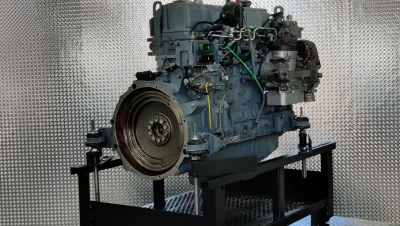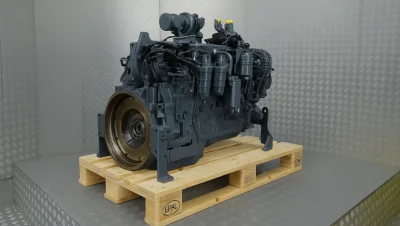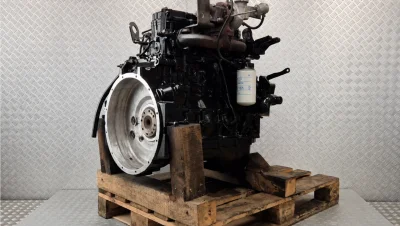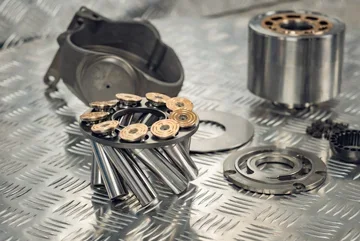


John Deere 4045HT080 Engine Overhaul in Powerscreen Chieftain 1400 Mobile Screener
A mobile screener operates in conditions where a diesel engine must ensure stable operation not only during the machine's movement itself, but above all during many hours of powering working systems. Powerscreen Chieftain 1400 is one of the popular mobile screeners designed, among other things, to work with sand, gravel, aggregates, and recycled materials. The machine structure was prepared with mobility, rapid setup for work, and serviceability in mind.
In the case of the machine described, it was necessary to perform an overhaul of the John Deere 4045HT080 power unit. The reason for starting the work was progressive natural wear of the engine, which over time began to affect its operating parameters. The unit was losing its efficiency, and the growing wear of mechanical components indicated that further operation without comprehensive verification could lead to a much more serious failure.
Powerscreen Chieftain 1400 is a machine intended for intensive material screening. The manufacturer indicates the use of this model with sand and gravel, aggregate production, and recycling, among others. Depending on the configuration, the machine can reach a capacity of up to approximately 400 tons per hour. This type of work involves a heavy load on the entire drive system, which is why an efficient engine is of direct importance for the screener's operational continuity.
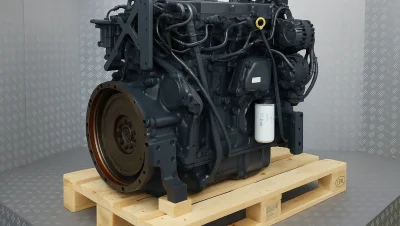
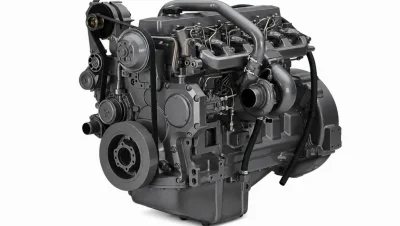
The John Deere 4045HT080 is an engine used in machines requiring a compact yet efficient diesel unit. During the overhaul of such an engine, we do not limit ourselves to replacing parts that look worn at first glance. Our goal is to thoroughly inspect the entire unit, determine the actual degree of wear, and rebuild the engine in such a way that after completion of the work it can work in demanding conditions again.
Diagnostics of the John Deere 4045HT080 Engine Before Overhaul
We start every engine overhaul with diagnostics. In the case of the John Deere 4045HT080 engine, the first stage was checking the basic operating parameters of the unit and observing the engine's behavior during operation. It was important to determine whether the symptoms pointed to a single fault or rather to progressive wear across multiple components.
One of the main suspects was wear of the crank-piston system. High operating hours and prolonged usage can lead to gradual wear of the cylinders, pistons, rings, and bearings. Symptoms of such wear may include a loss of power, increased oil consumption, and deterioration of combustion quality. In a screener operating under heavy load, even a gradual deterioration of engine parameters can be clearly noticeable.
Diagnostics began with basic control procedures. We checked the oil condition, its level, and signs that could indicate the presence of contamination or wear products. The cooling system and engine accessory components were also inspected. Next, we evaluated the unit's behavior during startup and operation.
In the further stage of diagnostics, we focused on parameters indicating the mechanical condition of the engine. Suspecting wear on the cylinders and pistons, compression measurement and evaluation of cylinder tightness are of key importance. The results of such measurements allow us to determine whether the problem actually lies within the crank-piston assembly, or if the cause should be sought in the valve or fuel system.
After completing the preliminary diagnostics, we decided to dismantle the engine and carry out a thorough inspection in the workshop. This was necessary because, with significant wear, it is impossible to reliably assess all components without disassembling the unit.
Removal of the Engine from the Powerscreen Chieftain 1400
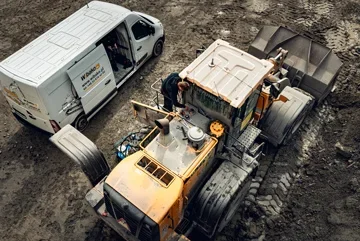
Removing the engine from a mobile screener requires proper preparation of the machine. Our mechanics perform work related to disconnecting the unit, while a crane provided by the client is used to lift and remove the engine. Thanks to proper preparation of the entire process, the engine can be safely disconnected from the machine and prepared for transport to our workshop in Kojszówka.
Before starting actual disassembly, we secure the machine and prepare the workspace. Next, electrical lines, fuel lines, cooling system components, and air intake and exhaust pipes are disconnected. We pay special attention to components that must be reconnected in the exact same configuration upon reassembly.
Mechanical connections between the engine and the machine are also dismantled. Proper disconnection of mountings prevents damage to parts that can be reused. During the work, we seal open lines and ports so that dirt does not enter the inside of the systems.
After disconnecting all required components, the engine is prepared for lifting. Mechanics double-check that the unit is not connected to the machine by any missed cable, wiring harness, or bracket. Only after completing this inspection can engine removal proceed safely.
After removal, the unit was prepared for transport. The John Deere 4045HT080 engine was then delivered to our workshop, where a much more thorough inspection of all components could begin.
Workshop Inspection of the John Deere 4045HT080 Engine
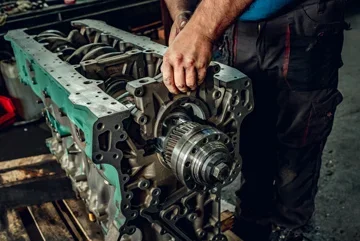
Once the engine is delivered to our workshop, we begin by assessing its overall condition. If the technical condition of the unit is not fully known, the first step is an attempt to turn the engine manually by hand. We check whether the crankshaft can complete a full 720 degrees and whether any unusual resistance occurs during rotation.
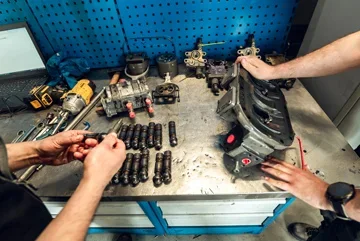
Next, the engine is prepared for teardown. The unit is disassembled into individual components, and parts are cleaned and visually inspected as work progresses. This approach allows us to observe the condition of individual components even before precise measurements are taken.
Inspection confirmed gradual wear on the components responsible for proper operation of the crank-piston assembly. However, we did not limit ourselves to confirming the cause of the reported issue. In a comprehensive overhaul, it is essential to check parts that do not show clear signs of damage at first.
The crankshaft undergoes a visual inspection for signs of wear, overheating, and potential damage. Runout measurements, journal dimensional checks, and oil gallery inspections are performed. This makes it possible to determine whether the crankshaft is suitable for continued service or requires reconditioning via grinding.
Connecting rods are also inspected. We check them for cracks, overheating marks, and wear. Measurements for twist and longitudinal bend are taken, alongside an inspection of the connecting rod bolts. This is especially critical because correct connecting rod geometry directly impacts piston operation within the cylinders.
We also verify pistons, rings, and cylinder liners. We inspect wear patterns, mating surface conditions, and the feasibility of continued use for individual components. Wear on these parts can lead to lost cylinder seal tightness, so they cannot be overlooked during an engine overhaul.
Crank-Piston Assembly Repair
The key area of work on the John Deere 4045HT080 engine was the crank-piston assembly. After performing measurements, the scope of necessary work was defined. Depending on verification results, individual components are replaced or reconditioned.
The crankshaft is thoroughly cleaned and measured. If measurements show that reconditioning is possible, crankshaft grinding is performed to the required undersize dimension. Simultaneously, we inspect oil passages, as their cleanliness is vital for proper bearing lubrication.
Main and rod bearings within the assembly are also inspected. Wear on bearings can affect oil pressure and introduce unwanted play. During engine assembly, bearings must be properly seated, and all mating surfaces adequately prepared.
Pistons and rings are checked for wear. If maximum allowable wear tolerances are exceeded, parts are replaced. Cylinder liners are checked as well. If replacement is needed, we carry out appropriate work to restore correct operating conditions for the pistons.
Rebuilding the crank-piston system in this manner aims to restore proper cylinder sealing as well as ideal lubrication and working conditions for moving engine parts.
Cylinder Head Inspection and Reconditioning
Another crucial step was inspecting the cylinder head. The head is checked to evaluate its suitability for reuse. We inspect valve seats, valves, and valve guides, among other elements. Pressure/leak testing is also a vital check.
Cylinder head leak testing involves submerging it in heated water and connecting compressed air. Observing escaping air bubbles helps detect leaks and cracks. Only after passing inspection can the further scope of work be determined.
Cylinder head reconditioning, depending on its condition, includes resurfacing/skimming as well as replacing worn valve guides and valves. All parts must be properly prepared prior to reassembly.
Fuel System and Accessories Inspection
An engine overhaul must not end with mechanical parts alone. We also inspect the fuel system and auxiliaries responsible for proper engine operation once installed back in the Powerscreen Chieftain 1400.
Fuel system elements are evaluated for wear and correct functionality. If unit design requires injection pump verification, it can be tested on a test bench. This test allows parameters to be assessed off-machine, reducing the risk of reinstalling a component that does not meet operational standards.
The turbocharger is also checked. Axial and radial play measurements are performed. We also inspect electrical and mechanical accessories, including starter motor, alternator, and other components that could affect engine starting and operation.
Professional Assembly of the John Deere 4045HT080 Engine
After completing the inspection of all components, engine assembly begins. This stage requires precision, proper work sequence, and inspection of every critical connection. Overhauling an engine isn't just replacing parts; proper preparation and assembly of the entire unit are equally important.
Before mounting, components are thoroughly cleaned, and mechanics inspect mating surfaces and mounting locations. The crank-piston assembly is assembled in proper order. Special attention is paid to bearings, crankshaft, connecting rods, and pistons. All elements must be installed to ensure seamless cooperation during future engine operation.
Subsequent assemblies, including the cylinder head, timing components, and accessories are then installed. Every assembly stage stems from prior measurements and verification. This ensures the rebuilt engine is prepared as a complete unit, not a random assembly of new parts.
After assembling the engine, we also inspect elements that will interface with the machine upon reinstallation. This minimizes the risk of having a properly rebuilt engine experience issues post-installation due to a damaged hose, leaking connection, or malfunctioning accessory.
John Deere 4045HT080 Engine Testing on a Dynamometer
One of the most essential steps in the whole overhaul process is testing the engine on an engine dynamometer (dyno). Here, we test the unit before re-installing it into the Powerscreen Chieftain 1400. This means we don't need to wait until installation into the machine to evaluate its performance under load.
The dynamometer enables testing under controlled load conditions. Following overhaul, the engine is started and prepared for operation. Initially, it runs under light conditions at approximately 20-30% nominal load. This phase allows us to verify basic behavior and observe working parameters right after assembly.
The overhauled engine is not subjected to maximum load right away; it undergoes a smooth break-in and inspection phase. Per our procedure, the engine runs on the dyno for a minimum of 16 operating hours under light load. During this time, we observe behavior and verify that proper operating parameters are maintained.
Dyno testing also allows us to catch issues that might go unnoticed during a brief start on a workshop test stand. Extended run-time helps check engine stability, load response, cooling and lubrication system performance, as well as auxiliary functionality.
If basic parameters hold after the initial light-load period, we move to the next testing stage. The engine is repeatedly subjected to higher load ranges. This allows testing its behavior in conditions much closer to real operational environments.
The engine dynamometer is a crucial element of our quality control process. Thanks to it, the client receives a unit whose performance has been verified prior to machine installation. This is especially vital for a screener engine, as the Powerscreen Chieftain 1400 can operate for long hours under high energy demand from its working systems.
Off-machine engine testing also helps shorten subsequent diagnostic time. If the unit passes the full dyno test cycle properly, we proceed to the next stage: reinstallation into the screener.
Installation of the Engine in the Powerscreen Chieftain 1400
After completing dyno tests, the John Deere 4045HT080 engine was prepared for reinstallation in the machine. Engine mounting is just as critical as the overhaul itself, as a properly rebuilt unit must be correctly integrated with the screener's complete system.
The unit is lowered into the engine compartment using a crane provided by the customer. Mechanics align the engine relative to its mounts and prepare all connection points. Engine mounts and hardware are installed. Proper alignment of the unit is essential to avoid additional stresses and unwanted loads during operation.
Following mechanical mounting, connection of interfaced systems begins. Cooling hoses, fuel lines, electrical harnesses, and air intake components are installed. Special attention is given to intake piping, as even a minor leak can disrupt proper engine operation.
Hose connections and routing are thoroughly checked. Parts showing wear or damage during removal may be replaced to prevent them from becoming failure points once operational. Cooling system connections and potential leak spots are inspected as well.
Preparatory tasks are conducted prior to initial startup, including replacing required filters and checking fluid levels. All accessible connections and electrical wiring are also re-checked.
Work does not stop when the engine fires up. The unit must be tested while working within the machine itself. We check operational stability, response to increasing load, and system behavior. Special emphasis is placed on oil, fuel, cooling, and air intake line integrity.
Final tests are conducted alongside the machine operator. The operator understands the specific screener's behavior and can spot nuances during routine operations. Joint testing lets us evaluate not only the engine itself, but also its integration with the rest of the Powerscreen Chieftain 1400 systems.
After successfully completing tests, confirming proper engine operation, and ensuring zero leaks, the work is signed off. This approach ensures the job is finalized only when the unit is fully ready for ongoing duty.
Post-Overhaul Engine Maintenance
Overhauling the John Deere 4045HT080 engine does not mark the end of service support. All engines we provide post-overhaul are backed by a warranty, and we offer ongoing maintenance servicing.
We recommend the first service inspection after 50 operating hours (mth) from startup. This is a critical milestone, as servicing entails more than just changing filters. Our mechanics inspect the overall condition of accessories, engine-to-machine mountings/connections, operation quality, and any potential leaks that may have developed during initial operating hours.
In the case of the Powerscreen Chieftain 1400, this inspection carries extra weight due to operational demands. The machine may run for long stretches in dusty conditions under variable loads and heavy working component intensity. Inspection after the first 50 operating hours enables early detection of potential anomalies.
Subsequent inspections are recommended every 250 operating hours, but no less frequently than every 3 months. Regular service maintains the engine in prime condition and reduces the risk of unplanned machine downtime.
Powerscreen and John Deere Engine Service
The Powerscreen Chieftain 1400 project demonstrates that an engine overhaul should be treated as a complete process rather than a standalone repair. Diagnostics, removal, transport, detailed verification, reconditioning or replacement of worn components, professional assembly, dyno testing, and reinstallation in the machine form one cohesive workflow.
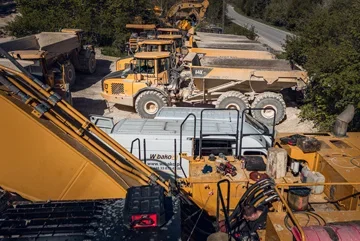
WIBAKO provides construction machine and off-highway machinery service, performing engine unit removals and installations among other services. Our mobile service team can perform work directly at the customer's site, and after removal, the engine can be transported to our facility in Kojszówka. Following the overhaul, reinstallation of the unit into the machine is also available.
The scope of our operations also includes John Deere diesel engine servicing and comprehensive repairs of power units used in heavy equipment. Combining diagnostics, workshop facilities, and an engine dyno allows us to monitor the unit at every stage of the process.
Engines from the John Deere 4045 family can be found across various industrial and heavy equipment machinery; therefore, specifying the exact engine version is always crucial when matching parts and defining overhaul scope. The designation 4045HT080 itself should be taken as a starting point to identify the correct engine configuration and its accessories.
John Deere 4045HT080 Overhaul Summary
The overhaul of the John Deere 4045HT080 engine running in the Powerscreen Chieftain 1400 mobile screener was performed as a comprehensive unit rebuild. Work was initiated due to natural engine wear, which over time began to affect performance parameters and risked exacerbating underlying issues.
The process encompassed diagnostics, engine removal from the machine, detailed subcomponent verification, inspection of the crank-piston assembly, cylinder head, fuel system, and accessories. The engine was then professionally assembled, started, and tested on an engine dynamometer.
Following successful testing, the unit was reinstalled into the Powerscreen Chieftain 1400. We completed system connections, leak checks, pre-start machine preparation, and operational tests with the machine operator.
By carrying out the entire workflow in one single cycle, the customer receives not only a rebuilt engine, but a verified unit ready for extended heavy-duty operation. Subsequent maintenance remains a key factor—the first inspection after 50 operating hours followed by routine checks according to the set schedule.
If you need a John Deere engine overhaul, Powerscreen screener service, or power unit removal and mounting, we can carry out the full process—from diagnostics and removal, through overhaul and dyno testing, to reinstallation in your machine.
Useful Information and Internal Links
Construction Machinery Service - comprehensive diagnostics, repairs, and servicing of industrial equipment.
Mobile Service for Construction Machinery - engine removal and installation directly at the customer's site.
Diesel Engine Overhauls - thorough inspection, reconditioning, and rebuilding of engine power units.
Engine Dynamometer - testing overhauled engines under controlled loads before machine installation.
Contact Us
Do you need an overhaul for a John Deere 4045HT080 engine or service for a Powerscreen Chieftain 1400 mobile screener? Contact us – we perform comprehensive repairs, removals, installations, and dyno testing of engines.