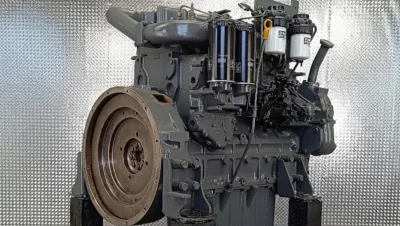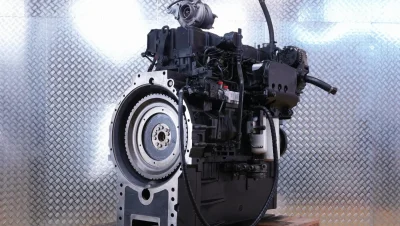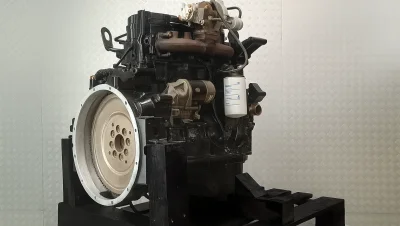


Overhaul of the Cummins QSB 4.5 engine in the Terex Finlay 683 Supertrac mobile screening plant
The Terex Finlay 683 Supertrac mobile screening plant must operate stably and without unplanned downtime, which is why even a gradual deterioration of the power unit's parameters is a signal that should not be ignored. In the case of this machine, the reason for sending the engine for an overhaul was natural wear resulting from high mileage and intensive operation. The operator noticed a gradual loss of performance and deteriorating running smoothness of the engine. The symptoms did not point to a single component failure, so it was necessary to carry out a full diagnostic and then a comprehensive verification of the engine.
We started the work with diagnostics of the Terex Finlay 683 Supertrac screening plant in the Kraków area. Our mechanics performed basic checks of the power unit installed in the machine and then conducted a more thorough assessment of operating parameters. After confirming that further operation of the engine in such a condition could lead to further damage, we decided to remove it. In accordance with the organization of work for this type of repair, the engine was removed from the machine using a crane provided by the customer, and then transported to the WIBAKO headquarters in Kojszówka.
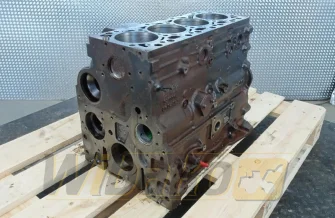
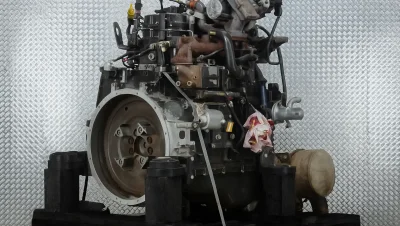
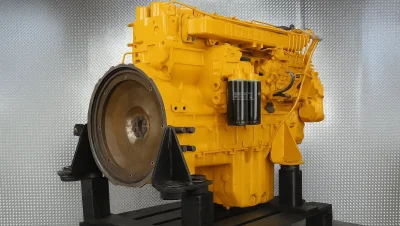
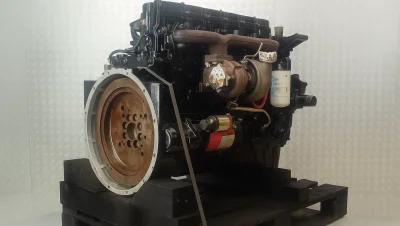
The power unit of the screening plant was a Cummins QSB 4.5 engine. This engine is commonly found in heavy machinery, where the power unit must operate for long periods under varying load conditions. In a mobile screening plant, the engine is one of the most critical components of the entire system, as its proper operation affects not only the machine's ability to move, but also the stable operation of the systems responsible for the screening process.
WIBAKO provides comprehensive construction machinery service, including diagnostics, engine removal and installation, as well as power unit overhauls. In the case of Cummins engines, it is particularly important to accurately determine the actual condition of all components. We do not limit ourselves to replacing elements that are visibly worn. The engine is disassembled, individual parts are washed and inspected, and the scope of the overhaul is determined by their actual technical condition.
Diagnostics of the Cummins QSB 4.5 engine in Terex Finlay 683 Supertrac
The first stage of work was engine diagnostics prior to its removal from the Terex Finlay 683 Supertrac screening plant. This was essential because we wanted to determine whether the symptoms reported by the customer were indeed due to wear of the engine itself, or if they could be related to auxiliary equipment or another machine component.
For a unit that has worked in demanding conditions for a long time, the gradual loss of parameters can have many causes. Components of the crank-piston system, timing gear, cylinder head, or auxiliary systems may suffer from wear. Therefore, we started diagnostics with a basic check of engine operation. We verified its behavior during startup and operation at various load levels. We paid attention to running smoothness, response to load changes, and the overall behavior of the unit.
The next step was to check parameters that could indicate mechanical wear. Special attention was paid to oil pressure and the state of the lubrication system. On an engine with high wear, it is also important to check whether there are traces in the oil and filter indicating progressive wear of interacting components.
The performed actions indicated that the problem was mechanical and related to general wear of the power unit. There was no basis to limit the repair to a single component. We therefore decided to remove the engine and thoroughly inspect it in the workshop.
Removal of the engine from the Terex Finlay 683 Supertrac screening plant
Removing the engine from a mobile machine requires proper preparation. Before starting work, we secured elements that could be damaged during unit removal. Electrical wiring connections, fuel system, cooling, and air intake lines were disconnected. We paid special attention to components that could become contaminated or damaged during disassembly.
The engine was disconnected from the components interacting with the power unit. We removed the necessary connections, mounts, and auxiliary components located in the engine compartment. Hoses and lines were properly secured to minimize the risk of contamination entering the systems.
The engine itself was removed from the machine using a crane provided by the customer. Our mechanics were responsible for proper preparation of the unit for lifting, disconnecting all connections, and supervising each step of the removal process. After removal, the engine was prepared for transport to our facility in Kojszówka.
The mobile nature of our service allows us to perform such work without needing to transport the entire machine to the workshop. In practice, this means reduced downtime for the screening plant. Our mobile service can travel to the client, perform diagnostics and engine removal, and the engine itself can later be transported to our facility where we carry out the overhaul.
Verification of the Cummins QSB 4.5 engine in the workshop
Upon delivery of the Cummins QSB 4.5 engine to the workshop, we began its thorough verification. For an engine with an unknown or uncertain technical condition, the first step is to assess whether it turns over freely. We check if the crankshaft can make a full rotation and if there are any unusual resistances during rotation.
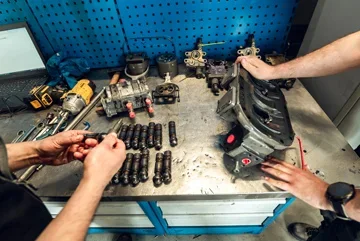
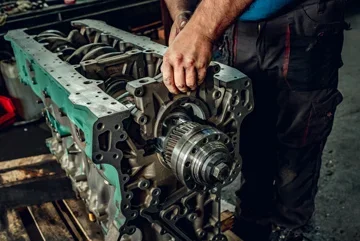
Next, the unit was prepared for teardown. Individual components were disassembled, washed, and continuously inspected by our mechanics. This approach prevents a situation where the scope of the overhaul is determined solely on the basis of the first damaged part found. With high operating hours, it is equally important to inspect parts that may look fine at first glance.
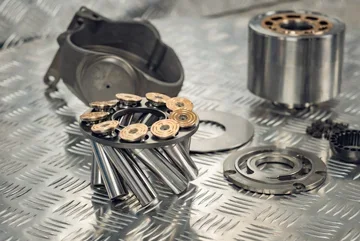
In the crank-piston system, we inspected the crankshaft, connecting rods, pistons, rings, cylinder liners, and bearings. The crankshaft underwent visual inspection for signs of wear, overheating, and damage. We also checked its journals and runout.
The connecting rods were subjected to visual inspection and measurements. We checked, among other things, their condition, any signs of overheating, wear, or damage. Fasteners and connecting rod geometry were also inspected.
The cylinder head was verified separately. We checked its condition, valve seats, guides, and valves. A pressure leak test was also performed. This involves submerging the head in heated water and applying compressed air, allowing us to detect potential leaks or cracks.
We also inspected the camshaft, evaluating its visual condition and the wear on journals and lobes. The turbocharger was also checked, measuring axial and radial play.
The verification confirmed earlier assumptions. The engine suffered from extensive operational wear, and the scope of wear affected multiple components. This meant a comprehensive overhaul was required rather than a localized repair.
Overhaul of the crank-piston system
One of the most critical stages of the Cummins QSB 4.5 engine overhaul was rebuilding the crank-piston system. This assembly is responsible for converting the energy generated during fuel combustion into rotational movement of the crankshaft, so its condition directly impacts the durability and performance parameters of the power unit.
After taking measurements, we determined which components could be reused and which required replacement or reconditioning. The crankshaft underwent detailed inspection. For components whose condition allows for continued operation, confirming their dimensions and correct geometry is crucial.
We also inspected the cylinder liners and pistons. With high operating hours, natural wear of interacting surfaces can lead to loss of cylinder sealing, increased oil consumption, and a gradual drop in engine performance. Therefore, during the overhaul, we paid special attention to components responsible for properly sealing the combustion chamber.
As part of the work, engine bearings and piston rings were also addressed. All components were evaluated for wear, and the replacement scope was selected based on measurements and technical condition of the parts.
Repair conducted in this manner restores the basic mechanical parameters of the engine and prepares the unit for further operation in the demanding conditions of a mobile screening plant.
Cylinder head reconditioning
The cylinder head of the Cummins QSB 4.5 engine underwent thorough verification. On an engine with many operating hours, checking for leaks and the condition of valve-related components is particularly crucial. Even minor leaks can affect combustion, performance, and running smoothness of the unit.
The head reconditioning scope includes resurfacing (planing) and, depending on inspection results, replacement of valve guides and valves. Before reassembly, the head must have its technical condition verified. A pressure leak test is an important control element that helps detect issues invisible to the naked eye.
After completing the work, the cylinder head was prepared for reinstallation. All mating surfaces were properly prepared, and components were installed with the required precision.
Inspection of fuel system and auxiliary components
During the overhaul, we did not limit ourselves solely to mechanical engine parts. In a comprehensive rebuild of the Cummins QSB 4.5, checking auxiliary components is equally important, as even a properly assembled engine may not achieve proper parameters if its auxiliaries are faulty.
We checked fuel system components and the condition of parts responsible for proper fuel delivery. Depending on the setup, fuel system elements may require additional measurements and testing off the engine.
The turbocharger was also verified. Checking axial and radial play determines whether the unit can be reused. We also inspected remaining mechanical and electrical auxiliaries to minimize the risk of external component failures after engine installation.
Professional assembly of the Cummins QSB 4.5 engine
Following verification and preparation of all components, we began engine assembly. At this stage, execution accuracy is just as vital as part quality. The engine must be assembled to ensure proper interaction among all crank-piston, cylinder head, timing gear, and auxiliary components.
During assembly, mating surfaces and connections of individual subassemblies are monitored. The crankshaft, connecting rods, pistons, rings, liners, and bearings must operate under proper conditions. Incorrect installation of even one component can affect the operation of the entire engine.
After installing the cylinder head and other elements, the engine was fitted with proper auxiliaries. We paid particular attention to connections that directly impact the integrity of oil, fuel, cooling, and air intake systems.
During assembly, we also prepare the engine for the subsequent dynamometer test. This is important because the test confirms not only starting capability, but also allows evaluating behavior under load.
Testing the Cummins QSB 4.5 engine on a dynamometer
One of the most important stages of the entire overhaul process was the test of the Cummins QSB 4.5 engine on an engine dynamometer. Being able to start and test the unit outside the machine provides extra confidence in the repair before reinstalling the engine into the Terex Finlay 683 Supertrac screening plant.
An engine dynamometer allows testing the unit under controlled load conditions. Simply starting the engine after an overhaul is not sufficient confirmation of a proper repair. An engine may run fine at idle, while issues may only appear under load. For this reason, we test the unit under various operating conditions.
After starting, the engine is initially run under light conditions. For overhauled engines, a break-in period of at least 16 operating hours (mth) at approximately 20-30% nominal load is specified. This allows observing unit behavior during break-in while monitoring basic operating parameters.
If the engine maintains correct parameters, the next testing phase begins. The unit is subjected to repeated load cycles, allowing us to evaluate its performance under higher demands. Operating stability, load response, and individual system behavior are monitored.
The dynamometer is also a vital diagnostic tool. It uncovers irregularities that might go unnoticed during a brief test run. If an issue arises, we can address it before mounting the engine in the machine. As a result, we avoid having to remove the engine from the screening plant again to diagnose a fault that would only manifest during work.
Testing on a dynamometer provides an additional layer of quality control for the work performed. It is especially critical for engines used in construction machinery and screening plants, where the power unit operates under significant load for long hours.
WIBAKO utilizes the engine dynamometer as an integral part of the comprehensive overhaul process. This ensures the Cummins QSB 4.5 engine is verified before returning to the Terex Finlay 683 Supertrac, rather than after installation.
Engine installation in Terex Finlay 683 Supertrac
After completing the overhaul and passing dynamometer tests, it was time to reinstall the Cummins QSB 4.5 engine into the Terex Finlay 683 Supertrac screening plant. Installation work was performed at the machine location using the crane provided by the customer.
Installation began with proper preparation of the engine bay and mounting points. The engine was lowered into the bay with due care. At this stage, controlling the engine's position relative to mounts and machine components is crucial. Once positioned, engine mounts were secured, followed by remaining connections.
Systems necessary for proper engine operation were connected, including cooling, fuel, electrical, and air intake lines. Where necessary, worn piping, hoses, and connections that could affect proper operation were replaced.
We paid special attention to the air intake system. Intake piping must be properly fitted and airtight. Leaks on the intake side can affect turbocharger operation and the combustion process, so connections were thoroughly checked.
Cooling system lines were also inspected. After connecting all components, we verified their routing, mounting, and joint tightness. The goal is not merely starting the engine, but preparing the entire machine for safe and correct operation.
After mounting the unit, required filters were replaced and pre-start procedures were completed. Prior to start-up, we re-checked connections and components that might have been disturbed during installation.
Next, we conducted the initial start-up. Mechanics monitored unit behavior, checked system tightness, and listened for unusual noises or signs of improper operation. Following initial tests, we ran further operational tests together with the machine operator.
Testing with the operator is a key part of handover. The operator knows the specific characteristics of the screening plant and can point out machine behavior during daily operations. Therefore, after engine start-up, we check not only engine parameters, but also its interaction with the machine.
During testing, we monitor engine response under changing load conditions and correct machine operation under normal working conditions. We also check for fluid leaks and ensure all connections remain sealed.
Upon successful completion of testing and confirmation of proper engine operation and absence of leaks, an installation protocol is completed. This ensures the entire process—from engine overhaul and dynamometer testing to installation and field testing—is documented and structured.
Post-overhaul engine maintenance
The engine overhaul itself does not end the service process. After installing the unit, proper initial operation is key. The overhauled Cummins QSB 4.5 engine requires inspection after its first working hours; we recommend performing the first service inspection after 50 operating hours (mth).
The 50-mth service is not limited to changing filters. Our technicians check the overall condition of the engine and its auxiliaries after the initial operating period. Connections, system tightness, and unit operation are inspected. At this stage, any leaks that might only appear during normal operation can also be detected.
Subsequent inspections are recommended every 250 mth, but no less than once every 3 months. WIBAKO can perform these inspections as part of our service offering. This means that after an overhaul, we do not leave the customer without support. Our mechanics can visit the machine's work site to perform required service procedures.
Which machines use the Cummins QSB 4.5 engine?
The Cummins QSB 4.5 engine is used in a variety of industrial machinery requiring a durable and efficient power unit. Depending on configuration, it can be found in construction equipment, industrial machinery, and equipment operating under harsh conditions.
An example application is the Terex Finlay 683 Supertrac mobile screening plant. For this type of machine, proper engine operation is critical to the entire process. Therefore, an engine overhaul should cover not only basic part replacement, but also thorough verification of all components and load testing.
If you own equipment powered by a Cummins QSB 4.5 engine and observe power loss, increased oil consumption, starting issues, or other concerning symptoms, it is best to start with proper diagnostics. Not every issue requires a full overhaul, but a thorough verification helps determine the true condition of the power unit.
Comprehensive service for construction machinery and Cummins engines
The overhaul of the Cummins QSB 4.5 from the Terex Finlay 683 Supertrac demonstrates the importance of a comprehensive approach to engine repair. High operating hours and natural engine wear do not always lead to a single specific failure. Often, multiple interacting components gradually deteriorate. In such cases, replacing a single part may only delay the problem.
That is why at WIBAKO we begin with diagnostics, followed by engine removal, thorough cleaning, and component inspection. Based on measurements, we define the overhaul scope. After repair, the engine is assembled, started, and tested on a dynamometer. Only after passing tests does the engine return to the machine.
We also perform engine removal and installation via our mobile service. We can travel to the client, remove the unit, and prepare it for transport to our Kojszówka facility. After overhaul completion, our mechanics can return to perform installation and commissioning.
This approach combines mobile service flexibility with workshop capabilities and dynamometer testing. For machine owners, it means a single streamlined repair process rather than multiple independent stages handled by different companies.
Summary of Cummins QSB 4.5 overhaul
The overhaul of the Cummins QSB 4.5 engine used in the Terex Finlay 683 Supertrac mobile screening plant began with machine diagnostics and confirmation of symptoms related to natural engine wear. We then performed engine removal, transport to the workshop, teardown, and detailed inspection of individual components.
The scope of work included inspection and rebuild of the crank-piston system, cylinder head verification, and checking of fuel and auxiliary systems. Upon completion of repairs, the engine was professionally assembled and tested on an engine dynamometer. Only after verifying correct parameters was the unit prepared for installation in the screening plant.
Following installation of the Cummins QSB 4.5, we conducted a thorough check of connections, system tightness, and initial start-up. Operational testing was then conducted with the machine operator. After successful testing, the Terex Finlay 683 Supertrac was ready for continued operation.
Following overhaul, we recommend performing the first service check at 50 mth. WIBAKO can also provide ongoing maintenance, offering complete support long after overhaul completion.
If you need a Cummins QSB 4.5 engine overhaul, Terex Finlay screening plant diagnostics, or comprehensive construction equipment service, WIBAKO can manage the entire process—from diagnostics and removal to overhaul, dynamometer testing, and final machine installation.
Cummins Engine and Terex Finlay Equipment Service
We offer comprehensive construction machinery service, including diagnostics, overhauls, and engine removal and installation. We also provide mobile construction machinery service, allowing us to begin work directly at the machine location.
For Cummins engines, we provide Cummins engine service, component inspection, engine overhauls, and dynamometer testing. If you are looking for information regarding parts or repairs for Cummins units, explore our offering of Cummins engine parts.
Contact Us
Need a Cummins QSB 4.5 engine overhaul or service for a Terex Finlay 683 Supertrac screening plant? Contact us—we perform comprehensive repairs, engine removals and installations, and engine dynamometer testing.