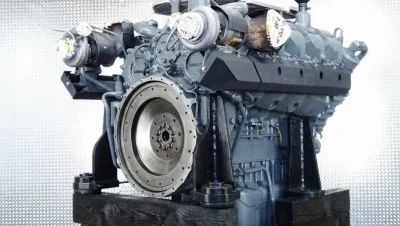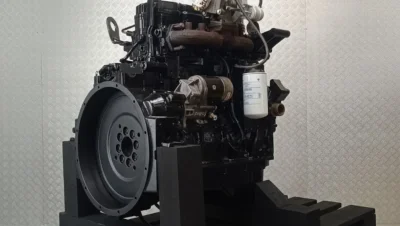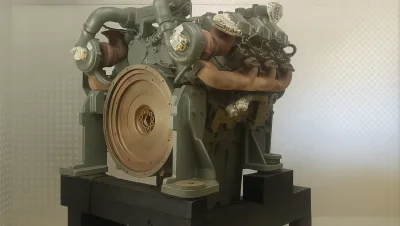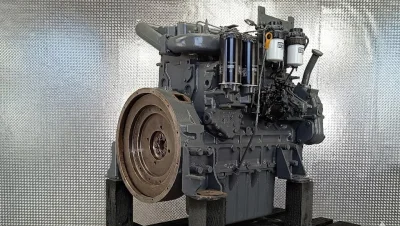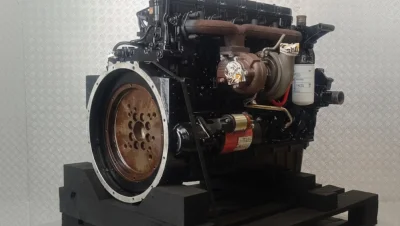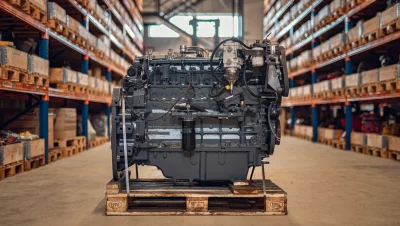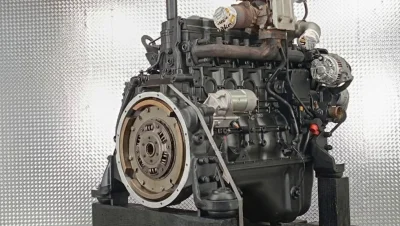


Engine Overhaul of Liebherr D936 A7 in Liebherr R 936 Crawler Excavator
Professional Service for the Liebherr R 936 Crawler Excavator
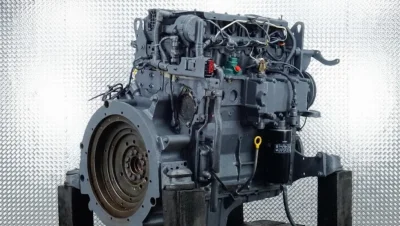
The Liebherr R 936 crawler excavator is one of the most common machines used in earthmoving, infrastructure construction, and industrial applications. The designs of this series are highly valued for their high performance, component durability, and ability to operate in demanding terrain conditions. Many models utilize the six-cylinder Liebherr D936 A7 engine with a displacement of 10.5 liters, which was designed for heavy off-highway applications. This power unit is characterized by high torque and exceptional resistance to long hours of operation.
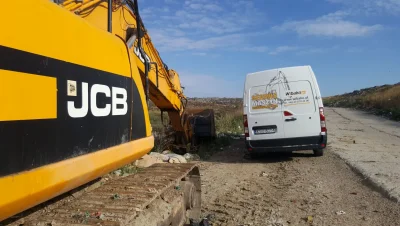
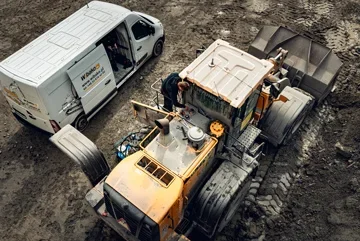
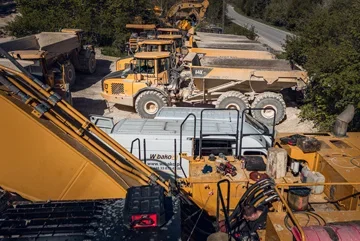
The owner of a Liebherr R 936 excavator working on road infrastructure projects near Kielce contacted our service department. The operators had observed a gradual loss of engine power, increased oil consumption, and noticeable blue exhaust smoke when working under load. The symptoms pointed to wear within the cylinder-piston assembly; however, a detailed diagnostic process was required before deciding on a complete overhaul.
Our mobile service team conducted an initial inspection of the machine at the customer's site. This included measuring compression pressure, analyzing the power unit's operational parameters, and inspecting the intake system. The results revealed uneven compression values between the cylinders. Additionally, an endoscopic inspection of the cylinder interiors showed signs of liner wear and increased blow-by into the crankcase. Based on the collected data, the decision was made to perform a comprehensive overhaul of the Liebherr D936 A7 engine.
Dismantling of the Liebherr D936 A7 Engine from the Liebherr R 936 Excavator
The dismantling process began directly on the construction site. Our mechanics secured the machine against accidental starting and disconnected the electrical system. Next, the cooling system was drained, and the fuel, hydraulic, and all control connections related to the engine's operation were disconnected.
Special attention was paid to securing the intake system and the charge air coolers. All lines were marked and labeled, which significantly accelerated the subsequent reassembly process. After disconnecting the ancillary components, the engine was prepared for extraction from the machine's compartment.
In accordance with established procedures, the engine was lifted out using a crane provided by the customer. After removal, the power unit was transported to our headquarters in Kojszówka, where a detailed inspection of all components was carried out.
Engine Inspection in the Workshop
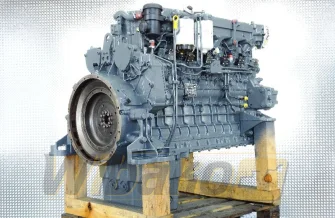
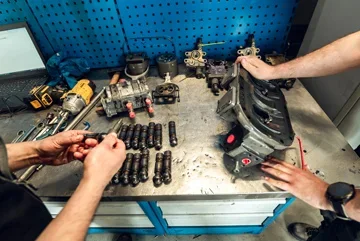
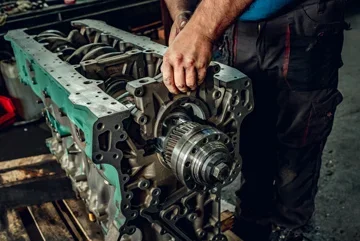
Once the Liebherr D936 A7 engine arrived at our workshop, the detailed diagnostic process began. The first stage involved attempting to manually rotate the crankshaft to assess mechanical resistance. Following this, the engine was completely stripped down to its individual components.
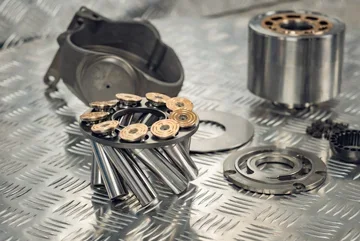
During the teardown, previous assumptions regarding the wear of the cylinders and pistons were confirmed. Signs of long-term operation were clearly visible on the cylinder liners, and the piston rings had lost their required sealing properties. Increased clearance between the pistons and liners was also detected in several cylinders.
The inspection also included:
- verification of the crankshaft, including measurements of the main and rod journals,
- checking the oil galleries,
- measuring crankshaft runout,
- inspecting the connecting rods for twisting and bending,
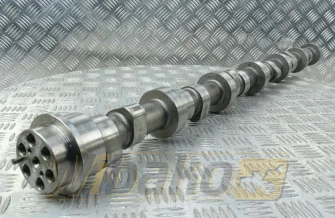
- checking the camshaft,
- assessing the condition of the turbocharger,
- inspecting the injection pump and injectors.
The analysis also revealed partial wear on the main and rod bearings, as well as the necessity to remanufacture the cylinder head.
Crank-Piston System Repair
The overhaul of the crank-piston assembly began with the preparation of the engine block. All components underwent a thorough industrial wash. The oil galleries were cleaned and blown out with compressed air.
The crankshaft underwent control measurements. After confirming it was suitable for further use, the journals were ground according to the manufacturer's precise specifications. New main and rod bearings were then installed.
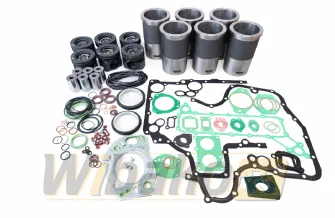
As part of rebuilding the crank-piston assembly, new cylinder liners, pistons, and piston rings were fitted. All connecting rods were verified for proper geometry and balance. Upon completion of these tasks, installation clearances were checked, and measurements were verified against the technical documentation.
Liebherr D936 A7 Cylinder Head Overhaul
The cylinder head was completely disassembled and subjected to a leak test in a hot water bath. The test revealed no cracks, making a full remanufacturing process possible.
The scope of work included resurfacing the mating surface, replacing the valve guides, installing new valves, and machining the valve seats. Once completed, combustion chamber leak tests and valve seat depth checks were carried out.
Thanks to this refurbishment, the cylinder head regained parameters close to factory specifications, which is critical for proper compression and efficient fuel combustion.
Fuel System and Component Repair
The fuel system was sent for detailed diagnostics. The injection pump was tested on a test bench and then sent for specialized remanufacturing. The injectors were inspected for proper spray patterns and opening pressure.
The turbocharger was checked for axial and radial play. After discovering bearing wear, a complete regeneration was performed. Additionally, the alternator, starter, and electrical system components interacting with the power unit were inspected.
A complete set of seals, service hoses, and lubrication system components responsible for reliable engine operation were also replaced.
Professional Engine Assembly
Following the completion of all component repairs, the reassembly process of the power unit began. Each stage of assembly was performed strictly according to the manufacturer's service documentation. All bolts were tightened using torque wrenches following the exact torque and angle procedures.
During assembly, particular attention was paid to the tightness of the lubrication, cooling, and air intake systems. New gaskets, hoses, and consumable elements were installed. Every connection was verified for correct seating and securing.
After assembling the engine, the system was pre-filled with oil, and the unit was prepared for its startup on the engine dynamometer. The functionality of all sensors, the electrical installation, and auxiliary systems was thoroughly verified.
The engine was then prepared for reinstallation into the Liebherr R 936 excavator. Following successful tests, transport to the customer was organized, where our mechanics installed the power unit using a crane provided by the machine owner.
The installation included connecting all fuel, hydraulic, electrical, and cooling lines. Several intake hoses showing signs of wear were also replaced. After starting the engine, a leak check of all connections and a series of functional tests were performed alongside the machine operator.
Upon successful completion of the tests, an installation protocol was drawn up, confirming the correct operation of the power unit.
Engine Testing on the Dynamometer
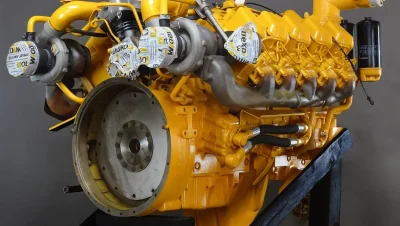
One of the most critical stages of the entire process was the verification of the Liebherr D936 A7 engine on our in-house engine dynamometer. This solution provides a massive advantage over workshops that limit themselves to merely starting the engine on a stand after an overhaul. Thanks to the dyno, we are able to check the behavior of the power unit before it is reinstalled in the machine.
After final assembly, the engine was equipped with a comprehensive set of sensors monitoring temperature, oil pressure, boost pressure, fuel consumption, and exhaust parameters. Following this, the break-in process of the power unit commenced.
For the first several hours, the engine ran under a partial load of approximately 20-30% of its nominal value. During this time, we monitored all primary operating parameters, paying close attention to the stability of the oil pressure, coolant temperature, and the behavior of the fuel system.
After completing the first stage of testing, a leak inspection and filter analysis were performed. Subsequently, a series of full-load trials began. The engine repeatedly reached the maximum torque and power values specified for the D936 A7 unit. This allowed us to verify the flawless operation of the turbocharger, cooling system, and lubrication system.
The dynamometer also allows us to catch minor issues that are often invisible during a brief startup in a workshop bay. We can monitor parameter stability over multiple hours, observe the engine's reaction to variable loads, and check its behavior under conditions that closely mimic the actual operation of the excavator.
During the tests, the Liebherr D936 A7 engine achieved all required factory parameters. No leaks, operational instability, or fuel system anomalies were detected. The parameter analysis confirmed the flawless operation of the unit post-overhaul. Only after obtaining these positive dynamometer results was the engine approved for installation in the customer's machine.
By utilizing the dyno, the customer receives absolute certainty that the power unit has been tested under load before returning to the construction site. This approach minimizes the risk of sudden downtime and helps avoid costly breakdowns during the initial period of operation.
Engine Service After Overhaul
Every engine overhauled by our company is covered by a warranty and the option for ongoing service support. After the first 50 operating hours, our mechanics perform a mandatory inspection that includes changing the filters, checking for leaks, and evaluating the performance of all subassemblies.
Subsequent inspections are carried out every 250 operating hours, or at least once every three months. These preventative measures ensure that the high reliability of the Liebherr D936 A7 engine is maintained for many years of operation.
Machines Utilizing the Liebherr D936 A7 Engine
The Liebherr D936 A7 engine is utilized in a wide variety of machinery across the construction, industrial, and mining sectors. This unit is commonly found in Liebherr crawler excavators, wheel loaders, material handlers, and other specialized heavy machinery requiring high torque and exceptional reliability.
Thanks to the robust durability of its design and the ready availability of spare parts, engines in this series are very frequently subjected to professional overhauls rather than being replaced with costly new units.
Summary
The comprehensive overhaul of the Liebherr D936 A7 engine in the Liebherr R 936 crawler excavator successfully restored the machine to full operational efficiency and eliminated the issues caused by cylinder-piston system wear. The scope of work encompassed diagnostics, disassembly, complete verification, component rebuilding, engine dynamometer testing, and final installation in the customer's machine.
Thanks to our professional technical facilities and the extensive experience of our mechanics, the customer received a power unit prepared for many more years of heavy operation. After 50 operating hours, we will perform the first service inspection to confirm the proper break-in of all new components.
Internal linking:
Liebherr engine overhaul
Crawler excavator service
WIBAKO engine dynamometer
Mobile service for construction machinery
Liebherr D936 A7 Engine Overhaul
We perform comprehensive overhauls of Liebherr D936 A7 engines and service Liebherr R 936 crawler excavators. Each engine undergoes rigorous testing on the WIBAKO engine dynamometer prior to installation in the machine.