Caterpillar 3116 Engine Overhaul in a Caterpillar 950F Wheel Loader - Comprehensive Engine Repair
Caterpillar wheel loaders have been used for many years in demanding construction, earthmoving, material handling and bulk material operations. One of the models designed for these applications is the Caterpillar 950F. This machine was developed for intensive operation, where adequate engine power, reliable drivetrain performance and the ability to perform long working cycles under load are essential. The heart of this wheel loader is the Caterpillar 3116 diesel engine, which powers the machine and ensures the proper operation of its main working systems.
In older construction machinery, years of operation, varying loads and natural wear of mechanical components can lead to deteriorating engine performance. In the case described here, the Caterpillar 950F wheel loader required a comprehensive overhaul of its Caterpillar 3116 engine. The main reasons for the repair were a gradual loss of engine power, increased engine oil consumption and symptoms indicating reduced cylinder sealing.
The work was carried out by WIBAKO, a service company specialising in the repair of diesel engines used in construction, agricultural and industrial machinery. Our work included engine diagnostics in the machine, engine removal, transportation to our workshop in Kojszówka, detailed component inspection, regeneration of worn parts, engine assembly and testing on an engine dynamometer. This comprehensive approach allows us not only to restore the engine's operating parameters but also to verify its performance under load before reinstalling it in the machine.
Caterpillar 950F Wheel Loader - Machine Characteristics
The Caterpillar 950F is a wheel loader designed for tasks requiring efficient material handling and intensive operation of the hydraulic system. Machines of this type are used on construction sites, in production facilities, aggregate quarries, gravel pits and during the loading and transportation of bulk materials. The loader's design allows it to work with various attachments, particularly buckets of different capacities, making it suitable for a wide range of applications.
During daily operation, a wheel loader works under considerable loads. Lifting a fully loaded bucket, scooping material, manoeuvring and travelling with a load all require appropriate engine performance. The power unit must provide stable operating parameters both while driving and when carrying out working operations. Proper interaction between the engine, drivetrain and working hydraulics is particularly important.
As operating hours increase, problems caused by the wear of mechanical components may develop. Reduced compression, increased oil consumption, uneven engine operation and difficulties reaching the required engine speed can negatively affect the machine's efficiency. In such situations, it is important to perform diagnostics to identify the actual cause of the problem. Not every loss of power means that a complete engine overhaul is necessary, which is why the technical condition of the engine must be thoroughly checked before deciding on the scope of repair.
Caterpillar 3116 Engine - Power Unit of the Caterpillar 950F Wheel Loader
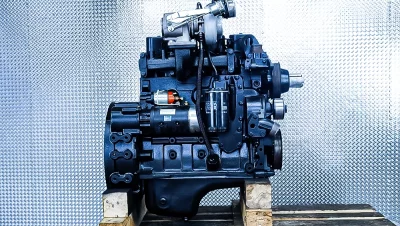
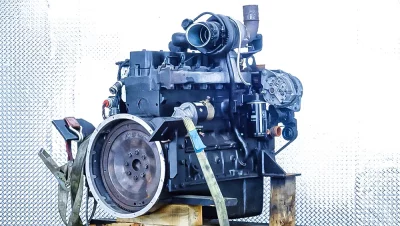
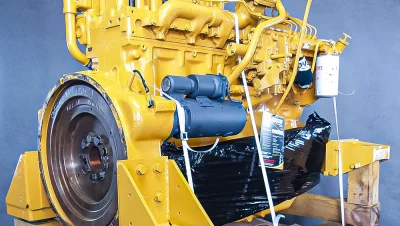
The Caterpillar 950F wheel loader is equipped with the Caterpillar 3116 diesel engine. This is a six-cylinder, inline diesel power unit with a displacement of approximately 6.6 litres, used in various industrial applications and working machines. The engine was designed for demanding operating conditions, requiring durability, suitable torque characteristics and stable power delivery.
Caterpillar 3116 engines can be found not only in wheel loaders but also in other construction and industrial machinery. Depending on the version and configuration, these engines have been used in selected excavators, loaders, specialised machines and industrial and transport applications. When selecting replacement parts and determining the scope of repair, it is essential to identify the exact engine version.
During a Caterpillar 3116 overhaul, particular attention must be paid to the condition of the crankshaft and piston assembly, cylinder head, crankshaft and components responsible for lubrication and cooling. Even minor dimensional deviations can affect the subsequent operation of the power unit. That is why WIBAKO does not limit its work to replacing individual components without prior inspection. Every part is assessed for further usability, and decisions regarding regeneration or replacement are based on measurement results.
Initial Caterpillar 3116 Engine Diagnostics Before the Overhaul
The first stage of the project involved diagnosing the Caterpillar 3116 engine installed in the Caterpillar 950F wheel loader. The symptoms reported by the machine operator included a gradual loss of power, increased engine oil consumption and deterioration in the engine's operating characteristics. These symptoms may indicate wear of components responsible for combustion chamber sealing. However, additional inspections were necessary before starting the removal process.
We began the diagnostics with basic inspection procedures. We checked the engine oil level and condition, inspected the cooling system and carried out a visual examination of the external engine components. Particular attention was paid to possible fluid leaks, the condition of hoses, connections and engine accessories. We also checked the engine's operation at idle and while increasing the engine speed.
The next step was to check the power unit's operating parameters. In an engine showing symptoms of increased oil consumption and power loss, assessing cylinder sealing is particularly important. Leakage within the piston-cylinder assembly can cause combustion gases to enter the crankcase, reduce combustion efficiency and lower overall engine performance.
To determine the cause of the problem more accurately, we carried out compression pressure measurements and additional cylinder leakage tests. We also inspected the accessible components of the intake and exhaust systems. The results indicated uneven conditions between individual cylinders and problems maintaining the required compression pressure. Combined with the symptoms observed during operation, these findings provided grounds for qualifying the engine for a detailed workshop inspection.
At this stage, we determined that continuing to operate the loader without eliminating the underlying problem could lead to further damage. Running an engine with worn crankshaft and piston assembly components can accelerate the wear of other parts, increase the load on the lubrication system and deteriorate the operating conditions of the entire power unit.
Removing the Caterpillar 3116 Engine from the Caterpillar 950F Wheel Loader
After completing the initial diagnostics, we began preparing the Caterpillar 950F wheel loader for engine removal. Due to the size of the engine and the need to maintain safety during the operation, the work area had to be properly prepared and lifting equipment provided. We remove engines from machines using a crane supplied by the customer. This allows the power unit to be safely lifted out of the engine compartment while minimising the risk of damaging structural components.
Before starting the actual work, we secured the machine against accidental starting. We then disconnected the electrical installation and accessories connected to the engine. We removed the necessary hoses and connections, taking care to label them correctly. This is important because it ensures that individual systems can be reconnected correctly during subsequent installation.
The next stage involved preparing the cooling system. We secured the hoses and connections and then disconnected the components that needed to be removed to allow the engine to be lifted out. Similar procedures were carried out on the intake and exhaust systems. We removed the necessary sections of piping, air hoses and mounting components that could interfere with the safe removal of the power unit.
After disconnecting the accessories, we proceeded to remove the engine mounts. We also checked the connections to the drivetrain to prevent uncontrolled stress on the components during lifting. The engine was properly prepared for lifting, and the lifting points were selected to ensure that the unit could be removed from the engine compartment in a stable position.
Using the crane, the Caterpillar 3116 engine was carefully removed from the Caterpillar 950F wheel loader. Throughout the operation, our mechanics monitored the engine's position and checked the clearance between the unit and the machine's structural components. Once removed, we also inspected the available mounting points, contact surfaces and components connected to the power unit. All disconnected hoses and components were secured against contamination.
After completing the removal process, the engine was prepared for transportation to the WIBAKO facility in Kojszówka. This is where we began the actual inspection and repair process. Carrying out the overhaul in a properly equipped workshop allows us to use specialised measuring instruments and equipment designed for servicing diesel engines.
Workshop Inspection of the Caterpillar 3116 Engine
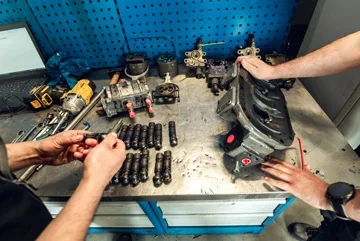
After delivering the engine to our workshop, we began a detailed inspection. The first step was to prepare the power unit for disassembly into individual components. We cleaned the external surfaces, removed accumulated dirt and began dismantling the engine into its separate parts. Each component was placed in a designated area to maintain order and make the subsequent inspection easier.
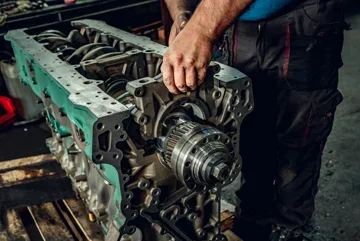
After removing the cylinder head, we gained access to the combustion chambers and crankshaft and piston assembly components. At this stage, it was possible to assess the wear of the cylinders and the surfaces working in contact with the pistons more accurately. Particular attention was paid to the piston ring contact areas, cylinder surface condition and any signs of overheating or improper lubrication.
We then proceeded with the complete disassembly of the crankshaft and piston assembly. We removed the pistons together with the connecting rods, dismantled the crankshaft and removed the remaining components required for detailed measurements. All parts were cleaned and prepared for a thorough technical inspection.
The inspection confirmed the initial suspicions regarding wear of the piston-cylinder assembly. We identified irregular wear on the cylinder surfaces and deterioration of the piston rings. These components could no longer provide the required sealing conditions inside the combustion chambers. This was consistent with the symptoms observed during the initial diagnostics, namely increased oil consumption and reduced compression pressure.
We also inspected the crankshaft. A visual examination was carried out to identify cracks, signs of overheating, scratches and other damage that could indicate improper operation. We then measured crankshaft runout and the diameters of the main and connecting rod journals. We also checked the oil passages for obstructions, as contamination can restrict the flow of lubricant to the cooperating components.
The connecting rods were inspected separately. We checked their visual condition, the surfaces in contact with the bearings and their geometric parameters. Measurements of twisting and longitudinal bending help determine whether the connecting rods can be reused. We also inspected the condition of the mounting bolts and other cooperating components.
The cylinder head was also thoroughly inspected. We checked the condition of the valves, valve guides and valve seats. A cylinder head pressure test was performed to detect possible cracks and internal leaks. During this test, the cylinder head is immersed in heated water, and compressed air is supplied through the appropriate passages. Escaping air bubbles make it possible to identify areas where the casting may have lost its sealing properties.
We also inspected the camshaft, checking its working surfaces, main journals and lobes. The turbocharger was assessed by checking axial and radial shaft play. We also inspected the remaining engine accessories, including components responsible for starting, charging and the proper operation of auxiliary systems.
After completing all measurements, we prepared the repair plan. Based on the inspection results, we determined which components could be reused, which required regeneration and which needed to be replaced with new parts. Only after completing this stage is it possible to properly plan the Caterpillar 3116 engine overhaul.
Comprehensive Caterpillar 3116 Engine Overhaul
After completing the inspection, we proceeded with the actual engine overhaul. The main objective was to restore proper cylinder sealing, the required mechanical parameters and stable engine operation under load. The scope of the repair was adapted to the actual technical condition of the individual components.
Crankshaft and Piston Assembly Repair
One of the most important areas of the Caterpillar 3116 overhaul was the crankshaft and piston assembly. This assembly is responsible for converting the energy generated during fuel combustion into the rotational movement of the crankshaft. The condition of the pistons, rings, cylinders, connecting rods and bearings directly affects engine efficiency, power output and oil consumption.
First, we prepared the engine block for further work. After thorough cleaning, we measured the cylinders, paying attention to their diameters, ovality and taper. Checking these parameters makes it possible to determine whether the working surfaces remain within the required dimensions and whether they can continue to be used. If excessive wear is identified, an appropriate repair solution must be selected in accordance with the engine's technical documentation.
As part of the piston-cylinder assembly overhaul, we prepared the components required to restore proper cylinder sealing. Particular attention was paid to the pistons and piston rings. The rings must provide adequate combustion chamber sealing while also removing excess oil from the cylinder walls. Wear of these components can allow oil to enter the combustion chamber, resulting in increased exhaust smoke and reduced engine performance.
We also inspected the piston ring grooves and piston surfaces. Components showing excessive wear were replaced with new parts featuring the appropriate specifications. When preparing the piston assembly, it was essential to maintain the required installation clearances and correct piston ring positioning. Improper installation can result in reduced sealing efficiency, excessive oil consumption or damage to the cylinder surfaces.
The crankshaft was thoroughly cleaned and subjected to dimensional inspection. We checked the surfaces of the main and connecting rod journals and assessed their technical condition. Based on the measurements, we determined whether the crankshaft could continue to be used and selected the appropriate bearings. Particular attention was paid to the oil passages, which must ensure unrestricted lubricant flow to the cooperating surfaces.
The connecting rods were inspected for geometric accuracy and wear of the bearing contact surfaces. We also checked the condition of their fasteners. Proper preparation of these components is essential to ensure correct piston movement and the transfer of forces generated during engine operation.
After preparing all the components, we proceeded with assembling the crankshaft and piston assembly. The installation was carried out under clean conditions and in accordance with the required assembly specifications. Particular attention was paid to operating clearances, correct bearing positioning and free crankshaft rotation. Each assembly stage was checked to eliminate potential installation errors before proceeding to the next components.
Caterpillar 3116 Cylinder Head Regeneration
The cylinder head is one of the most important structural components of a diesel engine. It closes the combustion chambers and works together with the valves, intake system and exhaust system. Its technical condition directly affects cylinder sealing, combustion efficiency and the engine's operating parameters.
After removal, the cylinder head was thoroughly cleaned and prepared for inspection. We checked the mating surface, valve seat condition, valve guides and the valves themselves. The previously performed pressure test allowed us to assess the condition of the casting and identify any potential sealing problems. We then evaluated the components working with the valve system.
As part of the regeneration process, we machined the cylinder head surface to ensure proper contact with the engine block. We also inspected the condition of the valve guides and prepared the assembly for the installation of components with the correct specifications. Replacing worn valve guides and valves helps restore proper valve guidance and sealing.
Preparing the valve seats was another important stage. Their surfaces must provide proper contact with the valves because even minor leaks can cause compression loss and deteriorate engine performance. After completing the necessary work, we checked the quality of the contact surfaces and prepared the cylinder head for reinstallation.
Before installing the cylinder head, we also inspected the engine block surfaces. We removed the remains of the old gasket and thoroughly cleaned the mounting area. We then prepared a new gasket and the necessary fasteners in accordance with the technical requirements of the Caterpillar 3116 engine. During installation, particular attention was paid to the correct tightening sequence and specified fastening parameters.
Fuel System and Engine Accessories Inspection
Inspecting the fuel system is another important part of a diesel engine overhaul. Correct fuel delivery and proper atomisation have a significant impact on the combustion process. Problems in this area can cause uneven engine operation, increased fuel consumption, excessive smoke and difficulties achieving full power.
During the Caterpillar 3116 overhaul, we inspected the accessible fuel system components. Particular attention was paid to the condition of the connections, fuel line sealing and components responsible for fuel delivery. We also assessed the condition of the injectors and prepared them for further inspection. Components requiring more detailed testing can be checked on a specialised test bench, which allows their operating parameters and fuel spray quality to be evaluated.
We also inspected the turbocharger. We checked axial and radial shaft play and examined the accessible surfaces. Proper turbocharger operation is essential for supplying the correct amount of air to the cylinders. Turbocharger damage can cause power loss, increased exhaust smoke and deterioration of the engine's operating characteristics.
The starter motor, alternator and remaining accessories were also inspected. We checked the condition of electrical connections and mounting components. All components that could negatively affect the engine's proper operation were assessed before the assembly process was completed.
When overhauling a Caterpillar 3116 engine, it is important not to focus exclusively on repairing mechanical components. Even a correctly assembled engine may fail to achieve the expected parameters if its accessories are not functioning properly. That is why a comprehensive inspection helps reduce the risk of further problems after reinstalling the power unit in the loader.
Professional Caterpillar 3116 Engine Assembly
After completing the regeneration work and preparing all components, we proceeded with assembling the Caterpillar 3116 engine. This stage requires particular precision because the correct installation of all connections directly affects the durability and reliability of the power unit. Before starting the assembly process, we checked that all parts were present and prepared the working surfaces.
Assembly began with preparing the engine block and installing the crankshaft and piston assembly components. Individual parts were thoroughly cleaned, and the mating surfaces were properly prepared. We then installed the crankshaft together with the bearings, checking its correct positioning and freedom of rotation. Proper component matching is essential for maintaining the correct oil film and minimising friction during subsequent operation.
After preparing the crankshaft, we proceeded with installing the pistons and connecting rods. Each assembly was properly prepared and inserted into the cylinder with care to avoid damaging the working surfaces. We also checked the correct positioning of the piston rings. After installing each component, we checked crankshaft rotation to ensure that there was no excessive resistance that could indicate an assembly error.
The next stage involved preparing the cylinder head. After regeneration and pressure testing, it was installed on the engine block using the appropriate gasket. The connection was made in accordance with the engine's technical requirements. We paid close attention to the tightening sequence and specified fastening parameters because the correct connection between the cylinder head and engine block is essential for maintaining combustion chamber sealing and the integrity of oil and coolant passages.
We then installed the remaining structural components and engine accessories. We prepared the lubrication system, cooling system components and parts responsible for the correct operation of the power unit. All connections were checked for proper installation. Particular attention was paid to areas where oil or coolant leaks could occur.
After completing the assembly, we carried out a mechanical inspection. We checked engine completeness, accessory mounting, correct hose routing and connections, as well as free engine rotation. We then prepared the engine for its first start and subsequent testing. By following the correct assembly sequence, we were able to proceed to the next stage: testing the power unit on the WIBAKO engine dynamometer.
Caterpillar 3116 Engine Testing on the WIBAKO Engine Dynamometer
One of the most important stages of the Caterpillar 3116 overhaul is checking its operation after the repair has been completed. At WIBAKO, we have an engine dynamometer that allows us to test power units outside the machine. This is a significant advantage when carrying out overhauls of engines used in wheel loaders, excavators and other construction machinery. This solution allows us to evaluate engine performance under controlled conditions before it is reinstalled in the customer's machine.
An engine dynamometer makes it possible to test a power unit under load rather than simply checking its operation at idle. This is particularly important for engines used in off-highway machinery, which operate under varying and often considerable loads during everyday work. Simply starting an engine after an overhaul does not provide sufficient information about its actual condition. Only controlled load testing makes it possible to assess whether all components are working together correctly.
After installing the Caterpillar 3116 engine on the test stand, we began preparing it for the first start. We checked the completeness of all connections, fluid levels and the correct connection of systems required for operation. Before starting the test, we also verified that the lubrication and cooling systems were properly prepared. This is particularly important for engines after a comprehensive overhaul, as the first start requires appropriate operating conditions.
After starting the engine, we began monitoring its basic operating parameters. We observed engine stability, oil pressure, temperature and performance when changing the engine speed. We also checked for unusual noises, vibrations and fluid leaks. This initial stage makes it possible to determine whether the engine can safely proceed to the next testing phases.
Engine break-in on the dynamometer begins with operation under relatively low load. In the case of overhauled engines, the power unit operates for a minimum of 16 engine hours at approximately 20-30% of its nominal load. This stage is important for the proper bedding-in of cooperating surfaces. It is particularly relevant for the crankshaft and piston assembly, piston rings and cylinder surfaces.
Break-in is not simply a matter of keeping the engine at a specific speed. It is also important to monitor operating conditions and observe changes in parameters over time. Our mechanics monitor oil pressure, engine temperature and operating stability. If any irregularities occur, the test can be stopped in time and additional inspections can be carried out. This helps reduce the risk of engine damage during the initial operating period.
After completing the first break-in stage, provided that the engine maintains the correct operating parameters, we proceed to the next testing phases. The load is gradually increased while we monitor the engine's response to changing operating conditions. We then carry out repeated tests at higher loads to evaluate the stability of the power unit across a wider operating range.
During dynamometer testing, particular attention is paid to oil pressure and engine operating temperature. We also observe the engine's behaviour when the load is increased and decreased. The power unit should operate steadily, without abnormal parameter fluctuations, excessive vibrations or symptoms indicating improper interaction between individual components. The inspection also includes checking the tightness of connections and the overall condition of the accessories.
An important part of the test is checking whether the engine maintains stable operating parameters during prolonged operation under load. In machines such as the Caterpillar 950F, the power unit must provide appropriate performance both when travelling and when carrying out working operations. That is why dynamometer testing makes it possible to identify problems that might not become apparent during a short unloaded start-up.
Testing engines before installation in the machine also helps reduce the risk of having to remove the power unit again if irregularities occur. If the engine were installed without prior load testing, identifying a problem could require preparing the machine again and carrying out additional service work. The dynamometer allows us to perform a significant part of the inspection in workshop conditions, increasing the safety and reliability of the entire repair process.
After completing the tests and confirming stable operating parameters, the Caterpillar 3116 engine was prepared for reinstallation. The test results confirmed the proper progress of the overhaul and allowed us to move the power unit to the next stage of the project. At WIBAKO, we consider dynamometer testing an essential part of comprehensive diesel engine repair, rather than simply an additional procedure performed at the end of the overhaul.
Installing the Overhauled Caterpillar 3116 Engine in the Caterpillar 950F Wheel Loader
After completing the overhaul and successfully passing the dynamometer tests, we began preparing the Caterpillar 3116 engine for reinstallation in the Caterpillar 950F wheel loader. Engine installation is just as important as the overhaul itself because even a properly regenerated engine requires correct installation and thorough inspection of all systems connected to the machine.
Before starting the work, we prepared the engine compartment. We inspected the accessible mounting points, mating surfaces and structural components used to disconnect the power unit during removal. We removed any dirt and checked the condition of hoses and connections. If necessary, components showing signs of wear or damage are replaced to reduce the risk of problems after the machine is started.
To lower the engine into the compartment, we once again used the crane provided by the customer. The power unit was properly suspended and prepared for lowering. Throughout the operation, our mechanics monitored its position to prevent contact with the loader's structural components. The engine was gradually lowered into the compartment and positioned correctly in relation to the mounts and drivetrain.
After positioning the unit correctly, we proceeded with securing it in place. We checked the alignment of the mounting points and the correct positioning of the mounting components. We then connected the engine to the drivetrain. At this stage, maintaining the correct engine position is essential because improper alignment can place additional stress on cooperating components and accelerate the wear of mounting elements.
The next step was connecting the auxiliary systems. We installed the fuel lines, cooling system components, electrical installation and remaining accessories. All connections were made with reference to the previously labelled hoses and their original functions. Particular attention was paid to correct installation routing to ensure that the hoses would not rub against other components or be exposed to excessive stress during machine operation.
We devoted considerable attention to the intake system. We installed the air piping and checked the connections between individual components. The intake system must be airtight because unfiltered air entering the engine can lead to accelerated wear of the cylinders and pistons. We also inspected the air hoses and their mounting components. Similar procedures were carried out on the exhaust system.
After connecting the cooling system, we checked all hoses, clamps and connections. The system must ensure proper coolant circulation and maintain the correct engine operating temperature. We also inspected the tightness of the connections and the condition of components that could cause coolant loss during operation. We then topped up the operating fluids and installed new filters as required after the overhaul.
Before starting the loader for the first time, we inspected all completed connections. We checked the engine mounts, fuel line connections, cooling system, air intake, exhaust system and electrical installation. We also verified that no tools or components used during installation had been left in the engine compartment. Only after completing these checks did we proceed with preparing the unit for start-up.
The first start was supervised by our mechanics. During the initial phase, we monitored engine operation, oil pressure and temperature. We also checked for leaks and unusual noises. Once stable operation had been achieved, we proceeded with further inspections, including checking the operation of systems connected to the power unit.
An important part of the acceptance procedure was testing the machine with the operator present. This allowed us to assess the Caterpillar 950F wheel loader under conditions corresponding to its actual applications. During the tests, we observed the engine's response to changing loads, its behaviour when increasing engine speed and its performance during basic working operations. We also checked connection tightness under operating conditions, as some leaks may only become apparent after the engine reaches the correct temperature or during increased loading.
Successful test results allowed us to complete the installation. We carried out another inspection of the engine compartment, mounts, hoses and accessible connections. We then performed a final assessment of the power unit in the presence of the operator. After confirming correct engine operation and the absence of any concerning symptoms, we completed the work and prepared an installation report.
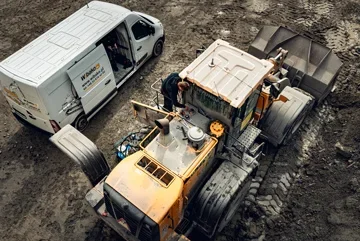
It is worth emphasising that WIBAKO also carries out engine removal and installation directly at the customer's location. Our mobile construction machinery service is equipped to perform work on-site. This means that machine owners do not have to organise the entire engine removal process themselves. We can carry out the work at a construction site, production facility or customer's machinery depot, then transport the engine to our workshop in Kojszówka for a comprehensive overhaul.
Operation and Maintenance of the Caterpillar 3116 Engine After the Overhaul
Completing the overhaul and restarting the Caterpillar 950F wheel loader does not mean that maintenance is no longer necessary. An engine after a comprehensive repair requires proper handling during the initial operating period. Monitoring operating parameters, maintaining the correct fluid levels and carrying out inspections on time are particularly important.
After installation, we recommend following the operating guidelines provided by our service team. The engine should reach its normal operating temperature before being subjected to intensive loads. Sudden changes in load immediately after start-up should also be avoided. Proper operating conditions during the initial period allow cooperating surfaces to bed in correctly and reduce the risk of unnecessary stress.
We recommend carrying out the first service inspection after 50 engine hours. This is a very important stage because it allows us to assess the condition of the power unit after its initial period of operation in the machine. During this visit, our mechanics replace the filters and inspect the connections between the engine and the remaining machine components. We also check the general condition of the accessories, mounts, hoses and system connections.
The 50-hour inspection is not limited to replacing consumables. During the visit, we verify whether the power unit is operating correctly under real working conditions. We inspect accessible connections, look for potential leaks and evaluate engine behaviour during operation. This is particularly important after installation because some irregularities may only become apparent after a certain period of use.
We recommend carrying out subsequent inspections every 250 engine hours, but no less frequently than once every three months. Regular servicing helps maintain the engine in proper technical condition and reduces the risk of more serious failures. Proper inspection of the lubrication system, cooling system and accessories is particularly important for wheel loaders, which often operate for many hours a day in demanding conditions.
WIBAKO also provides ongoing maintenance services for engines after overhauls. We can perform periodic inspections directly at the customer's location, monitor operating parameters and respond to any emerging problems. This allows machine owners to benefit from comprehensive support covering the engine overhaul, installation and subsequent operation.
Which Machines Use Caterpillar 3116 Engines?
The Caterpillar 3116 is an engine used in various applications, which means that knowledge of its design and repair requirements is important not only for wheel loader owners. Depending on the version, configuration and intended application, engines from this family can be found in construction machinery, industrial equipment and selected transport and specialised applications.
Caterpillar 3116 engines have been used in selected wheel loader models, excavators and machines designed for demanding off-road conditions. They can also be found in industrial applications where the ability to operate under prolonged load is essential. However, when identifying an engine, it is always necessary to consider its exact designation, serial number and configuration, as individual versions may differ in their components.
When overhauling a Caterpillar 3116 engine, selecting the correct replacement parts is essential. It is not sufficient to rely solely on the engine family name. When preparing an estimate and identifying the required components, we consider the power unit's specifications, part numbers and information from the identification plate. This helps minimise the risk of using unsuitable parts and improves the efficiency of the entire repair process.
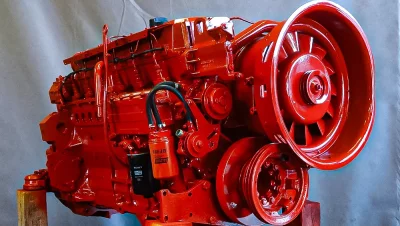
WIBAKO specialises in repairing engines used in various types of construction and industrial machinery. We service power units manufactured by Caterpillar, Cummins, Deutz, Perkins, Yanmar, Kubota and many other manufacturers. We carry out both comprehensive engine overhauls and repairs of individual components. Our workshop facilities and engine dynamometer allow us to perform many stages of the repair process in one location.
Comprehensive Caterpillar Engine Service - Why Choose WIBAKO?
Overhauling an engine used in construction machinery requires technical knowledge, experience and access to specialised equipment. In the case of engines such as the Caterpillar 3116, it is important not only to eliminate the cause of the failure but also to thoroughly inspect all components, carry out the regeneration process correctly and test the engine before reinstalling it.
WIBAKO has specialised in the repair and overhaul of combustion engines used in construction machinery for many years. We provide diagnostics, engine removal, component regeneration, engine assembly and dynamometer testing. Thanks to our comprehensive approach, we can manage the entire repair process, from the initial inspection in the machine to start-up and testing after installation.
One of our key advantages is the ability to test engines on a dynamometer before reinstalling them. This allows us to check the power unit under load and evaluate its operating stability. The machine owner receives an engine that has undergone additional workshop testing rather than simply a short start-up procedure.
We also offer mobile construction machinery servicing. Our mechanics travel to customers throughout Poland, providing diagnostics, repairs, engine removal and installation. If a comprehensive overhaul is required, we can remove the engine at the machine's operating location, transport it to our facility in Kojszówka and reinstall it once the repair has been completed.
Access to replacement parts is another important aspect of our business. We sell parts for engines and construction machinery, offering both original components and high-quality aftermarket alternatives. We help identify the correct components based on the engine number, machine serial number or a photograph of the identification plate.
By choosing WIBAKO, you receive comprehensive support covering diagnostics, repair, component regeneration and engine testing. Our goal is to restore engine performance and minimise the risk of further machine downtime. We service wheel loaders, crawler excavators, backhoe loaders, articulated dump trucks, material handlers and other machines used in construction and industry.
Summary of the Caterpillar 3116 Engine Overhaul in the Caterpillar 950F Wheel Loader
The Caterpillar 3116 engine overhaul in the Caterpillar 950F wheel loader involved a comprehensive range of work aimed at restoring the power unit's correct operating parameters. The repair was necessary due to wear of the piston-cylinder assembly components, resulting in increased oil consumption and reduced compression pressure. The diagnostics and subsequent workshop inspection confirmed the cause of the problem and allowed us to determine the appropriate scope of the overhaul.
As part of the project, we removed the engine from the machine, transported it to the WIBAKO workshop, thoroughly inspected its components, repaired the crankshaft and piston assembly, regenerated the cylinder head and inspected the accessories. The engine was then professionally assembled and tested on an engine dynamometer. After successfully completing the tests, we reinstalled the engine in the Caterpillar 950F wheel loader and checked the machine's operation with the operator present.
An important part of the entire project was testing the power unit on the dynamometer before reinstalling it. This allowed us to evaluate engine performance under load and inspect its basic parameters in workshop conditions. After installation, we carried out additional tests, checking the tightness of connections and the correct interaction between the engine and the machine's remaining systems.
After completing the work, we recommended the first service inspection after 50 engine hours. Subsequent inspections should be carried out every 250 engine hours, but no less frequently than once every three months. Regular maintenance helps maintain the engine in proper technical condition and allows potential problems to be identified at an early stage.
If you own a Caterpillar 950F wheel loader or another machine equipped with a Caterpillar engine and notice a loss of power, increased oil consumption, starting problems or unusual noises during operation, contact WIBAKO. We provide comprehensive diesel engine overhauls, diagnostics and construction machinery servicing. Our mobile service operates throughout Poland, while access to an engine dynamometer allows us to carry out additional testing of power units after repairs.
Related WIBAKO Services
Find out more about our services on the following pages:
Combustion Engine Overhauls and Repairs - comprehensive regeneration of power units used in construction and industrial machinery.
Mobile Construction Machinery Service - diagnostics, repairs, engine removal and installation directly at the customer's location.
WIBAKO Engine Dynamometer - testing engines after overhauls under controlled load conditions.
Combustion Engine Parts - original components and high-quality aftermarket alternatives for power units from various manufacturers.
Caterpillar Engine Overhaul? Contact WIBAKO
Need a Caterpillar 3116 engine overhaul or repairs to your Caterpillar 950F wheel loader? WIBAKO provides comprehensive combustion engine overhauls, mobile servicing, professional diagnostics and engine dynamometer testing. Contact us and benefit from the experience of our mechanics.