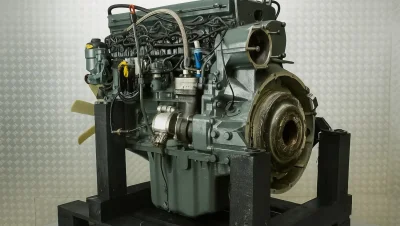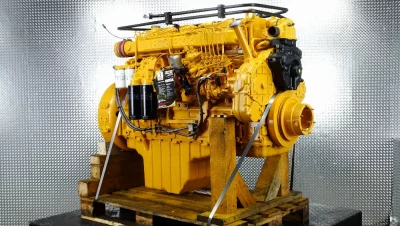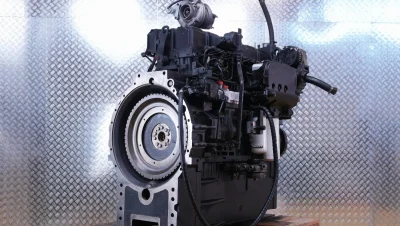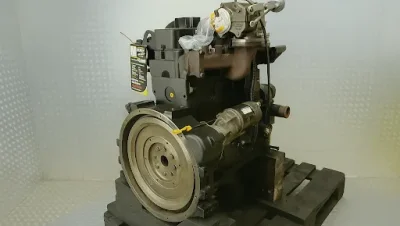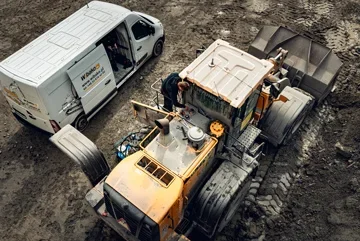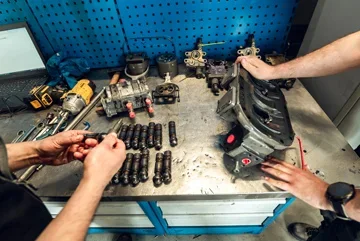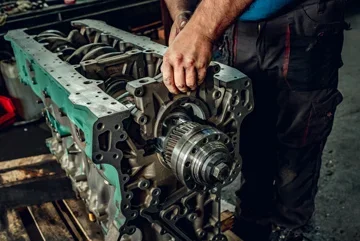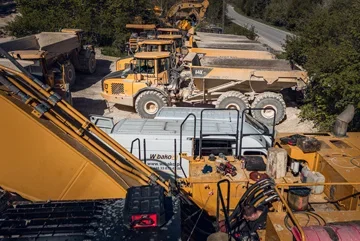


A John Deere engine we had rebuilt was due to go back into a Vermeer D36x50 horizontal directional drill. It looked simple: install, connect, start. The catch was that we had not removed this engine ourselves – the routing of hoses, connectors and ancillaries had to be reconstructed step by step.
Installing the engine and pump
First we tidied and cleaned the engine bay, setting aside all loose parts so nothing would get damaged. The engine was moved with the overhead crane and seated on its mounts, taking care to align the oil drain under the engine. Then we:
- removed the radiator to gain space,
- fitted the belt, fan and alternator,
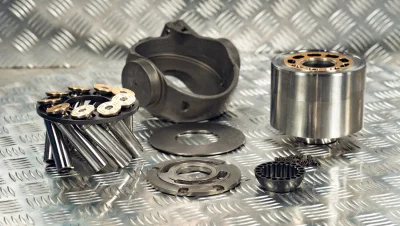
- installed the hydraulic pump – in such a tight space someone slim had to climb inside to line up the bolts,
- connected the fuel, the hydraulic lines (with new O-rings), the hydraulic tank and the intercooler piping.
We replaced the old, perished coolant hoses with new ones so they would not burst and cause overheating. In the wiring, marked with coloured cable ties, we found a poorly protected fuse posing a short-circuit risk – to be replaced. We also discovered a cracked fuel supply hose; once the customer supplied a new one, it was replaced.
Smoke leak test
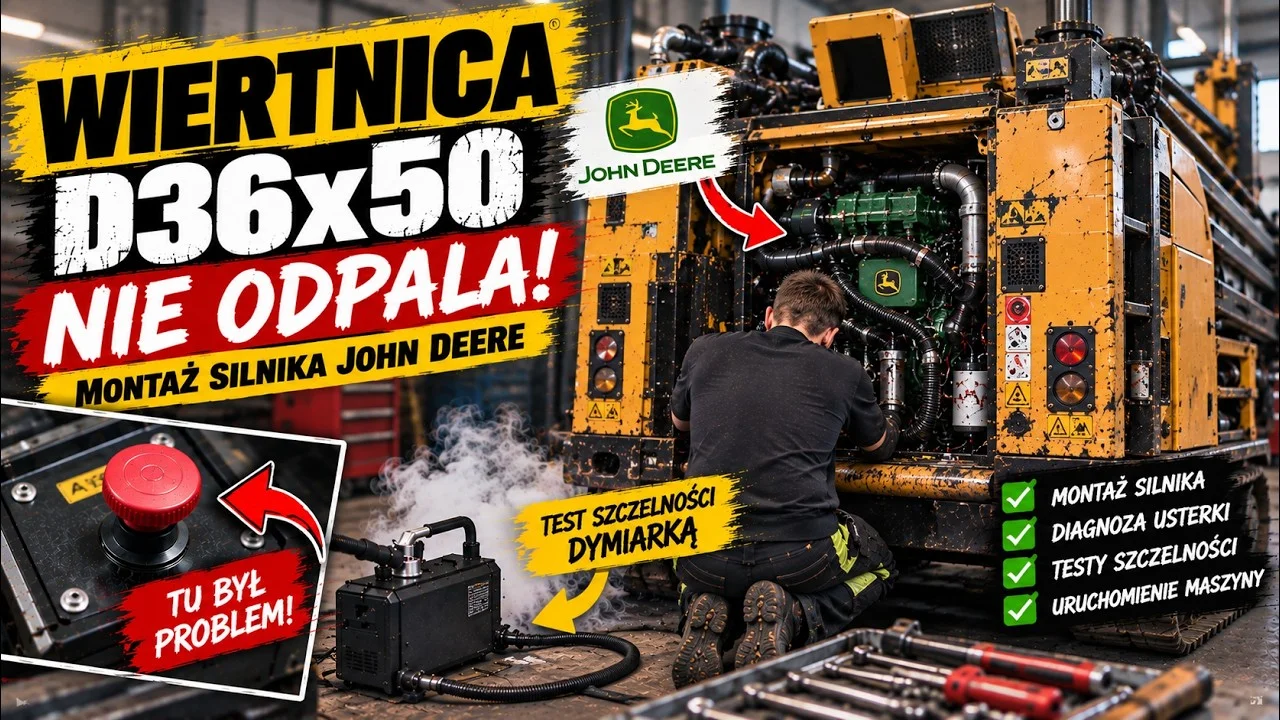
After filling the hydraulic oil we checked the cooling system for leaks with a smoke machine – a unit powered from the machine's batteries with a built-in compressor. The smoke quickly reveals any leak, and the gauge shows whether the system holds pressure. The system was tight, so we filled the coolant.
The machine won't start
Everything was connected, but the starter did not respond and the controller had no communication. We had to stop and study the wiring diagrams. The next day, together with the site electrician, we found the cause – surprisingly mundane: broken wires under the emergency stop button. The switch itself was fine, but the circuit was open, so the machine blocked cranking.
Start-up and testing
After repairing the wires the engine started. We fitted the housings with new air filters, checked for errors (none), warmed the engine up and checked for leaks. The engine runs smoothly with no leaks. The customer collected the machine, and we will see it again for the first oil change at 50 hours.
Takeaways
- Installing an engine in a machine dismantled by someone else takes extra time to reconstruct the connections – label the wiring when dismantling.
- With a no-start, begin with the safety circuits, e.g. the emergency stop.
- A smoke machine is a quick and reliable way to leak-test a system.
- After an engine overhaul, the first oil change is due at about 50 hours.
See our combustion engine overhauls and construction machinery service.
Watch the repair video: John Deere Engine Fitted, Everything Connected… and the Vermeer WON'T START!