

Overhaul of the Cummins QSB 4.5 Engine in a New Holland E195B Crawler Excavator
The New Holland E195B is a crawler excavator designed for demanding earthmoving, excavation and other applications requiring high hydraulic system performance. In this type of machine, the diesel engine is responsible not only for powering the excavator itself, but primarily for supplying the required power to the hydraulic system. For this reason, deterioration of engine performance can quickly translate into reduced productivity of the entire machine.
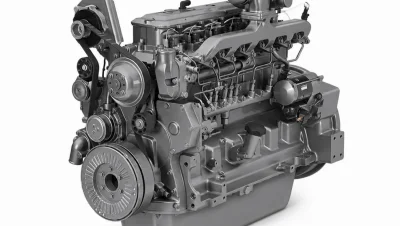
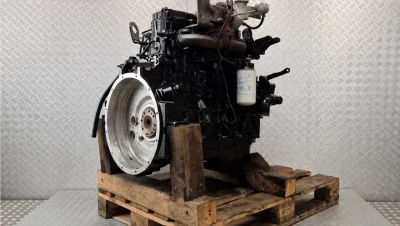
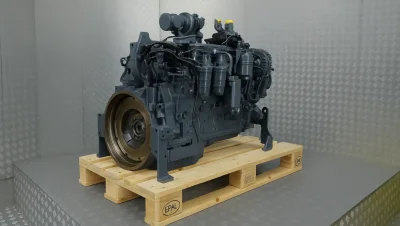
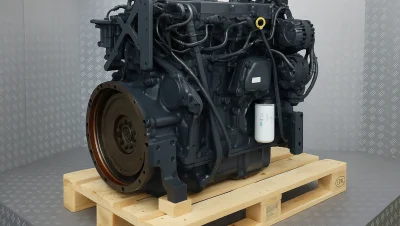
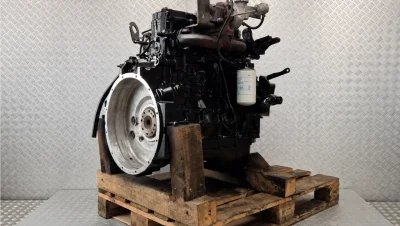
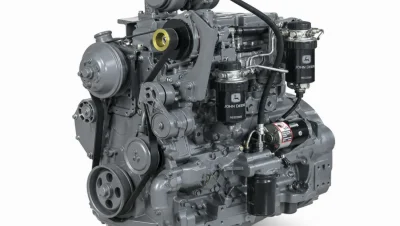
In the case described here, the subject of the work was a Cummins QSB 4.5 engine installed in a New Holland E195B crawler excavator. This engine belongs to a popular family of diesel engines used in construction machinery and other off-highway equipment. The QSB 4.5 was designed to operate under demanding conditions, which means that the proper condition of the crankshaft and piston system, cylinder head, fuel system and engine accessories has a direct impact on the performance and durability of the entire machine.
The work began with diagnostics of the engine directly in the machine. The reason for sending the engine for overhaul was a gradual loss of power combined with increased oil consumption and excessive smoke. Symptoms of this type can indicate natural wear of components responsible for cylinder sealing, so before deciding to remove the engine, it was necessary to carry out diagnostics to determine its actual condition.
Symptoms of Cummins QSB 4.5 Engine Wear
Loss of engine performance in a construction machine should not be ignored, particularly when it is accompanied by increased oil consumption or excessive exhaust smoke. These symptoms can gradually worsen and eventually lead to a significant reduction in machine productivity or an engine failure.
In the New Holland E195B, the gradual loss of power was particularly important because the diesel engine supplies power to the hydraulic system. When the engine is no longer able to maintain the required parameters, the operator may notice slower machine functions, reduced performance under load and difficulties maintaining stable engine operation.
Increased oil consumption can also indicate wear of the piston rings, pistons or cylinder surfaces. As these components wear, the sealing between the piston and cylinder can deteriorate. This may lead to increased blow-by, lower compression and oil entering the combustion process. Excessive smoke can be another indication that the combustion process is no longer taking place under the correct conditions.
These symptoms do not automatically mean that the engine requires a complete overhaul. Similar effects can sometimes be caused by the fuel system, turbocharger, intake system or other engine accessories. This is why proper diagnostics must be carried out before the engine is removed from the machine.
Initial Diagnostics of the Cummins QSB 4.5 in the New Holland E195B
The first stage was a basic inspection of the Cummins QSB 4.5 while installed in the New Holland E195B. Our mechanics checked how the engine started, its stability at idle and its behavior when engine speed was increased. We paid attention to the color and intensity of the exhaust smoke, the engine response to changes in load and the presence of unusual noises.
We then checked the basic operating parameters, including the engine oil level and the condition of components working together with the engine. An important part of the diagnostics was determining whether the loss of performance was actually caused by a mechanical problem inside the engine or whether it could be associated with the intake system, fuel system or engine accessories.
Due to the nature of the symptoms, further diagnostics focused on the sealing condition of the cylinders. When cylinders, pistons or piston rings are worn, three characteristic symptoms may occur simultaneously: reduced compression, increased oil consumption and excessive smoke. These components were therefore subjected to detailed inspection.
The diagnostic results indicated that a detailed mechanical inspection was necessary. At this stage, we did not limit ourselves to replacing individual components based solely on the symptoms. The Cummins QSB 4.5 was removed from the excavator and transferred to our workshop for complete disassembly and inspection.
Removal of the Engine from the New Holland E195B
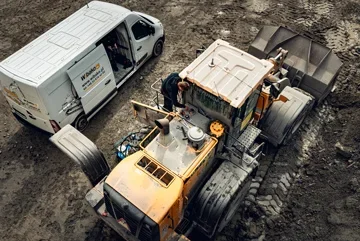
The Cummins QSB 4.5 engine was removed by our mechanics as part of our mobile service. For this type of work, we use a lifting crane provided by the customer. This allows the engine to be safely removed from the engine compartment without uncontrolled movement or the risk of damaging components of the excavator.
Before starting the actual removal, we prepared the New Holland E195B for service work. Components that could potentially be damaged while removing the engine were protected. Electrical connections, cooling system lines, fuel lines, intake components and exhaust system connections were disconnected.
Particular attention was paid to securing the cooling system components. Once disconnected, the lines were protected against contamination and accidental damage. The same procedure was applied to the intake system - after the air lines were disconnected, their ends were protected to prevent dust and other contaminants from entering the system.
The next stage involved disconnecting the engine mounts and components connecting the engine with other excavator systems. Before lifting the engine, our mechanics checked that all hoses, brackets and connections had been properly disconnected. Only after this inspection was the Cummins QSB 4.5 lifted with the crane and removed from the engine compartment.
After removal, the engine was prepared for transport to our headquarters in Kojszówka. There, the actual disassembly, cleaning and inspection of the individual components began. Performing the overhaul in our workshop gives us access to appropriate measuring equipment and a test bench for engines, allowing the completed unit to be thoroughly checked before installation.
Inspection of the Cummins QSB 4.5 Engine
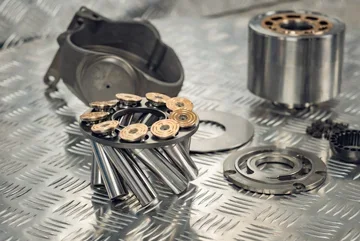
Once the engine arrived at our workshop, we began by disassembling it into individual components. Parts were progressively removed, cleaned and inspected. Inspection does not consist solely of a visual assessment. In the case of an engine undergoing overhaul, measurements are necessary to determine the actual wear of individual components.
The earlier diagnosis concerning wear of components responsible for cylinder performance was confirmed. The condition of the crankshaft and piston system indicated that a comprehensive overhaul was necessary rather than simply replacing one individual component.
We also inspected the cylinder head, crankshaft, connecting rods, camshaft and engine accessories. This allowed us to prepare a repair scope covering not only the cause of the original problem but also components whose condition could potentially affect the durability of the rebuilt engine in the future.
Inspection of the Crankshaft and Piston System
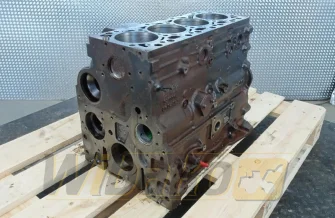
One of the most important stages was the detailed inspection of the crankshaft and piston system. We checked the condition of the cylinders, pistons, piston rings, bearings and crankshaft. Wear of the cylinder surfaces can lead to increased blow-by, reduced compression and higher oil consumption. This is why these components are particularly important when inspecting an engine that previously showed smoke and loss of power.
The crankshaft underwent visual inspection and measurements. We checked the crankshaft journals, runout and oil passages. These inspections make it possible to determine whether the crankshaft can be reused or whether grinding is required. The connecting rods were also checked for signs of overheating, cracks, twisting and longitudinal bending.
The pistons were inspected for wear and their cooperation with the cylinder surfaces was assessed. The piston rings were also checked. Excessive wear of these components can allow combustion gases to enter the crankcase and increase engine oil consumption.
Inspection of the Cylinder Head
The cylinder head of the Cummins QSB 4.5 was inspected separately. We checked the condition of the valve seats, guides, valves and cylinder head surface. An important part of the process was also a leak test.
The cylinder head leak test involves immersing the head in heated water and applying compressed air. Observation of escaping air makes it possible to identify leaks and cracks that cannot always be detected through a standard visual inspection.
After assessing the condition of the cylinder head, we determined the scope of work required to prepare it for reuse. Depending on its condition, cylinder head regeneration may include resurfacing, replacement of valve guides and replacement of valves.
Inspection of the Camshaft and Engine Accessories
The camshaft was visually inspected and measured. Particular attention was paid to the condition of the main journals and cam lobes because wear in these areas can affect the correct operation of the valve train.
The turbocharger was also inspected. As part of the verification process, we checked both axial and radial play. Inspecting the engine accessories is important because after an engine overhaul, a defective turbocharger or another component working with the engine could negatively affect its operation.
Overhaul of the Cummins QSB 4.5 Crankshaft and Piston System
After completing the inspection, we proceeded with the actual engine overhaul. The main area of work was the crankshaft and piston system, whose wear corresponded with the symptoms observed during the initial diagnostics.
The scope of work was determined based on the measurements performed. Depending on the condition of individual parts, components were either approved for further use after positive inspection, sent for regeneration or replaced. This approach helps prevent excessively worn components from remaining in the engine while also avoiding unnecessary replacement of parts that are still within the required technical parameters.
The crankshaft underwent a detailed assessment of its journals and geometry. If measurements indicate that it can be reused after machining, the required crankshaft grinding is carried out. At the same time, the bearings and their cooperation with the crankshaft are checked.
The pistons and cylinders were carefully inspected for wear. Components that did not meet the required parameters were replaced with suitable parts to restore the correct operating conditions of the piston-cylinder assembly.
After preparing all components of the crankshaft and piston system, our mechanics proceeded with engine assembly. Each stage is performed in the correct sequence with continuous checks of the installation. Particular attention is paid to the preparation of mating surfaces and verification of connections because these factors directly influence the durability of the completed overhaul.
Cummins QSB 4.5 Cylinder Head Regeneration
The Cummins QSB 4.5 cylinder head was prepared for reuse according to the results of the inspection. The scope of regeneration was selected according to the actual degree of wear of the individual components.
Work on the cylinder head included preparation of its surfaces, inspection of the valve seats and verification of the valve guide components. Where necessary, valve guides and valves are replaced. Another important stage is a repeated leak test after the work has been completed.
We do not treat the cylinder head as a component that can be prepared simply by replacing one individual part. The complete assembly must be inspected to ensure proper cooperation between the individual components. This helps restore the required combustion chamber sealing and stable engine operation after assembly.
Fuel System and Engine Accessories
The fuel system of the Cummins QSB 4.5 was also inspected during the overhaul. Fuel system components require careful checking because incorrect operation can cause excessive smoke, unstable engine operation, increased fuel consumption and reduced performance.
Components requiring specialist regeneration can be handled using appropriate specialist facilities. Injection pumps can be tested on a test bench, allowing their operation to be verified outside the machine.
The condition of the engine accessories was assessed at the same time. The turbocharger and other components required for correct engine starting and operation were inspected. The objective was to prepare a complete engine that could operate reliably under load once installed in the New Holland E195B.
Professional Assembly of the Cummins QSB 4.5
Once all preparation and repair work had been completed, we began assembling the engine. This is a highly precise stage of the process because even correctly prepared components must be installed properly and inspected throughout assembly.
The engine was assembled step by step, with checks of the correct position of each component. During assembly, we pay particular attention to clean mating surfaces, the condition of seals and the correct execution of all connections. Proper preparation of the engine for its first start is important both for durability and for the results of the subsequent dynamometer test.
After the main assemblies were installed, the engine accessories were fitted. All hoses and connections must be routed in a way that allows them to operate safely after the engine is installed in the excavator. We also inspect areas where hoses could be exposed to vibration or contact with other components.
Once assembly was complete, the Cummins QSB 4.5 was sent for the next stage - testing on our engine dynamometer. This allowed us to assess how the rebuilt unit behaved under load before it was installed in the machine.
Testing the Cummins QSB 4.5 on an Engine Dynamometer
The engine dynamometer is one of the most important elements of our post-overhaul inspection process. It allows us to test the engine not only during unloaded operation, but also under conditions that are much closer to those encountered during actual operation of construction machinery.
For an engine after overhaul, we do not limit testing to a short start-up. The unit is started and observed while operating. Initially, the engine works under light conditions, with a load of approximately 20-30% of its nominal load. This stage allows us to monitor the rebuilt engine gradually and verify its basic operating parameters.
The engine operates under these conditions for a minimum of 16 hours. During this time, we monitor its operation, working temperature, parameter stability and response to load. Extended operation allows the unit to be checked much more thoroughly than a short start-up on a workshop floor.
If the engine maintains its basic operating parameters during the initial period, we proceed to the next stage of testing. The unit is repeatedly loaded to assess its behavior at higher load levels. This makes it possible to check the crankshaft and piston system, fuel system, cooling system and accessories under conditions that more closely resemble real-world operation.
The dynamometer also allows us to identify irregularities that might not appear during a short engine start. During testing, we can observe the engine response to changing loads and determine whether it maintains stable operation. This is particularly important for engines used in construction machinery, where the diesel engine can operate under substantial load for many hours.
Testing on the dynamometer provides an additional safeguard against installing an engine with unverified operating parameters. Instead of installing the Cummins QSB 4.5 in the New Holland E195B and only then checking its behavior under hydraulic load, a significant part of the inspection can be completed before the engine is installed in the excavator.
After the test has been completed and the engine has been positively assessed, the Cummins QSB 4.5 is prepared for transport and installation. This approach is particularly valuable for customers who need to reduce machine downtime and return their excavator to operation as quickly as possible.
Installation of the Cummins QSB 4.5 in the New Holland E195B
After the overhaul and successful dynamometer test, the Cummins QSB 4.5 was prepared for reinstallation in the New Holland E195B crawler excavator. Installation is performed by our mechanics as part of our mobile service. As with engine removal, a lifting crane provided by the customer is used to place the engine back into the engine compartment.
Before starting the installation, we inspect the engine compartment and the components that will work together with the rebuilt engine. Placing the engine into the compartment is only the beginning of the installation process. The unit must be positioned accurately, correctly seated on its mounts and properly connected to the other systems of the excavator.
The engine is positioned correctly and our mechanics then install the engine mounts and remaining components. We check the correct seating of the engine mounts and make sure that the unit is correctly positioned relative to the cooperating components.
The cooling system, fuel system, electrical installation, air intake and exhaust system are then connected. If we identify worn or unsuitable hoses or other intake components during installation, we address the issue rather than leaving a potential problem until a later failure. As part of preparing the excavator for start-up, we also inspect the condition of the air piping and its connections.
All connections are carefully checked for leaks. This applies particularly to the cooling system and air intake system because leakage from either system can negatively affect engine operation. We also inspect hose routing, mounting points and protection against excessive vibration.
After the mechanical installation of the engine, the excavator is prepared for its first start. Filters are replaced according to the service scope, followed by pre-start checks. Fluid levels are checked and all connections made during the installation are inspected.
The first engine start is treated as an important part of the entire process. Our mechanics monitor engine operation and check whether any leaks occur. The excavator is then tested together with its operator.
Operator-assisted testing allows us to check the New Holland E195B under conditions corresponding to normal operation. We inspect the engine response to changes in load resulting from hydraulic system operation. The behavior of the engine is also checked while individual excavator functions are being operated.
After successful testing, we once again inspect the connections for leaks and assess the overall condition of the engine. If the Cummins QSB 4.5 operates correctly, no leaks are present and the excavator responds properly during operation, the installation process is completed. A report confirming the installation is then prepared.
Engine Service After the Overhaul
The engine overhaul itself does not mark the end of the service process. In construction machinery, correct operation during the initial period after an overhaul is particularly important. For this reason, we recommend carrying out the first service inspection after 50 operating hours.
The 50-hour inspection is performed by our mechanics. It is not limited to replacing filters. During the service visit, we inspect the general condition of the engine and its accessories, verify correct operation and check the connections between the engine and other machine components.
At this stage, it is also possible to detect leaks that may have appeared during normal operation. The inspection allows us to respond to irregularities at an early stage and verify that all components installed during the previous work continue to operate correctly.
Further service inspections are recommended every 250 operating hours, but not less frequently than every 3 months. Regular servicing helps maintain proper engine operating conditions and is an important part of operating an engine after a major overhaul.
Cummins QSB 4.5 in Construction Machinery
The Cummins QSB 4.5 is an engine found in various types of off-highway equipment. Engines from this family are used in construction machinery, industrial equipment, agricultural machinery and other applications requiring a durable diesel power source.
In service practice, correctly identifying the specific engine configuration is important. Even engines belonging to the same family may differ in terms of accessories, installation, control systems and the way they are integrated into a particular machine.
When planning an overhaul or engine replacement, it is therefore useful to provide not only the engine model but also the engine serial number, part number or a photograph of the engine identification plate. This allows the configuration to be identified more accurately and helps determine the correct scope of work.
Construction Machinery Service and Cummins Diesel Engine Service
The overhaul described above is an example of a comprehensive approach to engine repair in construction machinery. In the case of the New Holland E195B, the process included diagnostics, engine removal, transport to our workshop in Kojszówka, component inspection, engine overhaul, dynamometer testing and reinstallation in the machine.
Our mobile service team carries out engine removal and installation directly at the customer's location. This allows us to begin work where the machine is being operated and then transport the removed engine to our headquarters, where detailed inspection and overhaul work can be performed.
We provide construction machinery service and diesel engine overhauls for engines used by various manufacturers. In the case of Cummins engines, correct identification of the engine and its application is particularly important. This makes it possible to select the appropriate parts, plan the overhaul and prepare the engine for further operation.
The ability to test the engine on an engine dynamometer is another important advantage. It allows us to check the engine after overhaul before it is installed in the machine. For the customer, this means an additional quality check and greater confidence before the excavator is returned to operation.
Summary of the Cummins QSB 4.5 Overhaul in the New Holland E195B
The overhaul of the Cummins QSB 4.5 engine in the New Holland E195B crawler excavator was carried out as a comprehensive process covering diagnostics and detailed inspection of all major engine components.
The initial symptoms included loss of power, increased oil consumption and excessive smoke. Diagnostics directed the further work toward the crankshaft and piston system, and the workshop inspection after engine removal confirmed the need for a complete overhaul.
After the components were prepared and the necessary repairs completed, the engine was professionally assembled and subjected to an extended engine dynamometer test. Only after the unit successfully completed the load testing was it prepared for installation in the New Holland E195B.
The final stage involved careful engine installation, inspection of all connections, start-up and tests performed together with the machine operator. This process helps reduce the risk of problems after the excavator is returned to operation and gives the customer greater confidence that the engine has been properly prepared for further work.
After the overhaul, we recommend carrying out the first service inspection after 50 operating hours. During this visit, our mechanics inspect the engine, accessories, connections and overall operating condition. Subsequent inspections should be performed every 250 operating hours, but not less frequently than every 3 months.
Related Materials
Construction machinery service
Mobile construction machinery service
Cummins engines for construction machinery
Contact us
Do you need a Cummins QSB 4.5 engine overhaul or service for a New Holland E195B crawler excavator? Contact us - we provide comprehensive engine repairs, removal and installation services, and engine dynamometer testing.