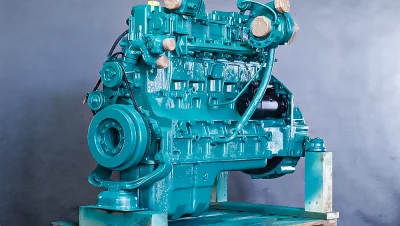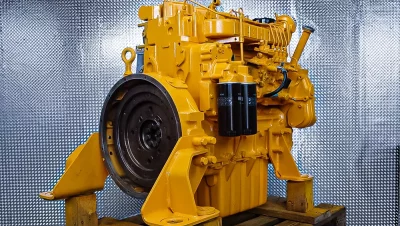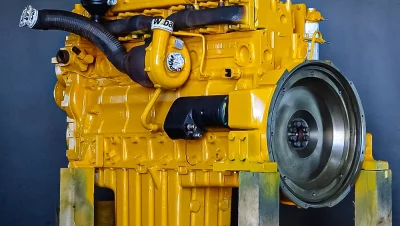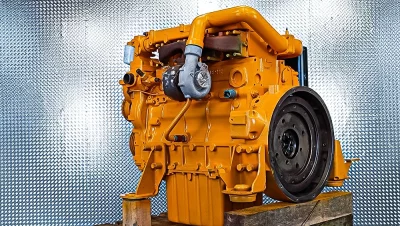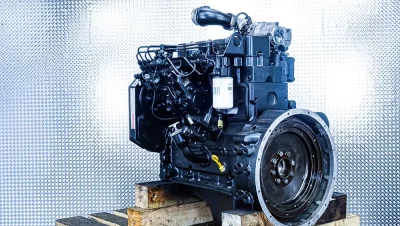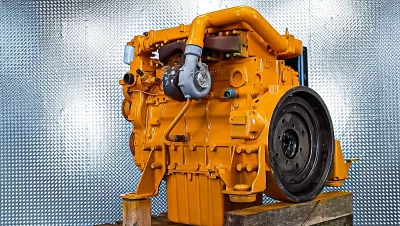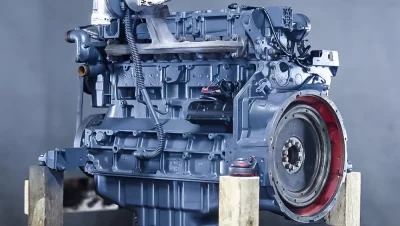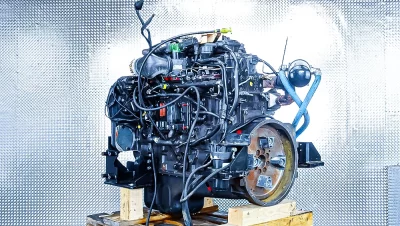


Overhaul of Cummins QSB 4.5 Engine in LiuGong 835H Wheel Loader
An engine failure in a wheel loader can very quickly bring the work of the entire machine to a halt. In the case of heavy construction equipment, it is not only the repair of the power unit itself that counts, but also proper diagnostics, precise verification of components, and testing the engine before reinstalling it. That is why a comprehensive Cummins engine service should cover the entire process – from identifying the cause of the failure all the way to load testing.
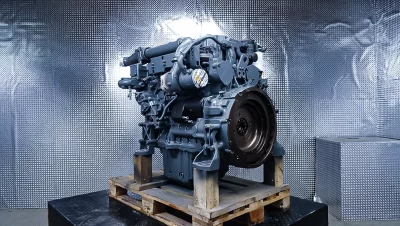
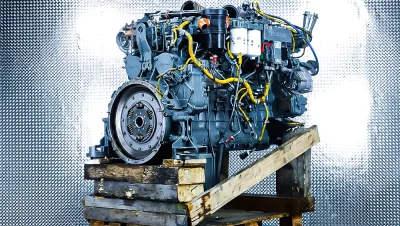
The subject of the project was a LiuGong 835H wheel loader equipped with a Cummins QSB 4.5 engine. The machine worked in demanding conditions, so the power unit was subjected to significant loads. Over time, symptoms indicating wear of the crank-piston assembly components appeared – the engine began to show a drop in performance, oil consumption increased, and its operation was no longer as stable as before.
The LiuGong 835H is a wheel loader designed for intensive work in loading and material transport. In this type of machine, a fully operational engine directly impacts not only the mobility, but also the efficiency of the entire operating system. The Cummins QSB 4.5 unit is a diesel engine used in many off-highway machines, which is why its proper reconditioning requires experience in both diesel engine mechanics and diagnostics of power units operating under heavy load.
In this case, we decided on a comprehensive engine rebuild. Our construction equipment service began work with diagnostics of the unit installed in the loader, followed by engine removal using a crane provided by the customer. After transporting the unit to our headquarters in Kojszówka, a detailed verification of all key components began.
Diagnostics of the Cummins QSB 4.5 Engine Before Removal
Before deciding on an overhaul, it was necessary to determine whether the observed symptoms actually pointed to wear of the crank-piston system components. Diagnostics began with basic checks carried out directly on the machine. Engine starting behavior, idle operation, and performance under increasing load were inspected.
An important signal was increased oil consumption and a noticeable drop in engine efficiency. In the case of the Cummins QSB 4.5 engine, such symptoms can have several causes, which is why we did not limit ourselves to a single inspection. We also checked the condition of the lubrication system and basic operating parameters of the unit.
The next stage was checking the oil pressure. An incorrect value can indicate, among other things, wear on the crankshaft bearings, increased clearances in the lubrication system, or other mechanical issues. Concurrently, attention was paid to the engine's behavior during operation and the presence of unusual noises.
Initial results pointed to the need for a closer inspection of the engine interior. Since the degree of wear on individual components could not be reliably determined without disassembling the unit, the engine was scheduled for further workshop verification.
Removal of the Engine from the LiuGong 835H Loader
Removing the engine from a wheel loader requires proper preparation of the workspace and adhering to a strict order of operations. In this case, the unit was removed from the machine using a crane provided by the customer. Before starting the actual removal, the machine was secured and the engine was prepared for safe disconnection.
First, lines and auxiliary components that could hinder unit extraction were disconnected. Special attention was paid to cooling system lines, intake hoses, and electrical connections. Elements were protected to minimize the risk of damage and contamination during subsequent work.
Engine mounting bolts holding the unit in the compartment were also removed. All connections were dismantled with care, as some components may be exposed to moisture, dirt, and high temperatures over years of machine operation.
Once prepared for extraction, the engine was suspended from the crane and gradually hoisted out of the compartment. At this stage, it was essential to monitor the unit's orientation and ensure that no remaining lines or auxiliary parts were still attached to the machine.
After removal, the Cummins QSB 4.5 was properly secured and transported to our headquarters in Kojszówka. Thanks to this approach, our mobile construction equipment service can perform removal work directly at the customer's site, while the thorough engine overhaul is carried out in workshop conditions.
Workshop Verification of the Cummins QSB 4.5 Engine
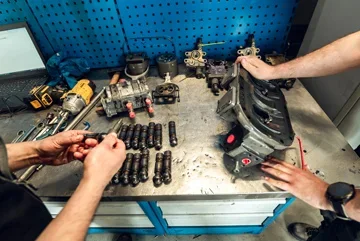
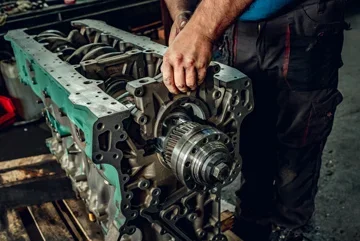
Upon arrival at the workshop, a detailed verification began. The unit was disassembled, and individual components were cleaned and evaluated by mechanics step-by-step. This method allows us to determine the actual scope of overhaul required, rather than limiting the work to replacing parts based solely on symptoms observed on the machine.
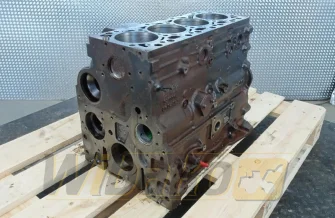
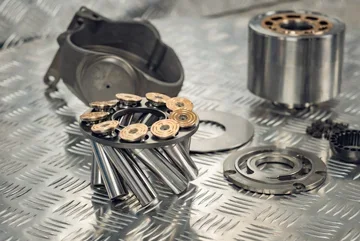
Components inspected included the engine block, crankshaft, connecting rods, pistons, piston rings, cylinder liners, and bearings. Particular attention was paid to friction surfaces and signs of wear that could confirm the root cause of the engine issues.
The crankshaft underwent a visual inspection for cracks, signs of overheating, and wear. Measurements of shaft runout and journals were performed, along with checking the oil galleries. This allowed us to assess whether the shaft could be reused or required further machining.
Connecting rods were also checked. Inspection included assessing wear, potential cracks, signs of overheating, and checking element geometry. Checking the connecting rod bolts was also an essential step.
The verification confirmed wear on parts responsible for the correct operation of the crank-piston assembly. The condition of the unit justified a comprehensive overhaul rather than just a localized quick fix.
Overhaul of the Crank-Piston Assembly
The crank-piston assembly is one of the most critical areas during a Cummins QSB 4.5 engine overhaul. This is where the immense forces generated by fuel-air mixture combustion are transferred. Wear on even a single component can impact the performance of the entire unit.
Following thorough verification, the scope of work for the crankshaft, pistons, rings, liners, and bearings was determined. Components whose condition no longer allowed safe continued operation were slated for replacement or proper reconditioning.
The crankshaft was subjected to detailed dimensional checks. For components requiring machining, crankshaft reconditioning involves grinding to specification. Before reassembly, it must also be ensured that oil galleries are thoroughly cleaned.
The condition of pistons and rings was also inspected. Worn rings can cause increased oil blow-by into the combustion chamber, loss of cylinder sealing, and degraded engine performance parameters. Therefore, the inspection cannot be limited to the piston body alone.
Cylinder liners and bearings were verified as well. All mating components must be accurately matched in size to ensure optimal operating conditions and proper lubrication after reassembly.
Cylinder Head Verification and Reconditioning
In parallel, the engine cylinder head was inspected. The head was examined to determine its suitability for reuse. Inspection covered the condition of valve seats, valves, guides, and pressure testing for leaks.
The head leak test involves submerging it in heated water and applying compressed air. Observing any escaping air bubbles enables the detection of cracks or leaks that may have developed.
Depending on the extent of wear, cylinder head reconditioning includes surface resurfacing (skimming), valve guide replacement, and valve replacement. The goal is not merely surface restoration, but preparing the head for safe ongoing operation while maintaining correct parameters.
Fuel System and Engine Auxiliaries
During a comprehensive overhaul of a Cummins QSB 4.5, auxiliary engine components are also inspected. One cannot assume that after a mechanical overhaul the engine will operate correctly if peripheral components remain in poor condition.
Fuel system components and other engine accessories were subjected to verification. Components requiring specialized testing are sent to appropriate diagnostic benches, including test stands.
The turbocharger was also checked, inspecting for axial and radial play. Verification extended to electrical and electromechanical components, such as the starter motor and alternator.
This wide scope of inspection reduces the risk of a situation where, after overhaul completion, the engine is mechanically sound but auxiliary equipment causes operational issues in the machine.
Professional Reassembly of the Cummins QSB 4.5 Engine
Following the completion of verification and preparation of all parts, reassembly of the unit commenced. Precision is crucial at this stage, as a proper engine overhaul is not just about replacing worn parts. Every component must be properly prepared, installed, and verified before moving on to the next phase.
During the reassembly of the Cummins QSB 4.5, careful attention was paid to the correct alignment of crank-piston assembly components, proper seating of bearings, pistons, and rings. Mutual clearance of individual components and the cleanliness of lubrication channels were constantly monitored.
The cylinder head was installed after prior verification of its condition. Proper bolt tightening sequence and torque specifications were strictly observed during installation.
After assembling the core engine, necessary auxiliaries were installed. Connections of hoses, cooling system components, and air intake lines were checked. Every connection must be tight, as even a minor intake leak can affect engine operation, while coolant or oil leaks could lead to severe consequences during operation.
Once reassembly was finished, the engine was prepared for startup and testing. At this point, the process transitions to another essential stage – testing the unit on an engine dynamometer.
Cummins QSB 4.5 Engine Test on a Dynamometer
One of the key advantages of a comprehensive overhaul is the ability to test the engine before reinstalling it in the machine. At WIBAKO, we have an in-house engine dynamometer, allowing us to test the unit under controlled conditions and verify its behavior under load.
A dynamometer test differs significantly from a basic engine startup on a workshop stand. The mere fact that a unit starts and idles does not mean the overhaul was successful. An engine working in a LiuGong 835H wheel loader must cope with dynamic loads and respond properly to power demands. Therefore, testing under load is a crucial component of post-overhaul quality control.
According to our standard procedure, the rebuilt unit runs for a minimum of 16 engine hours under light conditions, at a load of approximately 20-30% of nominal capacity. This stage allows technicians to monitor the engine smoothly post-overhaul and verify basic operating parameters.
During the test, engine stability, load responsiveness, and the behavior of individual systems are continuously monitored. We also check whether prolonged operation reveals any undesirable symptoms that might call for further inspection.
If the engine maintains correct parameters after the initial break-in period, testing proceeds to the next stage. The unit is repeatedly subjected to higher load levels. These trials test how the engine behaves under conditions closely matching actual wheel loader operating environments.
The dynamometer also helps prevent detecting issues only after the engine is reinstalled in the machine. If irregularities arise during testing, mechanics can pause the trial, identify the root cause, and perform additional checks. As a result, the engine returned to the LiuGong 835H is verified not only at startup, but under controlled load conditions.
For the customer, this provides confidence that the Cummins QSB 4.5 engine overhaul was thoroughly verified prior to reinstallation. This is especially vital for construction equipment, where any post-repair failure means additional downtime and repeated service work.
Installing the Engine in the LiuGong 835H Loader
Following successful dynamometer testing, the unit was prepared for installation into the LiuGong 835H wheel loader. Engine installation is just as critical as the overhaul itself. Even a perfectly rebuilt engine will not perform properly if installed incorrectly or if any connection leaks.
Our mechanics perform installation adhering strictly to proper procedure. The engine is lowered into the compartment using the customer's crane. As it is lowered, alignment relative to mounts and surrounding engine bay components is carefully managed.
Once positioned, engine mounts are secured and system connections are reattached. Particular attention is paid to cooling system hoses, intake piping, and auxiliary plumbing. If necessary, hoses showing signs of wear that could compromise future operation are replaced. This is particularly important for hoses exposed to high temperatures, vibrations, and oil exposure.
Electrical connections and auxiliary components are also thoroughly checked. Once all systems are connected, line tightness and connection integrity are verified. Pre-startup preparations are carried out, including filter replacement and checking primary fluid levels.
Initial startup after installation takes place under the supervision of our service technicians. Work does not end when the engine fires up. We observe its behavior, check operating stability, inspect connections, and check for potential leaks. Operational tests are then conducted together with the machine operator.
The operator's presence during testing is important, as they know the loader's working characteristics best and can evaluate performance in realistic daily operating conditions. Engine response to increasing hydraulic and drive loads is thoroughly evaluated.
Upon successful completion of testing, with verified engine performance and zero leaks, an installation sign-off protocol is completed.
Engine Maintenance After Overhaul
An engine overhaul does not end when the machine is handed back for work. For units that have undergone a comprehensive rebuild, starting initial operation correctly is vital.
We recommend performing the first service check after 50 engine hours. Our mobile service team can travel to the client's location to inspect the machine directly on-site. This inspection includes not only filter replacements, but also an overall check of auxiliary components and engine operational parameters.
During this check, any minor leaks that may have emerged during the first hours of normal operation can be caught, and connections between the engine and remaining machine components verified.
Subsequent service inspections are recommended every 250 engine hours, or at least every 3 months.
Where is the Cummins QSB 4.5 Engine Used?
The Cummins QSB 4.5 is a popular engine found in various off-highway applications. Engines from this family power construction, agricultural, and industrial machinery, as well as other equipment requiring a reliable diesel power plant.
For machinery equipped with the Cummins QSB 4.5, properly identifying the specific engine version and configuration is essential. When ordering parts and planning an overhaul, decisions should not be based solely on the model name. Data tag details and specific machine application are equally critical.
That is why, as part of our Cummins engine service, we assist in identifying the unit, defining the required overhaul scope, and selecting the correct replacement parts.
Summary – Comprehensive Cummins QSB 4.5 Overhaul
The overhaul of the Cummins QSB 4.5 engine used in the LiuGong 835H wheel loader covered the full service lifecycle – from on-site machine diagnostics, removal, and transport to Kojszówka, to detailed verification, reconditioning, reassembly, and testing.
The key highlight of the process was testing the rebuilt engine on a dynamometer prior to reinstallation in the loader. This verified engine performance under load and minimized the risk of issues surfacing after installation back in the machine.
A comprehensive approach covering diagnostics, overhaul, testing, and installation prepares the engine for reliable, long-term operation under demanding loader conditions. Following the initial 50 engine hours of operation, an on-site service inspection by our mechanics is strongly recommended.
Construction Machinery and Cummins Engine Service
WIBAKO carries out overhauls and repairs of engines used in construction equipment. Our mobile service conducts diagnostics, removal, and installation of power units directly at the customer's site, transporting engines requiring complete overhauls to our main workshop in Kojszówka.
We provide Cummins engine service, component verification, engine overhauls, and dynamometer testing. Combining mobile capabilities with complete workshop infrastructure allows us to manage the entire repair process from initial diagnosis to final machine commissioning.
Feel free to explore our additional resources on Cummins engine overhauls, construction machinery service, and dynamometer engine testing.
Contact Us
Need an overhaul for a Cummins QSB 4.5 engine or service for a LiuGong 835H loader? Contact us – we provide comprehensive repairs, engine removal and installation, and dynamometer engine testing.