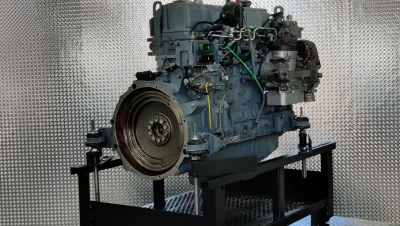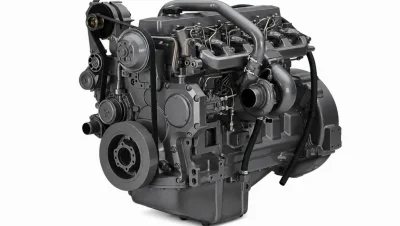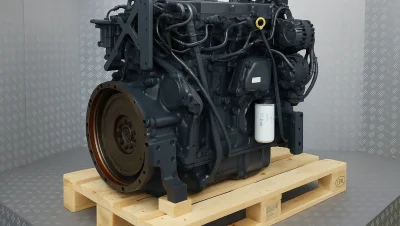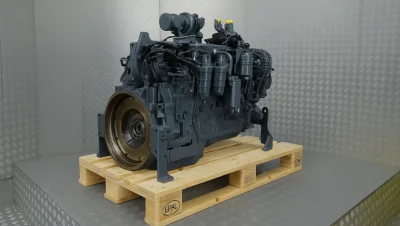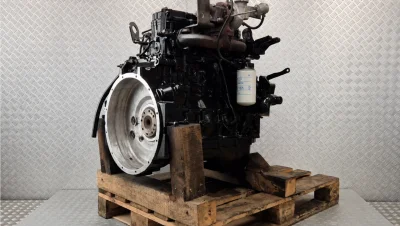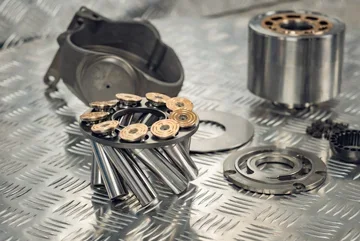


John Deere 6068HF285 Engine Rebuild in a John Deere 624K Wheel Loader
A wheel loader working under demanding conditions cannot afford long downtime. In the case of the John Deere 624K, the engine is the heart of the entire machine, which means that any loss of power, irregular operation or starting problems require thorough diagnostics. In this case, the machine was equipped with a John Deere 6068HF285 engine designed for demanding industrial applications.
The John Deere 624K is a K-Series wheel loader designed for intensive work such as loading, transporting materials and performing repetitive work cycles. The machine's design requires the powertrain to deliver appropriate torque, including at lower engine speeds. The 6068HF285 belongs to the six-cylinder, 6.8-litre John Deere PowerTech E engine family. Depending on the configuration and application, this engine is available in an industrial power range of 104-149 kW. The unit uses turbocharging with air-to-air charge air cooling and an electronically controlled high-pressure common rail fuel injection system.
This repair required a comprehensive engine rebuild. The work included diagnostics, engine removal, detailed inspection of the components, repair of mechanical parts and preparation of the engine for reinstallation. An important part of the entire process was also the test on our engine dynamometer, which allowed the engine to be checked outside the machine and operated under controlled load conditions.
Initial Diagnostics of the John Deere 6068HF285 Engine
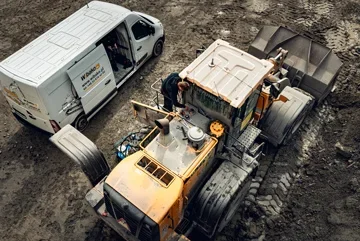
Before removing the engine, it was necessary to determine the actual condition of the unit installed in the John Deere 624K. Diagnostics began with basic checks performed directly on the machine. Our mechanics checked whether the engine could be started, how it behaved during starting and how it operated after reaching operating temperature. The lubrication and cooling systems were also inspected.
One of the main indications that an engine rebuild was necessary was the gradual deterioration of engine performance combined with increased oil consumption. With symptoms of this type, simply replacing an individual component is not sufficient. It is necessary to determine whether the problem is caused by wear in the crankshaft-piston system, deterioration of cylinder sealing or wear of components in the cylinder head.
The initial inspection included checking the engine and assessing its operation. The intake system, charge air pipes, cooling system connections and potential leaks were inspected, together with the condition of the engine accessories. Further diagnostics focused on confirming the source of the problem. When cylinder and piston wear is suspected, compression measurements, cylinder leakage testing and, where possible, borescope inspection are particularly important.
Once the machine-side diagnostics had been completed, a decision was made to remove the engine and carry out a detailed workshop inspection. Only after dismantling the engine is it possible to accurately assess components whose wear cannot always be clearly determined while the engine is installed in the machine.
Removing the Engine from the John Deere 624K
Removing an engine from a wheel loader requires careful preparation. During our repairs, engine removal is carried out using a crane provided by the customer. Before lifting the unit, our mechanics secure the machine and prepare all connections that need to be disconnected.
The work begins by disconnecting the electrical system and components connected to the engine. Engine accessories, electrical connections, fuel lines, cooling system hoses and intake and turbocharging components are disconnected. Particular attention is paid to protecting hoses and fittings so that they are not accidentally damaged or contaminated during removal.
Before lifting the engine out of the engine compartment, the mounting points must also be properly prepared. Mounting bolts are removed and the mechanics check that no component is still connecting the engine to the remaining systems of the machine. Once the engine is secured to the crane, it is carefully lifted out of the engine compartment. The entire process is performed with particular care because the space around the engine in a wheel loader is limited and some components are located very close to one another.
After removal from the John Deere 624K, the engine was prepared for transport to our facility in Kojszówka. There, we began the detailed inspection and dismantling process.
Workshop Inspection of the John Deere 6068HF285 Engine
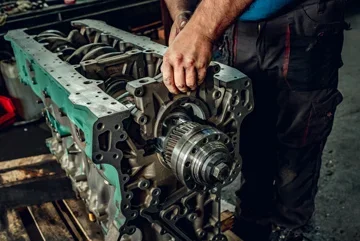
After arriving at our workshop, the engine was prepared for dismantling. First, all components were thoroughly cleaned to allow their condition to be assessed correctly. The engine was then dismantled step by step, with individual components being cleaned and inspected as the process progressed.
In the case of the 6068HF285, particular attention was paid to the crankshaft-piston system. The condition of the cylinders, liners, pistons, piston rings, connecting rods and bearings was inspected. The crankshaft was also carefully examined. Crankshaft inspection includes visual examination for overheating marks, wear and possible damage, followed by measurements of the journals, runout inspection and checking the oil passages.
The connecting rods underwent visual and dimensional inspection. They were checked for cracks, overheating marks, twisting and longitudinal bending. The fastening components were also inspected. This approach helps prevent a situation in which only the most obvious damaged components are replaced while other worn components remain in the rebuilt engine and could affect its service life.
The cylinder head was inspected at the same time. Valve seats, guides, valves and the cylinder head surface were checked. An important part of the inspection is also the leak test. The cylinder head is immersed in heated water and compressed air is introduced into the appropriate passages. Observing escaping air makes it possible to identify areas indicating leakage or cracking.
The camshaft was also inspected. This includes visual examination and measurement of the main journals and cam lobes. The mechanics determine whether the level of wear allows the component to remain in service.
The engine accessories were inspected separately. The turbocharger, for example, was checked for axial and radial play. Electrical and electromechanical components, including the starter motor and alternator, were also inspected.
The fuel system is another important part of the inspection. Proper operation of the high-pressure common rail system directly affects engine performance, fuel consumption and operating smoothness. The 6068HF285 uses an electronically controlled HPCR system, with high-pressure common rail injection and multiple injection events.
Repair of the Crankshaft-Piston System
Once all measurements had been completed, it was possible to determine the scope of work required to rebuild the engine. One of the most important areas was the crankshaft-piston system, which includes the crankshaft, connecting rods, pistons, piston rings, cylinder liners and bearings.
Each component is assessed separately because not every part necessarily requires replacement. If measurements confirm that a particular component can continue to be used, it may remain in service after appropriate preparation. Components exceeding acceptable wear limits are replaced or reconditioned according to the scope of the rebuild.
The crankshaft is carefully measured. If necessary, it can be reconditioned by grinding the crankshaft journals. Maintaining the correct dimensions and geometry of the surfaces working with the bearings is particularly important. The oil passages are also inspected because their condition has a direct impact on the lubrication of the crankshaft-piston system.
The condition of the cylinder liners and pistons is assessed to determine whether wear was responsible for reduced compression and increased oil consumption. If the measured parameters exceed acceptable limits, the components are replaced. New piston rings must work correctly with properly prepared cylinder surfaces, which is why the entire system is treated as a group of cooperating components.
Inspection and Reconditioning of the Cylinder Head
The cylinder head is one of the components that has a major influence on combustion chamber sealing. Its inspection therefore cannot be limited to a visual assessment. After dismantling, the cylinder head is cleaned and checked to determine whether it can continue to be used.
The scope of cylinder head reconditioning depends on the inspection results. Where repairs are required, the work may include resurfacing, replacement of valve guides and replacement of valves. After the work has been completed, the cylinder head is checked again for proper sealing.
A properly prepared cylinder head is essential for achieving correct compression and stable engine operation. For this reason, all operations are performed only after the actual condition of the individual components has been established.
Fuel System and Engine Accessories
During an engine rebuild, the components responsible for supplying fuel and air to the engine cannot be overlooked. The John Deere 6068HF285 uses an electronically controlled HPCR fuel system. Inspecting these components makes it possible to determine whether the injection parameters are correct and whether the fuel system could become a source of problems after the rebuild.
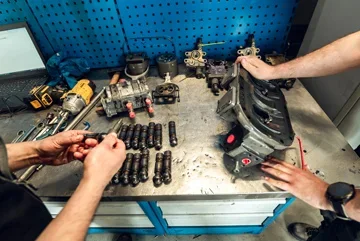
Components requiring specialist testing can be checked using appropriate test equipment. Where necessary, a fuel injection pump can be sent to an external specialist facility for reconditioning. Injectors also require testing appropriate to the fuel system used by the engine.
The turbocharger was also inspected. Checking axial and radial play makes it possible to determine its technical condition. The turbocharger works together with the charge air cooling system, which is why particular attention must be paid to the condition and sealing of the air pipes during reassembly.
Electrical and electromechanical components, including the starter motor and alternator, are also inspected. The aim is to prepare a complete power unit without leaving components that could cause problems after the engine is installed back in the machine.
Professional Assembly of the John Deere 6068HF285 Engine
Once all repair work had been completed, the engine assembly process began. This is a stage where precision and the correct assembly sequence are particularly important. All mating surfaces are properly prepared and individual components are installed according to the applicable technical requirements.
Assembly begins with preparation of the main engine components and the crankshaft-piston system. The crankshaft, bearings, connecting rods, pistons and other components are installed while maintaining the required parameters. Further engine assemblies, including the cylinder head, timing components and accessories, are then installed.
Proper preparation of oil, fuel and cooling system connections is also extremely important. Before the engine is started, we need to be certain that all lines have been connected correctly and that all connections are properly sealed. The intake system and charge air pipes are also inspected to ensure that they are correctly installed and secured.
After assembly, the engine is prepared for starting and testing. The goal is not simply to confirm that the engine starts. The purpose is to verify that all components are working together correctly, that the engine maintains the required operating parameters and that there are no oil, fuel or coolant leaks.
Once the engine has been assembled, it is prepared for testing on the dynamometer. This makes it possible to verify the rebuilt unit under controlled operating conditions before it is returned to the machine.
John Deere 6068HF285 Engine Dynamometer Test
One of the most important stages of the entire rebuild is the test on our engine dynamometer. This allows the engine to be tested outside the machine under controlled conditions and at different load levels. This is particularly important for engines used in construction machinery, because simply starting an engine on a workshop stand does not provide enough information about how it will behave during real working conditions.
After the rebuild, the engine is started on the dynamometer and initially operated under light load. According to our procedure, a rebuilt engine should operate for a minimum of 16 hours under light conditions, at approximately 20-30% of its nominal load. This allows the rebuilt components to operate progressively while our mechanics monitor the basic operating parameters.
During the test, engine operation is monitored across different speed ranges. We observe the behaviour of the unit, the stability of its parameters and its response to changes in load. The dynamometer also allows the load to be increased repeatedly, making it possible to evaluate the engine under conditions closer to those experienced during intensive operation of the wheel loader.
After the initial running-in period and a positive evaluation of the engine parameters, the engine is gradually subjected to higher loads. The test does not end after a short start-up. The unit is repeatedly loaded to verify its response to changing operating conditions and to identify potential problems that might otherwise only appear during intensive operation in the machine.
The John Deere 6068HF285 is a six-cylinder, 6.8-litre engine equipped with turbocharging and charge air cooling. Depending on the configuration, the manufacturer specifies an industrial power range of 104-149 kW. These characteristics demonstrate why testing under load is an important part of verifying an engine intended for heavy-duty equipment.
During the test, we also pay close attention to the tightness of the complete engine assembly. Connections, hoses and components of the cooling, lubrication, fuel and intake systems are inspected. If an irregularity appears during the test, it can be identified before the engine is installed back into the machine.
The engine dynamometer is therefore not simply a place where engine power can be measured. It is primarily a controlled testing environment that allows us to verify a rebuilt engine before it returns to service. For the customer, this provides an additional level of confidence that the engine has been thoroughly checked before being installed in the John Deere 624K.
Installing the Engine in the John Deere 624K
After successfully completing the dynamometer tests, the engine was prepared for installation in the John Deere 624K wheel loader. Engine installation is just as important as removal. It requires accurate positioning of the unit in the machine, correct execution of all connections and verification of the engine's interaction with the other systems.
The engine is lowered into the engine compartment using a crane provided by the customer. Our mechanics carefully check the position of the unit in relation to the mounting points and other components. Once the engine is correctly positioned, the mounts and connections are installed. Particular attention is paid to the routing of components because even an incorrectly positioned hose can become exposed to abrasion, excessive tension or leakage during operation.
The cooling, fuel and lubrication system lines are then connected, together with the air intake system. In the intake system, particular attention is paid to the tightness of all connections between the turbocharger, charge air cooler and the remaining air system components. A leak in this system can negatively affect engine operation and performance.
Electrical connections and components responsible for communication between the engine control system and the machine are also checked. After all components have been installed, a visual inspection of the entire engine compartment is carried out. The mechanics check that no hose or cable has been routed incorrectly, that all mounting points are secure and that all connections have been properly protected.
Before the first start, additional preparation is carried out, including replacement of the required filters and checking the levels of operating fluids. The engine is then started and testing in the machine begins.
After starting, the engine is checked at idle and at increased engine speeds. Our mechanics monitor the operating parameters, inspect the cooling and lubrication systems, check the intake system and look for possible leaks. All previously installed connections are checked again.
The next stage consists of machine tests performed together with the operator. This is important because the operator knows the specific characteristics of the wheel loader and can assess the machine during actual working cycles. The engine's response to changes in load, its behaviour while operating the attachment and the stability of the engine parameters are checked.
Once all tests have been completed successfully and correct engine operation and system tightness have been confirmed, the installation is formally completed. The process therefore does not end with simply placing the engine in the machine - it also includes testing its operation in real working conditions.
Post-Rebuild Engine Service
An engine rebuild does not end when the machine is started. The first operating period of a rebuilt engine is particularly important, which is why we recommend carrying out the first service inspection after 50 operating hours. This inspection is performed by our service team, which travels directly to the customer.
During the 50-hour inspection, we do not limit the work to replacing filters. Our mechanics inspect the general condition of the engine accessories, check the connections between the engine and the other machine systems and verify that the unit is operating correctly. System tightness is also inspected because minor leaks can become apparent during the initial operating period.
After the first inspection, we recommend further service inspections every 250 operating hours, but no less frequently than every 3 months. Regular servicing makes it possible to detect irregularities at an early stage and reduce the risk of serious failures.
John Deere 6068HF285 Engine Applications
The John Deere 6068HF285 belongs to the family of six-cylinder, 6.8-litre industrial diesel engines. The engine has six cylinders in an inline configuration, a 106 mm bore and a 127 mm stroke. The manufacturer specifies a compression ratio of 19.0:1 and turbocharging with air-to-air charge air cooling.
The engine was designed for industrial applications. Its features include forged steel connecting rods, replaceable wet cylinder liners, electronic engine control, a fixed-geometry turbocharger and an HPCR fuel system.
For the John Deere 624K, it is particularly important to match the exact engine version to the machine configuration. John Deere documentation for the 624K series lists several six-cylinder 6.8-litre engine variants depending on emissions version and loader configuration. Therefore, when selecting an engine, spare parts or the scope of a rebuild, the exact engine designation and machine serial number should always be used.
Comprehensive John Deere Engine Service
The rebuild of the John Deere 6068HF285 demonstrates why a comprehensive approach is important when repairing an engine used in construction machinery. Replacing worn components alone is not sufficient if the root cause of the problem and the condition of the remaining components have not first been properly determined.
WIBAKO provides comprehensive diesel engine repair services for construction and industrial machinery. Our services can include diagnostics, engine removal, transportation of the unit to our facility in Kojszówka, dismantling, cleaning and inspection of components, reconditioning, assembly, dynamometer testing and installation of the engine back into the machine.
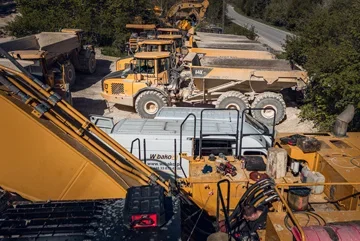
For machines operating away from the customer's premises, we also provide mobile service. Our mechanics carry out engine removal and installation and perform machine tests after the repair has been completed. This allows the customer to entrust the entire process to one company - from diagnostics and removal, through engine rebuilding, to reinstallation, commissioning and subsequent service inspection.
Summary of the John Deere 624K Engine Rebuild
The comprehensive rebuild of the John Deere 6068HF285 engine prepared the unit for continued operation in the demanding working conditions of the John Deere 624K wheel loader. The key stages of the repair included detailed diagnostics, engine dismantling, component inspection, repair of the crankshaft-piston system and cylinder head, inspection of the fuel system and accessories, followed by professional engine assembly.
The engine dynamometer test was an important part of the process. It allowed us to verify the rebuilt engine before installation in the machine and evaluate its behaviour under gradually increasing loads. Only after successfully completing the tests was the engine prepared for installation in the John Deere 624K.
After installation, detailed tests of the engine and the entire machine were carried out, including tests performed together with the operator. After correct operation and system tightness had been confirmed, the machine was ready to return to service.
For engines after a complete rebuild, we recommend the first service inspection after 50 operating hours. Our mechanics can carry out this inspection directly at the customer's site, checking not only the filters but also the condition of connections, accessories and the complete powertrain. Further inspections should be carried out every 250 operating hours, but no less frequently than every 3 months.
Internal Links
Construction Machinery Service
John Deere Diesel Engine Service
Mobile Construction Machinery Service
Contact us
Need a rebuild of a John Deere 6068HF285 engine or service for a John Deere 624K wheel loader? WIBAKO provides comprehensive engine repairs, engine removal and installation in machinery, as well as engine dynamometer testing.