

John Deere 6068HT080 Engine Overhaul in John Deere 1470 CWS Combine Harvester
The John Deere 1470 CWS combine harvester must work for many hours under heavy load during intensive harvest operations. In such conditions, the efficiency of the power unit directly affects not only the performance of the machine, but also the continuity of the entire harvesting process. In the case of the described combine, the reason for sending the engine for an overhaul was high operational wear of the power unit, which over time began to affect its operating parameters.
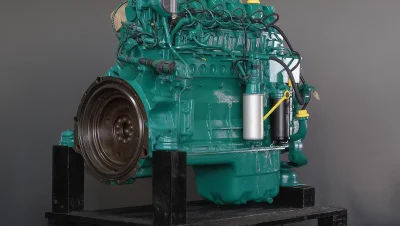
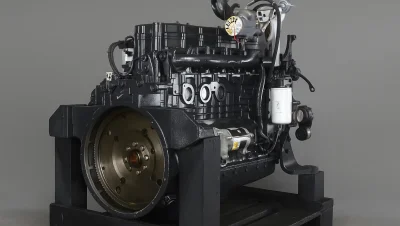
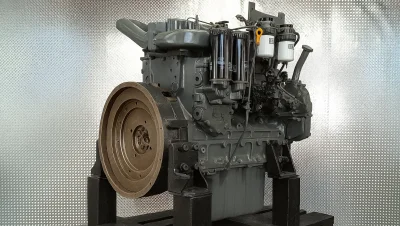
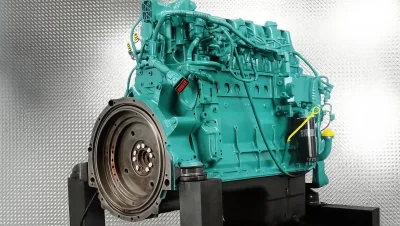
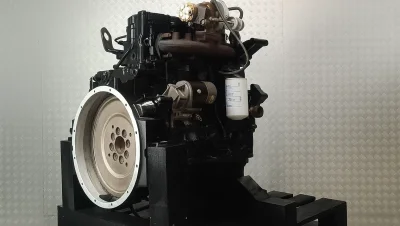
A John Deere 6068HT080 engine, used in the John Deere 1470 CWS combine harvester, arrived at our service center. Instead of limiting ourselves to replacing individual components, we decided on a comprehensive verification of the unit and rebuilding the engine to the extent resulting from the condition of individual components. This approach allows us to accurately determine the cause of the problem and check the condition of elements that could lead to another breakdown during further operation.
The John Deere 1470 CWS is a machine designed for demanding grain harvesting work, which is why the power unit operates under variable conditions and remains under load for long periods. The 6068HT080 engine is responsible for delivering the energy necessary to power the machine's systems, and its proper operation is essential to maintain appropriate combine performance.
In the case of engines used in agricultural machinery, not only the overhaul itself is of particular importance, but also the method of preparing the unit for reassembly. Therefore, the process performed by our John Deere diesel engine service included diagnostics, disassembly, thorough cleaning and component verification, repair of subassemblies requiring intervention, reassembly, engine dynamometer testing, and installation of the unit in the machine.
John Deere 6068HT080 Engine Diagnostics Before Overhaul
The first stage of work was engine diagnostics prior to its disassembly. High mileage and natural wear of engine components can cause a gradual loss of performance, increased oil and fuel consumption, and deterioration of the unit's operating smoothness. Therefore, before starting the overhaul, it was necessary to gather as much information as possible regarding the current condition of the engine.
During initial diagnostics, we paid attention to the starting method of the unit, its behavior during operation, and any potential signs of uneven running. The condition of the basic systems cooperating with the engine was also checked. An important element was checking the lubrication system, as a drop in oil pressure can indicate wear on the crank-piston system components, particularly the bearings and surfaces mating with the crankshaft.
We also analyzed the condition of the engine oil and filter. The presence of contaminants or metallic shavings can be an important indication of progressive wear on internal components of the unit. In the case of a heavily worn engine, such information allows us to direct further diagnostics and prepare an appropriate scope of work.
In the next stage, it was necessary to confirm the actual condition of the unit through its disassembly. Only a thorough verification of components after disassembly allows us to unambiguously determine which subassemblies can be reused, which require reconditioning, and which need to be replaced.
Engine Disassembly from the John Deere 1470 CWS Combine Harvester
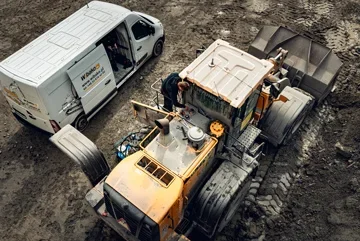
After completing the diagnostics, we proceeded with the removal of the power unit. Engine removal is always performed using a crane provided by the customer. The task of our mechanics is to properly prepare the machine, disconnect components interacting with the engine, and secure the unit before removing it from the bay.
Before starting actual disassembly, all components that could be damaged during engine removal were secured. Wiring harness connections, cooling system components, air intake, and other lines connected to the unit were disconnected. We pay special attention to securing the cooling and intake systems so that contaminants do not enter the lines and ducts during disassembly.
Next, engine mounts and remaining mechanical connections were unbolted. In this type of work, maintaining the correct sequence is crucial, as the engine is connected to many machine components, and accidentally snagging or leaving a line attached can lead to its damage.
After preparing the unit for removal, we utilized the crane provided by the customer. The engine was lifted and guided out of the bay in a controlled manner. Following removal, the unit was prepared for transport to our headquarters in Kojszówka, where the next stage of work began – detailed engine verification under workshop conditions.
Our mobile agricultural machinery service can carry out this type of work directly at the customer's site. Thanks to this, there is no need to organize complex logistics related to transporting the machine to the workshop. Depending on the scope of repair, we dismantle the unit on site and then transport the engine to our facility, where it can undergo comprehensive rebuilding and testing.
Workshop Verification of the John Deere 6068HT080 Engine
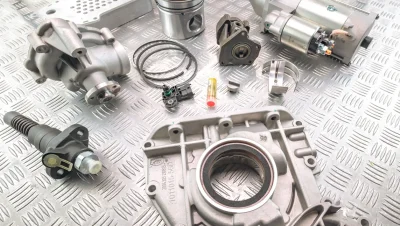
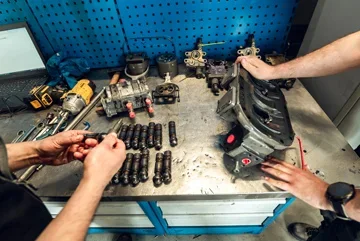
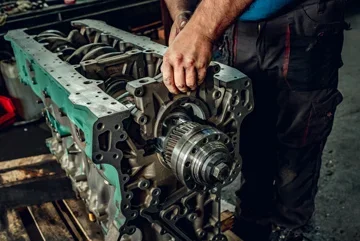
Upon delivery of the engine to our headquarters, we began its tear-down. The unit was disassembled into individual subassemblies, which were then thoroughly washed and verified by mechanics. Inspections conducted in this manner avoid situations where an overhaul is limited solely to replacing parts identified during initial diagnostics.
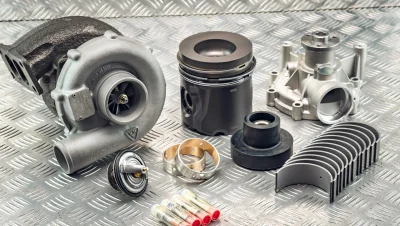
High operational wear confirmed the necessity of a comprehensive approach to the overhaul. The crank-piston system was thoroughly checked, including the crankshaft, connecting rods, pistons, rings, liners, and bearings. We inspected mating surfaces, signs of wear, overheating, and the condition of elements that directly impact proper lubrication and unit operation.
The crankshaft underwent a visual inspection for signs of wear, overheating, and potential damage. Shaft runout, journal dimensions, and oil passage cleanliness were also checked. If allowable dimensions are exceeded, the crankshaft may require reconditioning by grinding.
Connecting rods were also subjected to inspection. We checked them for cracks, signs of overheating, wear, and deformation. Verification includes measuring twist and longitudinal bend, mass control, and checking the condition of the bolts.
In parallel, the engine cylinder head was verified. The inspection covered the condition of valve seats, guides, valves, and cylinder head tightness. If a leak test is required, the cylinder head is submerged in heated water and then subjected to compressed air. The appearance of escaping air bubbles allows for detecting potential cracks.
The camshaft was also verified by checking its surfaces and the degree of wear on journals and lobes. The turbocharger was inspected as well, checking longitudinal and transverse play, among other things.
Crank-Piston System Repair
The most crucial part of the overhaul resulting from high operational wear was the verification and rebuild of the crank-piston system. It is this assembly that is particularly exposed to wear during long hours of engine operation under load.
Each component was evaluated individually. The crankshaft was inspected for dimensions and the condition of mating surfaces. In case reconditioning is needed, crankshaft grinding is performed according to required undersize dimensions.
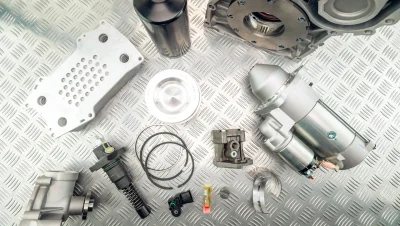
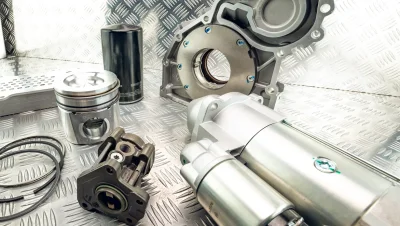
Connecting rods, pistons, and cylinder liners were also checked. Piston verification includes assessing working surfaces, ring grooves, and signs of overheating. Liners are inspected for wear and cylinder wall surface condition. Piston rings are also vital components, as their proper function affects combustion chamber sealing and oil control.
As part of the overhaul, main and rod bearings are also inspected. Their condition is directly related to proper lubrication and crankshaft operation. During unit reconstruction, all components must be properly matched, and mating surfaces thoroughly prepared for assembly.
Engine Cylinder Head Reconditioning
Another key area of the overhaul was the cylinder head. Its condition directly influences cylinder compression, the combustion process, and correct valve operation. Therefore, the cylinder head is not treated as a component that can merely be cleaned and reinstalled without prior inspection.
The cylinder head was thoroughly washed and verified. We checked valve seats, guides, valves, as well as the overall tightness of the element. Depending on the wear level, head reconditioning includes surface resurfacing (skimming) and replacement of valve guides and valves.
Upon completion of the work, cylinder head surfaces were properly prepared for reassembly. We paid special attention to maintaining proper geometry and tightness, as even minor irregularities in this area can affect engine operation after start-up.
Fuel System and Auxiliaries Inspection
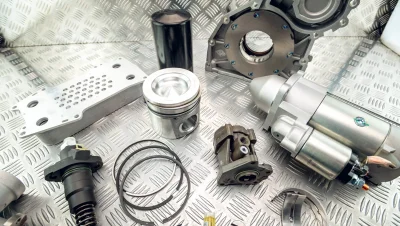
During the overhaul, we also inspected fuel system components and engine accessories. The supply system must ensure correct fuel dosing; therefore, elements requiring more detailed inspection can be routed to specialized test benches.
Injection pump testing is performed on a test bench. This allows us to assess its actual condition and operation under controlled conditions. Fuel injectors are also tested, as their condition is essential for proper combustion, smooth engine running, and fuel consumption.
The turbocharger was also inspected. Checking longitudinal and lateral play allows us to determine if the component can be reused or requires further reconditioning. Remaining engine accessories, including electromechanical components, were verified as well.
Professional Assembly of the John Deere 6068HT080 Engine
After completing all work related to component verification and reconditioning, we started assembling the engine. This stage requires extreme precision, as a properly executed overhaul does not end with replacing worn parts. All elements must be appropriately prepared, installed, and checked.
During engine reassembly, we pay special attention to proper preparation of mating surfaces and adhering to correct assembly sequences. Crank-piston system elements are installed while monitoring appropriate dimensions and clearances. After installing the crankshaft, connecting rods, pistons, and remaining components, the unit is gradually built up.
Next, the cylinder head is mounted along with corresponding accessory parts. Subsequently, remaining engine subassemblies, intake system, cooling system elements, and lubrication system are installed.
At this stage, the condition of piping is also of paramount importance. Air hoses and other connections must be checked before installing the engine in the machine. Damaged, worn, or leaking elements should not be left behind simply because the engine itself was overhauled. The tightness of intake connections is vital for proper engine operation, which is why we inspect hoses and their connections after assembly.
Similarly, cooling system components are checked. All hoses, clamps, and fittings must be prepared so that no leaks occur after starting the engine. We also inspect electrical system components and accessory connections.
Upon completing assembly, the engine is prepared for start-up and dynamometer testing. This ensures we do not install the unit in the combine harvester without verifying its operation post-overhaul first.
John Deere 6068HT080 Engine Test on an Engine Dynamometer
One of the most important elements of the entire process is the engine test on an engine dynamometer. Having our own dynamometer allows us to test the unit after overhaul prior to reinstalling it into the machine. This is a significant advantage, as any potential irregularities can be detected at the workshop stage without needing to remove the engine from the combine again.
The test is not limited to a short engine run. After overhaul, the unit operates on the dyno for a minimum of 16 hours under light duty conditions, at a load of around 20-30% of nominal power. This is a break-in phase and simultaneously allows for monitoring engine behavior after the work performed.
During operation, basic unit parameters and its behavior under load are monitored. Mechanics can observe running stability, engine response to load changes, temperature, and the behavior of auxiliary systems connected to the unit. Potential leaks and worrying symptoms that could indicate a problem requiring additional verification are also checked.
After completing the first stage of testing, provided the engine maintains correct operating parameters, we move on to subsequent tests under higher load. The unit is repeatedly loaded to check its behavior under conditions closer to real-world operation. This allows us to evaluate whether the engine responds properly to load and if all previously performed work yielded the expected results.
An engine dynamometer also allows for a more detailed comparison of unit behavior across different load levels. In the case of a combine harvester engine, this is especially important because during work, the machine does not operate at a single load level. Changing harvesting conditions result in varying power demand; hence, the unit must remain stable across a wide operating range.
A dyno test is also a form of quality control for the work we have completed. An engine after a comprehensive overhaul should be tested prior to installation in the machine, as only a loaded test run provides far more information than simply starting the unit on a workshop stand.
Thanks to this approach, the client receives an engine that has not only been assembled, but also tested under load conditions. This is particularly vital for units intended for seasonal and intensive duty machines, where any failure during harvest time can mean severe downtime.
Installation of the Overhauled Engine in John Deere 1470 CWS
Following successful completion of dyno testing, the engine was prepared for reinstallation into the John Deere 1470 CWS combine harvester. Installation is carried out in accordance with accepted service standards, taking into account all mechanical connections, hoses, and accessory items.
The unit was guided into the engine bay using the crane supplied by the customer. Mechanics monitored the engine's position while lowering it to prevent contact with machine components and avoid damaging previously prepared accessories.
Once the engine was positioned, mounts and remaining mechanical connections were installed. Next, lines for the cooling system, air intake, electrical wiring harness, and other systems interacting with the unit were connected.
We paid special attention to the tightness of all connections. After installation was complete, we checked air hoses and cooling system components. We also verified the correctness of electrical connections and accessory operation. Before the initial start-up, we prepared the engine for operation, including performing service tasks necessary for a safe start of operation.
After starting the engine, we initiated a series of tests. We did not limit ourselves to observing the unit running at idle. We verified its behavior during subsequent work stages, checking its reaction to load changes and observing engine parameters.
An essential element is also the involvement of the machine operator. After performing basic tests, our technicians conduct trials together with the operator, as it is the operator who knows the operating characteristics of that specific combine and can point out behaviors that might not occur during a short workshop test.
During testing, engine operation, absence of leaks, and proper functioning of associated components are controlled, among other things. Upon successful completion of trials, assembly can be considered finished, and the completed work is confirmed with an installation report.
Post-Overhaul Engine Maintenance
An engine overhaul does not end the moment it is started in the machine. After completing the work, we recommend performing the first service check after 50 operating hours (mth). Our service team can travel to the client and perform an inspection of the unit once its normal operation has commenced.
The 50 mth check does not consist solely of changing filters. Mechanics also inspect the overall condition of the engine and accessories, check connections between the engine and remaining machine components, and look out for potential leaks. This is an important stage, as after starting work, subassemblies may settle under actual operating conditions, and some connections may require additional checking.
We recommend the first filter change 50 mth after engine start-up. Subsequent service inspections should be performed every 250 mth, but no less frequently than every 3 months. Regular maintenance keeps the engine in good condition and helps detect potential issues sooner.
John Deere Engine and Agricultural Machinery Service
The overhaul of the John Deere 6068HT080 unit shows how important a comprehensive approach to engine repair is for a machine working under heavy loads. Merely replacing worn elements does not provide full information about the state of the entire unit. Only combining diagnostics, meticulous component verification, reconditioning, professional assembly, and load testing prepares the engine for continued operation.
WIBAKO performs agricultural machinery service, engine removals and installations, as well as power unit overhauls. Our mobile service can drive to the client, carry out engine removal work, and then organize transport of the unit to our facility in Kojszówka.
For John Deere engines, proper identification of the unit before commencing work is particularly important. The engine number and machine configuration allow us to select the appropriate repair scope and parts. This enables us to prepare an overhaul tailored to the actual condition of a specific engine instance.
Summary of the John Deere 6068HT080 Overhaul
For the John Deere 1470 CWS combine harvester, the 6068HT080 engine overhaul was performed as a comprehensive unit rebuild necessitated by high operational wear. We started the work with machine-level diagnostics, followed by engine removal, transport to our facility, and detailed verification of all key subassemblies.
The crank-piston system, cylinder head, crankshaft, connecting rods, pistons, liners, bearings, camshaft, fuel system, and accessories were all checked. Components requiring repair underwent proper reconditioning, and the engine was then professionally assembled and prepared for testing.
A crucial stage was the test run on an engine dynamometer, where the unit worked under controlled load. Only after successfully passing the tests was the engine reinstalled into the John Deere 1470 CWS combine harvester. Following installation, we conducted additional testing together with the machine operator, checking for proper engine operation and leak-tightness of all completed connections.
Combining mobile service, workshop facilities, and the ability to test engines on a dynamometer allows the entire process to be carried out comprehensively – from unit removal in the machine, through overhaul and testing, to reinstallation and post-startup inspection.
After completing the overhaul, we recommend a first inspection at 50 mth. Our service team can carry it out directly at the customer's site, inspecting not only filters, but also the condition of the engine, accessories, hoses, and connections. Regular maintenance following an overhaul is an important element in keeping the unit in good condition during further combine operation.
Related Services and Information
John Deere Agricultural Machinery Service – comprehensive diagnostics, engine removal and installation, and machine maintenance service.
John Deere Engine Overhauls – verification, component reconditioning, unit assembly, and engine dynamometer testing.
Engine Dynamometer – testing engines after overhaul under controlled loads prior to installation in the machine.
Mobile Machinery Service – technicians traveling to the customer, unit removal, and reinstallation after overhaul completion.
Contact us
Do you need an overhaul of a John Deere 6068HT080 engine or service for a John Deere 1470 CWS combine harvester? Contact us – we perform comprehensive repairs, engine removals and installations, as well as unit testing on an engine dynamometer.