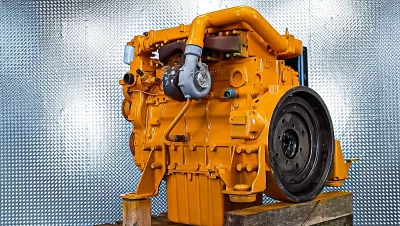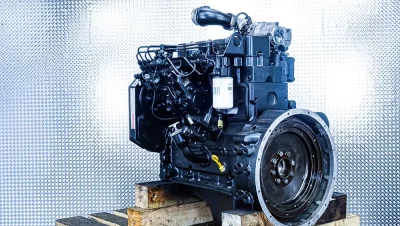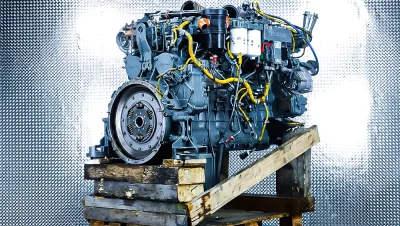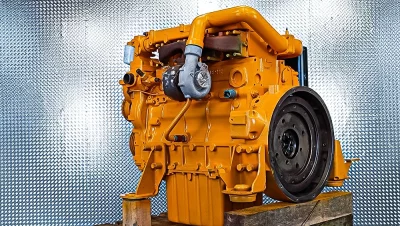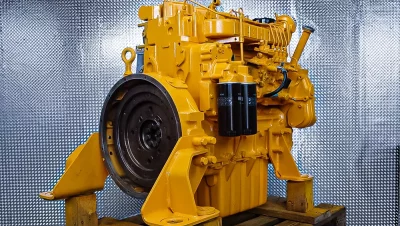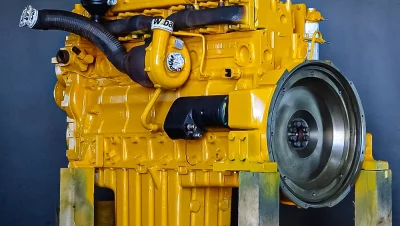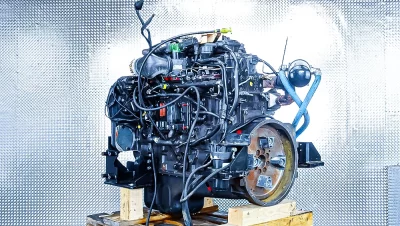


Cummins QSB 4.5 Engine Overhaul in Hyundai HL740-9 Wheel Loader
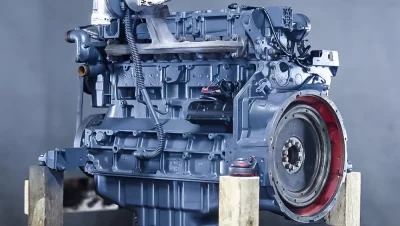
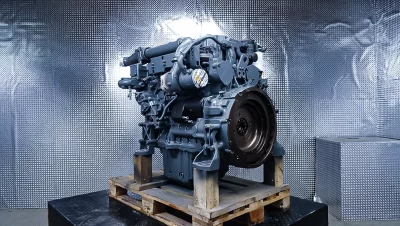
The Hyundai HL740-9 wheel loader lost its efficiency, and the engine's performance began to noticeably deviate from proper parameters.[cite: 1] In such situations, continued operation of the machine can lead to more serious damage and significantly higher repair costs[cite: 1]. For this machine, a decision was made to perform a comprehensive diagnostic and overhaul of the Cummins QSB 4.5 engine[cite: 1]. The work included engine diagnostics while still in the machine, engine removal, thorough verification of all components, repair of the crank-piston system, cylinder head reconditioning, inspection of the fuel system and accessories, followed by professional assembly and engine testing on a dynamometer[cite: 1].
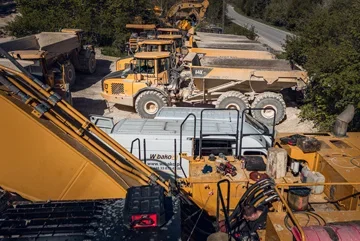
The Hyundai HL740-9 is a wheel loader designed for intensive work in demanding conditions[cite: 1]. Machines of this type are used, among other things, in material handling, earthworks, aggregate management, and on construction sites[cite: 1]. In such applications, the internal combustion engine must provide appropriate power and torque for many working hours[cite: 1]. The Cummins QSB 4.5 unit was designed specifically with industrial applications and off-highway machinery in mind, where durability, the ability to work under load, and stable parameters matter[cite: 1].
WIBAKO performs comprehensive construction machinery service and diesel engine overhauls[cite: 1]. In the case of Cummins engines, proper diagnostics and accurate verification of components are of particular importance[cite: 1]. Simply disassembling the engine and replacing worn parts does not guarantee that the unit will operate correctly after reassembly[cite: 1]. Therefore, the entire overhaul process was carried out in stages, and after completing the work, the engine was checked under load conditions on an engine dynamometer[cite: 1].
Diagnostics of the Cummins QSB 4.5 Engine in Hyundai HL740-9
Before deciding to remove the engine, we performed basic diagnostics of the power unit located in the Hyundai HL740-9 loader[cite: 1]. The goal of this first stage was to determine the technical condition of the engine and find the cause of its performance degradation[cite: 1]. For a unit working in a construction machine, not only the behavior of the engine itself is important, but also how it interacts with the cooling system, air intake, exhaust system, and fuel system[cite: 1].
As part of the diagnostics, we checked the primary operating parameters of the engine[cite: 1]. Control included, among other things, operating temperatures, oil pressure, and the unit's behavior during starting and load increase[cite: 1]. We also analyzed the engine's operation for uneven running, unusual noises, and symptoms indicating wear of internal components[cite: 1].
The next step was to inspect the oil system[cite: 1]. The condition of the oil and filter can provide a lot of information about the engine's health[cite: 1]. The presence of excessive contaminants or metallic shavings can indicate accelerated wear of internal mating components[cite: 1]. For an engine scheduled for overhaul, such information is then compared with the results obtained during disassembly[cite: 1].
Based on the inspections carried out, symptoms were found indicating natural wear and tear of the power unit related to high mileage and intensive operation[cite: 1]. The engine no longer provided parameters suitable for a loader operating under heavy load[cite: 1]. To unambiguously determine the extent of wear, we decided to remove the unit and perform a complete verification in the workshop[cite: 1].
Engine Removal from the Hyundai HL740-9 Loader
Removing an engine from a wheel loader requires proper preparation[cite: 1]. The engine is connected to many machine systems, so individual lines and components must be carefully marked and secured before starting work[cite: 1]. This helps reduce the risk of errors during subsequent installation[cite: 1].
Our mechanics began work by preparing the machine for safe disassembly[cite: 1]. Wiring harness components and lines related to the power unit's operation were disconnected[cite: 1]. The cooling system, air intake, and other connections that could be damaged during engine removal were secured[cite: 1]. Auxiliary components and mountings allowing the unit to be extracted from the engine compartment were also removed[cite: 1].
A crane provided by the client was used to extract the engine[cite: 1]. After disconnecting all connections, the engine was prepared for safe lifting and removal from the Hyundai HL740-9 loader[cite: 1]. At this stage, exercising caution is particularly important because the power unit is a heavy component, and there are many parts in the engine compartment that could be damaged[cite: 1].
After removal, the engine was prepared for transport to our headquarters in Kojszówka[cite: 1]. There, we began a detailed verification of the unit[cite: 1]. If engine removal must be performed directly at the client's location, our mobile construction machinery service can organize the work on-site and subsequently transport the unit to our workshop[cite: 1].
Workshop Verification of the Cummins QSB 4.5 Engine
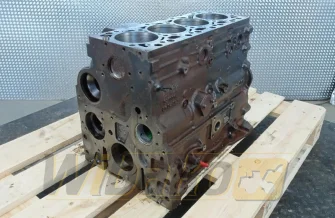
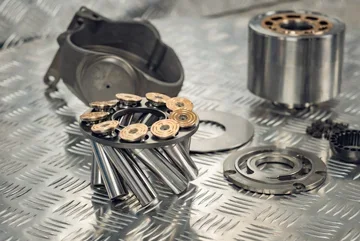
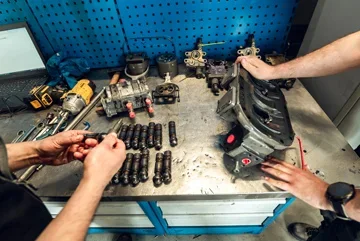
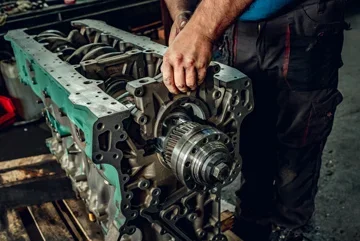
After delivering the engine to the workshop, the unit was disassembled[cite: 1]. All parts were systematically cleaned and inspected by the mechanics[cite: 1]. Verification does not rely solely on visual assessment[cite: 1]. For an engine undergoing an overhaul, it is necessary to perform measurements to determine which components can be reused and which require replacement or reconditioning[cite: 1].
First, we performed an inspection of the crank-piston system[cite: 1]. The crankshaft, connecting rods, pistons, rings, cylinder liners, and bearings were checked[cite: 1]. The crankshaft underwent a visual inspection for signs of wear, overheating, and potential damage[cite: 1]. Journal measurements and shaft runout checks were also performed[cite: 1]. Oil galleries were checked as well, as their clearance is directly critical to proper unit lubrication[cite: 1].
Connecting rods were inspected for cracks, signs of overheating, wear, as well as possible twisting and bending[cite: 1]. Their dimensions and the condition of the bolts were also verified[cite: 1]. This type of inspection is particularly crucial in an engine that has operated under heavy load for many hours[cite: 1].
Pistons and cylinder liners were checked as well[cite: 1]. Wear on mating surfaces can cause loss of compression, increased oil consumption, and performance drop[cite: 1]. For an engine intended for further operation in a wheel loader, components whose wear exceeds allowable values cannot be left in place[cite: 1].
Crank-Piston System Repair
After completing measurements, we defined the scope of work necessary to rebuild the Cummins QSB 4.5 engine[cite: 1]. The crank-piston system underwent a comprehensive repair[cite: 1]. Worn elements were replaced with new ones or reconditioned if their technical condition allowed for continued use[cite: 1].
The crankshaft was thoroughly checked and measured[cite: 1]. If wear values require machining, the shaft can undergo grinding[cite: 1]. Maintaining proper dimensions and correct surface geometry mating with the bearings is essential[cite: 1]. After completing machining and inspection, the shaft can be reused in the rebuilt engine[cite: 1].
Main and connecting rod bearings were also inspected[cite: 1]. These components are responsible for the proper interaction of the crankshaft with the engine block and connecting rods[cite: 1]. Their wear can lead to a drop in oil pressure, play formation, and more severe crankshaft damage[cite: 1].
Pistons, rings, and cylinder liners were checked[cite: 1]. If allowable values are exceeded, worn components are replaced[cite: 1]. Proper fitting of all crank-piston system parts is important for achieving adequate compression, limiting oil consumption, and ensuring proper fuel combustion[cite: 1].
After preparing the individual components, the system was reassembled according to technological requirements[cite: 1]. Special attention was paid to the cleanliness of all surfaces, proper lubrication during assembly, and correct tightening of fasteners[cite: 1].
Cylinder Head Verification and Reconditioning
The cylinder head is one of the engine's most critical components, which is why it was also thoroughly verified[cite: 1]. The inspection included the condition of valve seats, valves, and valve guides[cite: 1]. Cylinder head pressure testing was also performed[cite: 1].
A cylinder head pressure test allows detecting cracks that are not always visible during a standard visual inspection[cite: 1]. The head is submerged in heated water and then connected to compressed air[cite: 1]. Observing escaping air allows determining whether the structure is leak-free[cite: 1]. This is particularly important for an engine that will later work for many hours in demanding conditions[cite: 1].
Depending on its technical condition, the cylinder head may require reconditioning[cite: 1]. The scope of such reconditioning includes resurfacing (decking), valve guide replacement, and valve replacement[cite: 1]. After completing the work, all components are checked again to ensure the cylinder head can be safely used during the engine rebuild[cite: 1].
Cummins QSB 4.5 Fuel System Inspection
The fuel system directly affects how the engine runs[cite: 1]. Incorrect fuel metering can cause uneven operation, increased fuel consumption, smoking, and power loss[cite: 1]. Therefore, during the Cummins QSB 4.5 overhaul, we inspect fuel system components responsible for proper fuel preparation and delivery[cite: 1].
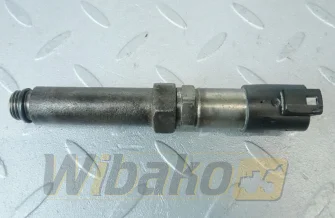
Injectors are components whose condition is of particular importance to the combustion process[cite: 1]. In case of doubts regarding their condition, they should be tested on an appropriate test bench[cite: 1]. This allows evaluating their operation and detecting irregularities that cannot be unambiguously identified through visual inspection alone[cite: 1].
Fuel system inspection is part of the comprehensive engine rebuild[cite: 1]. The goal is not merely to restore the ability to start the unit, but to ensure its proper operation after installation in the Hyundai HL740-9[cite: 1].
Turbocharger and Engine Auxiliaries Verification
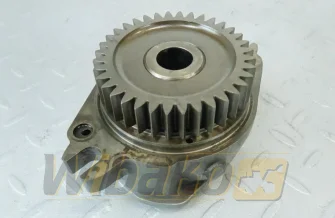
During the overhaul, the power unit's auxiliaries were also checked[cite: 1]. The turbocharger underwent axial and radial play inspection[cite: 1]. Its condition affects the amount of air delivered to the engine, and thus the combustion process and output power[cite: 1].
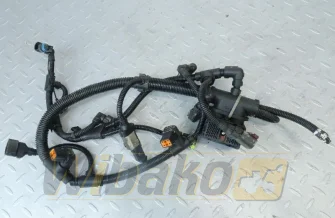
The inspection also covers electromechanical components and subassemblies that must properly cooperate with the engine after it is installed in the machine[cite: 1]. Thanks to this, during unit reassembly, one can minimize the risk of a situation where the overhauled engine is mechanically sound, but an issue arises in one of the retained auxiliary parts[cite: 1].
Professional Reassembly of the Cummins QSB 4.5 Engine
Following verification and the preparation of all components, we began reassembling the engine[cite: 1]. This stage requires high precision, as subsequent operation of the entire unit depends on correct assembly[cite: 1]. All surfaces were properly prepared and cleaned, and components were installed according to established technology[cite: 1].
During reassembly, we pay special attention to the crank-piston system[cite: 1]. The crankshaft, bearings, connecting rods, pistons, and other components must be installed in the correct sequence while adhering to proper specifications[cite: 1]. Bolted connections and components responsible for proper engine lubrication are also controlled[cite: 1].
Next, the cylinder head is mounted along with the prepared valve system[cite: 1]. All sealing surfaces must be properly prepared to reduce the risk of subsequent fluid leaks[cite: 1]. During assembly, we also pay attention to intake and exhaust system components[cite: 1].
After assembling the unit, the engine is prepared for startup and testing[cite: 1]. We check available connections, line conditions, and auxiliary components[cite: 1]. Particular attention is paid to oil lines, fuel lines, cooling system lines, and air intake hoses[cite: 1].
Cummins QSB 4.5 Engine Test on a Dynamometer
One of the most important stages of the entire process is testing the engine on an engine dynamometer.[cite: 1] The ability to test the overhauled unit outside the machine provides additional quality control over the performed work[cite: 1]. The engine can be started and loaded under controlled conditions before returning to the Hyundai HL740-9 loader[cite: 1].
The dynamometer allows observing engine behavior under various load levels[cite: 1]. We do not limit ourselves to a brief startup to check if it runs[cite: 1]. After overhaul, the engine is operated for a minimum of 16 hours under light duty conditions, with a load level of approximately 20-30% of nominal capacity[cite: 1]. This duration is needed to observe operating parameters and detect any potential irregularities[cite: 1].
During testing, primary operating parameters of the engine are monitored[cite: 1]. We observe, among other things, operational stability, lubrication system behavior, temperature, and unit response to load changes[cite: 1]. If the engine maintains proper parameters after the light-duty operating period, further testing phases begin[cite: 1].
In the next phase, the engine is repeatedly loaded[cite: 1]. This allows checking its behavior under conditions much closer to real machine operation[cite: 1]. For a power unit driving a wheel loader, this is particularly essential because the engine may repeatedly transition between different load levels during operation[cite: 1].
The dyno test is also a way to increase customer safety[cite: 1]. Potential issues can be detected prior to installing the unit in the machine[cite: 1]. As a result, we reduce the risk of needing to remove the engine from the loader again should irregularities occur[cite: 1].
Therefore, an engine dynamometer is not just a place where we check if the engine starts[cite: 1]. It is a test stand enabling controlled load testing and observation of the overhauled unit under conditions that cannot be fully replicated during a short stationary test[cite: 1]. In the case of a comprehensive Cummins QSB 4.5 overhaul, such verification forms a vital element of the entire process[cite: 1].
Installing the Engine in the Hyundai HL740-9 Loader
Following successful completion of tests, the engine was prepared for reinstallation in the Hyundai HL740-9 loader[cite: 1]. Depending on the scope of work required on the machine, installation can be performed by our mobile service[cite: 1]. Our mechanics carry out engine removals and installations directly at the customer's site, utilizing a crane provided by the client[cite: 1].
Positioning the unit into the engine bay is only the beginning of the process[cite: 1]. The engine must be properly aligned with its mounts and then secured[cite: 1]. All necessary lines and auxiliary components are reconnected[cite: 1]. We pay close attention to proper routing of lines and securing them against chafing and damage during machine operation[cite: 1].
Cooling system connections are inspected[cite: 1]. We check the condition of hoses and connections responsible for proper coolant flow[cite: 1]. For the intake system, we check air piping, connections, and line tightness[cite: 1]. A sealed intake is critical for proper operation of both engine and turbocharger[cite: 1].
The fuel system and electrical wiring components are also reconnected[cite: 1]. Every connection must be made meticulously, as even a minor leak in a fuel or intake line can cause issues during operation[cite: 1].
Once installation is complete, filters are replaced, and preparations are made for the initial start-up[cite: 1]. Before starting, we check fluid levels and connections across all systems[cite: 1]. After starting the engine, we monitor its operation at idle and during subsequent test stages[cite: 1].
Checking connection tightness is also a key step[cite: 1]. We inspect for any oil, coolant, or fuel leaks[cite: 1]. Air lines and cooling system components are checked as well[cite: 1]. Only after confirming proper engine operation do we proceed to machine testing[cite: 1].
During testing, the Hyundai HL740-9 loader is tested in collaboration with the operator[cite: 1]. This allows verifying the engine not only while stationary, but also under conditions matching real-world machine use[cite: 1]. Unit response to load changes and engine behavior during specific working functions are closely monitored[cite: 1].
A successful completion of tests confirms proper operation of the unit in the machine[cite: 1]. After installation, a report is drawn up confirming the completion of work, proper engine operation, and absence of detected leaks[cite: 1].
Post-Overhaul Engine Maintenance
An engine overhaul does not end the moment it is started[cite: 1]. The initial operating period after a rebuild is crucial for long-term unit durability[cite: 1]. Therefore, we recommend carrying out the first service inspection after 50 operating hours (mth) following engine commissioning[cite: 1].
The 50 mth inspection is performed by our mechanics[cite: 1]. It is not limited strictly to changing filters[cite: 1]. We also check the general condition of auxiliaries, connections between the engine and other machine components, as well as proper unit operation[cite: 1]. We also verify whether any leaks or other irregularities have appeared during the first hours of operation[cite: 1].
We recommend subsequent inspections every 250 mth, but no less frequently than every 3 months[cite: 1]. Regular maintenance allows early detection of issues and reduces the risk of major breakdowns[cite: 1]. WIBAKO offers both engine overhauls and ongoing maintenance service for rebuilt units[cite: 1].
Which Machines Use the Cummins QSB 4.5?
The Cummins QSB 4.5 is a unit used across various industrial applications and off-highway machinery[cite: 1]. Engines of this family can be found in construction machinery, loaders, excavators, rollers, generator sets, and other equipment requiring a compact diesel engine[cite: 1].
When servicing a specific machine, accurate identification of the engine version and its configuration is always essential[cite: 1]. This allows for correct parts selection and determining the scope of work[cite: 1]. Therefore, when requesting an overhaul, it is helpful to provide information regarding the machine model, engine designation, and available unit identification numbers[cite: 1].
Construction Machinery Service and Diesel Engine Overhauls
WIBAKO carries out diesel engine overhauls and comprehensive construction machinery service[cite: 1]. Our facilities allow us to execute the entire process from diagnostics, through engine removal and transport, to overhaul, dyno testing, and reinstallation in the machine[cite: 1].
For wheel loaders like the Hyundai HL740-9, mobile service capabilities are particularly valuable[cite: 1]. Removing and installing an engine does not always mean transporting the entire machine to the workshop[cite: 1]. Our mobile service can travel to the client, perform the necessary work on site, and transport the removed engine to our headquarters in Kojszówka[cite: 1].
Upon completion of the overhaul, the unit can be delivered back to the client and reinstalled in the machine[cite: 1]. As a result, the client receives comprehensive service covering not only the engine overhaul itself, but also preparing the unit for continued operation[cite: 1].
Summary of the Cummins QSB 4.5 Overhaul in Hyundai HL740-9
A comprehensive overhaul of the Cummins QSB 4.5 engine allowed the unit to be prepared for further work in the Hyundai HL740-9 wheel loader[cite: 1]. The reason for performing the overhaul was natural engine wear associated with intensive operation[cite: 1]. Diagnostics carried out prior to removal were supplemented by a detailed verification of all components after disassembling the unit[cite: 1].
The scope of work included checking and repairing the crank-piston system, verifying the crankshaft, connecting rods, pistons, liners, and bearings, inspecting the cylinder head, fuel system, turbocharger, and other auxiliaries[cite: 1]. After assembly, the engine underwent long-term testing on an engine dynamometer, including operation under load[cite: 1].
Next, the unit was installed in the Hyundai HL740-9[cite: 1]. After completing all connections, we conducted leak checks, startup, and tests with operator participation[cite: 1]. This allowed evaluating machine behavior after the overhaul under conditions corresponding to its daily work[cite: 1].
Following the overhaul, we recommend a first inspection after 50 mth[cite: 1]. This is an important maintenance stage during which our mechanics check not only the filters, but also the condition of auxiliaries, connections, and proper unit operation[cite: 1]. Regular servicing helps keep the Cummins QSB 4.5 engine in optimal condition and reduces the risk of further costly breakdowns[cite: 1].
Do you need a Cummins QSB 4.5 engine overhaul or service for a Hyundai HL740-9 loader? Contact WIBAKO[cite: 1]. We perform diagnostics, diesel engine overhauls, machine removal and installation, as well as engine unit testing on a dynamometer[cite: 1].
Related Materials
If you are interested in construction machinery service, also check out information regarding Cummins engine overhauls, mobile service for construction machinery, and engine testing on a dynamometer[cite: 1].
Contact Us
Need a Cummins QSB 4.5 engine overhaul or Hyundai HL740-9 loader service? Contact us – we perform comprehensive repairs, engine removals and installations, as well as engine unit testing on a dynamometer.