

Deutz TCD 6.1 L6 Engine Overhaul in a Vögele Super 1800-3i Asphalt Paver
The Vögele Super 1800-3i is an asphalt paver designed for road construction and resurfacing projects. Operating this type of machine requires stable operating parameters, efficient material distribution and reliable performance from all working systems. The combustion engine plays an important role by supplying the power required to drive the machine's components and perform paving operations. An engine failure can bring the entire machine to a standstill, disrupt the construction schedule and generate additional costs associated with organising work on site.
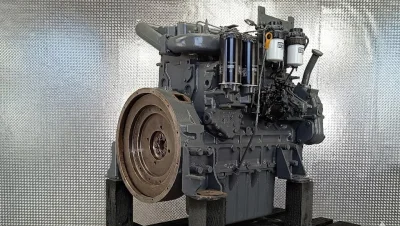
This article presents an example of a comprehensive overhaul of the Deutz TCD 6.1 L6 engine used in a Vögele Super 1800-3i asphalt paver. The process described includes initial diagnostics, engine removal, transportation to the WIBAKO workshop in Kojszówka, inspection of individual components, repair of the crankshaft and piston assembly, cylinder head and auxiliary equipment, as well as testing on an engine dynamometer. The final stages involve reinstalling the engine in the machine, checking its interaction with the other systems and scheduling post-overhaul maintenance.
WIBAKO specialises in diesel engine and construction machinery servicing, carrying out both workshop repairs and work directly at the customer's site. When an engine has suffered extensive damage, the ability to overhaul it in a properly equipped workshop and test it under load before reinstallation makes it possible to assess the results of the repair more thoroughly. The following description illustrates how this process can be carried out on a Deutz TCD 6.1 L6 engine.
Vögele Super 1800-3i and the Deutz TCD 6.1 L6 Engine
The Vögele Super 1800-3i belongs to the category of asphalt pavers used for road surfacing. Machines of this type are employed in the construction of new roads, the modernisation of existing routes, urban infrastructure projects and work on large industrial sites. Their purpose is to distribute asphalt mix evenly and prepare the surface for subsequent stages of road construction. In practice, this requires the machine to operate reliably for extended periods, often in dusty environments, at elevated ambient temperatures and under demanding operating conditions.
Vögele is a manufacturer specialising in road paving technology. The proper operation of an asphalt paver depends on the interaction of several systems, including the drive, hydraulics, electrical installation, cooling system and control systems. An engine failure can affect the operation of the entire machine. For this reason, engine repairs should involve not only the power unit itself but also an inspection of the components that will work with it after reinstallation.
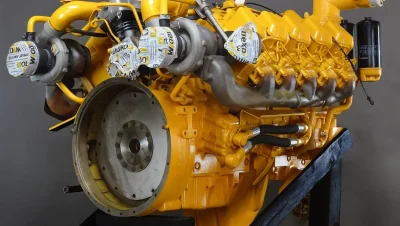
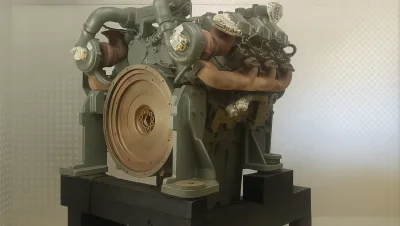
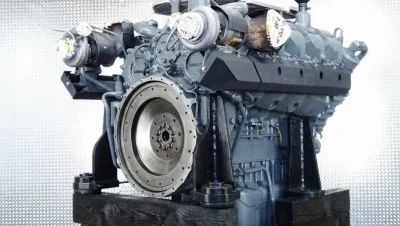
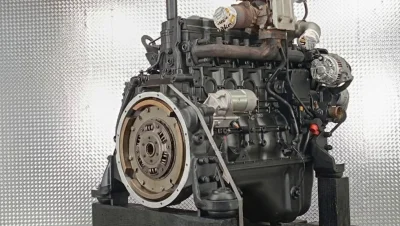
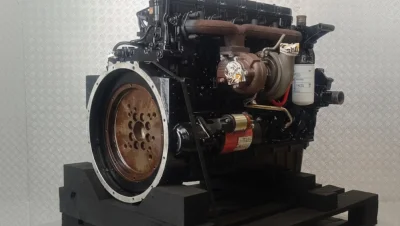
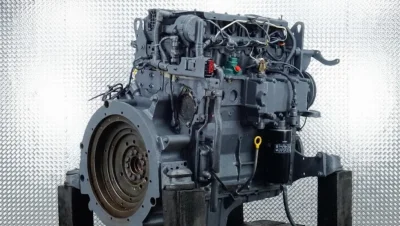
The Deutz TCD 6.1 L6 is a six-cylinder diesel engine used in industrial machinery and off-highway equipment. When diagnosing this type of engine, particular attention is paid to the condition of the crankshaft and piston assembly, cylinder sealing, cylinder head condition, lubrication parameters, cooling system and auxiliary equipment. The precise scope of inspection depends on the engine version, its equipment, operating history and the symptoms reported by the machine operator.
When servicing engines installed in asphalt pavers, it is also important to consider the conditions in which the engine has been operating. Prolonged operation under load, changing working conditions and exposure to elevated temperatures can accelerate component wear, particularly if early warning signs have not been diagnosed in time. For this reason, an overhaul of the Deutz TCD 6.1 L6 should be preceded by a thorough assessment of its technical condition.
Initial Diagnostics of the Deutz Engine Before Removal from the Vögele Super 1800-3i
One possible reason for sending a Deutz TCD 6.1 L6 engine for overhaul is a gradual loss of power accompanied by increased engine oil consumption. The operator may notice that the Vögele Super 1800-3i operates less consistently, responds more slowly to changes in load or requires more frequent oil top-ups. These symptoms do not automatically mean that a complete overhaul is necessary, as they may also be associated with auxiliary equipment, the intake system, turbocharging or other components affecting engine performance.
The first stage involves collecting information about the symptoms and the machine's operating history. Our mechanics establish the conditions under which the problem appeared, whether excessive exhaust smoke is present, whether the engine starts correctly and whether any unusual noises or changes in operating temperature have been observed. Available service records and monitoring system warnings are also checked, where the machine's configuration allows them to be accessed.
Basic diagnostic procedures are then carried out. These include checking the oil level and condition, inspecting the engine for leaks, examining the air intake pipes and assessing the cooling system. Connections and auxiliary components are also checked for leaks or other faults that could affect engine operation. If the symptoms indicate possible cylinder or piston wear, the next step may involve assessing compression pressure, provided that the engine design and test conditions allow this measurement.
A cylinder leak-down test and an inspection of the combustion chambers using a borescope may also be useful. These procedures help identify signs of excessive wear, surface damage or other irregularities that may justify further mechanical inspection. The results of individual tests must be considered together, as a single symptom does not always identify the source of the problem conclusively.
If the diagnostic results indicate serious mechanical wear, the decision is made to remove the engine. A definitive assessment of its condition can only be completed after dismantling the unit and carrying out workshop measurements. In this example, the assumed cause of the problem is wear within the crankshaft and piston assembly, requiring detailed inspection after the engine has been delivered to the WIBAKO workshop.
Removing the Engine from the Vögele Super 1800-3i Asphalt Paver
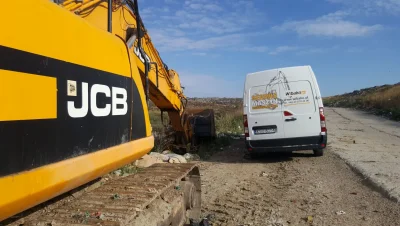
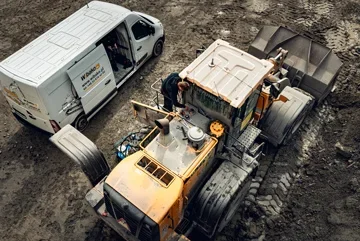
Removing an engine from road construction machinery requires proper preparation of the work area, protection of the machine's components and careful planning of the sequence of operations. The process begins by preparing the machine for servicing and securing it against accidental starting. Our mechanics assess access to the engine compartment, identify components that may obstruct removal and determine how the engine can be safely lifted.
The engine is removed using a crane provided by the customer. Before lifting begins, the lifting points must be identified, suitable slings prepared and the load-handling arrangement checked to ensure that the engine can be moved safely. Particular attention is paid to possible interference with the machine's structure, pipes, protective covers and other components located near the engine compartment.
Once the work area has been prepared, our mechanics begin disconnecting the auxiliary equipment. Mounting components, electrical connections and pipes that must be disconnected before removal are carefully dismantled. Depending on the machine configuration, this may also involve disconnecting cooling system hoses, air intake pipes, exhaust connections, fuel supply lines and connections associated with the lubrication system. All open lines must be properly protected against contamination.
Marking connections and organising the removed components is an important part of the process. This reduces the risk of mistakes during reinstallation. Our mechanics also inspect the condition of pipes, clamps, connectors and mounting points. If cracks, abrasion, corrosion or signs of leakage are found during removal, these observations can be taken into account when preparing the scope of installation work.
Once the systems and auxiliary equipment have been disconnected, the engine is prepared for lifting. It must be moved out of the compartment in a controlled manner, without forcing its movement or placing loads on components that are not designed to support the engine's weight. After removal, the accessible mounting surfaces and components inside the engine compartment are inspected. This prepares the machine for the installation of the repaired power unit.
The removed engine is secured for transportation and delivered to the WIBAKO facility in Kojszówka. A detailed mechanical inspection is then carried out in the workshop. Separating the work into an on-site stage and a workshop stage allows our mechanics to perform accurate measurements, clean the components and inspect parts that were difficult to access while the engine was installed in the machine.
Inspection of the Deutz TCD 6.1 L6 Engine at the WIBAKO Workshop
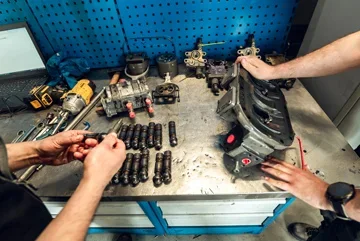
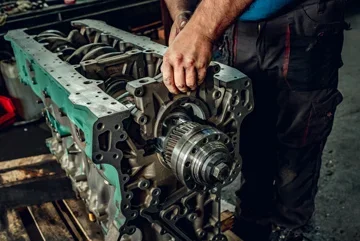
Once the engine arrives at the workshop, a detailed inspection begins. The unit is prepared for dismantling, and its external surfaces are cleaned as necessary to allow the work to proceed safely. Our mechanics then remove individual components and assess their condition throughout the process. The objective is not to replace every part automatically, but to determine which components can be reused, which require reconditioning and which must be replaced with new parts.
The inspection focuses primarily on the crankshaft and piston assembly. The condition of the cylinders or liners, pistons, piston rings, connecting rods, bearings and crankshaft is assessed. Our mechanics look for signs of wear, scoring, thermal discolouration and damage to working surfaces. The crankshaft undergoes visual inspection and measurement, including checks of the journals and runout. Oil passages are also examined, as their cleanliness and unrestricted flow are essential for proper lubrication after reassembly.
Connecting rods are inspected for cracks, deformation, signs of overheating and wear on mating surfaces. Depending on the results of the initial inspection, appropriate geometry measurements are carried out. Pistons and cylinder liners are assessed for wear and suitability for further use. If any component exceeds the permitted wear limits, suitable replacement parts must be installed and the correct operating clearances restored.
The cylinder head is inspected at the same time. Our mechanics check the condition of the valve seats, valves and guides, as well as the cylinder head surface. A pressure-tightness test is an important part of this process. The cylinder head can be immersed in heated water while compressed air is introduced into the relevant passages. The appearance of escaping air bubbles can indicate leaks caused by cracks. The exact inspection procedure depends on the cylinder head design and its condition.
The camshaft is also checked. Visual inspection covers the bearing journals and cam lobes, while measurements help establish the extent of wear. The lubrication and cooling systems are inspected as well, since faults in either system can contribute to repeated engine damage. If contamination is found in the lubrication system, it is particularly important to identify its source and thoroughly clean the components intended for reuse.
The engine's auxiliary equipment is also examined. Depending on the engine specification, the inspection may include the turbocharger, starter motor, alternator and electrical or mechanical components. The turbocharger is checked for axial and radial play, among other aspects. Assessing the remaining auxiliary components helps reduce the risk of a rebuilt engine failing to achieve the expected operating parameters because of a faulty external component.
After the measurements have been completed, our mechanics compile the results and determine the scope of the repair. Only at this stage can they establish precisely which components require replacement, machining or reconditioning. This approach allows the overhaul of the Deutz TCD 6.1 L6 to be tailored to the engine's actual technical condition rather than relying solely on the initial symptoms observed during operation of the Vögele Super 1800-3i.
Repairing the Crankshaft and Piston Assembly of the Deutz TCD 6.1 L6
If the inspection confirms excessive wear within the crankshaft and piston assembly, repairs begin on the components responsible for generating cylinder pressure and transferring force to the crankshaft. Correct parts selection and compliance with assembly specifications directly affect the service life of the engine. For a power unit intended for an asphalt paver, restoring stable operation is particularly important so that the engine can subsequently be tested under controlled load conditions.
The crankshaft is carefully examined for journal wear, runout and surface damage. If its condition permits reconditioning and the relevant dimensional specifications allow machining, the crankshaft may undergo grinding. Following machining, its dimensions are checked again to ensure correct compatibility with the bearings. If the crankshaft does not meet the required technical specifications, replacement may be necessary.
Connecting rods are prepared for reassembly only after their geometry and surface condition have been assessed. Their fasteners are also inspected, and any damage or deformation is evaluated before a decision is made about further use. Incorrect connecting rod geometry can cause uneven loading within the engine, which is why dimensional checks must not be replaced by visual inspection alone.
Pistons, piston rings and cylinder liners are selected according to the inspection results and the requirements of the specific Deutz TCD 6.1 L6 engine version. Our mechanics examine the working surfaces and determine whether individual components can be reused. If wear exceeds the permitted limits, suitable replacement parts are installed. Maintaining the correct clearances and dimensions is essential because these affect cylinder sealing, oil consumption and lubrication conditions.
Before assembly, the components are thoroughly cleaned and the oil passages are checked for unrestricted flow. The crankshaft and piston assembly is then assembled in accordance with the engine's technical requirements. The position of the components, operating clearances and correct seating of individual parts are checked. Every stage requires a clean working environment, as even small contaminants left inside the engine can accelerate wear on mating surfaces.
A comprehensive engine overhaul should not be limited to replacing a single worn component without assessing the remaining parts. Only a complete inspection can establish whether all components will work together correctly after the engine is restarted. At WIBAKO, the scope of work is determined by measurement results and the condition of the unit, with the aim of restoring the engine's proper operating conditions.
Cylinder Head Reconditioning and Valve System Inspection
The cylinder head of the Deutz TCD 6.1 L6 plays an essential role in the combustion process and valve operation. Its condition affects cylinder sealing, engine performance and the ability to achieve the required power output. For this reason, the cylinder head undergoes a detailed assessment after removal, including inspection of its working surfaces, valves, guides and valve seats.
Checking cylinder head tightness is one of the key stages. A test performed in heated water using compressed air can help identify certain cracks and leaks. If the test reveals irregularities, the possibility of further using the component must be assessed. A cylinder head that cannot be safely operated in its current condition should not be reinstalled without addressing the problem.
Depending on the inspection results, reconditioning may include resurfacing, replacement of valve guides and valves, and work on the valve seats. The machining performed must comply with the engine's design requirements. Once the work is completed, the relevant surfaces and the condition of the reconditioned components are checked before reassembly. Correct installation procedures are also essential to achieve proper sealing between the cylinder head and the engine block.
After the cylinder head has been prepared, our mechanics inspect the remaining valve train components and install the assembly according to the technical specifications. The correct tightening procedures and assembly sequence are followed throughout the process. Careful execution of these operations helps reduce the risk of leaks and improper engine operation after startup.
Fuel System and Engine Auxiliary Equipment Inspection
Inspecting the fuel system is another important part of the Deutz TCD 6.1 L6 overhaul. Even a properly rebuilt mechanical assembly will not deliver the expected performance if the fuel system does not supply fuel under the correct conditions. The inspection scope depends on the engine version and the fuel injection system installed. The relevant supply components, fuel line connections and system tightness are checked as part of the verification process.
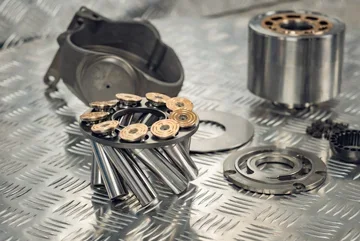
If diagnostics indicate irregularities in injector operation or other fuel system components, these parts require further testing. Depending on the component type, tests may be performed on an appropriate test bench or by a specialised service provider. Any reconditioning of the injection pump is carried out by an external specialist workshop. Once the work has been completed, correct installation and fuel connection tightness must be verified.
The turbocharger is also inspected if the engine is equipped with one. Our mechanics check clearances and the condition of components that may affect proper boost pressure. The inspection also covers the available intake pipes and air system connections. Leaks or restrictions can lead to incorrect operating parameters, which is why these components must be checked during both the overhaul and subsequent engine installation.
The starter motor, alternator and accessible electrical components are also examined. Depending on the findings, individual components may require repair, reconditioning or replacement. Mechanical connections, mounting points and auxiliary equipment are inspected as well, since faults in these areas could complicate the operation of the engine after the overhaul.
Before the engine is assembled, all components intended for reuse must be properly prepared. This includes cleaning, inspecting working surfaces and checking that no contaminants remain that could affect lubrication or fluid flow. This is particularly important following a mechanical failure that may have introduced metal particles or other contamination into the engine oil.
Installing the Deutz TCD 6.1 L6 Engine After the Overhaul
Once the inspection and planned repairs have been completed, the Deutz TCD 6.1 L6 engine is prepared for final assembly. Our mechanics check that all components are present, that the subassemblies have been installed correctly and that all connections are ready. Before the engine is fully assembled, components that will become difficult to access later are inspected. Cleanliness and compliance with the assembly procedures applicable to the specific engine version are essential throughout this stage.
Engine assembly includes installing the crankshaft and piston assembly, the prepared cylinder head and the remaining components required for correct operation. Our mechanics check clearances and component positioning, and tighten fasteners in accordance with the technical requirements. The auxiliary equipment is then installed, including the components of the fuel, lubrication and cooling systems. All pipes and connections must be correctly routed, secured and matched to the engine configuration.
After assembly, the engine is checked for completeness and the condition of its surfaces and connections. Particular attention is paid to components that affect system tightness. Before the first startup, the engine must be prepared for operation according to the relevant service procedures, including checking fluid levels and preparing the lubrication and fuel systems. The exact procedure depends on the engine configuration and the scope of the overhaul.
One of the advantages of carrying out the repair in a dedicated workshop is the ability to test the engine before reinstalling it in the machine. This makes it possible to assess its basic operating parameters and identify potential irregularities before the engine is connected to all the systems in the asphalt paver. Once the initial checks have been completed successfully, the engine is secured for transportation from the WIBAKO workshop in Kojszówka to the location of the Vögele Super 1800-3i.
Before installation, our mechanics prepare the engine compartment. The mounting surfaces, accessible pipes and components intended for reuse are inspected. If any connections are damaged or worn, their condition is assessed to determine whether repair or replacement is necessary. Preparing the compartment before lowering the engine into position helps prevent situations in which a damaged component is discovered only after access has become restricted.
The engine is positioned in the compartment using a crane provided by the customer. The operation is carried out in a controlled manner, with the engine correctly aligned with its mounting points. Once it reaches the required position, our mechanics install the engine mounts and verify that they are seated correctly. The remaining mechanical connections are then completed, and the auxiliary components disconnected during removal are reinstalled.
Reconnecting the cooling system hoses, air intake pipes, exhaust connections, fuel supply lines and electrical installation is an important part of the process. Pipes must be routed to minimise the risk of abrasion, kinking or contact with hot components. Clamps, seals, connectors and mounting points are checked carefully. If worn pipes or damaged connections were identified during removal, they must be addressed before the machine is started.
Once installation is complete, our mechanics check the fluid levels, connection tightness and correct installation of the auxiliary equipment. Components that may affect the safety of the first startup are also inspected. The engine is then started according to the relevant procedure, and its operation is monitored. During these checks, attention is paid to oil pressure, temperature, operating stability and possible leaks. Any irregularities must be investigated before the machine is returned to service.
The final inspection is also carried out with the machine operator present. This makes it possible to assess engine performance under the operating conditions of the asphalt paver and check whether the symptoms reported before the overhaul have disappeared. Our mechanics observe the engine's response to changes in load and its interaction with the machine's other systems. Once the tests have been completed successfully, no concerning symptoms are present and the connections have been confirmed as leak-free, the installation work can be completed and the service documentation prepared.
Testing the Deutz TCD 6.1 L6 Engine on an Engine Dynamometer
The WIBAKO engine dynamometer allows an overhauled engine to be tested under controlled conditions before it is reinstalled in the machine. This is an important stage of the repair process because correct assembly alone does not provide sufficient confirmation of how the engine will perform in operation. Dynamometer testing makes it possible to monitor the engine under load, assess operating stability and verify whether any concerning symptoms appear after the repair has been completed.
After the Deutz TCD 6.1 L6 engine has been prepared for testing, it is started on the dynamometer test stand. Before the main test begins, the basic operating conditions are checked, including fluid levels, the tightness of accessible connections and the correct preparation of the engine. During startup, our mechanics observe engine behaviour, operating stability and the available monitoring readings. If unusual noises, leaks or other concerning symptoms appear, their cause must be established before proceeding to the next stage.
Once the initial inspection has been completed successfully, the engine begins operating under a light load. For engines after an overhaul, WIBAKO conducts a test lasting at least 16 operating hours at approximately 20-30% of the nominal load. This stage allows the engine to be assessed progressively under controlled conditions. Throughout this period, particular attention is paid to operating stability and the behaviour of the main operating parameters.
Dynamometer testing makes it possible to assess the engine separately from the machine, without immediately placing the entire asphalt paver drive system under load. This helps distinguish issues originating within the engine itself from problems that may be associated with the machine installation or connected components. If the engine operates correctly, the load can be increased gradually in accordance with the test procedure. Changing the load makes it possible to observe how the engine responds under different operating conditions.
After the initial period under light load, the engine is tested repeatedly at higher load levels. The purpose is to assess whether it maintains stable operating parameters and responds correctly to changing test conditions. Our mechanics monitor engine behaviour and check the available readings. The engine's response to increasing load is also evaluated, as some irregularities may only become apparent when moving from light-load operation to more demanding conditions.
Dynamometer testing also provides an opportunity to monitor system tightness and assess auxiliary equipment under controlled operating conditions. If symptoms requiring further investigation appear, the engine can undergo additional diagnostics before being approved for installation. This approach reduces the risk of installing an engine that still requires further service work. Although the test does not replace every specialised diagnostic procedure, it is an important part of assessing the quality of the completed repair.
It is worth emphasising that a dynamometer allows the test conditions to be controlled and the load to be increased gradually. This is particularly important when checking and running in an engine after a major overhaul. The process should not be confused with a single startup at idle. Extended operation under controlled conditions makes it possible to observe the engine over time and assess its behaviour under varying loads. As a result, the workshop can evaluate the outcome of the repair more thoroughly before the engine is reinstalled.
Once testing is complete, the observations are used to assess whether the engine is ready for installation and further operation. Only after the test has produced satisfactory results is the engine prepared for transportation and installation in the Vögele Super 1800-3i. Combining a workshop overhaul with dynamometer testing is an important element of the comprehensive diesel engine servicing provided by WIBAKO.
Post-Overhaul Engine Maintenance and the 50-Hour Inspection
Completing the overhaul and installing the Deutz TCD 6.1 L6 engine does not mark the end of the servicing process. During the initial operating period, particular attention should be paid to engine parameters, system tightness and the condition of connections. The operator should monitor the instruments and respond to any unusual noises, smoke, leaks or temperature changes. Any concerning symptoms should be reported to the service team before continuing operation under conditions that could aggravate the fault.
WIBAKO recommends carrying out the first inspection after 50 operating hours following the engine's restart after the overhaul. This is an important stage that involves not only replacing filters and performing oil service tasks, but also checking the overall condition of the engine and its auxiliary equipment. Our mechanics inspect the connections between the engine and the remaining machine components, check system tightness and assess whether the engine has operated correctly during the initial period of use.
The 50-hour inspection is also important because some problems may only become apparent after a certain period of operation. During the service visit, our mechanics can check for oil, coolant or fuel leaks and verify that pipes and mounts remain in good condition. They also assess the general behaviour of the engine and determine whether any symptoms indicate the need for additional diagnostics.
After the first inspection, further checks are recommended every 250 operating hours, but at least once every three months. Maintenance intervals should be adapted to operating conditions and the technical requirements of the specific engine version. Asphalt pavers often work intensive schedules, so regular inspection of the engine and associated systems is important for reducing the risk of unplanned downtime.
WIBAKO also carries out service inspections after completed overhauls. This allows the customer to continue receiving maintenance from a service team familiar with the work already performed. Systematic servicing helps identify irregularities at an early stage and makes it possible to plan maintenance in a way that minimises its impact on road construction schedules.
WIBAKO Deutz Engine and Road Machinery Servicing
Repairing an engine installed in an asphalt paver requires consideration of both the condition of the power unit and the operating environment in which the machine performs its tasks. In the case of the Deutz TCD 6.1 L6, a thorough inspection makes it possible to determine the appropriate repair scope and select suitable repair methods. Detailed measurements, cylinder head checks, crankshaft and piston assembly inspection, and auxiliary equipment testing allow decisions to be based on the actual condition of individual components.
WIBAKO provides diesel engine and construction machinery servicing. The work may include diagnostics, engine removal at the customer's site, transportation of the unit to the workshop in Kojszówka, a comprehensive overhaul, dynamometer testing and reinstallation. Depending on the type of fault and the machine design, the scope of work is determined individually.
Our workshop facilities and the ability to test engines on a dynamometer extend the repair process by allowing the engine to be assessed outside the machine. This is particularly important when access to the engine compartment is limited and a detailed inspection requires dismantling the engine and separating its components. Once the workshop work has been completed, the engine can be prepared for installation and checked during the initial startup procedures in the machine.
For road construction machinery, engine downtime can affect the entire work crew and delay project completion. For this reason, it is important not only to remove the immediate cause of the failure but also to inspect components that may have contributed to the damage or could affect further operation. Proper diagnostics, correct installation and regular servicing help reduce the risk of recurring problems.
Deutz TCD 6.1 L6 Engines in Other Machines
Engines from the Deutz TCD family are used in various industrial applications and off-highway machines. Units with similar designations may be available in different configurations, so engine identification should take into account the complete type designation, serial number and information on the identification plate. The engine family name alone is not sufficient to confirm parts compatibility or determine whether a particular unit can be installed in another machine.
When selecting replacement parts for a Deutz TCD 6.1 L6, it is important to identify the exact engine version and its equipment. This applies to crankshaft and piston assembly components, cylinder head parts, auxiliary equipment and fuel system components. Design differences can affect whether specific parts are suitable, so the identification data should be verified before ordering.
WIBAKO assists with engine identification and parts selection using the engine designation, serial number or a photograph of the identification plate. This information helps establish the correct engine version and reduces the risk of ordering an incompatible component. If an overhaul of a Deutz engine installed in another machine is required, the diagnostic and repair scope should be determined according to the machine's specific configuration and the symptoms identified.
Summary of the Deutz TCD 6.1 L6 Overhaul in the Vögele Super 1800-3i
A comprehensive overhaul of the Deutz TCD 6.1 L6 engine intended for a Vögele Super 1800-3i asphalt paver requires a structured process involving diagnostics, inspection and repair. The essential steps include identifying the cause of improper operation, safely removing the engine, carrying out detailed workshop measurements and determining the required repair scope. Work is then performed on the crankshaft and piston assembly, cylinder head and auxiliary equipment, after which the assembled engine is prepared for dynamometer testing.
Testing the engine under load before installation makes it possible to assess its behaviour under controlled conditions and check operating stability after the overhaul. Once the test results are satisfactory, the engine can be reinstalled in the machine. Our mechanics then inspect the connections, system tightness and correct engine operation. Initial tests are carried out with the operator present, allowing the machine's behaviour to be checked after the work has been completed.
Post-overhaul maintenance is another important part of the process. WIBAKO recommends the first inspection after 50 operating hours, including filter replacement and an assessment of the engine and its auxiliary equipment. Further inspections should be performed every 250 operating hours, but at least once every three months. Regular checks help identify leaks and other irregularities before they develop into more serious faults.
If you require a Deutz engine overhaul, power unit diagnostics or road machinery servicing, contact WIBAKO. Based on the machine and engine identification data, we can determine the next steps, the required inspection scope and the possibility of carrying out the repair at our workshop in Kojszówka. Every engine requires an individual assessment, so the final overhaul scope should be based on its actual technical condition.
Need a Deutz TCD 6.1 L6 Engine Overhaul?
Contact WIBAKO if you require diagnostics, a Deutz engine overhaul or servicing for a Vögele Super 1800-3i asphalt paver. We provide diesel engine repairs, engine removal and installation, and testing on an engine dynamometer. Following an overhaul, we recommend a service inspection after 50 operating hours.