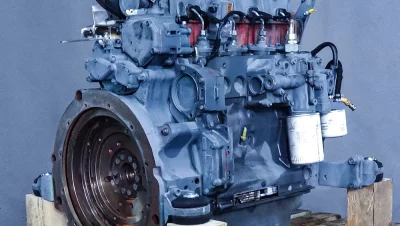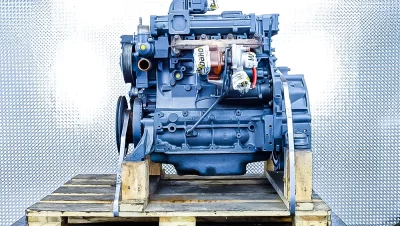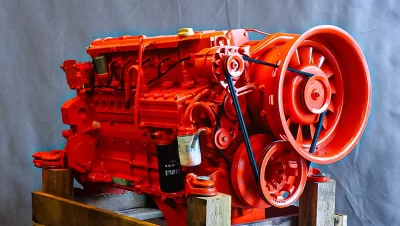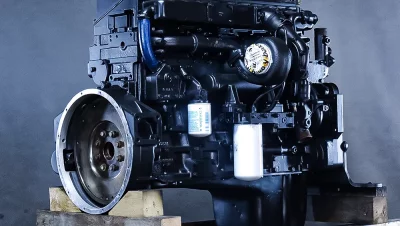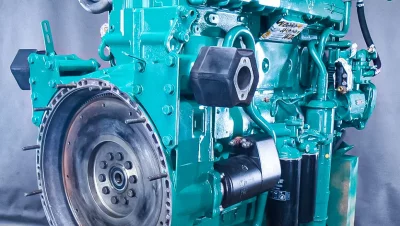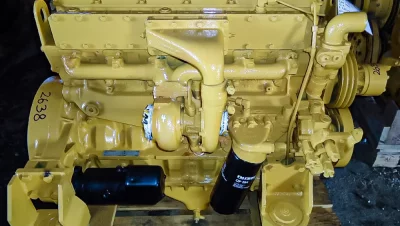


Volvo D7E Engine Overhaul in a Volvo EC240C Crawler Excavator - Comprehensive Power Unit Rebuild and Dynamometer Testing
Introduction
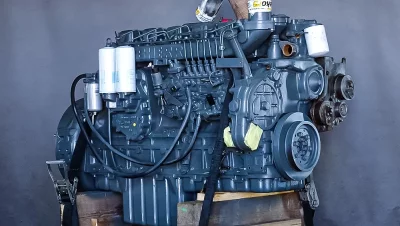
The Volvo EC240C crawler excavator is one of the most popular machines used in earthmoving, road infrastructure construction, demolition work, and industrial projects. This model is equipped with a six-cylinder Volvo D7E engine with a displacement of approximately 7.2 liters, developing around 138 kW at 1800 rpm. This unit was designed specifically for heavy-duty off-highway applications where high reliability and high torque at low engine speeds are required. The Volvo D7E engine was used not only in Volvo EC240C excavators but also in other construction machinery from the manufacturer.
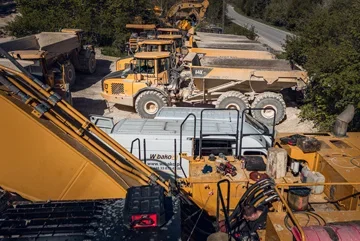
The owner of a Volvo EC240C excavator operating on a road project near Kielce contacted our construction machinery service. The machine operator noticed a gradual loss of power, increased engine oil consumption, and heavy blue smoke when operating under load. Initial analysis indicated significant wear on the cylinder-piston system. Due to the high value of the machine and the need to restore it to full efficiency, the decision was made to perform a comprehensive overhaul of the Volvo D7E engine.
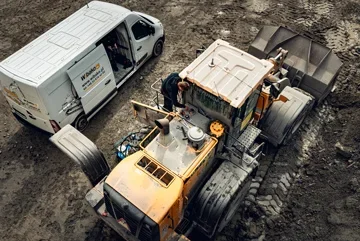
Our mobile service team traveled to the client, performed diagnostics, and then disassembled the power unit. The engine was transported to our facility in Kojszówka, where a full inspection, repair, engine dynamometer testing, and preparation for reassembly were conducted.
Initial Diagnostics of the Volvo D7E Engine in the Volvo EC240C Excavator
The first stage involved detailed diagnostics carried out directly at the client's site. The operator reported issues with maintaining performance during digging, increased fuel consumption, and the need for frequent engine oil top-ups. Additionally, an extended period to reach stable operating parameters during startup was observed.
The mechanics performed compression pressure measurements, evaluated the engine's operating parameters under load, and checked the intake system. The results indicated reduced compression in several cylinders. In the next stage, a cylinder leakage test and an endoscopic inspection of the combustion chambers were performed. The camera image revealed clear signs of wear on the cylinder surfaces and an accumulation of oil deposits.
Analysis of the results confirmed the necessity of a major engine overhaul. Given the machine's mileage and the nature of the work performed, there was a high probability of additional damage within the crank-piston assembly.
Disassembly of the Engine from the Volvo EC240C Excavator
Following the diagnostics, we proceeded with disassembling the power unit. The process was carried out by our mobile service technicians using a crane provided by the client.
Work began with securing the machine and disconnecting the batteries. Next, the cooling and lubrication systems were drained. The subsequent step involved disconnecting the electrical wiring, fuel lines, hydraulic hoses, and engine control elements.
Particular attention was paid to protecting the intake system and intercoolers. All hoses and wires were labeled to ensure correct subsequent reassembly. After removing the ancillaries and disconnecting the connections to the splitter gearbox, the engine was lifted with the crane and safely placed on a specialized transport stand.
Upon delivering the unit to the workshop, a detailed inspection and verification procedure began.
Workshop Inspection of the Volvo D7E Engine
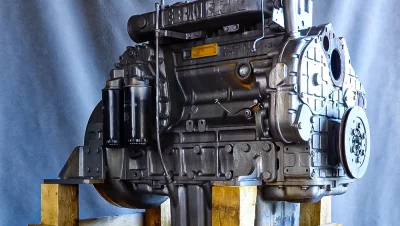
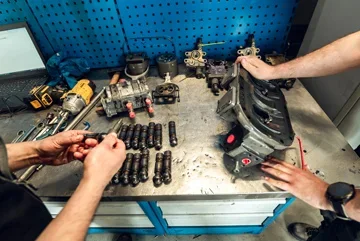
The inspection process began with an attempt to rotate the crankshaft and taking baseline measurements. Subsequently, the engine was completely disassembled into individual parts. All components underwent industrial washing and detailed visual inspection.
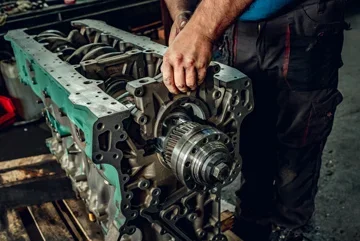
During the inspection of the engine block, significant wear on the cylinder surfaces was found. Diameter measurements showed that allowable operating tolerances had been exceeded. The pistons bore signs of overheating, and the piston rings had lost their required sealing properties.
Crankshaft verification included visual inspection, measurement of main and rod journals, checking oil passages, and inspecting crankshaft runout. Despite natural wear, the component qualified for regeneration via grinding.
The connecting rods were subjected to geometry checks, twist testing, and crack detection. All elements met the requirements for further operation after completing the necessary remanufacturing work.
The cylinder head was also inspected. It underwent a pressure/leak test in a heated water bath. No cracks were found, but wear on the valve guides and valve seats required a full rebuild.
The turbocharger, alternator, starter motor, and fuel system components were also checked. The injectors were sent to a test bench to evaluate their operating parameters.
Repair of the Crank-Piston Assembly
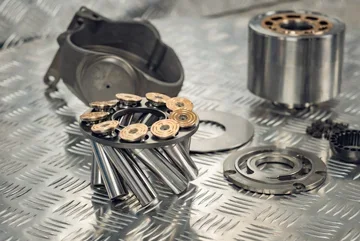
After completing the diagnostic phase, the rebuild of the crank-piston assembly began. The engine block was prepared for the installation of new cylinder liners. Subsequently, a set of new pistons, complete with rings and gudgeon pins, was installed.
The crankshaft was ground, followed by dimensional inspection. New main and rod bearings, selected according to the crankshaft's undersize dimensions, were installed.
Before assembly, each component was thoroughly checked for dimensional accuracy. Particular attention was paid to maintaining proper running clearances and the alignment of the entire crank-piston assembly.
Regeneration of the Volvo D7E Engine Cylinder Head
The cylinder head was completely stripped down. Valve guides, valves, and valve stem seals were replaced. This was followed by valve seat machining and resurfacing of the mating surface.
Upon completion of the work, the cylinder head was again pressure-tested for leaks. Only after a positive test result was it routed for final assembly.
Remanufacturing carried out in this manner restores proper sealing of the combustion chambers and ensures uniform operation across all cylinders.
Fuel System and Engine Ancillaries
The injectors were tested on a test bench. The evaluation revealed incorrect fuel atomization parameters. They were rebuilt and recalibrated.
The turbocharger underwent inspection for axial and radial play. Due to detected wear, it was remanufacturing. Exhaust manifolds, the intake system, and pressure lines were also checked.
The alternator and starter motor underwent a technical inspection. Wear components showing signs of deterioration were replaced.
Professional Engine Assembly
The assembly of the Volvo D7E engine was carried out in accordance with manufacturer procedures. All components were cleaned and prepared for reassembly under workshop conditions that ensure proper industrial cleanliness.
During assembly, new seals, gaskets, single-use bolts, and fastening elements required by the technical documentation were used. Every threaded connection was tightened using torque wrenches adhering to the specified torque values.
After assembling the engine block, the cylinder head, timing mechanism, lubrication system, cooling system, and complete ancillary components were installed. Subsequently, a leak test of all connections was performed, and the correct timing alignment was verified.
Prior to the initial startup, service fluids were filled, the fuel system was bled, and pre-lubrication of the engine was executed. This allowed for a safe commencement of the break-in procedure on the dynamometer.
Testing the Volvo D7E Engine on an Engine Dynamometer
One of the most critical stages of the entire process was the run on the engine dynamometer. Our company belongs to a small group of enterprises specializing in overhauling diesel engines for construction machinery that possess an in-house dynamometer, enabling full testing of units prior to installation.
Following assembly completion, the Volvo D7E engine was installed on a test bench equipped with an operating parameters monitoring system. During the initial startup, oil pressure, coolant temperature, exhaust gas temperature, boost parameters, and idling stability were monitored.
Then, a multi-hour break-in process began. For over 16 hours, the engine ran under a load of approximately 20-30% of its nominal value. This allows for the proper bedding-in of mating surfaces of the new crank-piston components and monitoring the behavior of all assemblies.
After completing the break-in stage, a series of tests were conducted with gradually increasing loads. The dynamometer allows for precise replication of the operating conditions encountered during the exploitation of the Volvo EC240C excavator. Achieved power, torque, combustion parameter stability, and engine response to dynamic load changes were checked.
During testing, the integrity of the cooling, fuel, and lubrication systems was also monitored. Thanks to the use of advanced measuring equipment, it was possible to detect even minor deviations in operating parameters.
Upon completion of all tests, an additional inspection of the engine was performed. No leaks, pressure drops, or anomalies in the operation of the power unit were found. The results obtained on the dynamometer confirmed the achievement of parameters consistent with the requirements for the Volvo D7E engine.
Conducting such tests prior to assembly significantly reduces the risk of issues occurring after the engine is installed in the machine. The client receives a unit verified under load, rather than merely started up on a workshop bench.
Installation of the Engine in the Volvo EC240C Excavator
Following the successful completion of the dynamometer tests, the engine was transported back to the client. Our service technicians completed the installation using a crane available at the project site.
The installation process involved precisely seating the power unit into the engine bay, mounting the engine brackets, connecting the couplings, and hooking up all working lines. Particular attention was paid to the intake hoses, cooling system, and fuel lines.
After completing the installation, operational filters were replaced, systems were bled, and a series of functional tests were performed. A trial startup was then conducted in the presence of the machine operator.
The excavator was subjected to multi-hour operational tests including hydraulic functions, travel, superstructure swing, and execution of digging cycles under load. After verifying the proper operation of all systems, the installation protocol was signed, and the machine was handed over for further operation.
Where is the Volvo D7E Engine Used?
The Volvo D7E engine has found applications in many construction machines from the manufacturer Volvo. This unit was installed, among others, in Volvo EC240C crawler excavators and other machines of a similar weight class. Thanks to its displacement of approximately 7.2 liters, six-cylinder configuration, and turbocharging, it provides excellent running refinement and high operational durability.
In the event of operational issues, we perform both routine repairs and complete major overhauls of these power units, including engine dynamometer testing.
Summary
The comprehensive overhaul of the Volvo D7E engine installed in the Volvo EC240C crawler excavator included full diagnostics, disassembly, verification of all components, rebuilding of the crank-piston assembly, cylinder head regeneration, ancillary repairs, and multi-hour testing on the engine dynamometer.
Thanks to the work carried out, the client received back a fully functional machine ready for years of operation. After 50 operating hours from startup, our mechanics will perform the first service inspection, including filter replacement, checking connections, inspecting for leaks, and evaluating engine operating parameters.
WIBAKO carries out Volvo engine overhauls, construction machinery servicing, as well as disassembly and installation of power units directly at clients' sites throughout Poland.
Volvo D7E engine overhaul
Volvo crawler excavator service
Volvo diesel engine repair
Engine dynamometer for construction machinery engines
Mobile service for construction machinery
Volvo D7E engine overhaul in a Volvo EC240C excavator
Do you need a Volvo D7E engine repair or service for a Volvo EC240C crawler excavator? We perform comprehensive overhauls, diagnostics, engine dynamometer testing, and engine installation directly at the client's site.