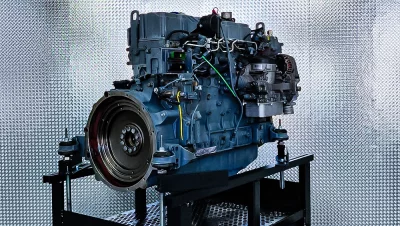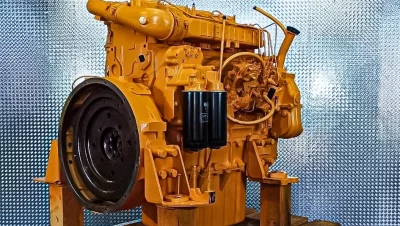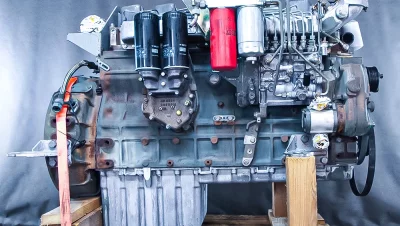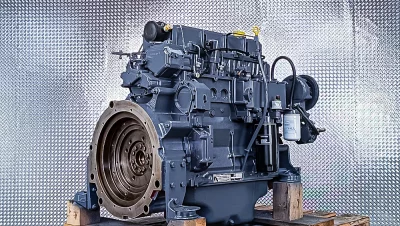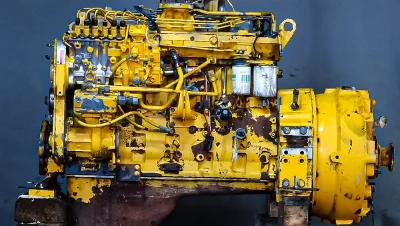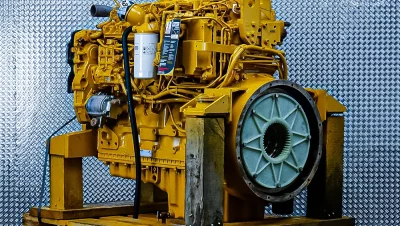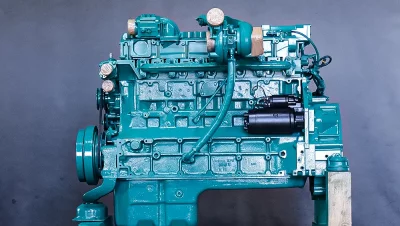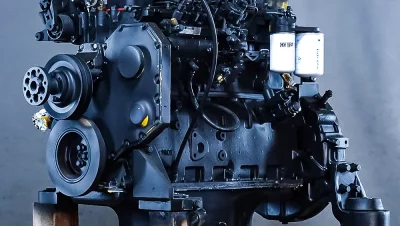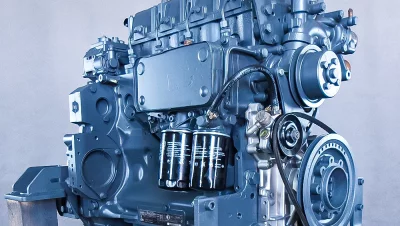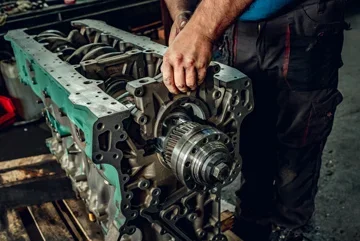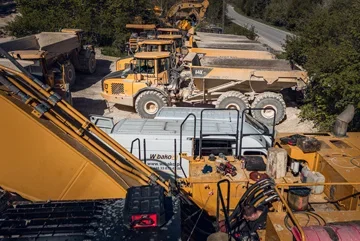


Overhaul of the Liebherr D936 A7 engine in the Liebherr L 586 wheel loader - comprehensive rebuilding of the power unit along with dynamometer testing
Introduction - service of the Liebherr L 586 wheel loader
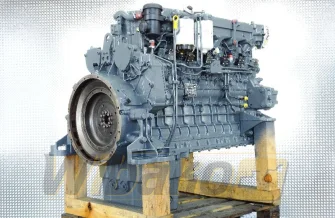
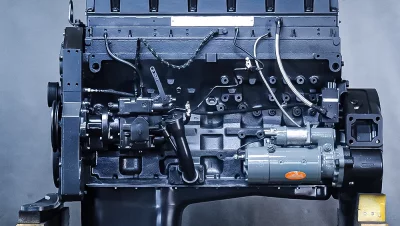
The Liebherr L 586 wheel loader is one of the largest machines used in aggregate mines, recycling plants, transshipment ports, and companies dealing with the transport of bulk materials. The design of this machine was developed for high-load operation for many hours a day. The key element responsible for the efficiency of the entire system is the six-cylinder, 10.5-liter Liebherr D936 A7 engine equipped with a Common Rail system and charge air cooling. This engine was also used in other heavy Liebherr machines.
The owner of a Liebherr L 586 wheel loader operating near Kielce in the Świętokrzyskie Voivodeship contacted our service. For several months, the operators observed a gradual drop in power, increased engine oil consumption, and blue smoke appearing when operating under load. Additionally, an extended cranking time after prolonged standstills was noticed. The symptoms pointed to wear of the cylinder-piston system; however, before making a decision on the overhaul, a full diagnostic assessment was required.
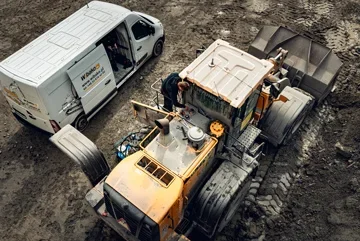
Our mobile construction machinery service went to the customer to perform preliminary tests on the power unit. After conducting compression measurements, analyzing operating parameters, and performing an endoscopic inspection of the cylinders, we confirmed the suspicion of significant wear on the cylinder liners and piston rings. Consequently, the decision was made to disassemble the engine and transport it to our headquarters in Kojszówka, where a complete rebuild of the power unit was carried out.
Preliminary diagnostics of the Liebherr D936 A7 engine
The first stage of work was to conduct detailed diagnostics while still in the machine. Mechanics began by analyzing the operational history of the Liebherr L 586 loader and interviewing the operators. The information obtained allowed us to determine that the engine had operated for a very large number of engine hours without a major overhaul.
During the measurements, reduced compression pressure was found on several cylinders. Next, a cylinder leak test was performed, which showed blow-by into the crankcase. Additionally, an endoscopic camera was used to assess the surface of the cylinder liners. Signs of operational wear and localized damage to the working surfaces were visible.
Exhaust gas analysis and observation of the unit's operation under load confirmed increased oil intrusion into the combustion chamber. Based on the tests carried out, we qualified the Liebherr D936 A7 engine for a comprehensive overhaul.
Disassembly of the engine from the Liebherr L 586 loader
After establishing the scope of work, our team proceeded to disassemble the power unit. The work was carried out directly at the customer's site using a crane provided by the machine owner. This process required proper preparation of both the engine and the loader itself.
First, the batteries were disconnected and the electrical system was secured. Next, operating fluids were drained, and radiators, cooling system lines, fuel lines, and intake system components were disassembled. Particular attention was paid to marking all electrical and hydraulic connections so that subsequent assembly would run smoothly and in accordance with the manufacturer's documentation.
The next stage was disconnecting the exhaust system, the turbocharger along with oil lines, and all accessories that hindered the removal of the unit. After unscrewing the mounting brackets and connections to the transmission, the engine was lifted using transport slings and safely placed on a transport stand.
After securing all technological openings, the unit was transported to our workshop in Kojszówka, where detailed verification began.
Engine verification in the workshop
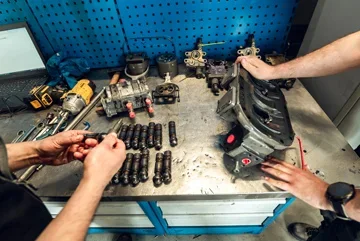
After delivering the Liebherr D936 A7 engine to the workshop, a complete teardown was performed. Each component was thoroughly cleaned in industrial washers and then sent for dimensional inspection.
Significant wear of the cylinder liners and piston rings was confirmed. In several cylinders, signs of surface polishing resulting from years of operation were visible. Diameter measurements showed that the manufacturer's allowable tolerances had been exceeded.
A verification of the crankshaft was also carried out, including visual inspection, runout measurement, and measurement of all main and connecting rod journals. Wear on the working surfaces requiring regeneration was found.
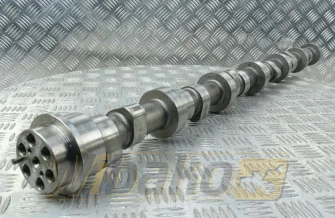
The connecting rods were subjected to geometry checks, weight checks, and bolt condition evaluation. Camshaft verification included measurements of cams and journals. Mechanics also checked the turbocharger for axial and radial play.
The cylinder head was subjected to a leak test in a heated water bath. No structural cracks were found, but the wear of the valve guides and valve seats qualified it for full regeneration.
Repair of the crank-piston system
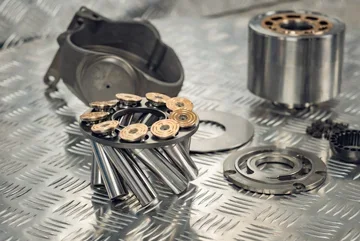
The largest scope of work covered the crank-piston system. The crankshaft was sent for grinding, after which a dimensional check of all working surfaces was performed. New main and connecting rod bearings were used in accordance with the manufacturer's specifications.
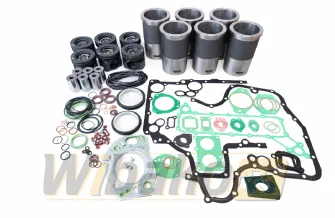
A set of new cylinder liners was installed in the engine block. Next, new pistons with a set of rings were prepared. All components were dimensionally matched in accordance with the technical documentation of the Liebherr D936 A7 engine.
After completing the measurements, the connecting rods were fitted with new mounting bolts. Next, the assembly of the complete crank-piston system was carried out, respecting all tightening torques and assembly procedures.
Regeneration of the engine cylinder head
The regeneration of the cylinder head included resurfacing the block mating surface, replacing valve guides, and installing new valves. After machining, a leak test of the valve seats was conducted.
Mechanics also checked the valve springs, valve control components, and all mating surfaces. After completion of the work, the cylinder head was prepared for mounting on the rebuilt engine block.
Fuel system and engine accessories
The injection pump was sent to a specialized workshop dealing with fuel system regeneration. Upon completion of the work, bench tests were carried out to confirm the correct fuel dosing parameters.
The injectors underwent full inspection and calibration. Additionally, the supply pump and all fuel lines were checked.
The turbocharger was regenerated. Wear components were replaced, and the rotating assembly was balanced. The alternator, starter motor, and engine electrical system were also inspected.
Professional assembly of the Liebherr D936 A7 engine
After completing all regeneration processes, assembly of the power unit began. The assembly was carried out in accordance with the manufacturer's technical documentation and WIBAKO's internal quality procedures.
Each component was verified again before assembly for cleanliness and dimensional compliance. Particular attention was paid to the correct timing setup, fuel system installation, and checking all sealing connections. A full set of gaskets, seals, and single-use mounting hardware was replaced.
After assembling the engine, preliminary priming of the oil systems was performed, and the unit was prepared for startup on the test bench. Subsequently, a leak test of all auxiliary systems, oil, fuel, and cooling lines was carried out.
Following the successful completion of the workshop trials, the engine was prepared for load testing on the engine dynamometer.
Testing the Liebherr D936 A7 engine on the engine dynamometer
One of the most important stages of the entire process was the test on the engine dynamometer. This is an element that distinguishes our diesel engine service from many workshops dealing with the repair of units used in construction machinery.
After assembly was complete, the engine was installed on a specialized test bench equipped with measurement systems allowing continuous monitoring of operating parameters. In the first phase, the unit ran for over 16 hours at a load of approximately 20-30% of the nominal value. This allows the mating surfaces to bed in properly and stabilizes operating parameters.
During the tests, we monitored coolant temperature, oil temperature, oil pressure, boost pressure, fuel system parameters, and exhaust emissions. All results were recorded and analyzed by our specialists.
After completing the break-in phase, multiple full-load cycles were initiated. The Liebherr D936 A7 engine operated across various RPM ranges, which made it possible to check the unit's behavior under conditions close to actual operation in the Liebherr L 586 loader.
The dynamometer also allows for the detection of potential leaks, fuel system malfunctions, or assembly errors before mounting the engine in the customer's machine. Thanks to this, the risk of issues occurring after starting the machine is significantly reduced.
During the trials, fuel consumption analysis, assessment of the stability of operating parameters, and monitoring of the engine's response to sudden load changes were also carried out. Upon completion of all tests, the unit achieved parameters in line with the manufacturer's specifications. Only after the successful completion of the tests was the engine cleared for installation in the machine.
Thanks to our own engine dynamometer, we are able to verify the quality of the repair performed before it leaves the workshop. This is a huge advantage in the case of overhauls for engines used in heavy construction machinery, where every unplanned breakdown means costly downtime.
Installation of the engine in the Liebherr L 586 wheel loader
After testing was completed, the unit was transported to the customer. Installation was carried out using a crane provided by the machine owner. The installation process began with preparing the engine compartment and inspecting all mating components.
The mechanics thoroughly checked the condition of hydraulic lines, mounts, engine mounts, and cooling system components. Selected wearable lines, hose clamps, and seals whose condition raised doubts were replaced.
Then the engine was carefully guided into the machine compartment and seated on the mounting points. After installing the brackets, the connection to the transmission and all auxiliary systems was made. Fuel lines, the intake system, exhaust system, cooling, and the electrical system were connected.
Upon completion of the installation, bleeding of the fuel system and an initial startup were performed. Then, a series of tests was carried out with the machine operator. The leak-tightness of connections, operating temperatures, and the unit's response to load changes were monitored.
Only after repeated operational tests and confirmation of the correct functioning of the entire system was an installation report drawn up and the machine handed over for further operation.
Engine maintenance after overhaul
Every engine overhauled by WIBAKO is covered by a warranty and the possibility of further maintenance service. In the case of the Liebherr D936 A7 engine, we recommended performing the first inspection after 50 operating hours from startup.
During this inspection, our mechanics will replace filters, check the leak-tightness of all connections, evaluate operating parameters, and inspect the accessories. Subsequent inspections should be carried out every 250 operating hours, but not less frequently than once every three months.
Machines using the Liebherr D936 A7 engine
The Liebherr D936 A7 engine was used in many heavy construction and industrial machines. The unit can be found, among others, in Liebherr L 566, Liebherr L 576, Liebherr L 580, and Liebherr L 586 wheel loaders. This engine was also used in selected material handlers and specialized equipment from Liebherr.
Summary
The overhaul performed on the Liebherr D936 A7 engine allowed for the restoration of full efficiency to the Liebherr L 586 wheel loader. The comprehensive rebuild included the regeneration of the crank-piston system, cylinder head, fuel system, and accessories. The entire unit was verified during hours of testing on the engine dynamometer, which allowed us to confirm proper operating parameters even before installation in the machine.
If your Liebherr L 586 loader requires a Liebherr D936 A7 engine repair, we provide comprehensive service for construction machinery, disassembly and assembly at the customer's site, engine transport to our headquarters, and professional testing on the engine dynamometer.
Related services
Overhaul of Liebherr D936 engines
Liebherr wheel loader service
Repair of diesel engines for construction machinery
Engine dynamometer for industrial engines
Overhaul of the Liebherr D936 A7 engine in the Liebherr L 586 loader
WE PERFORM COMPREHENSIVE OVERHAULS, REBUILDS, AND TESTS OF LIEBHERR D936 A7 ENGINES. WE PROVIDE DISASSEMBLY AND ASSEMBLY AT THE CUSTOMER'S SITE AND VERIFICATION ON A PROFESSIONAL ENGINE DYNAMOMETER.