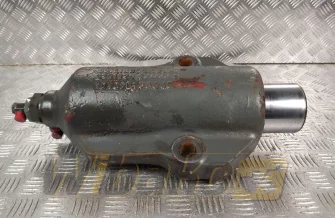


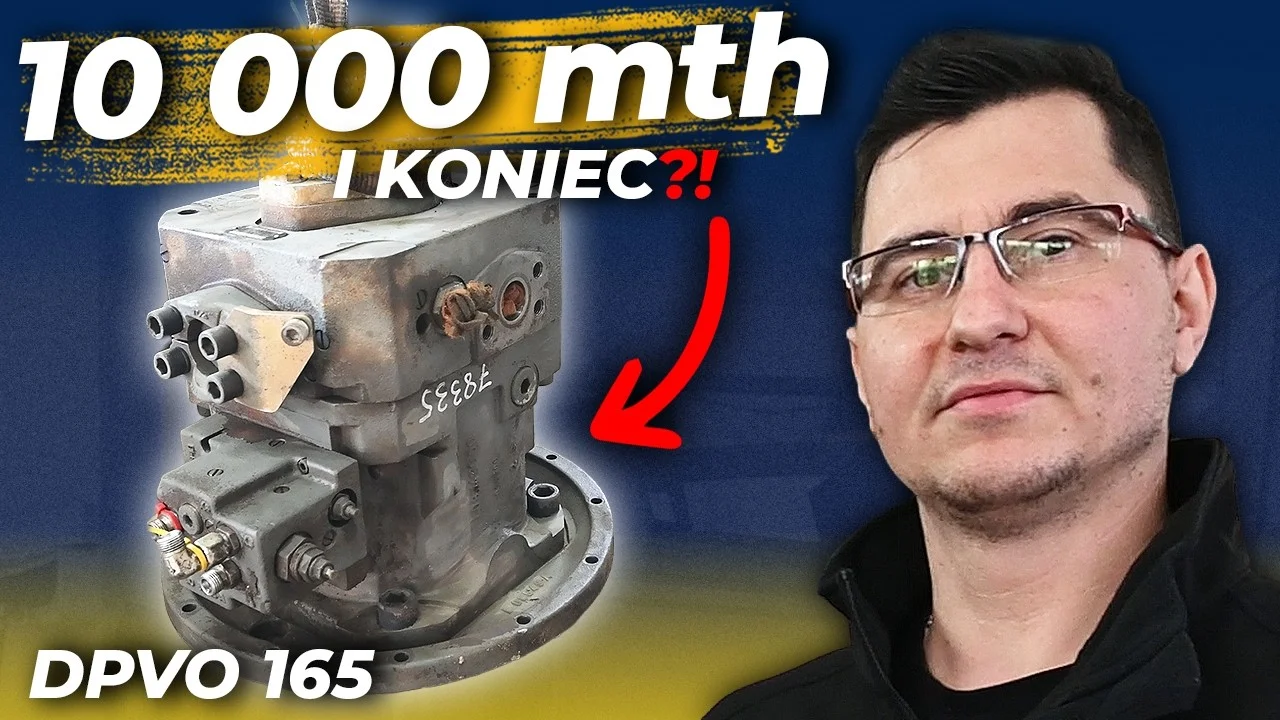
A DPVO 165 hydraulic pump from a Liebherr A316 wheeled excavator arrived at our workshop. The customer removed and sent it in because the machine had become noisy and developed control problems. The video follows the pump all the way: disassembly and inspection, replacement of worn parts, and a test on our dyno. Along the way we answer the question of how often such pumps should be serviced.
The weak point: swash plate bearings
In pumps of this type the most common failure is the swash plate bearings. When they break up, they destroy the rotating group and send debris throughout the hydraulic system. That is why we recommend sending the pump in for inspection and a bearing change after about 10,000 operating hours. It is a small cost compared with a new pump and cleaning a contaminated hydraulic system.
Disassembly and inspection
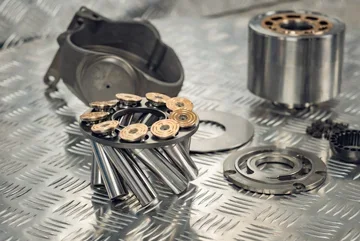
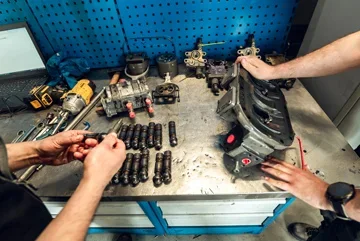
We started from the top: control pump, regulator, end plate and flange. To separate the housings, the control piston lock has to be released. Then we removed the rotating group, the drive shaft and the swash plate, unlocking the bearings (four Allen screws on each side).
The initial inspection showed no mechanical damage to the rotating group, but we found several parts to replace:
- swash plate bearings – their condition required replacement (we replace them at every rebuild anyway, as this is the sensitive spot of these pumps),
- auxiliary gear pump – heavily worn inside and not suitable for reconditioning,
- drive-side coupling – it had moved too close to the housing and was rubbing on it; the most likely cause of the noise.
The cause of the control problems was not visible to the eye, so after assembly the pump was to go on the dyno, where we simulate operation in the machine. The inspection report and quotation were sent to the customer for approval.
Repair and assembly
After detailed inspection the scope stayed the same: a new set of swash plate bearings, a full seal kit including the shaft seal, and a new gear pump – from our own stock, so the customer did not have to wait for parts. The bearing retaining screws are fitted with thread locker so that heat and vibration cannot loosen them. The rotating group is greased before assembly and each piston is wetted with oil. Care is needed when tightening the end plate bolts so as not to damage the threads.
Dyno test
On the test bench the pump was warmed up and checked under conditions similar to those in the excavator. Result: the pump runs quietly, without jerking, and controls very smoothly. After the test it was painted and shipped back to the customer.
Takeaways
- A pump inspection and swash plate bearing change every ~10,000 hours is inexpensive prevention against a costly failure.
- Noise does not always mean a destroyed pump – sometimes the coupling or the auxiliary pump is to blame.
- A dyno test after the rebuild confirms correct control before the pump goes back into the machine.
Every pump we receive is inspected free of charge on the same day. Learn more: repairs of hydraulic pumps and motors.
Watch the repair video: How Often Should Excavator Pumps Be Serviced? What Fails? – DPVO 165