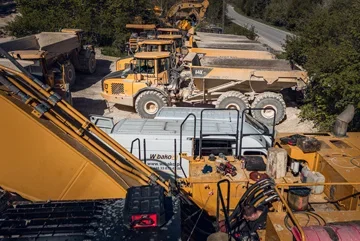


John Deere 6068HT082 Engine Overhaul in a John Deere T560 Walker Combine Harvester
An engine breakdown in a combine harvester during intensive field operations can quickly result in downtime for the entire machine. In the case of the John Deere T560, it is particularly crucial not only to fix the fault itself, but also to thoroughly inspect the power unit, correctly rebuild the engine, and verify its operation before restarting work.
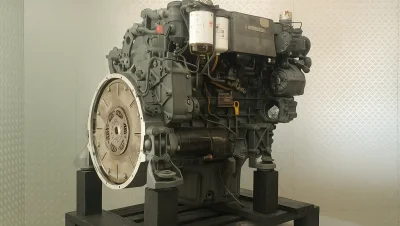
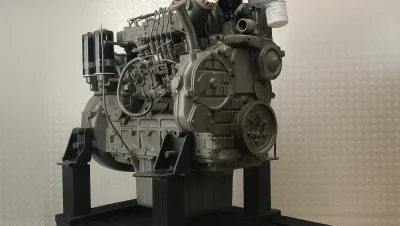
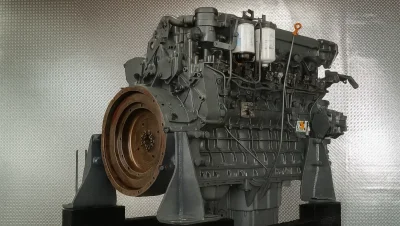
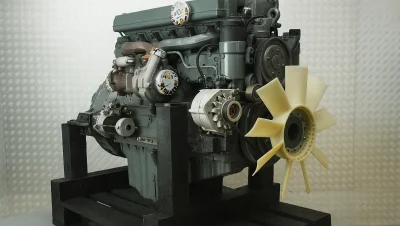
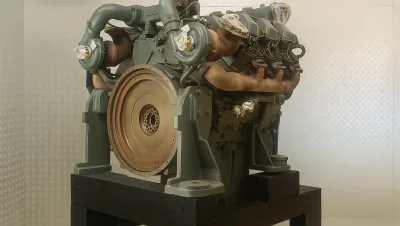
In this project, the work concerned a John Deere T560 walker combine harvester equipped with a John Deere 6068HT082 diesel engine. The scope of work included power unit diagnostics, engine removal from the machine, transport to our facility in Kojszówka, detailed component inspection, engine overhaul, dynamometer testing, and reinstallation of the unit in the combine.
The John Deere T560 belongs to a family of combine harvesters designed for high-efficiency harvesting operations. The combine's structure is prepared for high loads, which is why the engine must ensure stable operation not only while driving, but also during intensive operation of the working systems. Under such conditions, the efficiency of the power unit directly impacts the ability to utilize the full potential of the machine.
The John Deere 6068HT082 engine belongs to the John Deere 6068 engine family. During overhauls of this type, exact identification of the specific engine version is extremely important. The unit designation, serial number, and auxiliary equipment configuration allow for proper selection of the scope of work and parts needed for the rebuild. This is particularly vital for engines installed across various machines and equipment configurations.
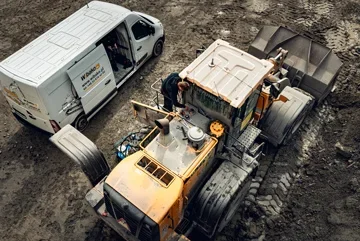
WIBAKO carries out comprehensive John Deere diesel engine servicing, including diagnostics, removal and installation of power units, component inspection, engine overhauls, and dyno testing. For machines working at a customer's site, we can begin work with diagnostics at the machine's location, then remove the engine and transport it to our headquarters in Kojszówka.
Diagnostics of the John Deere 6068HT082 Engine Prior to Removal
The first stage of work was diagnosing the power unit installed in the John Deere T560 combine. Before the engine was removed, it was necessary to determine its general technical condition and gather information to plan the further scope of work. When dealing with an engine still mounted in the machine, it is important not to limit the assessment to a single symptom. Issues with power, operation under load, or increased oil consumption can stem from several different causes.
In this case, high mileage and natural wear of the power unit were identified as the reason requiring an overhaul. This type of wear develops gradually and does not always lead to a sudden engine shutdown. Over time, however, a loss of performance, degraded operating parameters, increased oil or fuel consumption, and greater vulnerability to issues under high-load conditions become apparent.
We began diagnostics with a basic assessment of engine operation. We checked the starting behavior, stability of operation, response to increased load, and engine behavior while running. Another crucial element was checking for concerning mechanical noises, excessive vibrations, or other symptoms indicating wear on mechanical components.
The next stage involved checking core operational parameters. Among other things, we verified the condition of the lubrication system and observed engine behavior under load. When natural wear is suspected, it is essential to combine measurement results with an evaluation of the engine's actual mechanical state. Visual and auditory observation alone cannot determine the exact wear of pistons, rings, liners, bearings, or the crankshaft.
Upon completing initial diagnostics, we made the decision to remove the engine. Only tearing down the unit and thoroughly inspecting all components allows us to determine which parts can be reused, which require reconditioning, and which must be replaced.
Removing the Engine from the John Deere T560 Combine Harvester
Removing an engine from an agricultural machine requires proper preparation of the workspace. For jobs performed on-site at the customer's location, we utilize a crane provided by the client. Before lifting the unit, the workspace must be prepared and all elements that could be damaged during engine extraction must be secured.
Work begins by disconnecting components related to the electrical system, fuel system, cooling system, air intake, and other auxiliary equipment. All cables and connections are appropriately labeled so that their original layout can be recreated during reassembly. This practice reduces the risk of errors when putting the machine back together.
An essential part of the removal process is securing the cooling system. Hoses and connections are disconnected in a way that minimizes the risk of damage, and components remaining on the machine are protected against contamination. We follow a similar procedure for the intake system: air duct openings are secured to prevent debris from entering the system.
Next, the engine mounts and components connecting the unit to other assemblies are disconnected. After confirming that all hoses, mounts, and connections have been detached, the engine is ready to be lifted out using the crane. The unit is guided out of the engine compartment with extreme care to avoid damaging components in the immediate vicinity.
Once removed, the engine is prepared for transport. The unit arrives at our facility in Kojszówka, where detailed workshop inspection begins. If needed, our service team can also organize the subsequent stage of reinstalling the unit into the machine.
Inspection of the John Deere 6068HT082 Engine in the Workshop
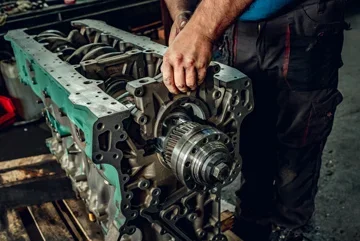
After the engine is delivered to the workshop, a detailed inspection of its components begins. The engine is disassembled into individual parts, which are thoroughly cleaned and inspected on an ongoing basis. This allows us not only to identify the cause of any issues, but also to evaluate the true wear level of the entire unit.
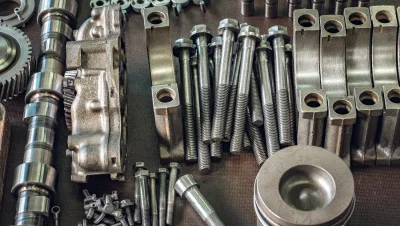
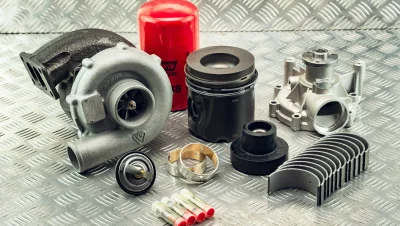
For an engine whose wear is tied to intensive, long-term operation, we pay special attention to the crank-piston system. We inspect the condition of the cylinders, pistons, rings, liners, bearings, connecting rods, and crankshaft. These components operate under high loads, and their condition directly affects compression, oil pressure, oil consumption, and overall engine running smoothness.
The crankshaft undergoes visual inspection and measurements. We check its visual condition, journals, oil galleys, and runout. We look for signs of overheating, scoring, and other indications of excessive wear. If the condition of the friction surfaces requires reconditioning, the crankshaft can be ground accordingly.
Connecting rods are also verified. We check them for cracks, signs of overheating, and wear. We control their geometry, twist, and bend along their axis, as well as the condition of the rod bolts. Such detailed checks are vital, as even minor deviations can adversely affect the proper operation of the crank-piston assembly.
Pistons, rings, and cylinder liners are inspected separately. We measure friction surface wear and check the elements responsible for maintaining proper combustion chamber sealing. If permissible wear limits are exceeded, parts are replaced or reconditioned in line with the scope of the overhaul.
Reconditioning of the Crank-Piston System
Once inspection is complete, the exact scope of the overhaul can be established. For a worn John Deere 6068HT082 engine, the work encompasses crank-piston components that directly influence cylinder sealing and proper lubrication of the unit.
The crankshaft is precisely measured for dimensions and the surface condition of its journals. We also check the oil passages, as their cleanliness is paramount for proper bearing lubrication. Depending on measurement results, reconditioning the crankshaft via journal grinding is performed.
Main and connecting rod bearings are inspected. Their wear can affect oil pressure and create play that may eventually lead to severe engine damage over time. Therefore, during an overhaul, we do not limit ourselves to replacing a single item without checking all interconnected parts.
We also inspect the pistons, rings, and liners. In the event of excessive wear, these components are replaced. The goal is to restore optimal cylinder sealing and proper combustion conditions. A correctly rebuilt crank-piston system delivers stable engine operation under both light and heavy loads.
Inspection and Reconditioning of the Cylinder Head
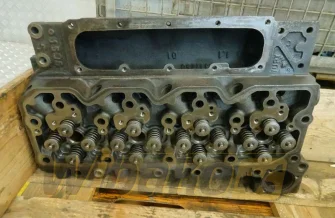
Another crucial stage of the overhaul is inspecting the cylinder head. High loads and long working hours in a combine harvester mean the cylinder head is one of the key elements requiring special attention during rebuilds.
The cylinder head is evaluated to determine whether it can be reused. Among other things, we check the condition of valve seats, guides, and valves. An essential phase is the cylinder head pressure test. This involves submerging the head in heated water and applying compressed air. Observing escaping air bubbles helps identify structural leaks or cracks.
If the cylinder head requires reconditioning, the scope of work may include resurfacing (decking), valve guide replacement, and valve replacement. After completing these operations, its condition is checked again to ensure the component can be safely operated going forward.
Fuel System and Auxiliary Inspection
During the overhaul of the John Deere 6068HT082 engine, the fuel system is also inspected. In an engine running under high loads, accurate fuel metering directly influences performance, operating temperatures, fuel consumption, and combustion quality.
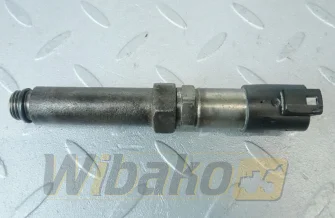
Fuel injectors can be tested on a test bench. This enables us to evaluate their performance outside the engine and decide whether they can be reused, repaired, or need replacement. Precision is critical with fuel system components, as a malfunction in just one part can negatively impact the whole engine.
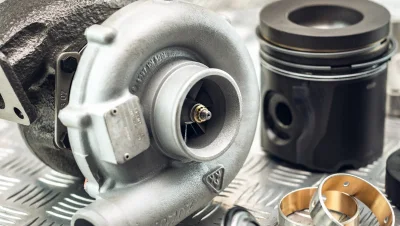
We also check engine accessories. The turbocharger is inspected for radial and axial shaft play, as its condition directly determines the amount of air supplied to the engine. Electrical and electromechanical components, including the starter motor and alternator, are also checked if their condition warrants inspection during the overhaul.
This comprehensive approach prevents situations where, after overhauling the core engine components, the unit is reinstalled with a faulty auxiliary component.
Professional Assembly of the John Deere 6068HT082 Engine
After verifying and reconditioning all individual components, assembly of the engine begins. This stage requires high precision, as proper operation depends not only on the quality of parts used, but also on the manner in which they are installed.
The engine is assembled in accordance with proper repair standards. Individual parts are prepared for installation, and mating surfaces are thoroughly cleaned. We pay special attention to the lubrication system: oil passages must be unobstructed, and lubrication components mounted to ensure oil reaches all required friction points.
During assembly, the prepared crank-piston components, cylinder head, and remaining subassemblies are fitted. We verify the correct positioning of parts and fasteners. Sealings are carefully checked as well, since leaks can lead to loss of oil or coolant, or introduce unwanted air into vacuum or pressure systems.
Once the base engine is assembled, accessories are mounted. We inspect all hose connections for the cooling, fuel, and air intake systems. If necessary, worn piping or hose couplings are replaced to prevent future operational issues.
The air intake system is of particular importance. Air ducts must be properly fitted and airtight. Even a minor leak can affect turbocharger performance and overall engine power. Thus, all intake connections and duct conditions are rigorously checked post-assembly.
Cooling system lines are verified similarly. Proper connection is crucial for maintaining optimal engine operating temperatures. All components must be firmly secured so that they do not shift, rub, or develop leaks during combine harvester operations.
Testing the John Deere 6068HT082 Engine on the Dynamometer
One of the most critical stages of the entire process is testing the engine on a dyno test bench. For an overhauled power unit, having the ability to test it before reinstallation into the machine is a huge advantage. It allows us to evaluate engine behavior under real load conditions instead of merely running it unloaded.
Once assembly is complete, the engine is mounted on the dyno bench. The unit is properly prepared for startup, followed by continuous monitoring of its core operational parameters. We evaluate starting characteristics, performance across various load ranges, and responsiveness to changing operating conditions.
For overhauled engines, testing begins under light conditions. The unit is run for a minimum of 16 hours at approximately 20-30% of nominal load. This phase allows for a controlled initial run-in period of the rebuilt engine while closely observing its behavior.
During this period, we monitor operational stability, coolant temperature, oil pressure, and general performance during extended operation. We also inspect for potential fluid leaks or unusual sounds. If the engine consistently maintains proper baseline parameters, we proceed to the next testing phase.
Next, the unit undergoes multiple load cycles. This checks how the engine behaves under conditions closer to those it will face in actual field service. Gradually increasing the load enables us to observe engine response and identify any minor anomalies before it is reinstalled in the combine.
The engine dynamometer serves as much more than just a tool to measure horsepower. It is primarily a mechanism for quality control under load. Thanks to this, we can verify full engine functionality after the rebuild before sending it back to the machine.
In the case of the John Deere T560 combine, this step is vital. During harvest, the machine operates under heavy loads for many hours at a time, requiring the engine to work seamlessly with the entire drive system and working mechanisms. Testing prior to installation significantly lowers the risk of issues surfacing during peak harvest season.
The dyno test is the final quality assurance gate of our rebuilding process. Only after successfully passing all test protocols is the engine prepared for shipment and reinstallation in the John Deere T560.
Installing the Overhauled Engine in the John Deere T560 Combine Harvester
Following successful overhaul and dyno testing, the engine is ready for reinstallation into the combine. Installation is carried out with the same level of care as removal. The unit is guided into the engine compartment using the client's crane and positioned accurately.
First, correct seating of the engine on its engine mounts is verified. Next, connections between the power unit and other machine systems are established. Hoses for cooling, fuel, intake air, electrical wiring, and remaining connections required for engine operation are reconnected.
During installation, special care is given to the condition of piping. Any lines that suffered wear during previous operation can be replaced. All hoses and cables must be routed correctly without chafing against other machine parts. We also verify the tight fastening of connections and overall leak integrity.
After physical installation, pre-start preparations are made. These include replacing relevant filters and checking all operational fluid levels. Before turning the key, technicians double-check all connections, mounts, and potential leak points once more.
The engine is then started inside the machine. However, our work does not end with a successful start. Combine operational tests are performed to monitor engine behavior and its interaction with other subassemblies. These tests are conducted alongside the machine operator, whose daily experience helps quickly spot subtle differences in combine performance compared to its previous state.
During testing, we observe engine response under increasing load, stability, and the performance of auxiliary systems tied to the unit. Coolant, oil, fuel, and intake circuits are rigorously inspected for leaks. Once all tests yield positive results, the installation phase is completed.
Successful trial runs mean the machine can be handed back over for field work. If required, an installation protocol is issued to confirm that all works and tests were executed properly.
Post-Overhaul Engine Maintenance
The engine overhaul itself does not mark the end of power unit care. After installing the rebuilt engine into the combine harvester, correct initial break-in procedures and a timely first service check are essential.
WIBAKO recommends performing the first filter replacement after 50 operating hours (mth) from engine startup. The 50-mth service check should not be treated as a routine filter swap. During this visit, our technicians can inspect the overall condition of auxiliaries, connections, and running behavior post-installation.
An inspection after the first 50 operating hours allows us to verify whether minor leaks or loose fittings have developed under real-world operating conditions. This is especially vital after mounting an engine into a machine, as components only experience true operational stresses during actual field work.
Subsequent maintenance services should be performed every 250 operating hours, or at least once every 3 months. WIBAKO offers on-site field maintenance for these checks. Our mobile service team travels directly to the client, allowing servicing to be completed without transporting the entire combine to the workshop.
John Deere 6068HT082 - An Engine Used in Demanding Machinery
When repairing John Deere engines, correct identification of the exact model variant is paramount. Information regarding displacement or engine series alone is not always sufficient to properly prepare an overhaul. Therefore, providing the complete unit designation and serial number prior to starting work is highly recommended.
For the John Deere T560, the unit subject to this overhaul was the John Deere 6068HT082. Exact identification allows us to source the correct parts and determine the precise engine configuration. This is crucial for engine models produced in numerous variants.
The John Deere T560 exemplifies machinery operating in conditions demanding high availability. Downtime during harvest season can have severe financial implications for an entire farm. Hence, a comprehensive unit overhaul must cover not only replacing worn components, but also validating the entire engine through post-repair testing.
WIBAKO Agricultural Machinery and Diesel Engine Repair Service
Overhauling the John Deere 6068HT082 engine in a John Deere T560 combine harvester demonstrates the value of a complete, structured approach to power unit repairs. On-site diagnostics, careful removal, transport to our facility, meticulous component checks, reconditioning, professional assembly, dyno testing, and reinstallation form one seamless workflow.
WIBAKO provides comprehensive John Deere diesel engine servicing and repairs for units operating under heavy-duty conditions. By combining mobile field service with advanced workshop capabilities, we can begin diagnostics directly at the customer's site and complete full engine overhauls at our headquarters in Kojszówka.
A cornerstone of our quality assurance is dynamometer testing prior to engine reinstallation. This provides verifiable proof of performance after an overhaul and mitigates the risk of sending out an engine with hidden faults that might only show up after being mounted in the machine.
Summary of the John Deere T560 Engine Overhaul
The overhaul of the John Deere 6068HT082 engine used in the John Deere T560 walker combine harvester was executed as a complete, step-by-step process covering all key stages of engine service. It originated with on-site engine diagnostics, followed by engine extraction and transport to our workshop facility.
In the workshop, the engine was disassembled and subjected to detailed inspection. Checks encompassed the crank-piston assembly, crankshaft, connecting rods, pistons, liners, rings, bearings, cylinder head, and auxiliary equipment. Measurement results established the exact scope of necessary reconditioning and part replacements.
Following completion of the overhaul, the engine was assembled and prepared for dynamometer testing. Running tests under controlled load validated the rebuilt engine's behavior before its return to the combine. The unit was then reinstalled into the John Deere T560, followed by comprehensive machine testing alongside the operator.
Successful trial completions mean the power unit is fully prepared for ongoing field work. We strongly advise carrying out the first maintenance service after 50 operating hours. This check serves not only to change filters, but also to evaluate connection integrity, auxiliary condition, and overall engine health during its initial operational period.
If you require a John Deere engine overhaul, unit diagnostics, or engine removal and installation services, WIBAKO can handle the complete process—from initial diagnostics to dyno testing and machine commissioning.
Useful Information and Internal Links
Skontaktuj się z nami
Potrzebujesz remontu silnika John Deere 6068HT082 lub serwisu kombajnu John Deere T560? Skontaktuj się z nami - wykonujemy diagnostykę, demontaż i montaż silników oraz kompleksowe remonty z testem na hamowni silnikowej.