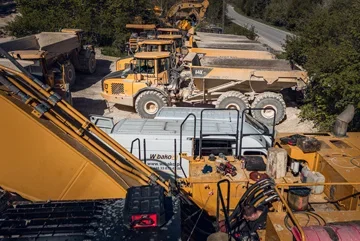


Overhaul of the Liebherr D9508 A7 Engine in the Liebherr R 976 Crawler Excavator
The Liebherr R 976 crawler excavator is a machine designed for heavy-duty work where high efficiency, stability, and the ability to operate under heavy loads directly affect the productivity of the entire enterprise. In this type of machinery, the internal combustion engine is one of the most critical components, as it provides the energy required to power the hydraulic system and other operating systems.
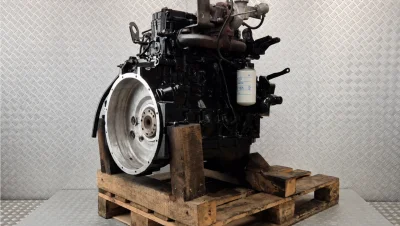
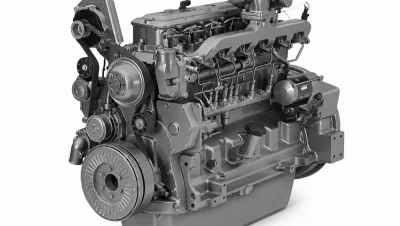
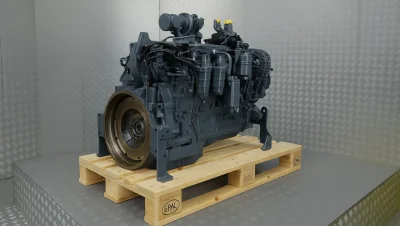
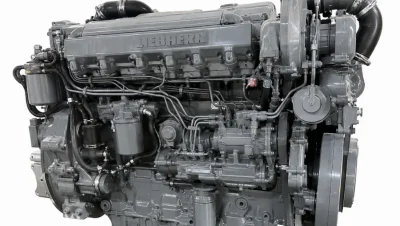
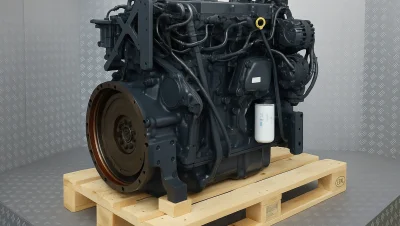
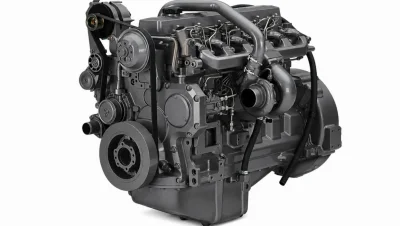
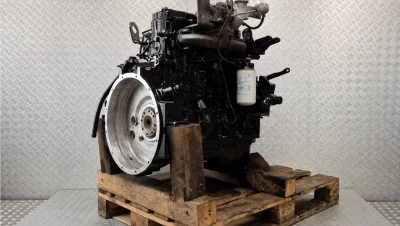
In the case of the described machine, the subject of the service work was the Liebherr D9508 A7 engine. It is a V8 diesel unit with a displacement of 16.16 liters, equipped with a Common Rail system. Depending on the specific version and application, the D9508 A7 engine can operate with various exhaust gas aftertreatment configurations. In Liebherr documentation for the Stage IIIA version, a power output of 330 kW at 1,800 rpm and a torque of 2,750 Nm at 1,100 rpm are specified.
With such a power unit, diagnostics cannot be limited merely to replacing damaged components. The overhaul of the Liebherr D9508 A7 engine requires thorough verification of components, measurements, and testing of the unit after assembly. Therefore, the entire process was divided into successive stages – from diagnosing the engine mounted in the excavator, through disassembly and part verification, to the overhaul, installation, and load testing on an engine dynamometer.
Diagnostics of the Liebherr D9508 A7 Engine Before Disassembly
Before starting the disassembly of the engine, it was necessary to determine the actual condition of the power unit. In the case of large construction machinery, diagnostics at this stage are of particular importance. The engine is connected to the cooling system, intake system, exhaust system, fuel system, electrical system, and other machine components. Improper operation of the unit can therefore result from a failure of the engine itself, but also from a problem with one of the interacting systems.
First, we conducted a basic assessment of the engine's operation. We checked how the unit starts, its running smoothness, response to load changes, and the occurrence of any disturbing noises. We paid attention to the engine's behavior while operating at various speeds and to any symptoms indicating wear on the crank-piston assembly components.
One significant indicator was a drop in engine performance and increased oil consumption. For a unit working in a heavy excavator, symptoms of this type require thorough verification. Power loss alone does not necessarily mean that a full overhaul is required. The cause could be related to the fuel system, air intake, turbocharger, exhaust system, or mechanical wear of the engine.
Therefore, before making the decision to overhaul, diagnostics were performed to narrow down the fault area. Basic engine operating parameters, the condition of the oil system, and the engine's behavior under load were checked. Monitoring smoke emission and inspecting for potential leaks were also key elements of the assessment.
Following diagnostics on the machine, we decided to disassemble the unit and conduct a detailed verification in the workshop. Only dismantling the engine allows for a precise evaluation of the condition of the pistons, cylinder liners, rings, bearings, crankshaft, connecting rods, and cylinder heads.
Disassembly of the Engine from the Liebherr R 976 Excavator
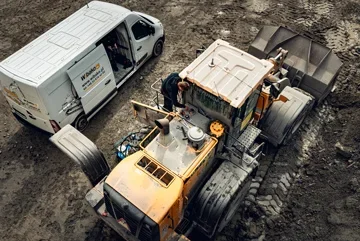
Disassembling the engine in a machine of this class is a process that requires proper preparation. Our mobile service performs engine disassemblies directly at the customer's site. A crane provided by the customer is used to remove the unit from the machine. This ensures the heavy powertrain can be safely hoisted from the engine compartment and prepared for transport to our facility in Kojszówka.
Before actual disassembly began, the machine was secured and the work area prepared. Next, we proceeded to disconnect the individual system components linked to the engine. Lines and connections requiring disconnection before removal were detached, and all reusable components were properly secured.
We paid special attention to the cooling system lines. The connections were prepared in a way that minimizes the risk of damaging hoses, fittings, and components located in the immediate vicinity of the engine. A similar approach was applied to the air intake system elements. Openings and hoses were secured to prevent dirt from entering the system interior.
The next step involved disconnecting the fuel system, electrical wiring, and auxiliary components that hindered engine removal. For a large V8 engine, proper preparation of the lifting points is also crucial. The engine was properly rigged for lifting and then hoisted out of the excavator's engine bay using the crane.
After disassembly, the unit was prepared for transport to the workshop. Once on site, we initiated the detailed verification process. This stage determines which parts can be reused, which require reconditioning, and which must be replaced.
Verification of the Liebherr D9508 A7 Engine in the Workshop
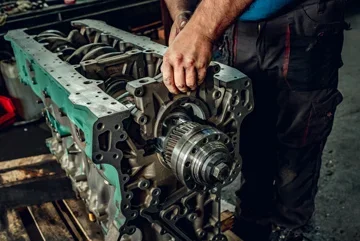
Upon delivery of the engine to our workshop, we commenced its teardown. All components were systematically disassembled, cleaned, and evaluated by our mechanics. We do not limit ourselves to visual inspection. Engine parts undergo precise dimensional measurements, as minor deviations can significantly impact proper operation post-overhaul.
Verification began with basic steps to evaluate whether individual mechanisms could continue operating. Subsequently, the engine was dismantled into individual assemblies. The parts were washed and subjected to a detailed inspection.
Regarding the crankshaft, a visual inspection was performed to check for wear marks, overheating, and potential damage. Shaft runout, journal dimensions, and oil passage cleanliness were also checked. This determines whether the crankshaft can be reused or if reconditioning is required.
The connecting rods were also inspected. Their condition was evaluated for wear, cracks, and signs of overheating. Verification also includes measurements for any twisting or bending of the connecting rod, as well as an inspection of the fasteners.
An essential part of the verification was the assembly of pistons, rings, and cylinder liners. Wear on these components can be directly linked to increased oil consumption and reduced engine performance. After teardown, it was possible to confirm the extent of wear and define the scope of further work.
Overhaul of the Crank-Piston Assembly
The crank-piston assembly is one of the most vital components of the engine. In the case of the D9508 A7 engine, this system operates under heavy loads, so an overhaul cannot be limited to replacing a single component without checking the remaining interacting parts.
As part of the overhaul, the crankshaft, connecting rods, pistons, rings, cylinder liners, and bearings were verified. Each component was evaluated for wear and potential reusability.
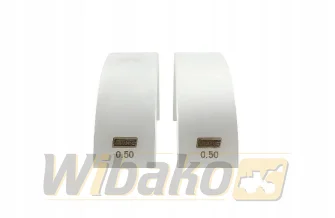
The crankshaft was subjected to precise measurements. If its condition allows for reconditioning, regrinding the shaft to an appropriate repair size can be performed. For the remaining components, the scope of work depends on the measurement results. Not all parts require the same type of reconditioning, as actual technical condition determines their continued use.
The bearing mating surfaces and connecting rod conditions were also checked. These components must be properly prepared prior to reassembly. We pay special attention to the cleanliness of oil passages, as debris left behind from previous operation can negatively affect a freshly overhauled engine.
Pistons and cylinder liners were also inspected. In cases of excessive wear, components failing to meet required tolerances must be replaced. New or qualified reusable parts are prepared for installation in accordance with established overhaul standards.
Verification and Reconditioning of Cylinder Heads
Another crucial phase of the overhaul was the inspection of the cylinder heads. Their condition directly impacts cylinder sealing, the combustion process, and proper valve operation. A cylinder head is never qualified for reuse based on external appearance alone.
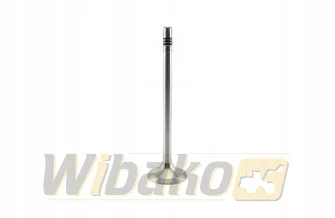
We performed a verification of valve seats, guides, and valves. Cylinder head tightness was also tested. Leak testing involves preparing the head, submerging it in heated water, and applying compressed air. Observing any escaping air bubbles reveals leaks or cracks.
Depending on the degree of wear, the scope of head reconditioning may include resurfacing, valve guide replacement, and valve replacement. A cylinder head prepared in this way can then be reused during engine assembly.
Fuel System and Engine Accessories
During the overhaul of the D9508 A7 engine, components of the fuel system were also verified. A diesel engine equipped with a Common Rail system demands strict attention to cleanliness and proper fueling system operation.
Fuel system components were checked for their technical condition. For sub-assemblies requiring specialized testing, test benches are utilized. This allows us to assess the actual operational parameters of parts rather than classifying them based solely on visual inspection.
The turbocharger underwent a separate inspection. Verification includes checking longitudinal and radial play. This is essential, as an impaired turbocharger can affect air delivery to the engine, its output, and operating temperatures.
Remaining accessory components, including the starter motor, alternator, and electromechanical parts, were also inspected. The scope of work depends on their technical condition and the results of the verification.
Professional Assembly of the Liebherr D9508 A7 Engine
Following verification and preparation of all components, we began assembling the unit. Assembling an engine after an overhaul requires adhering to a strict work sequence and precision at every step. Replacing worn parts is not enough. Proper surface preparation, maintaining cleanliness, and correctly making all connections are equally critical.
Before assembly began, parts were thoroughly cleaned. Special focus was given to oil passages and areas where contamination from previous operation could linger. Engine assemblies were then installed according to the specified sequence.
First, the block and crank-piston assembly components were prepared. Next, properly prepared pistons, rings, connecting rods, and other parts were installed. The crankshaft and bearings must be seated correctly, and all mating surfaces properly prepared.
After closing the lower engine section, cylinder head assembly and timing gear installation were performed. Subsequently, remaining engine components and accessories were mounted. Every connection is inspected before advancing to the next stage.
Preparing the lubrication and cooling systems is also a vital step. Passages and ports must be clear and clean, and all seals and joints must ensure proper tightness. For an engine operating in a heavy excavator, even a minor leak could lead to major operational issues down the road.
Upon completing primary assembly, the engine was prepared for startup on the dynamometer. At this stage, connections are inspected, mounted accessories are checked, and the unit is prepared for load testing.
Liebherr D9508 A7 Engine Dynamometer Test
One of the most essential parts of the entire overhaul process is the engine test on a dynamometer. This solution enables testing the unit not only without load, but also under conditions closely mimicking real-world operation. For large engines used in construction machinery, this is of paramount importance.
After overhaul completion, the D9508 A7 engine is prepared for bench startup. Prior to starting the test, basic connections and parameters necessary for safe operation are verified. The engine is then started and monitored during its initial running phase.
For an overhauled engine, the first test phase is conducted under light operating conditions. The unit runs for a minimum of 16 engine hours at a load of approximately 20–30% relative to nominal load. This stage allows observation of the assembled engine's behavior and confirms that core operating parameters remain stable.
During this period, operating temperature, oil pressure, and engine behavior at specific speeds are closely monitored. We also observe cooling, lubrication, and auxiliary system operation. Checking for potential leaks or abnormal noises is equally vital.
If the engine maintains correct parameters after the light-load period, we move to the next stage. The unit is subjected to repeated load cycles to verify its response under higher power demands. This helps identify issues that might remain unnoticed during unloaded operation.
An engine dynamometer is a critical quality control tool for our overhauls. Under normal conditions, an assembled engine can be started and basic parameters checked, but conducting a complete load test is not always feasible. On the dynamometer, we can control unit operation in a far more repeatable and safe manner.
The test also allows evaluating engine response to load changes. During operation, we monitor whether load acceptance occurs smoothly and whether the engine maintains stable parameters. We also verify that no troubling symptoms appear in the fuel system, turbocharging, or cooling system.
In practice, the dynamometer provides an additional quality control step before mounting the unit back into the machine. This allows potential issues to be identified right in the workshop without having to remove the engine from the excavator again.
This is particularly crucial for large construction equipment. Removing and reinstalling a Liebherr D9508 A7 engine requires dedicated equipment and time. Performing comprehensive testing before returning the unit to the client minimizes the risk of additional machine downtime.
Upon successful completion of testing and verification of correct parameters, the engine is prepared for reinstallation into the Liebherr R 976 excavator.
Installation of the Overhauled Engine in the Liebherr R 976 Excavator
Following successful dynamometer testing, the engine was prepared for transport and installation into the machine. Our mobile service handles engine installation in construction machinery directly at the client's location. This reduces the scope of work the machine owner has to organize independently.
Installation begins with preparing the engine compartment and inspecting the components that interact with the overhauled unit. This is a crucial step, as even a flawlessly overhauled engine can experience operational problems if the condition of an interacting component is overlooked during installation.
A crane provided by the customer is used to lower the engine into the compartment. The unit is positioned correctly and secured in the locations specified by the machine design. Special attention is paid to proper engine alignment and all mounting points.
Mechanics then proceed to connect the systems. Cooling hoses, intake pipes, fuel lines, electrical connections, and remaining hoses and accessory parts are installed. Piping elements or seals that cannot guarantee reliable performance are replaced as needed.
We pay special attention to the air intake system. All connections must be properly fitted and tight. An intake system leak can impair engine performance and boost parameters. Therefore, after installation, we thoroughly check connections and line conditions.
The cooling system is monitored in a similar manner. Hoses, fittings, and joints are checked for correct installation and tightness. The system must be properly prepared prior to initial startup to mitigate overheating risks.
Prior to starting the engine, preparatory service is carried out, including replacing required filters and checking basic fluid levels. All accessible connections and components affected during disassembly and assembly are inspected.
Once the engine is started, monitoring of its performance in the machine begins. Mechanics track unit parameters, inspect connection tightness, and observe engine behavior during operation. Functional tests of the machine are then carried out.
An important part of this stage is collaborating with the operator. After basic testing, the engine is evaluated while the machine operates under normal working conditions. The operator can provide feedback regarding excavator behavior, load response, and any unusual symptoms.
Additional leak checks are performed after the unit reaches full operating temperature. This is essential, as certain leaks only appear after the engine warms up. Thus, inspection does not end with the initial engine start.
Upon successfully passing test runs, confirming proper engine performance, and verifying no unwanted leaks, an installation protocol is completed. Only then is the machine engine installation process considered complete.
Liebherr Service and Post-Overhaul Engine Maintenance
An engine overhaul does not end when the machine is started up. The first operating hours are critical for evaluating unit behavior post-overhaul. Therefore, we recommend carrying out the initial service inspection after 50 engine hours.
The 50-hour inspection is performed by our service team. Mechanics travel to the client to inspect more than just filters. Overall engine and accessory condition, operational regularity, and the integrity of connections made during assembly are all checked.
At this stage, minor leaks that only appear during standard machine operation can also be caught. Hose connections, cooling system, intake, and other elements are inspected.
We recommend subsequent inspections every 250 engine hours, but at least once every 3 months. Regular maintenance allows early detection of irregularities and reduces the risk of major breakdowns.
Which Machines Use the Liebherr D9508 A7 Engine?
The Liebherr D9508 A7 engine belongs to the class of large power units designed for heavy-duty applications. It is a 16.16-liter turbocharged V8 engine equipped with a Common Rail system. Liebherr documentation highlights its application in heavy construction machinery, among other heavy equipment.
When identifying an engine, it is always recommended to use the exact model designation and serial number. Within a single engine family, various configurations of accessories, fuel systems, cooling, or emission control systems can exist. This directly influences part selection and the scope of overhaul work required.
Therefore, when planning an overhaul of a Liebherr D9508 A7 engine, it is beneficial to provide the service center with as much information about the unit as possible. The engine serial number and machine details allow for accurate engine version identification and proper work scope preparation.
Comprehensive Liebherr Engine Service
Overhauling an engine in a large crawler excavator requires integrating several stages – diagnostics, disassembly, transport, verification, reconditioning, assembly, testing, and reinstallation. At WIBAKO, we deliver these services end-to-end.
Our mobile service carries out engine removal and installation directly on-site. Following removal, the unit can be transported to our headquarters in Kojszówka, where we perform meticulous verification and overhaul. Upon completion, the engine is dyno-tested before returning to the machine.
This approach allows us to maintain quality control across the entire process – from initial diagnostics, through the Liebherr engine overhaul, up to excavator startup and the subsequent 50-hour inspection.
Summary of the Liebherr D9508 A7 Engine Overhaul
Overhauling the power unit in a Liebherr R 976 excavator is a process that cannot be reduced to merely replacing worn components. Proper diagnostics, precise component verification, and thorough post-repair engine testing are of utmost importance.
In the case of the Liebherr D9508 A7 engine, proper assessment of the crank-piston assembly, cylinder heads, fuel system, and accessories is vital. Each of these components can influence the future performance of the entire unit.
A key advantage is the ability to perform an engine dynamometer test prior to reinstallation into the machine. Operating under controlled load lets us thoroughly evaluate the overhauled engine's behavior and minimize risks post-installation.
Following machine installation, additional testing is conducted with the operator, connections are checked for leaks, and proper unit function is confirmed. Upon successful trials, an installation protocol is issued.
The final phase of the process is ongoing service support. After the initial 50 engine hours, our service team visits the client again to inspect engine and accessory condition and carry out necessary service actions. Thus, the overhaul does not end at startup, but includes monitoring the unit during its initial operational period.
Internal Links
Mobile Service for Construction Machinery
Engine Dynamometer – Post-Overhaul Engine Testing
Contact Us
Need an overhaul for your Liebherr D9508 A7 engine or service for your Liebherr R 976 crawler excavator? Contact WIBAKO – we provide comprehensive engine overhauls, machine disassembly and reassembly, and engine dynamometer testing.