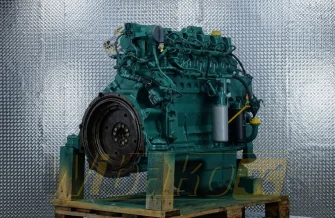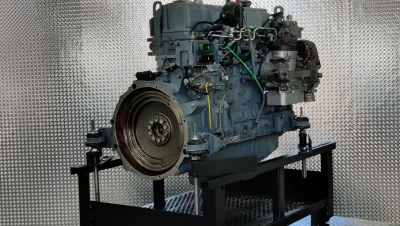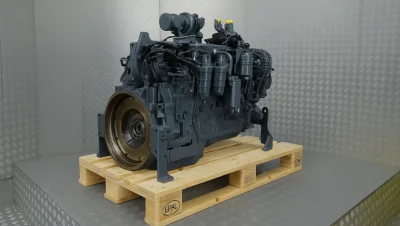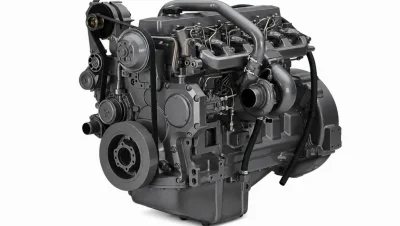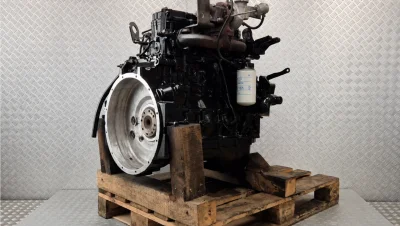


Comprehensive overhaul of the Deutz TCD2013 L06 2V engine in the Dynapac SD135C tracked asphalt paver (code 35)
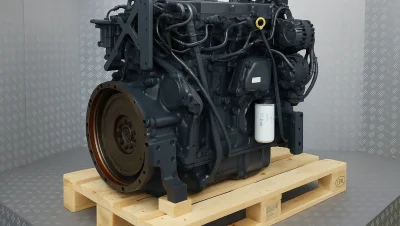
Our WIBAKO service received the tracked asphalt paver Dynapac SD135C (code 35), which is used daily for the construction of large sections of national roads. The machine is known for its high work stability, precise laying of the mineral-asphalt mixture, and ability to operate in difficult terrain conditions. Its heart is the reliable, six-cylinder diesel engine Deutz TCD2013 L06 2V, valued for its durability, low fuel consumption, and high flexibility in terms of load.
The client approached us due to increasing problems with the engine's operation, manifested by uneven performance, noticeable loss of power, and detectable vibrations during operation under load. Preliminary diagnostics indicated the possibility of crankshaft damage, which often manifests as unusual vibrations and noises in the lower parts of the unit. To confirm the cause, we conducted a full engine analysis, including measuring crankshaft runout, visual inspection, and non-destructive testing.
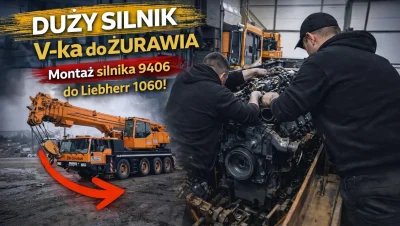
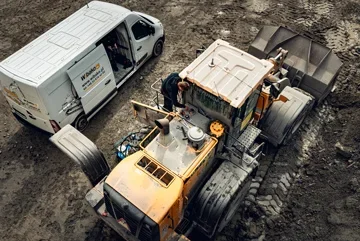
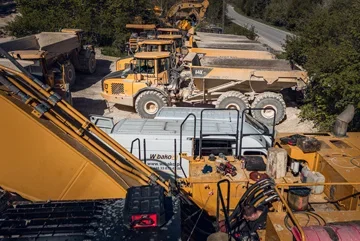
The disassembly of the power unit took place near Katowice, where the machine was operated. Our mobile service arrived on site, secured the work area, and then performed a professional disassembly using a crane provided by the client. The engine was transported to our headquarters in Kojszówka, where a detailed verification process began.
Preliminary diagnostics and confirmation of damage
Upon receiving the machine for assessment, we conducted an extensive preliminary diagnosis. Symptoms such as vibrations, noise from the lower part of the engine, and noticeable loss of power suggested problems in the crankshaft-piston system.
The diagnostic process included:
- measuring oil pressure during operation under load,
- analyzing engine operating parameters using service testers,
- endoscopic inspection of the cylinders,
- checking clearances and the nature of vibrations.
The results indicated significant deviations from the manufacturer's norms, justifying the need for engine disassembly and further detailed workshop diagnostics.
Engine disassembly from the machine
The disassembly of the power unit was carried out by our mobile service directly at the client's location. The work included disconnecting the electrical, fuel, hydraulic, and cooling systems. We secured all wires, harnesses, and connectors to avoid damage during transport.
After performing the necessary unscrewing of accessory components, mounting brackets, and supporting frame, the engine was lifted using the client's crane. It was then placed on our service vehicle and transported to Kojszówka, where the verification stage began.
Engine verification in the workshop
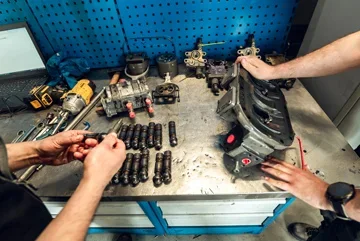
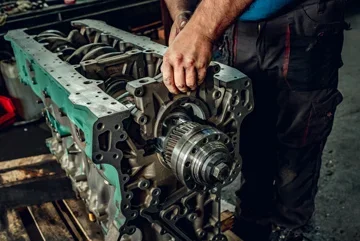
After disassembling the engine into parts, we confirmed the preliminary diagnosis. The crankshaft showed clear signs of wear, and the runout measurement confirmed its deformation. Additionally, the main and connecting rod bearings showed signs of overheating and uneven wear, indicating operation with insufficient lubrication in the past.
The scope of verification included:
- detailed measurements of the crankshaft,
- verification of connecting rods for twisting and bending,
- disassembly and assessment of the condition of pistons, rings, and cylinder liners,
- verification of the cylinder head, valve seats, guides, and sealing,
- checking the turbocharger for axial and radial play,
- testing the injection pump and injectors on the test bench.
Repair and regeneration process
Crankshaft-piston system
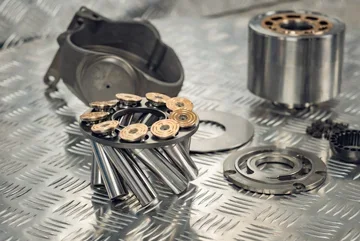
Due to the extent of the damage, the crankshaft underwent complete regeneration, including grinding and re-measurement. The cylinder liners were replaced with new ones, as well as the piston rings and bearings. The connecting rods were subjected to straightening and weight balancing.
Engine head
The head underwent a complete rebuild: machining, replacement of valve guides, new valves, and lapping of seats. A leak test was also performed in a water bath with air connection, confirming the absence of micro-cracks.
Fuel system
The injection pump was sent to an external specialized facility, where it was calibrated and regenerated. The injectors were adjusted, and worn tips were replaced.
Engine accessories
The turbocharger was checked and, upon detecting excessive play, underwent regeneration. The starter and alternator were inspected and had their consumable parts replaced.
Professional engine assembly
After completing the work, all components were reassembled according to Deutz procedures. Each element underwent torque control, and the lubrication system was bled and flushed.
Engine testing on the dynamometer
The engine was connected to our professional dynamometer, which allows us to verify the operating parameters of units under conditions close to real-world scenarios. The test lasted about 16 hours of operation under varying loads. In the first hours, a load of 20-30 percent was applied, followed by full load cycles.
The dynamometer allowed us to detect any leaks, deviations in parameters, and enabled precise control of temperatures, pressures, and combustion characteristics. Thanks to the dynamometer, we can guarantee that the engine after repair achieves parameters equivalent to factory standards, which is an advantage of WIBAKO over many competing services.
Engine installation in the machine
After successful dynamometer tests, our team proceeded with the reinstallation of the engine in the Dynapac SD135C paver. The process included thorough preparation of the engine compartment, checking mountings, frame connections, and complete replacement of filters. We ensured the tightness of the entire air piping, cooling system, and fuel lines.
Next, we conducted a series of tests in the presence of the operator. After confirming the correct operation of the engine, the absence of leaks, and stability of parameters, the machine was returned to service.
Engine maintenance after overhaul
After the engine rebuild, we recommend the first filter change after 50 operating hours. During this inspection, our service technicians also check the tightness of connections, the operation of accessories, and the operating parameters of the unit. Subsequent inspections should be conducted every 250 operating hours or every 3 months.
Where can you find the Deutz TCD2013 L06 2V engine?
This engine can be found in machines such as:
- Dynapac asphalt pavers,
- Atlas wheel loaders,
- Sennebogen material handlers,
- Terex and Genie construction machines.
Summary
The comprehensive overhaul of the Deutz TCD2013 L06 2V engine in the Dynapac SD135C tracked asphalt paver restored the machine's full functionality and increased its reliability. By utilizing our dynamometer and multi-stage verification, the client received a unit fully prepared for operation in challenging road conditions. WIBAKO service guarantees quality, precision, and a professional approach at every stage of service.
We invite you to contact us regarding repairs of Deutz engines and other units used in road and construction machines.
Overhaul of Deutz TCD2013 engines
Contact us for a quote for the repair or diagnostics of your engine.