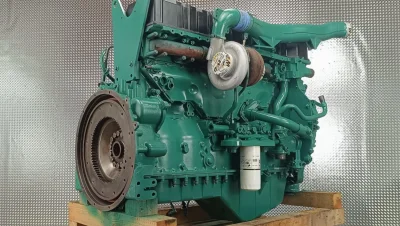
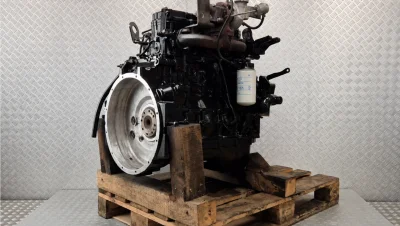
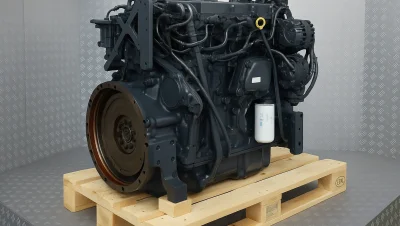
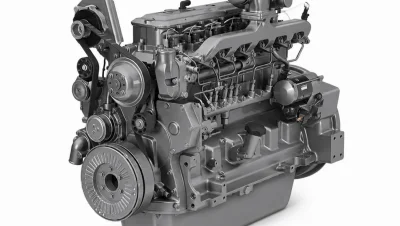
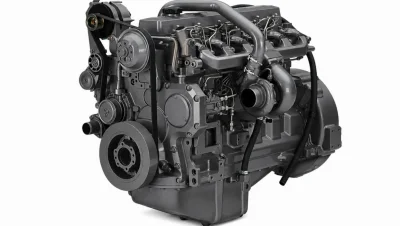
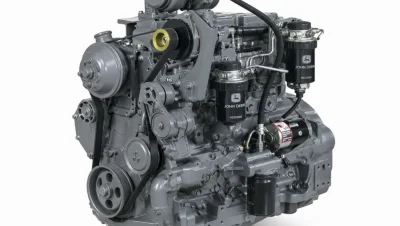
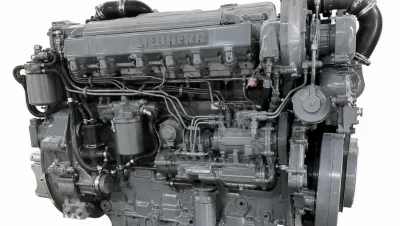
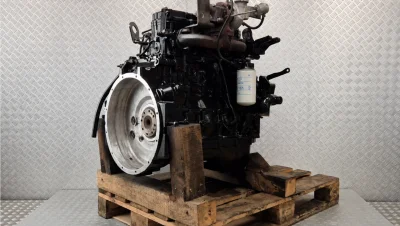
Volvo D9A Engine Overhaul in a Volvo A25D Articulated Dump Truck - Comprehensive Engine Repair
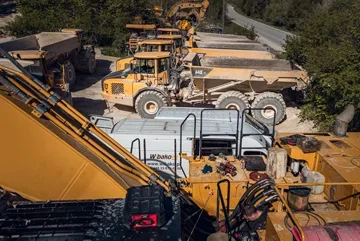
The Volvo A25D articulated dump truck is a heavy-duty transport machine designed to operate in demanding off-road conditions. It is commonly used on construction sites, in quarries, gravel pits and during large infrastructure projects. Its design focuses on efficiently transporting substantial loads across uneven, muddy and sloping terrain. One of the most important components responsible for the machine's performance is the Volvo D9A diesel engine.
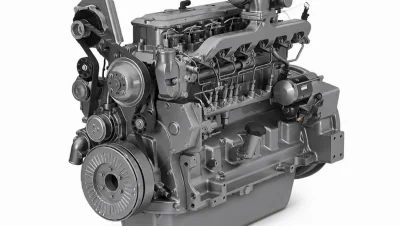
The Volvo D9A is a six-cylinder inline diesel engine with a displacement of 9.4 litres, equipped with turbocharging and charge air cooling. Depending on the version, it delivers approximately 224 kW (305 hp) and a maximum torque of 1,700 Nm. These specifications allow the articulated dump truck to operate efficiently under full load, including when travelling over challenging terrain. The engine features replaceable wet cylinder liners, which are important when carrying out comprehensive engine repairs.
In machines such as the Volvo A25D, the technical condition of the engine directly affects transport efficiency and operational continuity. Progressive wear of the engine's piston assembly can lead to reduced compression, increased oil consumption, excessive exhaust smoke and a noticeable loss of performance. In such situations, simply replacing basic consumable components is not enough to solve the problem. Detailed diagnostics and a thorough assessment of the entire power unit are necessary.
In this case, the reason for sending the Volvo D9A engine for overhaul was progressive wear of the cylinders and pistons, which resulted in deteriorating engine performance. WIBAKO carried out diagnostics, removed the engine from the Volvo A25D articulated dump truck, performed a comprehensive inspection of its components and rebuilt the power unit. Once the repair was completed, the engine underwent testing on an engine dynamometer before being prepared for reinstallation in the machine.
Initial Diagnostics of the Volvo D9A Engine Before Overhaul
Before deciding to overhaul the Volvo D9A engine, it was necessary to identify the cause of its deteriorating performance. The diagnostic process began with a basic inspection of the power unit installed in the Volvo A25D articulated dump truck. Our mechanics checked the engine oil and coolant levels, the condition of visible connections, system tightness and any signs of fluid leakage. They also assessed the exhaust smoke and observed the engine's behaviour during starting.
One of the important symptoms indicating wear within the piston assembly was increased oil consumption accompanied by reduced engine performance. These symptoms may indicate a loss of sealing between the pistons, piston rings and cylinder liners. In a large-displacement diesel engine, even a relatively small reduction in cylinder sealing efficiency can noticeably affect the combustion process and the power produced by the engine.
At the next stage, more detailed measurements and inspections were carried out. Depending on the available conditions, diagnostics may include compression pressure measurements and cylinder leak-down testing. These procedures help determine whether the combustion chambers maintain the required pressure and whether excessive blow-by is occurring. An additional diagnostic method is borescope inspection, which makes it possible to examine piston crowns and cylinder wall surfaces without completely dismantling the engine.
If compression-related irregularities are identified, it is necessary to establish whether they are caused by worn piston rings, damaged pistons or excessive cylinder liner wear. Combining diagnostic results with a subsequent mechanical inspection makes it possible to determine the actual scope of the required overhaul.
The initial assessment confirmed that the Volvo D9A required comprehensive repair. Due to the nature of the damage, the decision was made to remove the power unit and transport it to the WIBAKO workshop in Kojszówka, Poland. This solution allows us to perform accurate measurements, mechanical machining and engine testing under controlled workshop conditions.
Removing the Volvo D9A Engine from the Volvo A25D Articulated Dump Truck
Removing the engine from a Volvo A25D articulated dump truck requires proper preparation of the work area and a carefully planned sequence of operations. Due to the weight and dimensions of the power unit, the procedure must be carried out using suitable lifting equipment. The crane required to remove the engine from the machine is provided by the customer, while our mechanics are responsible for preparing the unit for removal, disconnecting the auxiliary components and safely carrying out the entire operation.
The work begins by securing the machine against accidental starting and disconnecting the electrical system. The mechanics then proceed with draining the relevant operating fluids, where required by the scope of work. The next step involves disconnecting the fuel lines, cooling system connections and pipes responsible for supplying and discharging air.
Particular attention is paid to the intake system and charge air cooling components. All pipes, hoses and connections must be properly marked so that their original arrangement can be accurately restored during reinstallation. Our mechanics also protect open pipes and ports against dirt and foreign particles entering the machine's systems.
Once the electrical connections and auxiliary equipment have been disconnected, the engine mounting points are dismantled. The support points, condition of the mounting components and connections to the drivetrain are inspected. The power unit is then prepared for lifting. Our mechanics check the positioning of the lifting slings to ensure proper balance and prevent damage to structural components during removal.
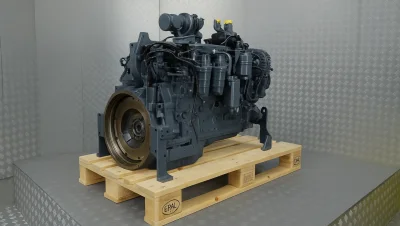
After the Volvo D9A engine has been safely removed from the engine compartment, it is prepared for transportation. The intake, exhaust, fuel and oil openings are protected, along with all components that could be damaged during transport. The engine is then delivered to the WIBAKO headquarters in Kojszówka, where the detailed inspection and repair process begins.
Inspection of Volvo D9A Engine Components at the WIBAKO Workshop
Once the power unit arrives at our workshop, a detailed inspection of its technical condition begins. The first step involves assessing the overall condition of the engine and checking whether it can be rotated mechanically. If there are no signs of mechanical seizure, the crankshaft can be rotated under controlled conditions to assess resistance throughout the engine's mechanisms. The unit is then prepared for dismantling.
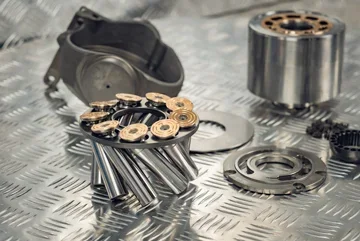
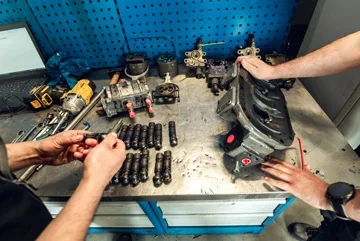
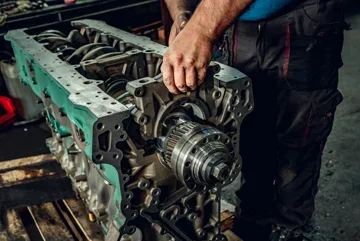
The Volvo D9A engine is disassembled into individual components. Our mechanics remove the auxiliary equipment, covers, cylinder head, oil sump and piston assembly components. All dismantled parts are properly organised and subsequently cleaned. Thorough cleaning is essential because carbon deposits, oil residues and other contaminants could make it difficult to accurately assess the technical condition of individual components.
Inspection of the cylinder liners and pistons is one of the most important stages of the process. Our mechanics examine the working surfaces of the liners for scratches, signs of overheating, deformation and uneven wear. Measurements of the internal diameter are also taken at several points and heights. This makes it possible to determine the degree of wear and establish whether the components still meet the required dimensional specifications.
The pistons undergo both visual and dimensional inspections. Their crowns, skirts, ring grooves and surfaces in contact with the cylinder liners are examined. Our mechanics look for signs of excessive friction, cracks, thermal damage and indications of abnormal combustion. The piston rings are also checked, including their condition and clearances within the grooves. Based on the measurements, we determine which components can be reused and which must be replaced.
The crankshaft undergoes a detailed visual inspection and mechanical measurements. The main and connecting rod journals are checked, including their diameters, ovality and taper. Crankshaft runout, bearing surfaces and oil passages are also inspected. Particular attention is paid to signs of overheating, scoring and possible cracks. If the condition of the crankshaft requires it, the component may be sent for appropriate reconditioning.
The connecting rods are also thoroughly inspected. Our mechanics assess their visual condition and check for deformation, twisting and longitudinal bending. The bearing surfaces, connecting rod small ends and condition of the fastening bolts are examined. These measurements help determine whether the connecting rods retain the required geometry and can safely continue operating after reassembly.
Another important stage is the inspection of the Volvo D9A cylinder head. The valve seats, guides, valves and cylinder head mating surface are checked. A pressure test is performed to detect possible cracks and internal leaks. During this procedure, the cylinder head is placed in a heated water bath and compressed air is introduced into the appropriate passages. Escaping air bubbles make it possible to identify areas where the component has lost its tightness.
The camshaft is also inspected. Our mechanics examine the camshaft lobes, main journals and any signs of uneven wear. The condition of the components working with the valve mechanism is assessed as well. This makes it possible to identify damage that could negatively affect proper valve operation.
The inspection also covers the turbocharger, alternator, starter motor and other engine accessories. In the case of the turbocharger, axial and radial shaft clearances are checked, together with the general condition of its components. Assessing the auxiliary equipment helps reduce the risk of additional failures after the rebuilt engine has been installed in the machine.
Once the inspection is complete, our mechanics prepare an assessment of the individual components. The repair scope is established based on these findings, and the appropriate replacement parts are selected. Only after determining the actual condition of the engine can the rebuilding process begin.
Comprehensive Volvo D9A Engine Overhaul - Component Reconditioning and Replacement
Once the inspection has been completed, the actual Volvo D9A engine overhaul begins. The work covers the piston assembly, cylinder head, lubrication system components and engine accessories. The main objective is to restore the engine's correct mechanical parameters and ensure suitable operating conditions for further use in the Volvo A25D articulated dump truck.
Repair of the Piston Assembly
Due to the confirmed wear of the cylinders and pistons, rebuilding the piston assembly is particularly important. The Volvo D9A engine uses replaceable wet cylinder liners, allowing repairs to be carried out without replacing the entire engine block, provided that its technical condition allows it. After inspecting the liner seats and checking the relevant dimensions, new components are prepared for installation.
Replacing cylinder liners requires maintaining the correct installation parameters and checking how far the liners protrude above the engine block surface. This is essential for ensuring proper sealing between the engine block and cylinder head. Incorrect liner positioning may lead to sealing problems and improper engine operation.
Along with the cylinder liners, the pistons and piston rings are also assessed. Worn or damaged components are replaced with new parts matching the specifications of the particular engine version. The compatibility of individual components and the required installation clearances are checked. Proper matching of the pistons and cylinder liners directly affects compression, oil consumption and the durability of the entire assembly.
After measurements have been taken, the crankshaft is prepared for reinstallation or appropriate reconditioning if its condition requires it. If mechanical machining is necessary, the crankshaft journals can be ground to the correct repair dimensions. Suitable main and connecting rod bearings are then selected. All mating surfaces must be thoroughly cleaned, and the oil passages checked for unrestricted flow.
After inspection and preparation, the connecting rods can be reused if they meet the required dimensional specifications and show no damage that would make further operation unsafe. Our mechanics pay particular attention to correct bearing installation and the specified tightening torques of the fasteners. Assembling the piston assembly requires a high degree of accuracy because all its components operate under considerable mechanical and thermal loads.
Volvo D9A Cylinder Head Reconditioning
At the same time, work is carried out to prepare the cylinder head for reinstallation. After thorough cleaning and pressure testing, the condition of the valve seats, guides and valves is assessed. Depending on the degree of wear, appropriate reconditioning work is performed, including cylinder head resurfacing, replacement of valve guides and valves.
Resurfacing restores the required flatness of the cylinder head mating surface. This is particularly important in diesel engines, where high combustion pressures occur. A properly prepared surface allows the head gasket to achieve the correct sealing pressure and reduces the risk of combustion gases entering the cooling system.
The valve seats are also inspected to ensure they provide adequate sealing when the valves are closed. If wear is identified, appropriate machining is carried out. Valve guides are checked for excessive clearance, as wear in these components may cause incorrect valve positioning and reduced combustion chamber sealing.
After reconditioning, all cylinder head components are inspected again. Our mechanics check the quality of the machining, surface condition and correct interaction between individual components. Only after a positive assessment is the cylinder head prepared for installation on the engine block.
Fuel System and Auxiliary Equipment Inspection
Another important part of the Volvo D9A engine overhaul is inspecting the fuel system. Correct fuel delivery directly affects engine power, operating smoothness, fuel consumption and exhaust gas temperature. The inspection includes assessing the condition of the available fuel system components, checking line tightness and evaluating the overall condition of the parts responsible for supplying fuel to the cylinders.
If diagnostics reveal irregularities in the operation of the injectors or injection pump, these components can be sent to a specialist facility for testing on a calibration bench and possible reconditioning. This solution makes it possible to verify the operating parameters of the fuel system components under controlled conditions.
Our mechanics also inspect the turbocharger. In the Volvo D9A engine, proper operation of the boost system is essential for achieving correct combustion parameters and the required power output. The inspection includes checking shaft clearances, tightness and the condition of oil and air connections. If any irregularities are identified, the turbocharger is sent for appropriate repair.
The alternator and starter motor are also checked. A properly functioning electrical system is essential during the first engine start after the overhaul and throughout the machine's subsequent operation. The electrical connections, mounting points and condition of components working with the power unit are inspected.
Professional Volvo D9A Engine Assembly
Once all reconditioning work has been completed and the parts are ready, engine assembly begins. This stage requires particular accuracy because even minor deviations from the required installation specifications can affect the durability of the power unit. Before assembly starts, all components are cleaned again and prepared for installation.
Our mechanics begin by preparing the engine block, installing the cylinder liners and checking their positioning. The pistons with rings and prepared connecting rods are then installed. Each component is properly lubricated and fitted according to the required technical specifications. Once the crankshaft has been installed, the clearances and freedom of rotation are checked.
The next stage involves installing the cylinder head with the appropriate gasket. The connection is made following the specified tightening sequence and torque requirements. The valve mechanism components and other engine parts are then installed. The lubrication, cooling and fuel system components are subsequently fitted.
Correct preparation of all connections is also extremely important. Our mechanics inspect mating surfaces, the condition of seals and pipe connections. The oil passages are checked for unrestricted flow, and the installation of components responsible for distributing oil to the moving parts is verified.
After the main engine components have been assembled, the auxiliary equipment is installed, including the turbocharger, alternator, starter motor and other components required for proper engine operation. All connections are inspected before the engine is prepared for its first start. This comprehensive approach makes it possible to restore the engine's mechanical parameters and prepare the Volvo D9A for load testing.
Volvo D9A Engine Testing on the WIBAKO Engine Dynamometer
One of the most important stages of the comprehensive Volvo D9A engine overhaul is testing on an engine dynamometer. At WIBAKO, we have a dedicated test facility that allows us to inspect combustion engines under controlled load conditions. This means we can verify the operation of the power unit before reinstalling it in the Volvo A25D articulated dump truck. This is an important technical and organisational advantage, as it helps reduce the risk of discovering irregularities only after the engine has been installed in the machine.
Dynamometer testing does not simply involve starting the engine and checking whether it runs at idle. Its main purpose is to evaluate the behaviour of the power unit under different load conditions. During normal operation, the Volvo A25D works in changing conditions. The engine must provide sufficient power when moving with a full load, travelling uphill and transporting material over uneven ground. Therefore, a proper assessment of the rebuilt engine requires tests that go beyond a basic start-up procedure.
After the engine has been mounted on the dynamometer, our mechanics prepare all the necessary systems for starting. Operating fluid levels, pipe connections, fuel lines and the electrical installation are checked. The components responsible for lubrication and cooling are also inspected before the test begins. Only after confirming that the engine has been properly prepared is the first start-up performed.
The initial running period takes place under a relatively light load. An engine that has undergone a complete overhaul must go through an appropriate running-in process during which the cooperating surfaces gradually adapt to one another. At WIBAKO, the initial testing phase lasts a minimum of 16 engine operating hours at approximately 20-30% of the rated power. This stage is particularly important for monitoring the stability of the engine's operating parameters.
During the test, our mechanics monitor oil pressure, engine temperature, cooling system performance and the tightness of all connections. They pay attention to possible leaks, unusual noises, vibrations and changes in engine operation. The engine's response to changes in rotational speed is also monitored. Any concerning symptoms must be investigated and their causes identified before proceeding to the next stage.
After the initial running-in period has been completed, and provided that the engine maintains the correct operating parameters, testing under higher loads begins. The load is gradually increased to check how the power unit performs under conditions similar to those encountered during actual operation. The engine is subjected to repeated tests at different load levels, allowing us to assess its stability and ability to maintain the required operating parameters.
Monitoring oil pressure is particularly important during load testing. The lubrication system must provide the correct operating conditions for the crankshaft, bearings, pistons and other cooperating components. Irregularities in this area could lead to accelerated component wear. For this reason, measurements are taken at successive stages of the test, and the results are analysed against the specifications applicable to the particular engine version.
Engine operating temperature is equally important. As the load increases, more thermal energy is generated during combustion. The cooling system must effectively dissipate excess heat to ensure stable engine operation. Our mechanics therefore monitor temperature behaviour throughout the tests and check for any signs of overheating. The cooling system's tightness and the correct operation of its components are also assessed.
Another important part of the test is evaluating the engine's response to changing loads. In real operating conditions, the Volvo A25D does not require a constant amount of power. The engine must respond to changing transport conditions, machine load and terrain characteristics. For this reason, the tests include checking the engine's response to increasing and decreasing loads, rotational speed stability and its ability to return to smooth operation after a change in operating conditions.
The dynamometer also allows us to assess whether the engine achieves the correct performance characteristics. In the case of the Volvo D9A, power and torque are particularly important parameters. Selected versions of this engine are designed to deliver approximately 224 kW and a maximum torque of 1,700 Nm. However, the final assessment of the results must take into account the exact engine version, its identification number and the relevant technical specifications. Different engine variants cannot be compared directly without considering their individual specifications.
Throughout the entire process, our mechanics also monitor the engine's overall operating smoothness. Unusual noises, vibrations and possible signs of abnormal combustion are checked. The tightness of the systems is also assessed once the engine reaches operating temperature and during loaded operation. Some leaks may only become visible after the engine has warmed up, which is why testing under different conditions is so important.
If any irregularities occur during testing, the engine is not approved for reinstallation until the cause has been identified. If necessary, additional inspections are performed, and after the problem has been resolved, the test is repeated. This allows us to verify the effectiveness of the repairs and reduce the risk of having to remove the engine from the machine again.
Engine dynamometer testing is therefore an essential part of our quality control process. It allows us to check not only whether the engine starts, but also how it performs during extended operation and under varying loads. For the owner of a Volvo A25D articulated dump truck, this provides greater confidence that the power unit has been properly prepared for further operation. Only after the tests have been successfully completed is the engine prepared for transportation and reinstallation in the machine.
Installing the Rebuilt Volvo D9A Engine in the Volvo A25D
After successfully completing the dynamometer tests, the Volvo D9A engine is prepared for reinstallation in the Volvo A25D articulated dump truck. Engine installation is just as important as the overhaul itself. Even a correctly rebuilt engine may fail to deliver the expected performance if mistakes are made when connecting its systems, securing the unit or preparing the machine for its first start.
Before installation begins, our mechanics inspect the engine compartment and the components that will work together with the rebuilt power unit. The mounting points, support structures, mechanical connections and accessible pipework are assessed. If necessary, dirt and operating residues are removed. It is important to ensure that the engine is installed in a properly prepared space without components that could damage the newly rebuilt parts.
As during removal, installation is carried out using a crane provided by the customer. Our mechanics prepare the engine for lifting, check the mounting points and supervise the process of lowering the unit into the engine compartment. The engine must be positioned correctly to ensure that it can be properly connected to the remaining drivetrain components.
Once the engine has been positioned, it is secured to the machine's structure. Our mechanics check that the mounting components fit correctly and inspect the condition of the engine mounts and brackets. Mechanical connections to the drivetrain are then completed. Maintaining the correct engine position is essential because incorrect alignment may cause additional stresses and vibrations during operation.
The next stage involves connecting the fuel system, cooling system, lubrication system and electrical installation. Our mechanics pay particular attention to the correct routing of pipes and cables to prevent them from rubbing against moving or hot components. All connections must be made to ensure proper sealing and resistance to the vibrations generated during dump truck operation.
The intake system receives particular attention. In the Volvo D9A engine, the correct air supply to the turbocharger and the remaining components of the boost system directly affects engine performance. Our mechanics inspect the condition of pipes, hoses and clamps. The connections to the charge air cooler and intake manifold are also checked. If any damage or wear is identified in the pipework, the affected components must be properly repaired or replaced.
The exhaust system is also inspected. All connections must be correctly fitted and sealed. Leaks in the exhaust system may cause operational problems and affect the machine's operating conditions. The mounting points, seals and routing of the pipes in relation to other engine compartment components are checked.
After all connections have been completed, our mechanics prepare the engine for its first start. The filters required as part of post-overhaul servicing are replaced, and the lubrication system is properly prepared. Operating fluid levels, pipe condition and auxiliary equipment mounting points are checked. Before starting the engine, it is also necessary to confirm that all electrical and mechanical connections have been completed correctly.
The first start is supervised by our mechanics. Oil pressure, operating temperature and engine behaviour at idle are monitored. The engine is then tested at gradually increasing rotational speeds. Our mechanics check whether it runs smoothly, whether there are any unusual noises and whether all systems are functioning correctly.
The tightness of the fuel, cooling, lubrication, intake and exhaust system connections is verified. Particular attention is paid to pipes and hoses that may have been disturbed during installation. Inspections are performed both while the engine is stationary and after it reaches the appropriate operating temperature. This makes it possible to identify possible leaks that may not be visible immediately after starting a cold engine.
The final part of the installation process involves functional tests carried out together with the machine operator. This is an important stage because it allows us to evaluate engine performance under the actual operating conditions of the Volvo A25D. Our mechanics observe how the power unit responds to changes in load and rotational speed, while the operator can verify whether the machine behaves correctly during individual operations.
The engine's behaviour while the machine's systems are operating is also checked. An articulated dump truck uses its power unit not only for movement but also to drive auxiliary systems. Therefore, it is important to monitor engine operation during manoeuvring and when operating the dump body. Our mechanics pay attention to rotational speed stability, response to increased power demand and any signs of overloading.
Once the tests have been successfully completed and no leaks have been detected, the installation process can be finalised. The customer receives information about the work performed, and an installation report is prepared after the inspection. The documentation confirms that the work has been completed and records the condition of the machine following the tests. The Volvo A25D can then be prepared for further operation.
Volvo D9A Engine Servicing After Overhaul - Inspection After 50 Operating Hours
Proper servicing after a comprehensive engine overhaul is essential for the durability of the rebuilt power unit. During the first hours of operation, the cooperating engine components go through a running-in process. For this reason, inspections carried out after the machine has been returned to service should never be overlooked.
At WIBAKO, we recommend carrying out the first service inspection after 50 operating hours. Our service team can travel directly to the customer and inspect the engine at its operating location. This inspection is not limited solely to replacing filters and oil, where required by the servicing schedule. Its purpose is also to assess the overall technical condition of the engine after its initial operating period.
During the inspection, our mechanics check system tightness, pipe connections, mounting points and auxiliary equipment operation. Oil pressure, engine temperature and power unit behaviour during starting and loaded operation are also assessed. Particular attention is paid to possible leaks, loose connections and unusual noises that may have appeared during operation.
Early inspection makes it possible to identify irregularities before they develop into more serious technical problems. This is particularly important for articulated dump trucks, which often operate for many hours a day and are used for intensive material transport. Downtime of such a machine may cause delays to ongoing projects and additional costs for the company.
After the first inspection, further servicing is recommended every 250 operating hours, but no less frequently than once every three months. Regular maintenance includes assessing the condition of the power unit, checking system tightness and performing servicing tasks in accordance with the requirements of the particular engine. Engines supplied by WIBAKO after overhaul are covered by a warranty, and our service team can also provide ongoing technical support.
Volvo A25D Articulated Dump Truck and D9A Engine - Application Characteristics
The Volvo A25D belongs to a family of articulated dump trucks designed to transport materials in demanding off-road conditions. Its articulated construction allows the machine to maintain suitable manoeuvrability and the ability to travel over uneven surfaces. As a result, the dump truck can be used on construction sites, in open-pit mines, gravel pits and during earthmoving operations.
The Volvo D9A engine was developed to provide sufficient power and torque for machines requiring high levels of traction. Its six-cylinder configuration, 9.4-litre displacement, turbocharging and charge air cooling allow it to deliver the performance required for heavily loaded operation. Replaceable cylinder liners are an additional advantage when it comes to engine repairs and rebuilding.
When servicing Volvo D9A engines, it is particularly important to use suitable replacement parts and maintain the installation specifications provided by the manufacturer. This applies to the piston assembly, cylinder head, lubrication system and auxiliary equipment. Comprehensive inspection of all components helps prevent situations in which repairing one component fails to resolve problems caused by wear elsewhere in the engine.
Engines from the Volvo D9 family have also been used in other machines and industrial applications. Selected machines and specialist equipment are equipped with units from this engine family. However, when selecting replacement parts or planning an overhaul, the exact engine designation must always be verified, as individual versions may differ in equipment, auxiliary components and technical specifications.
WIBAKO provides repairs and overhauls of engines used in construction machinery from various manufacturers. We service engines from Volvo, Caterpillar, Cummins, Deutz, Perkins, Kubota, Yanmar and Liebherr, among others. The scope of work is selected according to the technical condition of the specific engine and the requirements of its intended application.
Comprehensive Volvo Engine Service - Summary of the Volvo D9A Overhaul
Overhauling the Volvo D9A engine used in a Volvo A25D articulated dump truck requires suitable technical facilities, experience and precision at every stage. From accurate diagnostics, through engine removal and component inspection, to reconditioning, assembly and load testing, every operation contributes to the final result of the repair.
In large-displacement engines with high torque output, the condition of the piston assembly is particularly important. Wear of cylinder liners, pistons and piston rings may cause reduced compression, increased oil consumption and lower engine performance. A comprehensive rebuild restores the correct operating conditions between individual components and prepares the engine for further service.
The availability of engine dynamometer testing is another important part of the process. At WIBAKO, we can test the power unit before reinstalling it in the machine. Extended testing, an initial load of approximately 20-30% of rated power and subsequent tests under higher loads allow us to assess operating stability and system tightness.
Our services also include engine removal and installation directly at the customer's location. WIBAKO's mobile service operates throughout Poland and, where required, also abroad. We can remove the power unit, transport it to our headquarters in Kojszówka, carry out a comprehensive overhaul and then reinstall the engine in the machine.
If your Volvo A25D articulated dump truck is losing power, consuming excessive amounts of oil, producing excessive exhaust smoke or showing other concerning symptoms, a detailed diagnostic inspection is recommended. Carrying out repairs at the right time can reduce the risk of more serious damage and costly machine downtime. WIBAKO provides comprehensive Volvo engine services, including diagnostics, complete engine overhauls, component reconditioning, dynamometer testing and power unit reinstallation.
After completing an overhaul, we recommend the first service inspection after 50 operating hours. Subsequent inspections should take place every 250 operating hours, but no less frequently than once every three months. Regular servicing makes it possible to monitor the technical condition of the engine and maintain its correct operating parameters throughout further use.
Explore our other services: construction machinery service, diesel engine overhauls and mobile construction machinery service.
Volvo D9A Engine Overhaul - Contact WIBAKO
Do you need a Volvo D9A engine overhaul for your Volvo A25D articulated dump truck? WIBAKO provides comprehensive diesel engine overhauls, component reconditioning, dynamometer testing and engine removal and installation. We offer professional service throughout Poland. Contact us to discuss the repair options available for your engine.