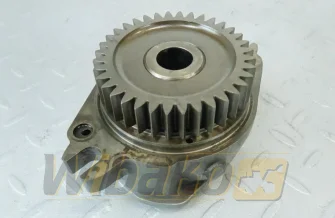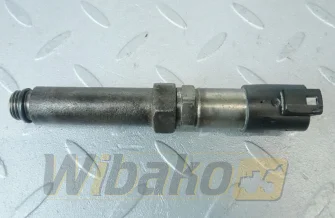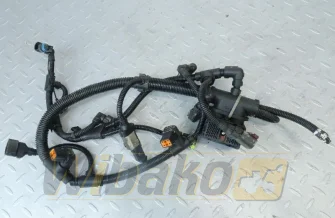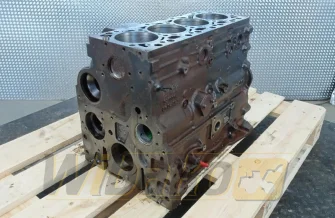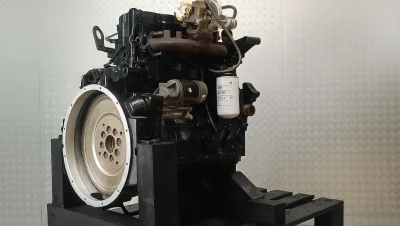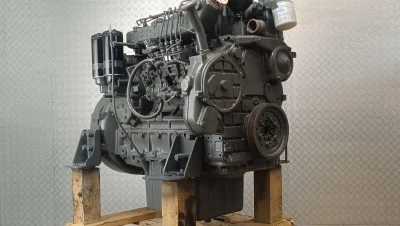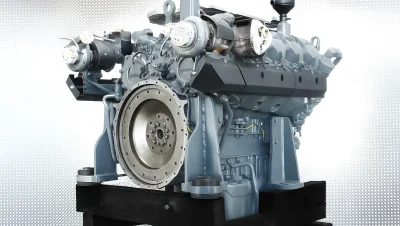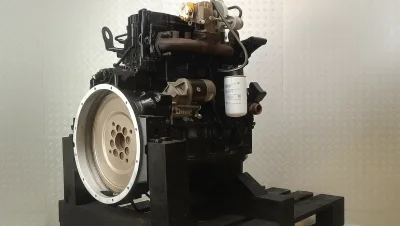


Overhaul of the Cummins QSB 4.5 Engine in the Atlas Copco FlexiROC T35 Crawler Drill Rig
Introduction - Atlas Copco FlexiROC T35 Drill Rig Service
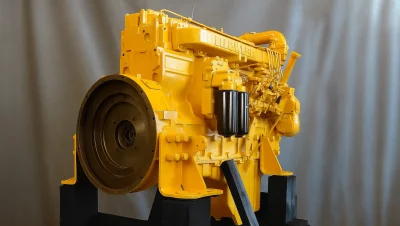
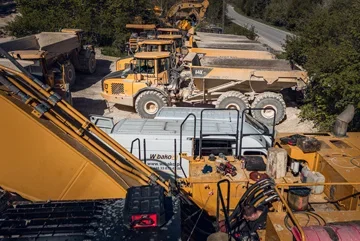
Our service center received a Cummins QSB 4.5 engine from an Atlas Copco FlexiROC T35 crawler drill rig. The project began with a report from a client conducting geotechnical and foundation works near Kielce in the Świętokrzyskie Voivodeship. Our mobile service team carried out diagnostics on the machine directly at the construction site, then disassembled the power unit and transported it to our headquarters in Kojszówka.
The Atlas Copco FlexiROC T35 is an advanced crawler drill rig used for drilling production holes, foundation works, road construction, and in quarries. The machine's design was developed to operate in harsh terrain conditions where high reliability of both the hydraulic system and the internal combustion drive is required. The FlexiROC T35 model features a long boom reach, an efficient drilling system, and the capability to drill holes with diameters ranging from approximately 64 to 115 mm.
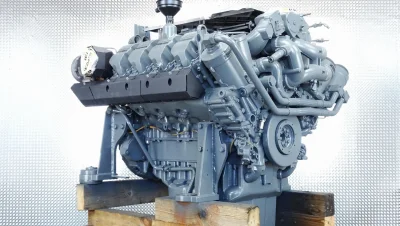
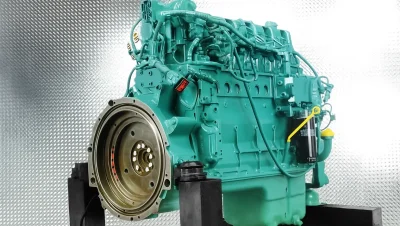
The Cummins QSB 4.5 engine is a highly regarded diesel unit used in many construction and industrial machines. The four-cylinder, turbocharged design provides sufficient torque with relatively low fuel consumption. Due to its compact construction and high durability, engines of this series are frequently found in drill rigs, wheel loaders, road rollers, and specialized machinery.
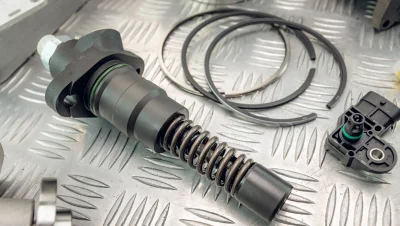
The reason for sending the engine for an overhaul was damage to the injection system. The operator reported a noticeable drop in power during drilling, uneven engine operation, increased fuel consumption, and heavy smoking under load. In the first phase, we performed basic electronic diagnostics and analyzed the engine's operating parameters. This was followed by a fuel system inspection, injector testing, and a combustion quality assessment. The results obtained indicated improper operation of the fuel supply system.
Disassembly of the Cummins QSB 4.5 Engine from the Drill Rig
After confirming the need for an overhaul, our mechanics proceeded to disassemble the engine. The work was performed on-site using a crane provided by the customer. The process began by disconnecting the batteries and securing the machine's electrical system.
Next, the protective covers were removed to grant access to the power unit. The cooling system hoses, fuel lines, intake system, and exhaust system were disconnected. Special attention was paid to securing the hydraulic lines located in the immediate vicinity of the engine. All connections were labeled to ensure that subsequent reassembly followed the manufacturer's documentation exactly.
After disconnecting the auxiliary components, engine mounts, and drive couplings, the unit was lifted out of the engine compartment and prepared for transport. The engine was brought to our facility, where a detailed verification of all components began.
Engine Verification in the Workshop
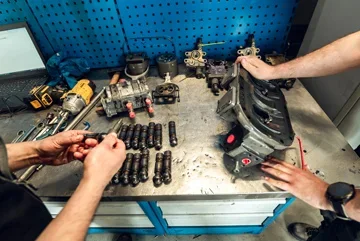
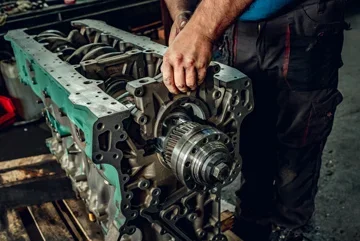
Upon arrival at the workshop, a full verification procedure was carried out on the engine. It began with checking the crankshaft's ability to rotate and performing diagnostic tests before complete teardown. The engine was then disassembled down to the bare block.
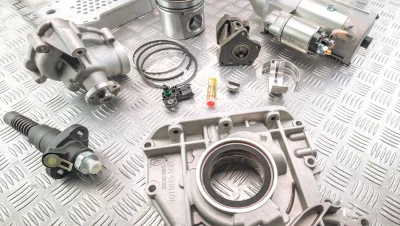
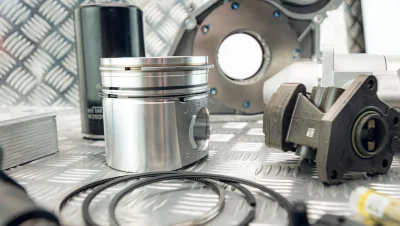
During inspection, the fuel system issues were confirmed. The injectors showed uneven fuel delivery rates, and some components exhibited signs of operational wear. Additionally, increased wear on the pistons and rings was found, resulting from prolonged operation with incorrect combustion.
A crankshaft verification was also performed, including measurements of the main and connecting rod journals, a crankshaft runout check, and an assessment of the oil channels' condition. The connecting rods were inspected for twisting, bending, and any signs of overheating.
The cylinder head was subjected to a pressure test in a water bath. The condition of the valve seats, guides, and valves was evaluated. The camshaft, turbocharger, alternator, starter motor, and other engine accessories were also inspected.
Regeneration and Repair of the Crank-Piston System
Following the measurement process, the scope of the overhaul works was established. First, the crank-piston system was remanufactured. The engine block was thoroughly cleaned and prepared for further operations.
The cylinder liners, pistons, piston rings, and a complete set of main and rod bearings were replaced. After successful verification, the crankshaft was machined according to the measurement results and prepared for reassembly. All components were put together adhering strictly to the tightening torques specified by the manufacturer.
The crankshaft seals, a full gasket set, and consumable components affecting the long-term trouble-free operation of the power unit were also replaced.
Cylinder Head Regeneration
The cylinder head underwent comprehensive regeneration. The process included resurfacing the mating face, replacing the valve guides, and installing new valves. The valve seats were machined, and the correct seating of the valves was verified.
Upon completion of the work, a second pressure test was performed. This allowed us to confirm the full functionality of the cylinder head before it was mounted back onto the engine.
Repair of the Fuel System and Components
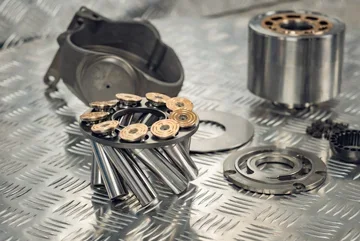
A crucial element of the overhaul was rebuilding the fuel system. The injectors were tested on a test bench and remanufactured according to the manufacturer's requirements. The feed pump and other components responsible for fuel delivery were also inspected.
The turbocharger was verified for axial and radial play. Positive inspection results allowed for its continued use after replacing the wear components. The alternator, starter motor, and electronic sensors responsible for engine management were also checked.
Professional Engine Reassembly
After completing all remanufacturing work, the engine assembly process began. Each component was installed in accordance with Cummins technical documentation. Special attention was paid to the correct timing setup, valve clearances, and fuel system parameters.
Once the power unit was assembled, a series of quality controls were carried out, including leak tests of the oil, fuel, and cooling systems. New filters, service hoses, and sealing components were installed. The engine was then prepared for dyno testing.
Engine Dyno Testing
One of the most important stages carried out by WIBAKO is testing the engine on an engine dynamometer. This solution allows us to verify the quality of the work performed even before mounting the power unit back into the machine. Few companies specializing in construction machinery engine overhauls have their own dyno station capable of fully testing engine operating parameters under load.
Following assembly, the Cummins QSB 4.5 engine was installed on the dynamometer. The first stage involved running it for several hours under a light load of about 20-30% of its nominal value. During this time, coolant temperature, oil pressure, combustion parameters, and the stability of the fuel system were monitored.
After the break-in stage was completed, tests under increasing load began. The engine was run multiple times across various RPM ranges and loads corresponding to the actual working conditions of the Atlas Copco FlexiROC T35 drill rig. Power output, torque, and fuel consumption parameters were recorded.
The dynamometer also allowed for evaluating the operation of the turbocharger, cooling system, and electronic engine control unit. Thanks to this, any irregularities can be detected before installation in the machine. This approach significantly reduces the risk of unplanned downtime after the equipment is collected by the client.
During the tests, the tightness of all connections, temperature stability, and the behavior of the unit during sudden load changes were also controlled. The engine successfully passed all testing stages, achieving parameters in line with the manufacturer's requirements. Only after obtaining positive results was it approved for installation in the machine.
By using the dyno, the client receives an engine proven under conditions close to real operation. This is one of the greatest advantages of the comprehensive service provided by WIBAKO and an essential factor building safety for the machine's future operations.
Installing the Engine in the Atlas Copco FlexiROC T35 Drill Rig
Following the dyno tests, the engine was transported back to the client. Our service technicians completed the installation of the power unit in the Atlas Copco FlexiROC T35 crawler drill rig. Just as during disassembly, a crane provided by the machine user was utilized.
The installation process included precise seating of the engine in the compartment, connecting all systems, and checking the alignment of the mounts. The cooling system hoses, fuel system, intake, and exhaust systems were hooked up. The tightness of all connections was checked thoroughly.
Next, the service filters were replaced, the systems were filled with the appropriate fluids, and the initial start-up procedure was performed. In the presence of the operator, a series of functional tests were carried out, covering the operation of the drilling system, hydraulics, and auxiliary systems of the machine.
Upon completion of the tests, an installation report was drawn up, confirming the correct operation of the engine and the absence of leaks or irregularities.
Post-Overhaul Engine Maintenance
Every engine overhauled by WIBAKO is covered by a warranty and the option for ongoing service support. We recommend performing the first inspection after 50 operating hours. During this visit, our mechanics replace the filters, check the tightness of connections, and inspect the condition of the components after the break-in period.
We recommend performing subsequent inspections every 250 operating hours, but no less than once every three months. Regular servicing helps maintain the high reliability of the Cummins QSB 4.5 engine and reduces the risk of costly breakdowns.
Machines Utilizing the Cummins QSB 4.5 Engine
Cummins QSB 4.5 engines are utilized in many construction and industrial machines. They can be found, among others, in Atlas Copco and Epiroc drill rigs, wheel loaders, road rollers, motor graders, telehandlers, and specialized machinery used in infrastructure construction.
Due to the wide application of Cummins units, our service team has extensive experience in repairing, remanufacturing, and rebuilding these engines.
Summary
The overhaul carried out on the Cummins QSB 4.5 engine in the Atlas Copco FlexiROC T35 crawler drill rig included comprehensive diagnostics, full component remanufacturing, rebuilding the fuel system, engine dyno testing, and professional installation in the machine. As a result, the client received a power unit prepared for many more years of operation.
If you own an Atlas Copco, Epiroc drill rig, or any other construction machine equipped with a Cummins engine, we provide comprehensive construction machinery servicing, diesel engine overhauls, on-site disassembly and assembly, and engine dyno testing.
Internal linking:
Cummins Engine Overhaul
Crawler Drill Rig Service
WIBAKO Engine Dynamometer
Mobile Service for Construction Machinery
Cummins QSB 4.5 Engine Overhaul
Do you need a Cummins QSB 4.5 engine repair or service for an Atlas Copco FlexiROC T35 drill rig? WIBAKO performs comprehensive overhauls, engine dyno testing, as well as on-site engine disassembly and assembly for the client.