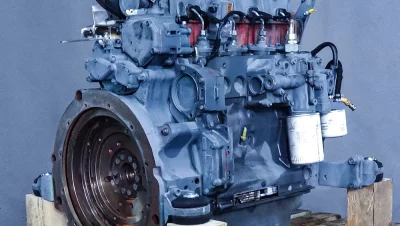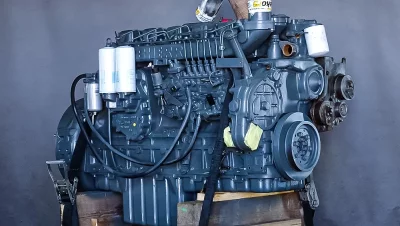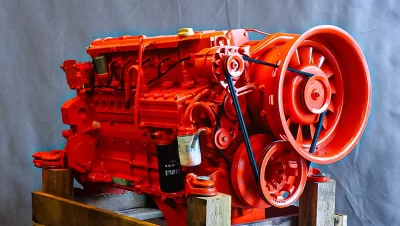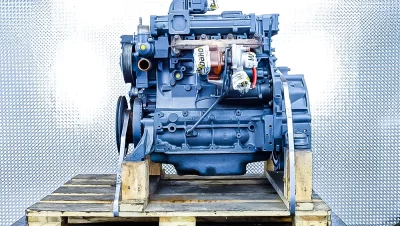


Deutz TCD 6.1 L6 Engine Overhaul in a Fuchs MHL 340 F Material Handler
When a material handler starts to noticeably lose power, oil consumption increases and more smoke appears from the exhaust system, continued operation can quickly lead to more serious engine damage. In the case of the Fuchs MHL 340 F, the reason for the overhaul was progressive wear of the components of the crankshaft-piston system. The symptoms primarily indicated deteriorating cylinder sealing and a reduction in the efficiency of the power unit.
The Fuchs MHL 340 F is a wheeled material handler designed for intensive handling operations. Depending on the machine configuration, it can be equipped for work with waste, scrap metal, timber and other materials requiring a long working reach. The MHL 340 F is equipped with the six-cylinder in-line Deutz TCD 6.1 L6 engine. For the MHL 340 F version, the engine power is specified at 129 kW, approximately 173-175 hp.
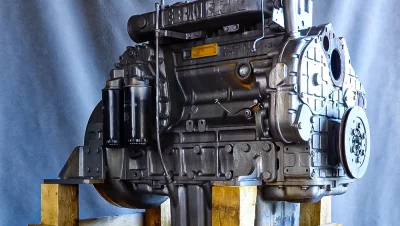
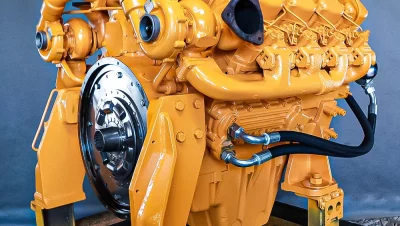
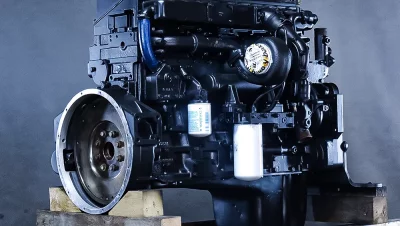
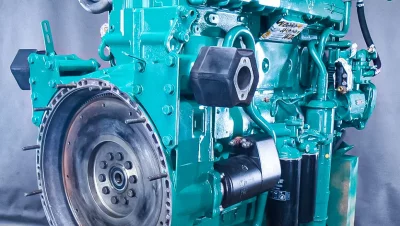
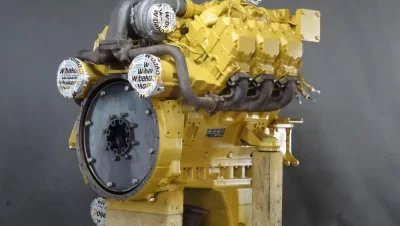
The Deutz TCD 6.1 L6 is a diesel engine designed for mobile machinery applications. It is a six-cylinder in-line engine with turbocharging and direct fuel injection. Depending on the emissions version and machine configuration, different exhaust after-treatment solutions may be used.
In this case, the scope of work included engine diagnostics in the machine, removal of the power unit, detailed verification of all major components, engine overhaul, installation of the engine in the Fuchs MHL 340 F and a load test on an engine dynamometer. This approach made it possible to check the unit not only after assembly, but also under load before returning it to regular operation.
Diagnostics of the Deutz TCD 6.1 L6 Engine in the Machine
Before deciding to remove the engine, it was necessary to determine whether the observed problems were actually caused by the condition of the power unit or could have resulted from the equipment or systems working with the engine. In a machine such as the Fuchs MHL 340 F, proper diagnostics are particularly important because the engine operates under changing load conditions and the operator often uses a significant part of the available power during handling operations.
The first stage was an assessment of the engine during starting and idling. We checked the starting behavior, stability of operation, response to increasing engine speed and behavior when the engine was loaded. We also paid attention to exhaust smoke, unusual noises coming from the engine and its response to changes in load.
The engine oil level and condition as well as the lubrication system components were then inspected. In the case of worn cylinders, pistons and piston rings, increased oil consumption can be one of the characteristic symptoms. It was also important to determine whether there were any signs of excessive wear in other components of the lubrication system.
Diagnostics were also performed to assess the condition of the cylinders. An important part of the process was checking compression and evaluating cylinder sealing. The results indicated deteriorating engine parameters. Combined with the symptoms observed during operation, this provided a basis for further mechanical diagnostics.
When wear of the crankshaft-piston system is suspected, electronic diagnostics alone are not sufficient. Therefore, the next step was to remove the engine and perform a detailed inspection in our workshop. Only dismantling the unit makes it possible to directly assess the condition of the pistons, piston rings, cylinder surfaces, bearings and crankshaft.
Removal of the Engine from the Fuchs MHL 340 F
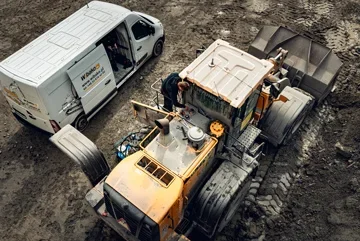
Removing an engine from a wheeled material handler requires proper preparation of the machine and a carefully planned sequence of work. During our service operations, engine removal is always carried out using a crane provided by the customer. Before starting the work, we prepare the machine for safe engine removal and protect the components that remain in the engine compartment.
First, the lines and components associated with engine operation were disconnected. Electrical connections, fuel lines, cooling system hoses, air intake pipes and exhaust system components were removed. Particular attention was paid to protecting hoses, pipes and connection points so that they would not be damaged during the remaining work.
The connections between the engine and the systems working with it were also disconnected. Before lifting the unit, the engine mounts and lifting points were checked. The engine was then prepared for lifting with the crane. Maintaining the stability of the unit during removal was essential, as was checking that no hose, cable or mounting component remained connected to the engine.
After removal, the Deutz TCD 6.1 L6 was secured and transported to our headquarters in Kojszówka. This allowed us to perform a complete overhaul under workshop conditions and subsequently test the engine on an engine dynamometer before reinstalling it in the machine.
Verification of the Deutz TCD 6.1 L6 Engine in the Workshop
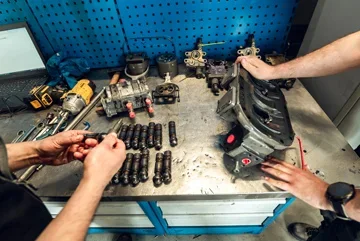
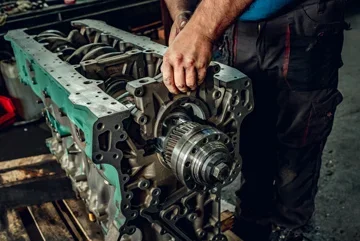
Once the engine was delivered to our workshop, the unit was prepared for dismantling. When an engine is classified as requiring an overhaul, all components are dismantled, cleaned and inspected. We do not limit the process to replacing parts that appear worn at first glance. Each important component is assessed to determine whether it can be safely reused.
We initially inspected the external condition of the unit and its equipment. The engine was then dismantled into individual components. This made it possible to confirm the initial suspicions concerning wear of the crankshaft-piston system.
Signs of wear were visible on the cylinder surfaces and corresponded with the symptoms previously observed during machine operation. The condition of the cylinder surfaces, pistons and piston rings was checked. The crankshaft and bearings were also inspected. Measurements allowed us to determine which components could be reused and which required replacement or regeneration.
The crankshaft was visually inspected for signs of wear, overheating and possible damage. Measurements of the journals and crankshaft runout were performed, and the oil passages were checked. The connecting rods were inspected for cracks, signs of overheating, wear and correct geometry. The connecting rod bolts were also checked.
The cylinder head was inspected at the same time. We checked the condition of the valve seats, valve guides and valves, as well as cylinder head tightness. The leak test consists of immersing the cylinder head in heated water and supplying compressed air. Escaping air can reveal areas indicating leakage or cracking.
The turbocharger was also inspected. The inspection included checking axial and radial play of the shaft. Depending on the inspection results, the component can either be approved for further operation or sent for regeneration.
Overhaul of the Crankshaft-Piston System
The most important part of the Deutz TCD 6.1 L6 overhaul in this case was the repair of the crankshaft-piston system. Wear of cylinders and pistons directly affects combustion chamber sealing, compression and the engine's ability to achieve the required operating parameters.
After dismantling and thoroughly cleaning the components, measurements were performed to determine the necessary scope of work. The cylinder surfaces, pistons, piston rings, bearings, connecting rods and crankshaft were inspected. Components whose condition did not allow further reliable operation were replaced.
An engine overhaul is not simply about restoring the ability to start the engine. The correct interaction of all components is essential. New or regenerated components must be correctly matched with the remaining parts of the unit. For this reason, measurements are performed before assembly and the relevant installation dimensions are checked during the assembly process.
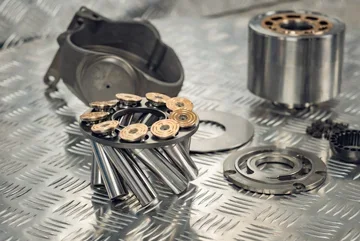
The crankshaft was carefully checked for wear. If its condition allows further use, it can be prepared for installation following appropriate verification. If the permissible dimensions have been exceeded, regeneration is required, which means grinding the crankshaft to the required repair dimension.
Inspection of the bearings is particularly important for engine durability. Their improper condition can lead to deterioration of lubrication and further wear of the cooperating surfaces. During the overhaul, we therefore pay attention to the condition of the bearing surfaces, correct fitting and cleanliness of the lubrication system.
Regeneration of the Engine Cylinder Head
After removal, the cylinder head was thoroughly cleaned and inspected. The inspection included the condition of the valve seats, valve guides and valves. Cylinder head tightness was also checked.
The scope of cylinder head regeneration always depends on its actual condition. The regeneration process includes machining the cylinder head surface, and depending on the degree of wear, replacing valve guides and valves. The aim is to restore the required geometry and tightness before the cylinder head is installed again.
After the work was completed, the cylinder head was prepared for installation according to the required sequence and procedures. This component has a direct influence on the engine's operation after overhaul and therefore cannot be treated as a secondary part of the repair process.
Fuel System and Deutz TCD 6.1 L6 Equipment
During the overhaul, we also assessed the engine equipment. Verification makes it possible to reduce the risk of a situation in which a mechanically repaired engine still fails to achieve the required parameters due to a problem with its equipment.
The turbocharger was checked for axial and radial play. Electrical and electromechanical components were also inspected, as their condition can affect correct starting and operation of the engine.
Fuel system components are assessed according to their design and actual condition. If more detailed diagnostics are required, components can be tested on specialist equipment. This makes it possible to determine their actual condition instead of replacing them without confirmation of a fault.
During assembly, particular attention was also paid to the components responsible for supplying air to the engine. The tightness of the intake system is important for the correct operation of a turbocharged engine, so the connections, pipes and clamps had to be carefully inspected.
Professional Engine Assembly
Once the inspection and preparation of all components were completed, we began assembling the Deutz TCD 6.1 L6 engine. The assembly was performed in stages, with each cooperating component checked during the process. The aim was not only to mechanically assemble the unit correctly, but also to prepare it for subsequent load testing.
The crankshaft-piston system components, cylinder head, timing components and remaining equipment were installed using appropriately prepared parts. Particular attention was paid to the correct connection of the lubrication and cooling systems. Before starting the engine, the fuel system also had to be properly prepared and the engine brought to a condition suitable for safe initial operation.
Connection checks are an important part of the assembly process. All hoses, mounts and equipment components must be installed correctly. Particular attention is paid to areas where oil, fuel or coolant leaks could occur. Air intake connections are also carefully checked, as even a small leak in the intake system can affect the operation of the turbocharging system.
After assembly, the engine was prepared for starting and testing. We do not consider the work finished simply because the engine starts. For us, this is only the beginning of verifying the results of the overhaul. The next stage is the engine dynamometer test.
Deutz TCD 6.1 L6 Engine Dynamometer Test
One of the most important stages of the entire process is the Deutz TCD 6.1 L6 engine test on an engine dynamometer. It allows the unit to be tested under controlled load conditions before it is installed in the Fuchs MHL 340 F. This is particularly important for engines after a comprehensive overhaul because correct operation at idle alone does not confirm that the unit will perform correctly throughout its operating range.
After assembly, the engine is started and prepared for operation on the test stand. During the initial stage, the engine operates at a lower load. A rebuilt engine should be given the opportunity to begin working gradually, while its parameters are monitored during subsequent stages of the test. For engines after overhaul, the procedure includes at least 16 hours of operation under light conditions, with a load of approximately 20-30% of the nominal value.
This stage allows us to monitor the stability of the unit and observe engine behavior during the initial operating period of components that have been replaced or regenerated. Basic operating parameters, lubrication system behavior, temperature and engine response to changes in load are monitored.
If the engine maintains correct operating parameters during the period of light-load operation, the next stage of the test begins. The unit is gradually subjected to higher loads. This allows us to check how the engine behaves during operation approaching the conditions it will experience in the machine.
The engine is repeatedly loaded while its behavior is monitored during changes in operating conditions. This allows us to assess not only the engine's ability to develop the required power, but also its stability during longer periods of operation. This is particularly important for an engine intended for a Fuchs MHL 340 F, as a material handler often operates for many hours under changing loads.
The dynamometer also reduces the risk of installing an engine in the machine where a problem would only become apparent during actual operation. If an irregularity occurs during the test, the unit can be stopped, additional diagnostics can be performed and the problem can be resolved before the engine is transported back to the customer.
The dynamometer test is therefore an integral part of the Deutz TCD 6.1 L6 overhaul process. It connects the mechanical work performed in the workshop with the subsequent installation in the machine. Only after successfully completing the test is the unit prepared for reinstallation in the Fuchs MHL 340 F.
Installation of the Engine in the Fuchs MHL 340 F
After completing the dynamometer tests, the engine was prepared for reinstallation in the Fuchs MHL 340 F material handler. We treat engine installation as a separate stage of the work because a properly overhauled engine must still be correctly connected to the other systems of the machine.
The engine is lowered into the engine compartment using a crane provided by the customer. During lowering, its position relative to the mounting points is controlled. Correct positioning of the engine and alignment of all mounting points are essential. Once the unit is seated, the engine mounts and mounting components are inspected.
The cooling system, air intake, exhaust, fuel system and electrical connections are then installed. The condition of the piping and hoses is checked. If a hose or pipe is worn or damaged, or its condition could affect subsequent operation, it should be appropriately prepared or replaced. Particular attention is paid to air intake hoses and their connections because leaks can negatively affect the operation of the turbocharging system.
Once all connections have been completed, all critical areas are checked for tightness. The cooling system hoses, oil connections, fuel lines and intake system are inspected. Before the first start, the appropriate operating fluids are also filled and filters are prepared for operation according to the scope of work performed.
The first engine start after installation is carried out in the presence of our service technicians. After starting, we monitor the operation of the unit, check for possible leaks and assess the engine's response to changes in engine speed. Further machine tests are then performed.
Cooperation with the Fuchs MHL 340 F operator is an important part of the testing process. The operator knows the machine's normal behavior and working characteristics best. During the tests, we can therefore assess engine operation while the machine performs actual working movements. We check the engine's behavior as the load increases, its response to changes in engine speed and its interaction with the machine's systems.
Leak-tightness checks are also performed after the engine has reached operating temperature. Some problems may only become visible once the system reaches its normal working temperature, which is why connections are inspected again after a longer period of operation. Successful completion of the tests allows the installation to be completed and the machine returned to service.
After installation, a service report is prepared. This documents the scope of work performed and the results of the final tests.
Engine Service After the Overhaul
An engine overhaul does not end when the machine is started. The first operating period is particularly important, which is why we recommend carrying out the first service inspection after 50 operating hours. This inspection is performed by our service team, which travels to the customer.
During the 50-hour inspection, we do not limit the work to changing filters. The general condition of the engine and its equipment, correct operation of the unit and condition of the connections made during installation are checked. We also inspect whether oil, fuel or coolant leaks have appeared during the first hours of operation.
This approach makes it possible to quickly identify any irregularities that may have developed during normal operation. Subsequent service inspections are recommended every 250 operating hours, but no less frequently than every 3 months.
Deutz Engine and Material Handler Service
The Deutz TCD 6.1 L6 overhaul for the Fuchs MHL 340 F is an example of work that requires a combination of diagnostics, engine mechanics, appropriate unit preparation and inspection after reinstallation. WIBAKO performs overhauls and repairs of diesel engines used in construction machinery and off-highway equipment.
Our services include engine diagnostics, engine removal and installation, component verification, crankshaft-piston system repairs, cylinder head regeneration, equipment inspection and engine dynamometer testing. Our mobile service team also performs engine removals and installations at the customer's location.
The Deutz TCD 6.1 L6 engine is used in various mobile machinery applications, which is why precise identification of the specific engine is always important when selecting parts and defining the scope of work. In the case of the Fuchs MHL 340 F, the technical data identifies the Deutz TCD 6.1 L6 as the engine used in the machine.
Summary of the Fuchs MHL 340 F Engine Overhaul
In the case of the Fuchs MHL 340 F, the reason for the overhaul was wear of the crankshaft-piston system components, which affected compression, oil consumption and the overall efficiency of the engine. Diagnostics performed before removal were confirmed during the detailed inspection of the unit in our workshop.
The Deutz TCD 6.1 L6 engine was dismantled, cleaned and subjected to detailed measurements. The scope of work included the crankshaft-piston system, inspection of the crankshaft, bearings and connecting rods, cylinder head regeneration and equipment inspection. After professional assembly, the engine underwent a load test on the engine dynamometer and was then installed in the Fuchs MHL 340 F.
Final tests with the operator allowed us to assess engine behavior in the machine and confirm correct cooperation between the power unit and the remaining machine systems. After installation, we recommended an inspection after the first 50 operating hours followed by regular service inspections.
A comprehensive Deutz engine overhaul makes it possible to restore machine performance without having to replace the existing power unit. Combining detailed component verification, professional installation and dynamometer testing provides an opportunity to check the engine before it returns to intensive operation.
Internal Linking Opportunities
Deutz Engine Overhauls - information about the scope of Deutz engine overhauls and regeneration for construction and industrial machinery.
Construction Machinery Service - comprehensive diagnostics, repairs and mobile service for construction machinery and material handlers.
Engine Dynamometer Testing - testing diesel engines after overhaul under load before installation in the machine.
Deutz Engine Parts - parts for Deutz engine repairs and overhauls, selected based on precise identification of the individual engine.
Contact us
Do you need a Deutz TCD 6.1 L6 engine overhaul or service for a Fuchs MHL 340 F material handler? WIBAKO provides comprehensive engine repairs, on-site engine removal and installation, and engine dynamometer testing.