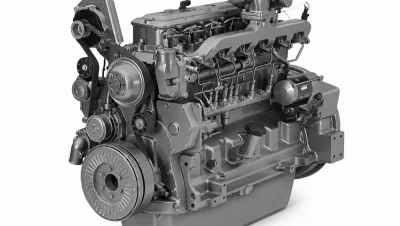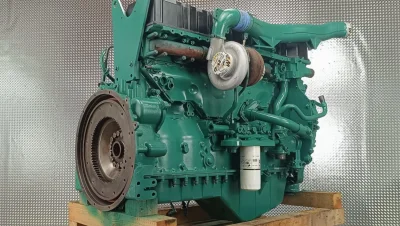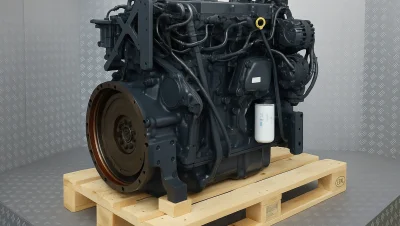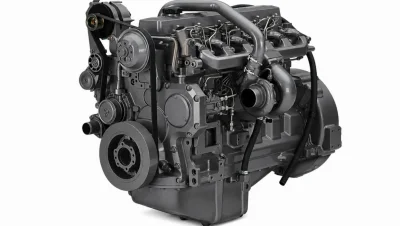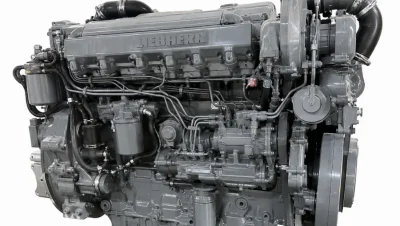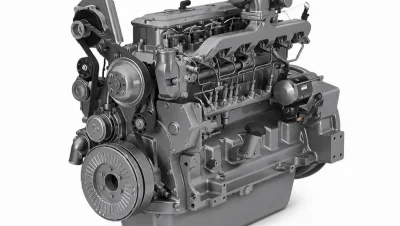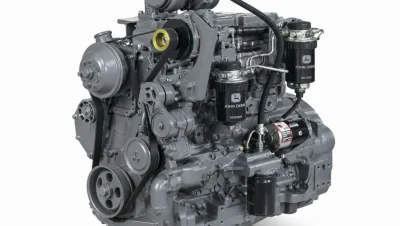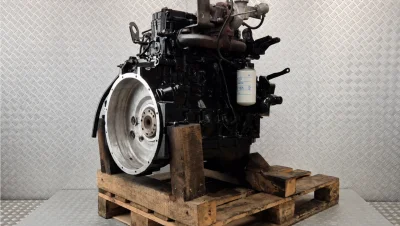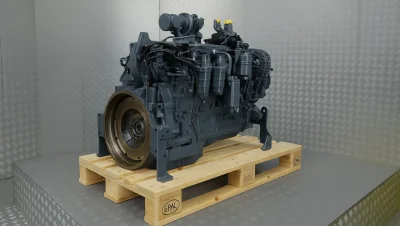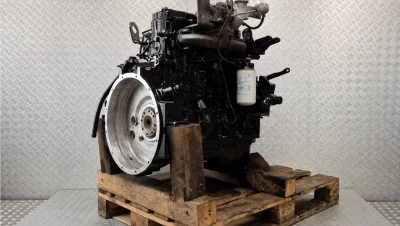


John Deere 6068HF285 engine overhaul in a KLEEMANN MOBIREX MR 110 Z impact crusher
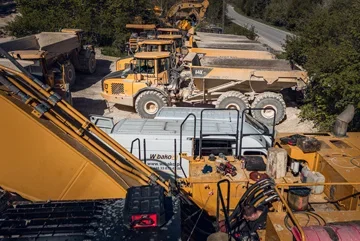
KLEEMANN MOBIREX MR 110 Z is an impact crusher designed for intensive operation in the processing of mineral materials and aggregates. In machines of this type, the diesel engine operates under variable load conditions, and its proper performance directly affects the continuity of the entire crushing process. In this case, the subject of our work was a John Deere 6068HF285 engine installed in a MOBIREX MR 110 Z version equipped with a John Deere power unit.
The engine delivered to our service required comprehensive inspection and overhaul due to natural operating wear. The symptoms indicated a gradual loss of engine performance, so before determining the scope of repairs, we carried out diagnostics with the engine still installed in the machine. This approach helps reduce the risk of replacing serviceable components while allowing us to identify the actual cause of the problem more accurately.
The John Deere 6068HF285 is a six-cylinder diesel engine with a displacement of 6.8 litres, belonging to the PowerTech family of industrial engines. The manufacturer offers this model in different power configurations depending on the application and rated speed. The 6068HF285 is available in power ratings ranging from 104 to 149 kW, approximately 139-200 hp. The engine uses electronic control and a high-pressure Common Rail fuel system.
In an impact crusher, the engine must operate reliably even when the load changes according to the amount and type of material entering the crushing system. For this reason, an overhaul of a John Deere engine cannot be limited to simply replacing worn components. All major assemblies must be carefully inspected, the engine must be correctly assembled, and the completed unit should be tested under load on an engine dynamometer.
Diagnostics of the John Deere 6068HF285 engine in the KLEEMANN MOBIREX MR 110 Z
We started the work with diagnostics of the power unit while it was still installed in the crusher. First, we assessed how the engine behaved during starting and after reaching operating temperature. We checked the engine's response to changes in load, its operating stability, and the basic parameters of the lubrication and cooling systems.
When diagnosing engines used in impact crushers, observing their behaviour under changing loads is particularly important. Simply running the engine at idle does not always reveal problems that appear only when the engine is required to deliver more power. For this reason, the diagnostics also included an assessment of the engine during normal machine operation.
Based on the operating history and the observed symptoms, we identified natural engine wear as the main reason for the overhaul. A gradual loss of performance may be associated with wear of cylinders, pistons, piston rings, main and connecting rod bearings, and other components of the connecting rod and piston system. The inspection was intended to confirm the actual condition of the engine and determine which components required replacement or reconditioning.
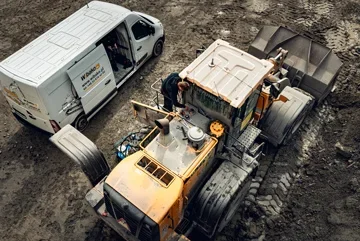
After completing the diagnostics in the machine, we determined the scope of further work. The engine was removed using a crane provided by the customer. Our service team also performs this type of work as part of our mobile service, allowing our mechanics to remove engines directly at the machine's location and then prepare them for transport to our facility in Kojszówka.
Removing the engine from the KLEEMANN MOBIREX MR 110 Z
Removing an engine from a crusher requires proper preparation of the work area and protection of all components that remain in the machine. Before starting the work, we disconnected the electrical system and prepared the systems connected to the engine. The mechanics then proceeded to disconnect the hoses, fuel lines, cooling system components, air intake pipes and other equipment.
During engine removal, we pay particular attention to the routing of the hoses and the connections between individual components. With a machine that has been working intensively, it is important not only to remove the engine itself, but also to protect components that will be reused during installation. Hoses and connections are identified and protected against contamination, while the cooling system is properly prepared before being disconnected.
Once the engine had been disconnected from the machine's systems and mounting points, we prepared it for lifting. The crane provided by the customer allowed the engine to be safely removed from its compartment. After removal, the unit was prepared for transport to our facility in Kojszówka, where the workshop inspection began.
For machines such as the MOBIREX MR 110 Z, proper organisation of the removal process is particularly important. An impact crusher is a complex machine, so accidental disconnection of hoses or incorrect protection of connections could make subsequent installation more difficult. For this reason, before removing the engine, we document the arrangement of the individual connections and check their condition.
Inspection of the John Deere 6068HF285 engine in the workshop
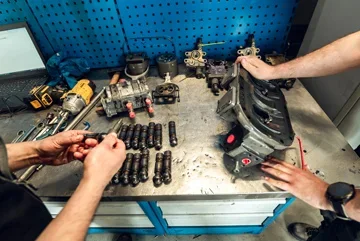
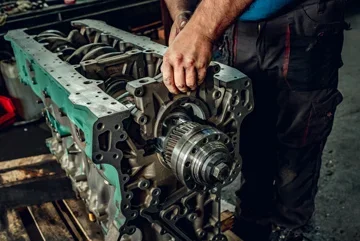
After the engine was delivered to our workshop, it was disassembled into individual components. All parts were cleaned and prepared for detailed inspection as the work progressed. When an engine shows signs of natural operating wear, visual inspection alone is not sufficient. Therefore, the individual components were subjected to measurements and checks for wear.
First, we inspected the connecting rod and piston system. The crankshaft was checked for signs of overheating, wear and possible damage. We measured the journals and checked crankshaft runout, as well as the condition and cleanliness of the oil passages. The connecting rods were also inspected for visible wear, possible deformation and the condition of their fastening components.
We then inspected the pistons, piston rings, cylinder liners and bearings. Depending on the measurement results, individual components were classified for reuse, replacement or reconditioning. This approach helps prevent a component with excessive wear from remaining in an overhauled engine.
The cylinder head was also inspected. The inspection included the condition of the valve seats, valve guides and valves. A cylinder head pressure-tightness test was performed as well. This procedure involves immersing the cylinder head in heated water, connecting compressed air and observing whether air bubbles appear, which could indicate a leak or crack.
We also inspected the engine accessories. This included checking the turbocharger for axial and radial play. The overall condition of the components working with the engine was also assessed, because even a correctly rebuilt engine may fail to reach its expected parameters if one of its supporting components is excessively worn.
Overhaul of the connecting rod and piston system
After completing the measurements, we were able to determine the actual scope of the John Deere 6068HF285 engine overhaul. Work on the connecting rod and piston system covered the components responsible for transferring combustion forces to the crankshaft and maintaining proper cylinder sealing.
The crankshaft underwent detailed dimensional inspection. We checked the condition of the main and connecting rod journals and measured crankshaft runout. If the working surfaces require machining, the crankshaft is appropriately ground. After machining, the crankshaft is measured again to confirm that the required dimensions have been achieved.
The connecting rods were also inspected. The inspection includes checking for wear, signs of overheating, twisting and longitudinal bending. The fastening components are also checked. In an engine intended for further intensive operation, all these components must form a correctly matched and properly functioning assembly.
For the cylinders and pistons, it was important to determine the degree of wear of the working surfaces. Worn piston rings, piston components or cylinder liners can lead to reduced compression, increased oil consumption and exhaust smoke. Therefore, during an overhaul we do not rely solely on the visual appearance of the parts, but primarily on measurement results and their actual technical condition.
After completing the work, all components of the connecting rod and piston system were prepared for assembly. The use of correctly selected components and maintaining the appropriate working dimensions are among the basic requirements for achieving stable operating parameters after an overhaul.
Reconditioning and repair of the engine cylinder head
The cylinder head of the John Deere 6068HF285 engine was thoroughly inspected before being considered for reuse. We checked the condition of the valve seats, valve guides and valves. A pressure-tightness test was also carried out to identify damage that may not be visible during a standard visual inspection.
The scope of cylinder head reconditioning always depends on its degree of wear. When reconditioning is required, it may include cylinder head resurfacing and replacement of worn valve guides and valves. After the work is completed, the cylinder head is checked again to confirm that the repair has been carried out correctly.
In an engine operating in an impact crusher, the cylinder head is exposed to prolonged operation under load. Therefore, proper combustion chamber sealing and correct valve operation are important for maintaining stable engine performance. Inspection of the cylinder head is consequently one of the important stages of the complete overhaul.
John Deere engine fuel system and accessories
During the overhaul, we also inspected the fuel system components. In an engine equipped with an electronically controlled Common Rail system, proper operation of the injection system has a direct impact on combustion, engine response to load and operating stability.
Fuel system components are assessed according to their technical condition and operating parameters. When necessary, components requiring more detailed diagnostics can be tested on suitable equipment. This reduces the risk of leaving a malfunctioning component in a rebuilt engine.
We also inspected the engine accessories, including the turbocharger and electromechanical components. The turbocharger was checked for axial and radial play. The general condition of the components working with the engine was also assessed so that reliable results could be obtained during the subsequent dynamometer test.
Professional assembly of the John Deere 6068HF285 engine
After completing the inspection and reconditioning of the individual components, we proceeded with engine assembly. Assembly after an overhaul is carried out according to an appropriate sequence, with individual stages checked as the work progresses. Before closing each assembly, we inspect its condition, the cleanliness of the mating surfaces and the correct positioning of the components.
Particular attention is paid to the connecting rod and piston system. The crankshaft, connecting rods, pistons, piston rings, cylinder liners and bearings must be installed so that all components work together correctly. We also check the oil passages and areas where contaminants from previous operation could remain.
After installing the cylinder head and engine accessories, we prepare the unit for its first start. Hose connections, mounting points and components responsible for supplying oil, fuel and air are checked. The cooling system is also prepared and all areas where leaks could occur are inspected.
The rebuilt engine is not immediately returned to the crusher after assembly. First, it is tested on an engine dynamometer, where we can assess its behaviour under controlled load conditions. This allows potential problems to be identified before the engine is installed back into the KLEEMANN MOBIREX MR 110 Z.
Testing the John Deere 6068HF285 engine on the engine dynamometer
One of the most important elements of the entire overhaul process is testing the engine on a dynamometer. It allows the unit to be checked under load conditions that cannot be fully reproduced during a normal workshop start-up. In the case of an engine intended for an impact crusher, this is particularly important because the power unit may be exposed to significant and variable loads during machine operation.
After assembly, the John Deere 6068HF285 was started and subjected to the testing procedure. The first stage of operation on the dynamometer is performed at a relatively low load. For engines after overhaul, the unit operates for a minimum of 16 hours at approximately 20-30% of its nominal load. This stage allows us to observe the engine after assembly and monitor its basic operating parameters.
During the test, we monitor the engine's behaviour and pay attention to operating stability, temperature, oil pressure and response to changes in operating conditions. We also check for possible leaks and monitor the operation of individual systems. If the engine maintains the required parameters, the next stage begins, during which the load is gradually increased.
A dynamometer test is therefore not simply a short engine start to confirm that the unit runs. The engine is repeatedly loaded in order to assess its behaviour under different operating conditions. This is particularly important for a unit that will return to a crusher, where the load may change depending on the material being processed.
During subsequent stages of the test, we observe the engine's response as the load increases. This allows us to check whether the unit maintains stable parameters and whether the fuel system, cooling system, lubrication system and accessories work together correctly. For electronically controlled engines, monitoring the operation of the control systems and the engine's response to changes in power demand is also important.
The dynamometer also allows us to identify problems that might remain unnoticed during unloaded operation. An engine may run correctly at idle but reveal problems related to the fuel system, temperature, lubrication or turbocharging only under higher load. Load testing therefore allows us to verify the engine under significantly more demanding conditions.
After completing the initial running-in period at low load, the engine is gradually subjected to higher loads. Repeated tests allow us to assess operating stability and check whether any undesirable symptoms appear after prolonged operation. Only after successfully completing the entire procedure is the engine prepared for installation in the machine.
For the customer, this provides an additional level of safety. The unit leaving our workshop for the crusher has already been checked under controlled operating conditions. Testing on an engine dynamometer reduces the risk of installing an engine with a previously undetected fault and allows the machine to return to operation with greater confidence in the condition of the power unit.
WIBAKO also uses the dynamometer as a diagnostic tool. If an irregularity occurs, we can carry out additional measurements and determine which system requires further inspection. This means we do not have to wait for a problem to appear only after the engine has been installed in the machine. This is particularly important for construction machines and crushers, where downtime can interrupt the entire work process.
Installation of the engine in the KLEEMANN MOBIREX MR 110 Z
After successfully completing the dynamometer tests, the engine was prepared for reinstallation in the crusher. Installation is just as important a stage of the entire process as the engine overhaul itself. Even a correctly rebuilt engine must be properly installed in the machine, and all systems working with the power unit must be correctly connected.
Before placing the engine into the compartment, we checked the installation area and the condition of the components that would work with the unit. The engine was positioned using the crane provided by the customer and then carefully lowered into its mounting position. The next stage involved correctly positioning the mounting points and connecting the engine to the drive components.
Once the engine had been mechanically secured, we proceeded with connecting the systems. This included cooling system hoses, fuel lines, the air intake system, exhaust system components and the electrical installation. Each connection was checked for correct installation and secure fastening.
Particular attention was paid to the air intake piping. Connections in the air intake system must be properly sealed because leaks in this area can affect engine operation and its response to load. We checked the condition of the hoses, clamps, connectors and mounting points. The cooling system hoses and all areas where leaks could occur during operation were checked in the same way.
Before the first start after installation, we also performed the necessary preparation work, including filter replacement and inspection of the basic systems. We checked fluid levels, electrical connections and the correct installation of the accessories. The engine was then started and we began monitoring its operation in the machine.
The first start was carried out with particular attention to detail. We monitored engine behaviour, operating temperature, oil pressure and system tightness. We also checked the engine's response as the load was increased. In a machine equipped with an extensive control system, correct interaction between the engine and the other crusher systems is also important.
After the initial checks, the machine was tested together with the operator. The operator was able to assess the crusher's behaviour under conditions close to normal operation, while our service technicians monitored engine parameters and the condition of the connections. This allowed us to verify not only the power unit itself, but also its cooperation with the complete machine.
During the tests, we paid attention to the engine's behaviour when the load changed. We also checked for oil, fuel or coolant leaks. Hose connections, mounting points and engine accessories were inspected. Only after successfully completing these tests can the installation be considered properly completed.
After the work was completed and the tests were successfully passed, an installation report was prepared. This provides the customer with information about the work carried out and confirmation that the unit operated correctly after the service.
Engine maintenance after overhaul
An engine overhaul does not end when the machine is started. The first operating period after rebuilding the unit is important for its future operation. Therefore, we recommend carrying out the first inspection after 50 operating hours.
The 50-hour inspection is performed by our service team. Our mechanics travel to the customer and inspect not only filters and basic service components, but also the connections between the engine and other machine systems, the condition of the hoses, system tightness and the correct operation of the unit in the machine.
An early inspection allows potential leaks or minor irregularities that may have developed during the first hours of normal operation to be identified. Further inspections are recommended every 250 operating hours, but at least once every 3 months. WIBAKO can also provide continued service and maintenance of the engine after the overhaul.
Machines equipped with John Deere 6068HF285 engines
The John Deere 6068HF285 is an industrial diesel engine designed for applications requiring a durable power source. The manufacturer offers this model in several power configurations, so before selecting an engine for a specific machine, it is necessary to verify the engine serial number, configuration and required operating parameters.
In practice, engines from the John Deere 6.8-litre family can be found in various industrial and construction applications, including equipment used for material processing, crushing, screening and other demanding off-highway applications. In the case of the KLEEMANN MOBIREX MR 110 Z, it is particularly important to match the engine to the exact machine version.
When identifying an engine, it is not advisable to rely solely on the model designation. Different John Deere engine versions may have different accessory configurations, control systems and operating parameters. Therefore, when requesting an engine repair or replacement unit, it is useful to provide us with the engine serial number, engine designation, machine number or a photograph of the identification plate.
John Deere engine and construction machinery service
The work on the John Deere 6068HF285 engine in the KLEEMANN MOBIREX MR 110 Z impact crusher covered the complete process - from diagnosing the loss of performance, through engine removal, transport to our workshop, disassembly and measurements, to overhaul, dynamometer testing, reinstallation and operational testing.
WIBAKO provides construction machinery service both at our facility in Kojszówka and as part of our mobile service. Our mechanics perform engine removal and installation directly at the customer's site and then transport the units to our workshop for detailed inspection and overhaul.
The scope of work can be adapted to the actual technical condition of each engine. Not every engine requires replacement of every component, which is why accurate diagnostics and measurements are the basis of our work. This allows us to determine which components can be reused, which require reconditioning and which should be replaced.
WIBAKO services engines used in excavators, wheel loaders, crushers, screens, rollers, material handlers and other off-highway machines. We also provide construction machinery service, diagnostics and diesel engine repairs.
Summary of the John Deere 6068HF285 engine overhaul
The overhaul of the John Deere 6068HF285 engine installed in the KLEEMANN MOBIREX MR 110 Z impact crusher was carried out comprehensively - from diagnosing the cause of the loss of performance, through detailed inspection of the components, to rebuilding the engine and testing its operation under load.
An important part of the entire process was the engine dynamometer test. The ability to test the engine for an extended period before installation in the machine allows us to verify its operation under load and reduce the risk of a problem occurring only after the crusher has been restarted. After completing the test, the engine was installed in the machine and then checked during tests carried out together with the operator.
Thanks to the comprehensive approach, the customer received a power unit prepared for further operation, with its condition verified at each stage of the overhaul. After the first 50 operating hours, a service inspection by our mechanics is recommended, followed by regular maintenance every 250 operating hours or at least every 3 months.
If you need a John Deere engine overhaul, engine diagnostics or KLEEMANN crusher service, WIBAKO can handle the complete process - from diagnostics and engine removal at the machine, through overhaul and dynamometer testing, to reinstallation and continued service.
Contact us
Do you need an overhaul of a John Deere 6068HF285 engine or service for a KLEEMANN MOBIREX MR 110 Z impact crusher? Contact us - we provide comprehensive diagnostics, engine overhauls, engine dynamometer testing, as well as engine removal and installation in construction machinery.