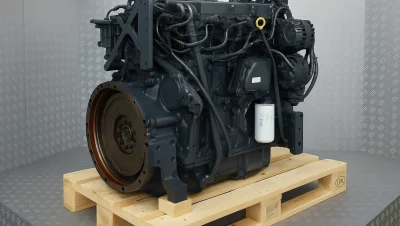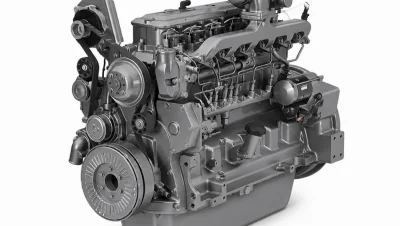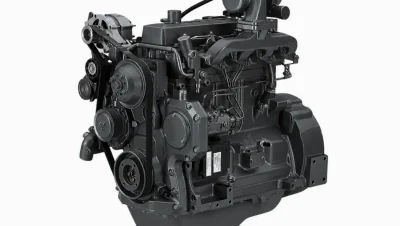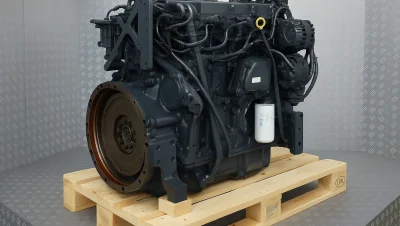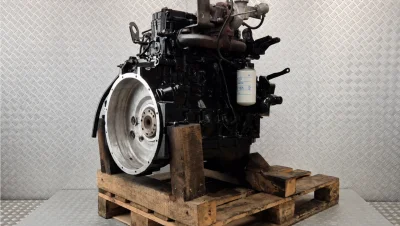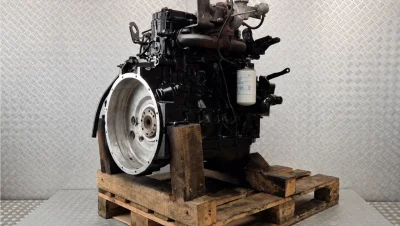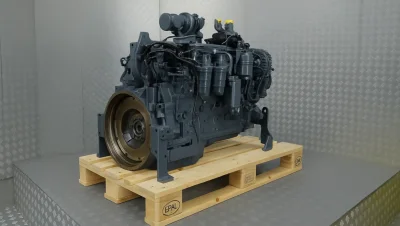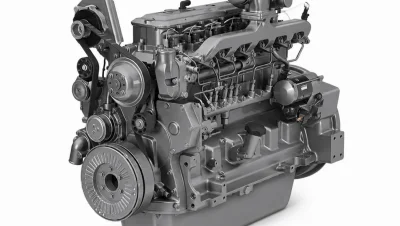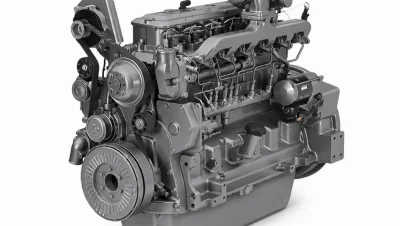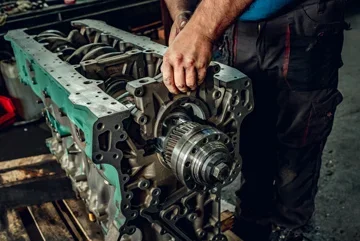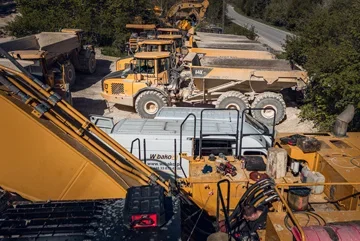


Deutz TCD 4.1 L4 engine overhaul in the HAMM H 13i roller
HAMM H 13i is a road roller designed for intensive work involving the compaction of surfaces and subgrades. In machines of this type, the diesel engine is responsible not only for moving the roller, but also for providing the power required for the proper operation of the working systems. Therefore, the condition of the drive unit has a direct impact on the machine's ability to be used on a construction site.
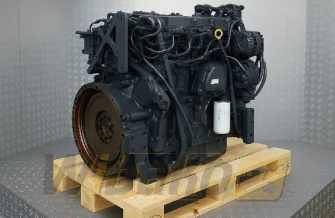
In the case described, the subject of the work was a Deutz TCD 4.1 L4 engine. This is a four-cylinder unit belonging to the Deutz TCD engine family, designed, among other things, for use in mobile machinery. The manufacturer offers different configurations of the TCD 4.1 L4 depending on the application, which is why it is important during service work to identify the exact engine version based on its markings and equipment.
We preceded the engine overhaul with diagnostics of the unit installed in the machine. The aim was to determine the source of the problems and confirm whether further operation of the engine was possible or whether a comprehensive rebuild would be necessary. In the case of engines used in road rollers, it is particularly important to check the crank and piston assembly, cylinder head, lubrication system, fuel system and auxiliary equipment.
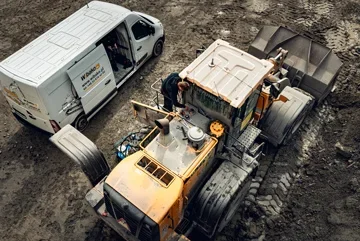
Diagnostics of the Deutz TCD 4.1 L4 engine before removal
We started the work by diagnosing the engine directly in the HAMM H 13i roller. We assumed a scenario in which the main reason for the need for an overhaul was normal operational wear of the drive unit. With a high number of operating hours, the cylinders, pistons, rings, bearings and other cooperating components may gradually wear. Symptoms of such wear do not always appear suddenly. Initially, they may be noticeable mainly when the engine is operating under load.
First, we assessed the overall operation of the engine. We checked how the unit started, its behaviour after warming up and its response to changes in load. We also observed the colour of the exhaust fumes, the level of mechanical noise and any oil or coolant leaks.
The next stage involved checking the basic operating parameters. We paid particular attention to oil pressure and the behaviour of the unit during operation. However, when an engine is intended for overhaul, diagnostics in the machine alone are not sufficient to determine the actual condition of all components. Therefore, after carrying out the basic measurements, we decided to remove the unit and perform a detailed inspection in our workshop.
This approach makes it possible to distinguish symptoms from the actual cause of the problem. Oil consumption, reduced performance or uneven engine operation may be related to several different components. Only dismantling the engine, thoroughly cleaning the parts and taking measurements makes it possible to determine the scope of the necessary work.
Removing the engine from the HAMM H 13i roller
After completing the diagnostics, we began preparing the HAMM H 13i for removal of the drive unit. We carry out engine removal using a crane provided by the customer. Before lifting begins, all components that could interfere with the safe removal of the engine are properly disconnected and secured.
First, the wiring and components associated with the operation of the unit are disconnected. The appropriate connections of the intake system, cooling system, electrical installation and other components that need to be disconnected before removing the engine from the compartment are dismantled.
We pay particular attention to securing hoses and connections. Cooling system components are protected against contamination, while intake hoses are protected against dirt entering the system. In the case of the electrical installation, connections are marked in a way that allows them to be correctly reconnected during subsequent assembly.
After all required components have been disconnected, we check the engine mounts. The unit is properly suspended and then disconnected from its mounting points. Only after confirming that the engine is properly secured do we begin removing it from the compartment.
After removal, the engine is prepared for transport to our headquarters in Kojszówka. At this stage, it is important to retain all components that may be required during subsequent inspection or assembly. Proper protection of the engine also reduces the risk of damage to hoses, connections and auxiliary equipment.
Inspection of the Deutz TCD 4.1 L4 engine in the workshop
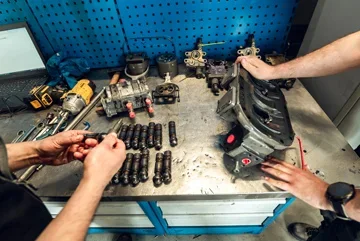
After the unit was delivered to our workshop, we began its detailed inspection. The engine was prepared for dismantling, and individual components were checked at successive stages of disassembly.
First, the engine was cleaned of external dirt. We then proceeded to dismantle the components. Each element is assessed for wear, mechanical damage, signs of overheating and other irregularities that could affect durability after the overhaul.
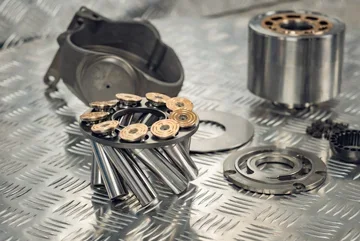
Inspection of the crank and piston assembly includes checking the crankshaft, connecting rods, pistons, rings, cylinders and bearings. The crankshaft is subjected to visual inspection and measurements. We check, among other things, the condition of the journals, crankshaft runout and oil passages. This makes it possible to determine whether the crankshaft can be reused or requires reconditioning.
The connecting rods are checked for cracks, signs of overheating and wear. Their twisting and longitudinal bending are also checked. The connecting rod bolts are inspected as well.
Pistons and rings are assessed together with the condition of the cylinder surfaces. Depending on the measurement results, a decision is made regarding the scope of work. If a component does not meet the requirements for further operation, it is designated for replacement or reconditioning.
Inspection and reconditioning of the engine cylinder head
One of the important stages of the Deutz TCD 4.1 L4 overhaul is checking the cylinder head. A visual assessment alone is not sufficient, which is why the cylinder head undergoes a detailed inspection.
We check, among other things, the condition of the valve seats, valves and guides. Clearances and the general condition of the mating surfaces are also checked. The cylinder head pressure test is particularly important because even a small crack can cause problems during subsequent engine operation.
The pressure test involves immersing the properly prepared cylinder head in heated water and applying compressed air. Observation of any bubbles makes it possible to identify areas where air is escaping through leaks.
The scope of cylinder head reconditioning depends on the measurement results. Reconditioning includes, among other things, resurfacing, while valve guides and valves are replaced if necessary. The aim is not to replace every component regardless of its condition, but to restore the cylinder head to parameters that allow it to operate safely in the future.
Crank and piston assembly of the Deutz TCD 4.1 L4
In the case of an engine whose overhaul is related to normal operational wear, the crank and piston assembly is particularly important. These components are exposed to significant mechanical and thermal loads throughout the engine's operating life.
After taking measurements, we determined the condition of the crankshaft, bearings, connecting rods, pistons and cylinders. We also checked the condition of the piston rings. All components requiring replacement were qualified for the next stage of the overhaul.
If crankshaft measurements indicate that reconditioning is possible, this may include crankshaft grinding. In the case of components whose wear exceeds the permissible level, we use new parts appropriate for the specific engine configuration.
Thorough cleaning of the oil passages is also an important part of the work. Contaminants left in the lubrication system could enter the mating surfaces again after the overhaul and accelerate the wear of new components.
Fuel system and engine auxiliary equipment
The fuel system of the Deutz TCD 4.1 L4 engine is also inspected during the overhaul. Depending on the configuration used and the condition of individual components, the components responsible for the correct delivery and proper metering of fuel are checked.
For components requiring more detailed diagnostics, we use appropriate test benches. Injectors can be tested on a test bench, which makes it possible to assess their actual condition instead of relying solely on observations of engine operation.
The engine auxiliary equipment is also inspected. We check the condition of the turbocharger, including axial and radial play. Electrical and electromechanical components, including the starter motor and alternator, are also checked if they are included in the scope of the overhaul.
This comprehensive approach is particularly important when the engine is intended for further intensive operation. Rebuilding only the internal components of the unit without checking its auxiliary equipment could result in additional work being required after the engine is reinstalled.
Professional assembly of the Deutz TCD 4.1 L4 engine
After completing the inspection and all required work, we proceed with engine assembly. Assembling a rebuilt engine requires following the correct sequence of operations and maintaining accuracy at every stage. Before closing individual assemblies, we check the mating surfaces and the cleanliness of the components.
The crank and piston assembly is assembled after all components have been prepared. Properly selected bearings, pistons, rings and other components designated for replacement are installed. The crankshaft is installed and checked for correct rotation.
During assembly, we pay particular attention to the lubrication system. Oil passages must be clean, and all components must be properly prepared for the first start-up. The cylinder head is installed after its inspection and reconditioning have been completed.
The auxiliary equipment is then installed. We check the connections and mounting components. The turbocharger, electrical installation components and remaining auxiliary equipment must be installed in a way that enables the engine to operate correctly later on.
After assembly is completed, we carry out a visual inspection of the entire unit. We check that all hoses, connections and mounting components are in the correct positions. The engine is then prepared for start-up and testing.
Deutz TCD 4.1 L4 engine test on the engine dynamometer
One of the most important stages of our work is the engine dynamometer test. The ability to test the unit outside the machine provides a significant advantage during an overhaul. The engine is not installed directly into the roller after assembly, but first undergoes testing under controlled conditions.
After the Deutz TCD 4.1 L4 overhaul is completed, the engine is started on the test bench and operated under load. The initial stage of the test is carried out under light operating conditions, with a load of approximately 20-30% of the rated value. The overhauled engine operates under these conditions for a minimum of 16 hours.
This stage makes it possible to observe the behaviour of the unit after rebuilding. Basic operating parameters, temperature, oil pressure and engine stability are monitored. We also observe any leaks and the operation of systems working together with the unit.
If the engine maintains the correct parameters after the period of operation under light load, the next stage of testing begins. The unit is repeatedly subjected to higher loads. This makes it possible to check the engine's behaviour under conditions much closer to the actual operation of the machine.
The dynamometer also allows us to check the engine's response to changes in load. This is particularly important for a unit that will later operate in construction machinery. The engine must respond correctly not only when running without load, but also when a greater proportion of the available power is required.
The test results allow our mechanics to determine whether the unit is ready for the next stage. If an irregularity occurs during testing, it can be diagnosed before the engine is installed in the machine. This reduces the risk of additional work being required at the customer's site.
The dynamometer test is also an important part of quality control for the repair performed. An engine overhaul does not end when the engine is assembled. Only proper operation during load testing allows us to proceed to the next stage, which is installing the unit in the HAMM H 13i.
Installing the overhauled engine in the HAMM H 13i
After successfully completing the dynamometer tests, the Deutz TCD 4.1 L4 engine is prepared for reinstallation in the HAMM H 13i roller. Our service team performs both engine removal and installation, allowing us to carry out the entire process from diagnostics in the machine through to starting the unit after the overhaul.
The engine is placed into the compartment using a crane provided by the customer. During positioning, particular attention is paid to the correct alignment with the mounting points. The engine is then carefully connected to the machine structure.
After the unit is mounted, all necessary connections are restored. We connect the cooling system, intake system, hoses and electrical installation. We also check the condition of the air piping. If hoses or connections do not provide adequate tightness or their condition indicates that replacement is necessary, they are properly prepared or replaced.
Inspection of the intake system is particularly important for the operation of a turbocharged engine. Any leaking connection can affect the proper operation of the unit, which is why after installation we check the hose connections and their mounting.
The cooling system is checked in a similar manner. All hoses and connections must be properly installed and the system prepared for start-up. We also check areas where coolant or oil leaks could occur.
Before the first start-up, preparatory work is carried out, including replacement of the required filters and checking the levels of operating fluids. We then start the unit and observe its operation.
After starting the engine, we check the tightness of all connections. We inspect the cooling system hoses, air hoses, oil connections and auxiliary equipment. We do not limit ourselves to a short engine start-up - the unit must also be checked during operation.
At the final stage, we test the machine together with its operator. The operator can describe the behaviour of the roller during actual operation, while our service technicians monitor the engine and other systems. We check the unit's response to changes in load, operating stability and the behaviour of the machine while performing typical tasks.
After successfully completing the tests and confirming that there are no leaks or other irregularities, an installation report is prepared. This provides the customer with confirmation that the work has been completed and that tests have been carried out after the engine was reinstalled.
Engine maintenance after the overhaul
The Deutz TCD 4.1 L4 engine overhaul does not end when the unit is installed in the HAMM H 13i. Proper engine maintenance after the overhaul is important for its continued durability. Therefore, we recommend carrying out the first inspection after 50 operating hours from start-up.
The 50-hour inspection is carried out by our mechanics. It is not limited solely to replacing filters. During the service visit, the general condition of the auxiliary equipment and the correct operation of the engine after its initial period of operation are checked.
The connections between the engine and the other machine components are also inspected. At this stage, it is possible to detect, among other things, minor leaks that may have developed during normal operation due to vibrations and loads occurring during roller operation.
We recommend carrying out subsequent inspections every 250 operating hours, but not less frequently than every 3 months. Regular maintenance makes it possible to continuously monitor the condition of the unit and respond more quickly to any irregularities that arise.
Deutz engine and construction machinery service
The work carried out on the Deutz TCD 4.1 L4 in the HAMM H 13i is an example of a comprehensive approach to drive unit overhaul. The process includes diagnostics in the machine, removal, transport of the engine to our workshop, detailed inspection, repair, assembly, dynamometer testing, reinstallation and machine testing.
WIBAKO provides construction machinery service and diesel engine service. We also carry out work using our mobile service. Our mechanics can travel to the customer, perform diagnostics, remove or install the unit and then transport the engine to our headquarters in Kojszówka.
This solution makes it possible to reduce the amount of work performed directly at the construction site and carry out demanding overhaul stages in a properly equipped workshop. After the repair is completed, the unit can be reinstalled in the machine and then tested during operation.
Which machines use Deutz TCD 4.1 L4 engines?
The Deutz TCD 4.1 L4 belongs to a family of units designed for use in mobile machinery. Depending on the specific configuration and engine version, units from this family can be used in various industrial and construction machines.
When selecting parts or carrying out an overhaul, it is important not to rely solely on the TCD 4.1 L4 name. The exact engine markings, configuration and auxiliary equipment used are important. Therefore, before preparing an overhaul or parts quotation, please provide the engine data, serial number, markings from the nameplate or a photo of the nameplate.
Summary of the Deutz TCD 4.1 L4 overhaul in the HAMM H 13i
Overhauling the Deutz TCD 4.1 L4 engine installed in the HAMM H 13i roller requires thorough diagnostics and consistent control of each stage of the work. In the case of normal operational wear, it is particularly important to carefully inspect the crank and piston assembly, cylinder head and auxiliary equipment.
A comprehensive process makes it possible not only to rebuild worn components, but also to check other components that may affect the engine's subsequent operation. An important part of the entire process is the engine dynamometer test, which allows the unit to be tested under load before it is installed back into the machine.
After testing is completed, the engine is installed in the HAMM H 13i, followed by detailed checks of the connections, tightness and machine operation. A test involving the operator additionally makes it possible to check the behaviour of the roller during actual operation.
After the overhaul, we recommend the first inspection after 50 operating hours. Subsequent service should then be performed every 250 operating hours, but not less frequently than every 3 months. Regular maintenance is an important part of the continued operation of the overhauled engine.
If you need a Deutz TCD 4.1 L4 engine overhaul, HAMM H 13i diagnostics or construction machinery service, contact WIBAKO. We provide diagnostics, engine removal and installation, Deutz engine overhauls and engine dynamometer testing before reinstalling the unit in the machine.
Internal links
Construction machinery service
Deutz engines and engine parts
Mobile construction machinery service
Contact us
Do you need a Deutz TCD 4.1 L4 engine overhaul or service for a HAMM H 13i roller? Contact us - we provide comprehensive repairs, engine removal and installation, as well as engine dynamometer testing.