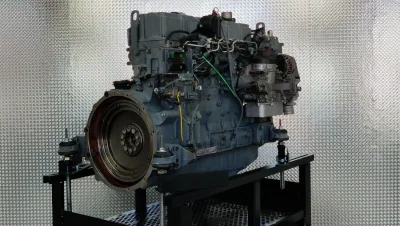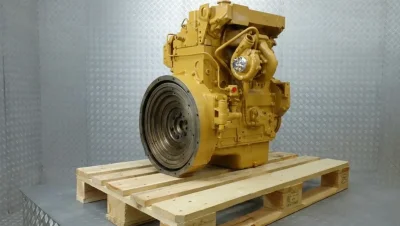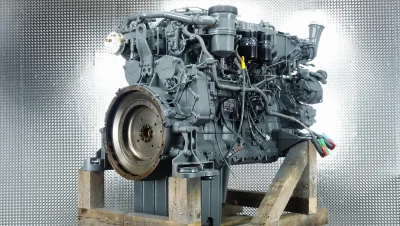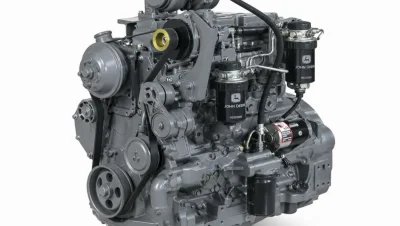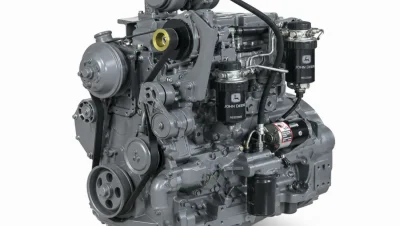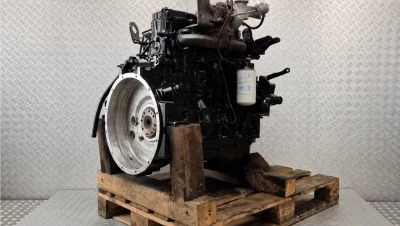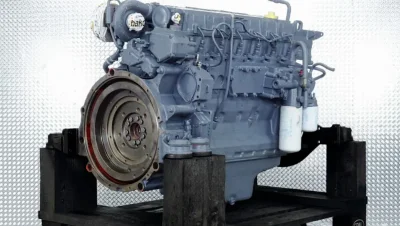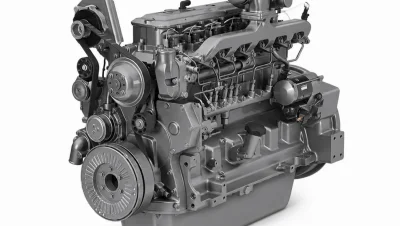


John Deere 4045HF285 Engine Overhaul in a Powerscreen Warrior 1400 Heavy-Duty Screener
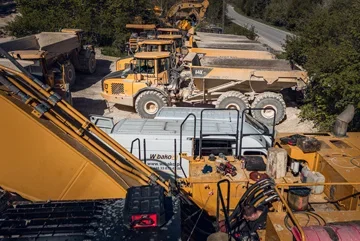
Powerscreen Warrior 1400 is a heavy-duty mobile screener designed to operate in demanding conditions, including the screening of rock, aggregates, soil and material generated during recycling processes. The machine operates under high loads, while its screening system and conveyors require a stable and reliable power source. One of the machine versions is equipped with a John Deere 4045HF285 diesel engine.
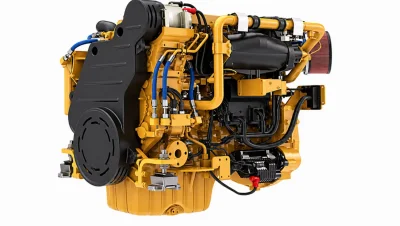
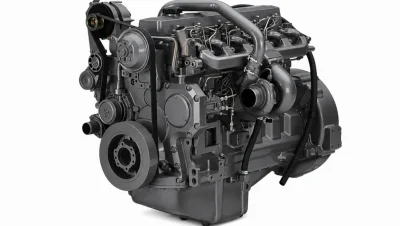
The John Deere 4045HF285 belongs to the PowerTech E family of 4.5-liter engines. It is a four-cylinder inline diesel engine with turbocharging, charge air cooling and a high-pressure common rail fuel injection system. The manufacturer specifies this model for engines meeting EPA Tier 3 / EU Stage III A requirements, with a power range of 86-104 kW depending on the configuration and application.
When servicing engines installed in heavy-duty screening equipment, a proper assessment of the engine condition is particularly important. Long-term operation under load can gradually lead to wear of components in the crankshaft-piston system, cylinder head, fuel system and engine accessories. That is why an overhaul of the John Deere 4045HF285 engine begins with diagnostics of the engine installed in the machine rather than with random replacement of components.
Diagnostics of the John Deere 4045HF285 Engine in the Machine
In the case described here, the reason for sending the engine for overhaul was natural wear of the engine after long-term operation. The symptoms developed gradually. The engine was no longer operating with the efficiency expected from a unit working in a heavy-duty screener, and some of its original operating parameters had deteriorated. In such a situation, it is important to distinguish normal operating wear from a failure of an individual component.
We started the diagnostics by checking the basic operating parameters of the engine. We assessed the starting process, stability at idle, response to increasing load and engine behavior while working with the screener's drive system. We also checked the engine oil level and condition, as well as components of the cooling and intake systems.
The next stage involved checking oil pressure and assessing engine operating parameters at different engine speeds. In the case of an engine showing a high degree of wear, it is also important to check compression and compare the results between individual cylinders. These measurements help determine whether the problem may be related to the crankshaft-piston system, cylinder wear, piston condition or piston rings.
After completing the initial diagnostics, the decision was made to remove the engine and transport it to the WIBAKO workshop in Kojszówka. Only a detailed inspection after disassembly makes it possible to determine the actual scope of the overhaul and decide which components can be reused and which require repair or replacement.
Removing the Engine from the Powerscreen Warrior 1400
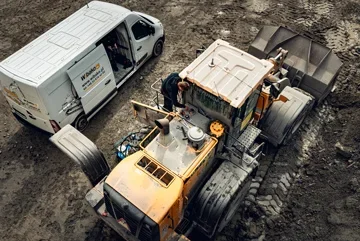
Removing an engine from a heavy-duty screener requires proper preparation of the machine. When the service is carried out by WIBAKO, the work can be performed directly at the customer's location. Our mobile service travels to the machine, carries out the engine removal and the engine is then transported to our headquarters in Kojszówka.
Before the removal begins, components located directly around the engine are secured. Our mechanics disconnect the electrical installation, fuel lines, cooling system hoses, air intake pipes and other connections required to safely remove the engine.
Particular attention is paid to components that may be reused during installation. Hoses, connectors, mounts and other accessories are protected against damage and contamination. The cooling system and air intake are properly secured so that contaminants cannot enter the systems during further work.
The engine is always removed using a crane provided by the customer. Once the engine mounts have been disconnected, the unit is lifted and carefully removed from the engine compartment. This stage requires precision because the space around the engine in a screening machine is limited, and incorrect handling could damage hoses, wiring or other components.
Once the engine has been removed, the condition of the connections is documented and the unit is secured for transport. The John Deere 4045HF285 engine is then delivered to the WIBAKO workshop, where the actual inspection and overhaul process begins.
Inspection of the John Deere 4045HF285 Engine in the Workshop
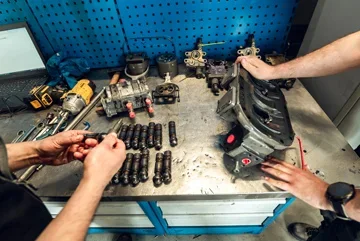
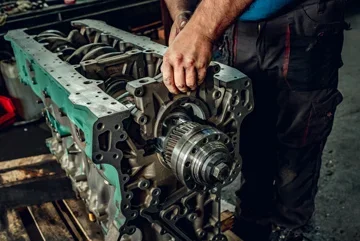
After the engine arrives at the workshop, it is prepared for disassembly. If its condition indicates that a complete overhaul is required, the engine is dismantled into individual components. The parts are washed and cleaned, after which our mechanics perform a detailed inspection.
Engine inspection is not limited to visual examination. Individual components are measured and compared with the required technical parameters. This makes it possible to determine the actual degree of wear and avoid replacing components that can still be correctly reused after inspection or machining.
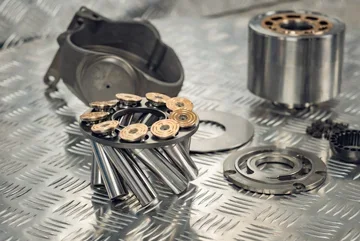
The crankshaft-piston system is inspected, including the crankshaft, connecting rods, pistons, piston rings, cylinder liners and bearings. The crankshaft undergoes a visual inspection for signs of overheating, cracks and wear. Runout and journal measurements are also performed, while the oil passages are checked for condition and cleanliness.
Connecting rods are inspected for cracks, signs of overheating and wear. Depending on their condition, measurements are taken to check twisting and longitudinal bending. The connecting rod bolts are also inspected. Such a detailed inspection is particularly important in an engine operating in a screener, where the power unit may work for many hours under changing and significant loads.
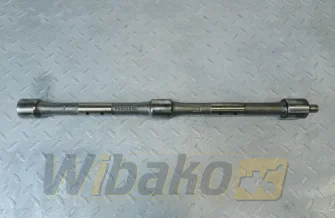
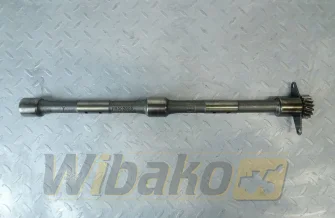
The camshaft is also inspected. Our mechanics check its visual condition and perform measurements related to wear of the journals and cam lobes. This makes it possible to determine whether the component can be reused.
Overhaul of the Crankshaft-Piston System
Once the measurements have been completed, the scope of work required for the crankshaft-piston system is determined. Depending on the inspection results, worn bearings, piston rings, pistons or cylinder liners may be replaced. If necessary, the crankshaft can undergo machining.
Each component is assessed individually. We do not follow a rule of automatically replacing every component. The scope of the overhaul is determined by the actual condition of the engine and the measurement results. This allows the rebuild to be properly planned and the engine parameters to be controlled.
When assembling the crankshaft-piston system, particular attention is paid to maintaining the correct dimensions and properly preparing the mating surfaces. New components are installed while maintaining the required assembly parameters. Oil passages are cleaned and the lubrication system components are checked before the engine is closed.
The lubrication system is particularly important in an engine operating in a heavy-duty screener. Continuous load and changes in engine speed mean that proper oil pressure and flow are essential for the correct lubrication and cooling of cooperating components.
Inspection and Reconditioning of the Engine Cylinder Head
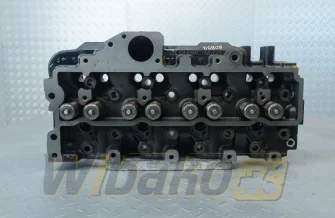
The cylinder head of the John Deere 4045HF285 is thoroughly cleaned and inspected. Valve seats, guides, valves and the cylinder head surface are checked. One of the important stages is a leak test.
The leak test involves immersing the cylinder head in heated water and then applying compressed air to the appropriate passages. By observing the cylinder head, it is possible to determine whether there are areas through which air is escaping. This makes it possible to detect cracks or leaks that may not always be visible during a standard visual inspection.
If the cylinder head requires reconditioning, the scope of work is determined according to its condition. Reconditioning may include cylinder head resurfacing, replacement of valve guides and replacement of valves. After machining, the cylinder head is inspected again before installation.
A properly prepared cylinder head is one of the components that directly affects cylinder sealing, combustion and the overall operating quality of the engine. For this reason, it is not overlooked during a comprehensive overhaul.
Fuel System and Engine Accessories
The John Deere 4045HF285 uses a high-pressure common rail fuel system and electronic engine control. The manufacturer specifies for this engine family variable common rail pressure, multiple injection phases and injection pressure of up to 1600 bar.
For this reason, during the overhaul we do not limit the inspection to mechanical components. The fuel system is assessed for its technical condition and correct operation. Depending on the inspection results, components requiring more detailed testing may be sent to an appropriate test bench.
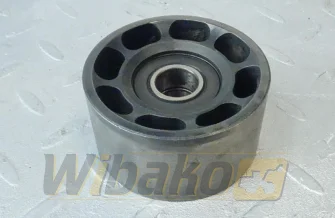
The condition of the engine accessories is also checked. The turbocharger is inspected, including axial and radial play. Electrical and electromechanical components, including the starter motor and alternator, are also checked. Their condition is important for reliable starting and trouble-free operation of the engine once it is installed in the machine.
After the inspection is complete, all components that are to be reused are prepared for installation. Parts requiring replacement are replaced with appropriate components according to the scope of the overhaul.
Professional Assembly of the John Deere Engine
Once all repair work has been completed, the engine is assembled. This stage is just as important as the diagnostics themselves. Even correctly selected and inspected parts must be installed in the correct sequence and with the appropriate assembly parameters.
The crankshaft-piston system is assembled after all mating surfaces and cooperating components have been properly prepared. Properly selected bearings, pistons, piston rings and other components included in the overhaul are installed. The crankshaft and connecting rods are installed after the required measurements and inspections have been completed.
The cylinder head with its prepared valve system is then installed. The timing system and remaining engine accessories are fitted. During assembly, particular attention is paid to the cleanliness of oil passages, correct routing of hoses and the condition of sealing surfaces.
Once the engine is closed, the intake, cooling, fuel and electrical systems are connected. Particular attention is paid to the correct connection of all lines and to preparing the unit for its first start. Before starting the engine, the oil and coolant levels are checked, together with the condition of other operating fluids.
An engine that has been rebuilt is not considered ready simply because it has been mechanically assembled. It must be started, its operating parameters must be checked and its behavior under load must be tested. For this purpose, the engine is placed on the WIBAKO engine dynamometer.
Testing the John Deere 4045HF285 Engine on the Dynamometer
The engine dynamometer is an important part of the overhaul process because it allows the engine to be tested before it is installed back into the machine. In the case of an engine intended for a Powerscreen Warrior 1400, this means that the unit can be tested under controlled load conditions similar to those encountered during operation.
After the first start, the engine is monitored for its basic operating parameters. We check idle stability, response to changes in load, cooling system operation and lubrication system performance. We also check for possible leaks and unusual noises that could indicate a problem with one of the components.
For engines after an overhaul, we do not immediately apply maximum load. The engine initially operates for a minimum of 16 hours under light operating conditions, with a load of approximately 20-30% of the nominal value. This stage allows us to check the behavior of the rebuilt engine during a prolonged period of operation.
During this process, our mechanics monitor the engine parameters and its response to load. Operating temperature and oil pressure are checked, together with overall parameter stability. Particular attention is paid to whether the engine continues to operate correctly after reaching operating temperature and whether any symptoms appear that could not be detected during a short initial start.
After the initial operating period, if the engine maintains its basic parameters, the load is gradually increased. The engine is repeatedly operated under higher loads and different operating conditions. This makes it possible to check the engine's response to changing load and verify its behavior when the power demand increases.
Dynamometer testing has another important advantage. It allows the engine to be tested before it is installed in the screener. If a problem appears during the test, it can be addressed while the engine is still in the workshop, without having to remove the engine from the machine again. This reduces the risk of additional downtime for the Powerscreen Warrior 1400 and allows the customer to receive an engine that has been properly tested.
The dynamometer is also an important quality-control tool for the overhaul itself. Simply starting an engine after an overhaul does not provide complete information about its behavior under load. Only controlled load testing makes it possible to verify whether the engine responds correctly to increasing power demand and whether all cooperating systems remain stable.
WIBAKO also uses the engine dynamometer to test engines intended for sale or installation in customers' machines. For rebuilt engines, the ability to perform a test before installation is particularly valuable because it reduces the number of unknown factors associated with starting the machine after installation.
Once the tests are completed and correct engine operation has been confirmed, the engine is prepared for reinstallation in the Powerscreen Warrior 1400. Only after successfully completing the dynamometer test does the engine proceed to the next stage.
Installing the Engine in the Powerscreen Warrior 1400
After the overhaul and dynamometer test have been completed, the engine is returned to the machine. Installation can be performed by our mobile service directly at the customer's location. Again, the crane provided by the customer is used to safely lower the engine into the engine compartment.
During installation, particular attention is paid to the correct positioning of the engine in relation to its mounts. The unit is placed in its correct position and the mounting components are then installed. The following stages include connecting the fuel system, cooling system, air intake, exhaust system and electrical installation.
If worn hoses or piping components were identified during removal, they are properly prepared before the machine is started again. This applies particularly to charge air pipes and connections where leaks could affect engine operation. Every connection must be correctly fitted and secured.
After all connections have been completed, a leak inspection is performed. The cooling system, oil lines, fuel system and intake system are checked. Inspection of all connections is particularly important after an overhaul because even a small leak can affect engine performance.
Before the first start, operating fluids are filled and the necessary preparation procedures are carried out. Once the engine starts, our mechanics check its operation at idle and then gradually increase the load. Engine parameters and the tightness of connections made during installation are monitored.
Final tests are carried out together with the machine operator. This is an important part of the acceptance process because the operator knows how the specific Powerscreen Warrior 1400 normally works and can provide feedback on the machine's behavior during screening. Together, the engine operation and cooperation between the power unit and the other machine systems are checked.
Once the tests have been completed and correct engine operation and the absence of leaks have been confirmed, an installation report is prepared. The machine can then return to operation.
Engine Service After the Overhaul
An engine overhaul does not mark the end of the service process. After the engine has been started, it is important to follow the recommended procedures for the initial operating period. WIBAKO also performs service inspections after engine installation.
The first inspection is recommended after 50 operating hours. This is not limited to changing filters. During the service visit, our mechanics check the overall condition of the engine accessories, connections between the engine and other machine components and correct engine operation. Possible leaks that may have appeared during normal operation are also inspected.
Further inspections should be carried out every 250 operating hours, but at least once every 3 months. Regular inspections make it possible to detect irregularities at an early stage and reduce the risk of a more serious failure.
Where Is the John Deere 4045HF285 Engine Used?
The John Deere 4045HF285 is a four-cylinder, 4.5-liter diesel engine designed for industrial applications. The manufacturer specifies a power range of 86-104 kW depending on the application and configuration. The engine uses turbocharging and charge air cooling.
When identifying an engine installed in a particular machine, the identification information on the engine nameplate and the serial number should always be used. Different configurations and power versions exist within the John Deere engine family, so the machine model alone is not always sufficient to correctly select replacement parts.
WIBAKO services John Deere engines used in construction and industrial machinery. We can assist with engine identification based on the machine model, engine number, part number or a photograph of the engine nameplate.
Construction Machinery Service and John Deere Engine Overhauls
The overhaul of the John Deere 4045HF285 engine described above demonstrates WIBAKO's comprehensive approach to repairing engines operating in heavy-duty machinery. The process begins with diagnostics in the machine and continues with engine removal, transportation to the workshop, detailed inspection, overhaul, assembly and dynamometer testing.
Our company also performs engine removal and installation as part of our mobile service. This means that the customer does not have to organize the entire process independently. Our mechanics can travel to the machine, perform the necessary work on the power unit and, after the overhaul, reinstall the engine and participate in the first machine tests.
WIBAKO provides John Deere diesel engine service and repairs for engines used in construction machinery, screeners, crushers, loaders and other off-highway machines. We have workshop facilities that allow comprehensive engine inspection as well as a dynamometer for testing engines under load.
Summary of the John Deere 4045HF285 Engine Overhaul
An engine overhaul in a Powerscreen Warrior 1400 requires more than simply replacing worn components. It primarily requires proper diagnostics and determination of the actual scope of work. In the case of the John Deere 4045HF285, the process included engine diagnostics, removal from the machine, component inspection, overhaul of the crankshaft-piston system, inspection of the cylinder head and fuel system, inspection of engine accessories, professional assembly and dynamometer testing.
Performing a dynamometer test before reinstalling the engine makes it possible to check engine behavior under load and reduce the risk of discovering a problem only after the engine has been installed in the screener. After successfully completing the tests, the engine can be installed in the Powerscreen Warrior 1400 and checked during machine operation.
After the first 50 operating hours, our service performs a follow-up inspection. Further inspections are carried out every 250 operating hours, but at least once every 3 months. This approach makes it possible to maintain control over the engine condition even after the overhaul has been completed.
If you need a John Deere 4045HF285 engine overhaul, engine diagnostics in the machine, engine removal and installation or an engine dynamometer test, WIBAKO can handle the complete process from diagnostics through to machine start-up.
Related WIBAKO Services
Construction machinery service - diagnostics, repairs and servicing of machines operating under demanding conditions.
Diesel engine overhauls - comprehensive inspection, repair and testing of engines used in construction and industrial machinery.
WIBAKO mobile service - travel to the customer's location, engine removal and installation and initial machine start-up after the repair.
Contact us
Do you need a John Deere 4045HF285 engine overhaul or service for a Powerscreen Warrior 1400 screener? Contact WIBAKO - we provide diagnostics, engine overhauls, engine removal and installation and engine dynamometer testing.