

Do not ignore power loss after warming up
Is your machine losing power after warming up? Check what might be the cause
-
Phone
+48 33 870 42 00
Call us -
WhatsApp
+48 532 161 000
Write on WhatsApp -
E-mail
biuro@wibako.pl
Send an e-mail
Machine Power Loss After Warming Up. A Guide for Operators and Machine Owners
A situation where a construction or agricultural machine handles the toughest tasks in the morning without any trouble, but after an hour or two of operation begins to slow down drastically, lose traction, or "fade" when trying to lift a full bucket, is one of the most deceptive service problems. Machine power loss after warming up directly paralyzes work efficiency and generates massive time losses. This phenomenon is closely related to the change in the physical properties of operating fluids (oils) under the influence of rising temperature. Understanding why heat deprives a machine of its factory strength allows for an accurate and cost-effective diagnosis before replacing any components.
The Physics of the Fault: The Impact of Temperature on Oil and Tolerances
When a machine is operating, the temperature of the hydraulic oil and engine oil increases drastically (often reaching from 60°C to well over 90°C). As the temperature rises, the viscosity of the liquid naturally decreases – simply put, the oil becomes very thin and fluid, much like water.
In a properly functioning, tightly fitted hydraulic or fuel system, this change in viscosity remains within tolerance limits. However, if key components (pistons, pumping sections, control valves) have microscopic clearances resulting from wear, the thin, hot oil, instead of building working pressure, begins to escape through these gaps, generating massive internal leakage. As a result, despite full engine RPMs, the system pressure drops drastically.
Most Common Causes of Machine Power Loss After Warming Up
The problem of a machine "fading" as the hours of operation progress usually centers around the hydraulic system and advanced engine components. Here are the main causes:
1. Wear of the hydraulic pump (main piston pump or gear pump)
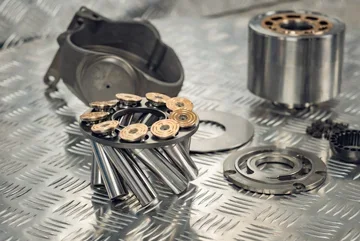
This is the absolute number one factor when diagnosing this issue. When a hydraulic pump is worn out, its internal moving parts (e.g., the rotating group, valve plate, or pistons) lose their perfect seal. With cold oil, which is thicker, the pump is still able to generate high working pressure. Once warmed up, the thin oil slips effortlessly from the pressure chamber back to the suction side or into the pump housing – the machine loses its power almost completely and slows down.
2. Wear of injection pump pumping elements or injectors
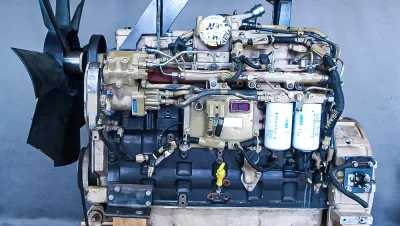
If the engine loses power and begins to stall after warming up, the problem may lie within the fuel supply system. Similar to hydraulics, the precision components of injection pumps (or Common Rail high-pressure pumps) and injector nozzles are lubricated and sealed by diesel fuel. Warm fuel loses viscosity, which, in the case of worn-out sections, causes a drop in injection pressure, incomplete combustion of the mixture, and a sudden loss of engine torque.
3. Oil cooling system insufficiency (hydraulic cooler, thermostat)
Sometimes the mechanical components are still in an acceptable condition, but the cooling system fails to dissipate heat effectively. An oil cooler clogged with dust, a malfunctioning fan (e.g., a worn-out viscous clutch), or a blocked oil thermostat can cause the system temperature to exceed permissible limits. The oil overheats, its operating viscosity drops drastically, which consequently translates into an immediate weakening of the entire machine.
4. Leakage in control valves and cylinders (seals)
As the temperature rises, metal components expand and rubber seals become more flexible. If the spools in the control valve are worn or the internal piston seals in the cylinders (so-called seal packs) are degraded, the hot oil escapes sideways (bypassing from one cylinder chamber to the other). The machine loses power on a specific function or on all working movements simultaneously.
Quick Symptom Verification – Reference Table
The table below allows for an initial differentiation of which system is responsible for the machine's loss of strength as the temperature rises:
| Symptom after warming up | Engine behavior | Hydraulics behavior | Probable cause |
|---|---|---|---|
| The machine slows down drastically, lacks power in the ground | Runs smoothly, does not drop RPMs, does not smoke | Oil reaches a very high temperature, pump operates louder | Wear of the main hydraulic pump (internal leakage) |
| Working movements become slow, and cylinders drift down under load by themselves | Runs stably at set RPMs | Only selected functions weaken (e.g., only arm or swing) | Wear of spools in the control valve or internal cylinder seals |
| The engine loses RPMs and "dies" under the slightest hydraulic load | Chokes, runs unevenly, struggles to start when warm | Normal, but is bogged down by the stalling engine | Wear of the injection system (high-pressure pump / injectors) |
| Loss of power occurs suddenly, accompanied by a loud metallic noise | Runs correctly | Sudden drop in pilot pressure (joysticks become stiff or rubbery) | Damage to the charge (pilot) pump or priority valve |
What to do when a machine loses power after warming up?
Before you decide on a costly disassembly of the main components, perform these basic verification steps:
- Change or verify oil parameters: Make sure that the hydraulic system contains oil with the correct viscosity grade (e.g., HV 46 or HV 68 for demanding, hot working conditions) and that it is not worn out.
- Clean the cooling system: Thoroughly blow out with compressed air or wash the fins of the hydraulic oil and engine coolers.
- Perform a simple touch test: Check if the hydraulic pump housing becomes drastically hotter than the oil tank itself after a short period of operation (this indicates immense friction and internal leakage inside the pump).
Remember! Continuing to operate a machine that "fades" after warming up leads to an avalanche production of metal micro-shavings by the wearing pump. These shavings travel with the oil throughout the entire system, irreversibly destroying control valves, valves, and cylinders, which multiplies the final repair cost many times over.
Precise pressure and flow measurements – trust the experts from Wibako
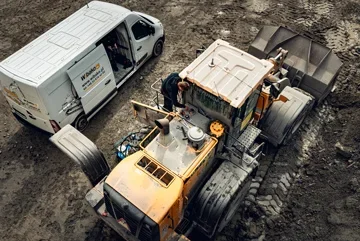
Diagnosing a "fading when hot" type of fault by randomly replacing parts is bound to fail. The only effective method is to conduct tests using a professional hydraulic flow meter and pressure gauges connected to the system at the exact moment when the machine is fully warmed up. This allows for a precise determination of the pump's efficiency percentage and isolates the locations of pressure loss. When the performance of your equipment drops drastically, a visit to a professional is necessary.
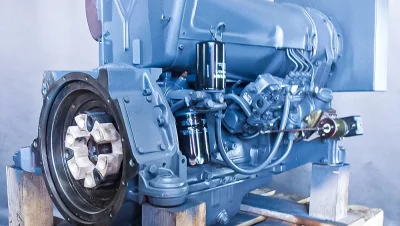
At Wibako, we have specialized for years in professional diagnostics, service, and comprehensive remanufacturing of power hydraulics components and industrial engines. We service advanced construction and agricultural machinery from global brands such as Liebherr, Deutz, Perkins, Caterpillar, Cummins, and Kubota. We have specialized test benches to test hydraulic pumps and motors under full working load. Our engineering team will precisely determine whether the cause of your machine's power loss is a worn-out pump, a leaking control valve, or a fuel system failure, eliminating the problem effectively and for years to come. Restore full operational stability to your machine with Wibako!