

Why is the machine emitting black smoke?
Discover the most common causes and effective solutions
-
Phone
+48 33 870 42 00
Call us -
WhatsApp
+48 532 161 000
Message on WhatsApp -
E-mail
biuro@wibako.pl
Send an e-mail
Why is the machine emitting black smoke? A guide for operators and machine owners
Black smoke coming out of the exhaust system of a construction or agricultural machine is one of the most common, and at the same time, most visible signs of a malfunctioning engine. Ignoring this symptom leads not only to a drastic increase in expensive fuel consumption but also to accelerated wear of key components and unexpected downtime on the construction site or in the field. Quick identification of the cause is key to maintaining your equipment's full operational readiness.
What is black engine smoke?
Simply speaking, black smoke is nothing more than soot, i.e., incompletely burned carbon particles from diesel fuel. In diesel engines, a strictly defined mass ratio of fuel to air is required for a proper and clean combustion process. If this delicate balance is disrupted, a so-called rich mixture combustion occurs.
The appearance of black smoke means that there is too much fuel in the combustion chamber relative to the amount of supplied oxygen. The engine cannot efficiently burn off the delivered dose, as a result of which the excess unburned fuel leaves the exhaust system in the form of a dark, heavy residue.
The most common causes of black smoke
Several key elements of the engine accessories can affect the disruption of the fuel-air ratio. Here are the four most common reasons:
1. Clogged or worn air filter
This is the most mundane yet very frequent cause in machines operating in highly dusty environments. If the air filter is heavily contaminated, the engine "suffocates" – it does not receive enough oxygen needed for the complete combustion of the injected diesel fuel. The mixture becomes too rich, and blackness begins to escape from the exhaust pipe.
2. Turbocharger failure or a leak in the intake system
The turbocharger is responsible for forcing air under the right pressure into the cylinders. If its geometry is damaged, bearings are worn, or a leak appears in the system (e.g., a cracked intercooler pipe, a loose clamp), too little air will enter the engine. Even if the injection system works properly, the lack of sufficient boost pressure will cause heavy black smoking, especially under load.
3. Injection system damage (contaminated or worn injectors)
When injectors are worn, they start to "pour" fuel instead of precisely atomizing it into a fine mist. Oversized diesel fuel droplets cannot mix with air and burn within the short duration of the power stroke. A similar effect is caused by a damaged injection pump, which delivers incorrect (too high or poorly timed) fuel doses.
4. Faulty Exhaust Gas Recirculation system (EGR valve)
The EGR valve is designed to redirect a portion of the exhaust gases back into the combustion chamber to reduce nitrogen oxide emissions. If the valve gets stuck in the open position due to accumulated soot, too much exhaust gas continuously enters the cylinders at the expense of fresh, oxygen-rich air. This results in an immediate drop in power and thick smoke.
Quick symptom verification – Reference table
Use the table below to make an initial assessment of which component of your machine might require urgent intervention:
| Accompanying symptoms | Moment of intense smoking | Impact on machine operation | Probable cause |
|---|---|---|---|
| Smoke appears gradually week by week | Across the entire RPM range | Slight drop in power, higher fuel consumption | Clogged air filter (requires cleaning/replacement) |
| Hissing or whistling under the hood, sudden power loss | During acceleration and under load | Drastic drop in pulling / lifting power | Leak in the intake system (cracked intercooler or hose) |
| Rough idling, engine knocking | On both cold and warm engine | Fluctuating RPM, hard starting | Worn injectors (dripping nozzles) |
| Lack of power in the lower RPM range | Upon sudden acceleration | Jerking, entering limp mode | Blocked or damaged EGR valve |
What to do when the machine emits black smoke?
If you observe black smoke, it is worth starting with the simplest maintenance tasks that can be performed in the field:
- Check the condition of the air filter: Remove the element and check its level of contamination. If necessary, clean it or replace it with a new one.
- Inspect the intake system: Check the condition of the rubber hoses connecting the turbocharger to the intercooler and intake manifold for cracks or loose clamps.
- Verify fuel quality: Sometimes the cause of poor combustion is contaminated or low-quality fuel from an unverified source.
Remember! Long-term operation of a machine that smokes heavily in black leads to a drastic increase in temperature in the combustion chamber. This can result in burnt pistons, damaged valves, as well as complete clogging and destruction of expensive particulate filters (DPF/DPD).
When basic inspection is not enough – rely on professional diagnostics
Modern fuel delivery and boost systems used in machines require millimeter precision and specialized computer equipment for a correct evaluation of operating parameters. If replacing the filters brought no results, a visit to a specialist is necessary to precisely pinpoint the source of the problem.
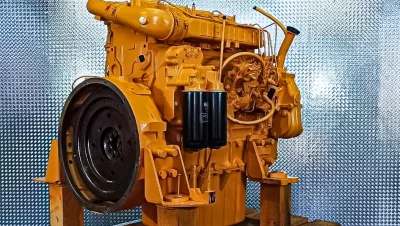
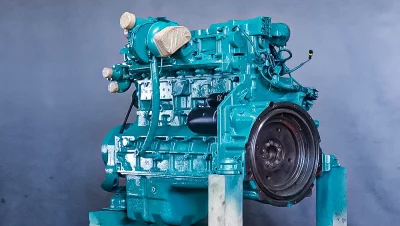
At Wibako, we offer comprehensive support in the field of diagnostics and advanced major repairs of industrial engines. We have modern test benches and a team of experienced engineers specializing in servicing machines powered by engines from brands such as Liebherr, Deutz, Perkins, Caterpillar, Cummins, and Kubota. Regardless of whether the problem lies in the precise calibration of the Common Rail system, turbocharger regeneration, or an EGR valve failure – at Wibako, we will restore your engine to its full factory power and optimal combustion parameters. Contact us and forget about black smoke problems!