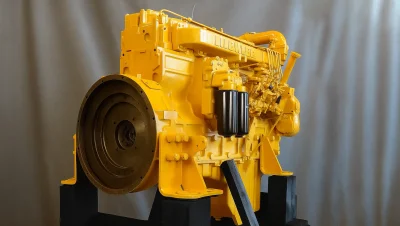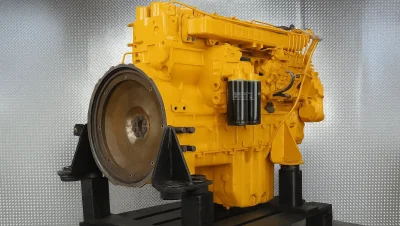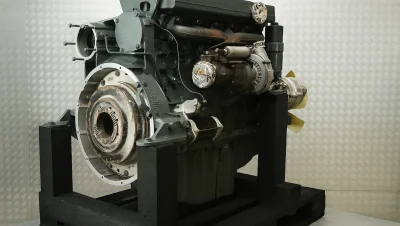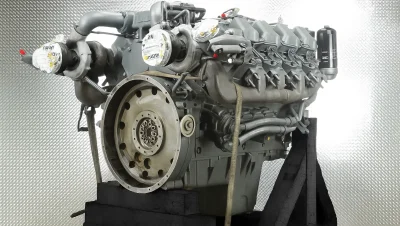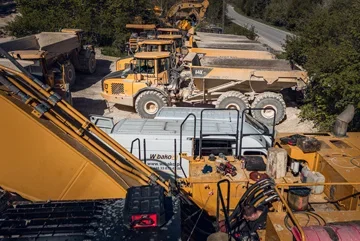


Volvo D12D Engine Overhaul in a Volvo L180E Wheel Loader – Comprehensive Service and Engine Dyno Testing
The Volvo L180E wheel loader is one of the most recognizable machines operating in aggregate quarries, recycling facilities, municipal enterprises, and large construction companies. This machine was designed to work in demanding conditions where drivetrain reliability has a direct impact on overall operational efficiency. The L180E model was equipped with the Volvo D12D engine, featuring a displacement of approximately 12 liters and an output exceeding 300 HP. This power unit was engineered for long hours of operation under heavy loads and varying working conditions.
A Volvo L180E owner operating in the Silesian region near Katowice contacted our service department. Operators reported a gradual loss of engine power, increased engine oil consumption, and excessive exhaust smoke under load. Additionally, the machine struggled to maintain full productivity during bulk material loading operations. These symptoms indicated wear within the crankshaft-piston assembly and deteriorated cylinder sealing performance.
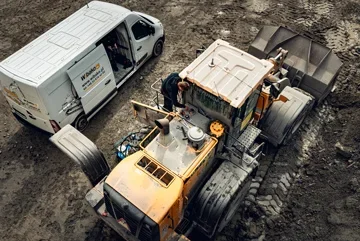
As part of the project, our mobile construction equipment service team performed a complete on-site inspection of the machine. Following the diagnostic assessment, a decision was made to remove the engine and transport it to our facility in Kojszówka, where we carried out a comprehensive inspection, overhaul, and engine dynamometer testing.
Volvo D12D Engine Diagnostics Before Removal
The first stage involved a detailed evaluation of the engine while it was still installed in the machine. Our technicians monitored operating parameters during startup, idle operation, and under load. Increased exhaust smoke and uneven engine response to rapid load changes were immediately apparent.
Next, compression pressure measurements were performed on each cylinder. The results revealed significant differences between cylinders, suggesting wear of pistons, piston rings, and cylinder liner surfaces. We also conducted a cylinder leak-down test and an endoscopic inspection of the combustion chambers. The inspection camera revealed blow-by traces and characteristic wear patterns on cylinder working surfaces.
We additionally reviewed the machine's service history. The loader had been operating for many years under heavy-duty conditions at an aggregate handling facility. High operating hours combined with natural component wear ultimately necessitated a complete engine overhaul.
Removing the Volvo D12D Engine from the Volvo L180E Loader
After confirming the scope of damage, we proceeded with engine removal. Our service team arrived on-site and prepared the machine for extraction of the power unit. This process required careful disconnection and protection of all systems connected to the engine.
The electrical wiring harness, control wiring, and engine monitoring systems were disconnected first. Next, the intake system, pressure lines, and cooling system components were removed. All hoses and connections were labeled to ensure accurate reassembly during installation.
Particular attention was given to protecting the cooling package, hydraulic hoses, and engine compartment accessories. This helped prevent collateral damage during engine extraction.
Once all connections were removed, the engine was lifted out using a crane provided by the customer. The unit was then secured for transport and delivered to our workshop. Simultaneously, we conducted a preliminary inspection of the engine compartment, checking mounts, hoses, engine supports, and drivetrain components.
Engine removal is one of the most critical stages of the repair process. Improper labeling or accidental damage to wiring and hoses can lead to issues during commissioning. For this reason, every stage of work is documented with photographs and recorded in our service documentation.
Volvo D12D Engine Inspection at the Workshop
Upon arrival at our facility, the engine underwent a comprehensive inspection process. The unit was cleaned and prepared for disassembly. Even during the initial evaluation, significant carbon deposits and signs of intake system blow-by were evident.
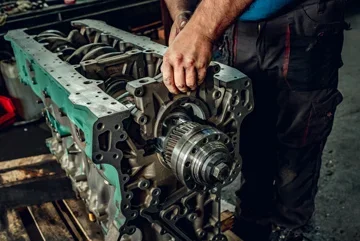
Disassembly began with the removal of accessories, manifolds, the turbocharger, and fuel system components. The cylinder head, oil pan, and crankshaft-piston assembly were then dismantled. The inspection confirmed the findings from the on-site diagnostics.
The cylinder liners displayed operational wear and localized scoring on working surfaces. The piston rings had lost their sealing capability, allowing combustion gases to enter the crankcase. Wear was also identified on both main and connecting rod bearings.
A complete crankshaft inspection was carried out, including visual examination, runout measurement, oil passage inspection, and dimensional checks of all main and rod journals. The results confirmed the need for crankshaft regrinding.
Additional inspections were performed on the camshaft, connecting rods, turbocharger, and fuel injection system. This allowed us to prepare a complete list of components requiring repair or replacement.
Repair of the Volvo D12D Crankshaft-Piston Assembly
Following completion of all measurements, we began rebuilding the crankshaft-piston assembly. The crankshaft underwent precision grinding and was subsequently rechecked for dimensional accuracy and geometry.
Connecting rods were inspected for twist, bending, and dimensional conformity. Each rod was individually verified, and any components outside specification were replaced.
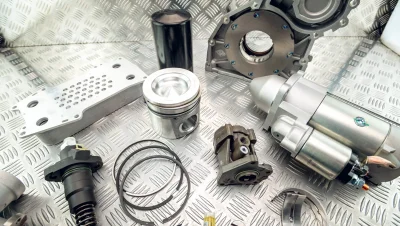
The engine received a complete set of new cylinder liners, pistons, and piston rings. Main and connecting rod bearings, seals, and wear components within the lubrication system were also replaced. Special attention was paid to maintaining assembly clearances according to Volvo specifications.
After assembly, additional inspections were performed, including verification of crankshaft rotation and dimensional checks to eliminate potential issues before final engine assembly.
Volvo D12D Cylinder Head Reconditioning
The cylinder head was completely disassembled and subjected to industrial cleaning. A pressure test was then conducted in a heated water bath using compressed air. The test revealed no cracks or structural damage.
The reconditioning process included resurfacing the head gasket surface, replacing valve guides, and inspecting all valve seats. Worn valves were replaced, and all new components were precision lapped.
Following completion of the work, the cylinder head underwent additional dimensional and leak testing before being approved for assembly.
Fuel System and Auxiliary Component Repairs
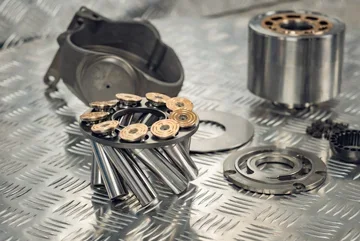
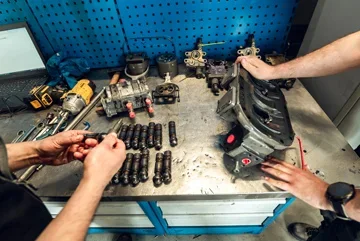
The Volvo D12D fuel system also underwent a complete inspection. Fuel injectors were tested on a calibration bench to verify spray pattern quality, opening pressure, and fuel delivery consistency.
The injection pump was sent to a specialized facility for professional rebuilding. Following repair, it was tested and calibrated according to manufacturer specifications.
The turbocharger was also inspected. Radial and axial shaft clearances, housing condition, and sealing integrity were verified. After completing necessary repairs, the turbocharger was approved for continued operation.
Additionally, the alternator, starter motor, and all associated electrical components were inspected. As a result, the customer received a fully tested and reliable engine ready for years of service.
Professional Engine Assembly After Overhaul
After all reconditioning work had been completed, final engine assembly began. The process followed official Volvo D12D service procedures. All components were thoroughly cleaned and prepared prior to installation.
Particular attention was paid to torque specifications for main bearings, connecting rods, and cylinder head fasteners. Every connection was completed according to manufacturer procedures. New gaskets, seals, and single-use components were installed throughout the engine.
Following assembly of the short block, the cylinder head, timing system, fuel system, and auxiliary equipment were installed. Necessary adjustments were made, and the engine was prepared for initial startup.
As part of the preparation process, worn service hoses were also replaced. All oil, fuel, and coolant connections were tested for leaks. Each stage was documented by our technicians.
This approach significantly reduces the risk of failures after installation in the machine. Comprehensive verification of all components interacting with the engine ensures maximum reliability of the entire powertrain.
Volvo D12D Engine Dynamometer Testing
One of the most important stages of the project was engine dynamometer testing. Our company is among the few industrial engine repair specialists equipped with a professional engine dyno capable of fully testing an engine before installation in the machine.
Once assembly was complete, the Volvo D12D engine was mounted on the test stand. Initial startup took place under close supervision by the technicians responsible for the overhaul. Coolant temperature, oil pressure, combustion parameters, and auxiliary system performance were continuously monitored.
During the first several hours, the engine operated at approximately 20–30% of rated load. This break-in stage allows newly installed components to seat properly. Throughout the process, lubrication, cooling, and fuel systems were regularly checked for leaks.
Following break-in, load was gradually increased. The dynamometer enabled precise simulation of real operating conditions experienced in a Volvo L180E wheel loader. This allowed us to evaluate engine performance during dynamic load changes and maximum power output.
Parameters recorded during testing included torque, power output, exhaust gas temperature, boost pressure, and oil pressure. Any deviation from reference values could be identified before engine installation.
The dynamometer also allowed repeated operation at maximum load while monitoring parameter stability. This is particularly important for engines used in construction equipment, where power units operate under heavy loads for extended periods.
After testing was completed, additional leak checks, oil analysis, and auxiliary system evaluations were performed. Only after successfully completing all inspections was the engine approved for installation in the customer's machine.
Installing the Volvo D12D Engine in the Volvo L180E Loader
Following dynamometer testing, the engine was prepared for transportation and delivered to the customer. Our mobile service team performed installation using a crane provided by the machine owner.
The installation process began with a detailed inspection of the engine compartment. Engine mounts, hydraulic hoses, fuel lines, and all supporting components were inspected. The engine was then precisely positioned within the machine frame.
The electrical system, fuel system, cooling system, and intake piping were subsequently connected. Selected service hoses were also replaced to improve long-term reliability.
Upon completion of installation, a thorough leak inspection was performed. The engine was started and monitored at idle speed. Once operating temperature was reached, a series of functional tests was conducted together with the machine operator.
Engine response was evaluated during hydraulic operation, loaded travel, and normal loading cycles. Operating temperature, oil pressure, and sealing integrity were continuously monitored under full working conditions.
After successful completion of all tests, installation documentation was prepared and a handover protocol was signed. The machine was then returned to service.
Post-Overhaul Service Support
Every engine rebuilt by our company includes ongoing service support. After the first 50 operating hours, our technicians perform an on-site inspection. This visit includes filter replacement, leak checks, and inspection of all connections between the engine and machine systems.
Subsequent inspections are recommended every 250 operating hours, but no less frequently than every three months. Regular maintenance helps maintain the reliability of the Volvo D12D engine while minimizing the risk of costly breakdowns.
Machines Powered by the Volvo D12D Engine
The Volvo D12D engine was used in numerous construction and industrial machines. These engines can be found in Volvo L180E, L220E, and other heavy-duty machines operating in mining, material handling, and municipal sectors. Their robust design allows for successful major overhauls, enabling exceptionally long service life.
Summary
The comprehensive overhaul of the Volvo D12D engine in a Volvo L180E wheel loader included complete diagnostics, engine removal, detailed inspection, component reconditioning, dynamometer testing, and professional installation. As a result, the customer regained full machine performance and reliability for continued operation in demanding conditions.
Our Volvo diesel engine service department specializes in rebuilding engines used in wheel loaders, excavators, cranes, crushers, and other construction equipment. We provide mobile engine removal and installation, transportation to our workshop, and complete engine dynamometer testing. After 50 operating hours, we perform a mandatory inspection to verify proper engine performance following overhaul.
Internal link: Volvo D12D engine overhaul
Internal link: Volvo wheel loader service
Internal link: Engine dynamometer testing for industrial engines
Volvo D12D Engine Overhaul
Need a Volvo D12D engine overhaul or service for your Volvo L180E wheel loader? We PROVIDE engine removal, rebuilding, engine dynamometer testing, and on-site installation directly at your location.