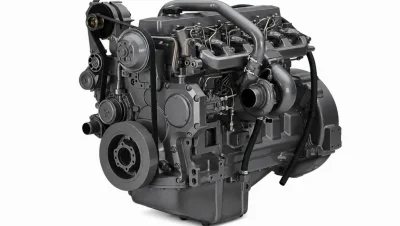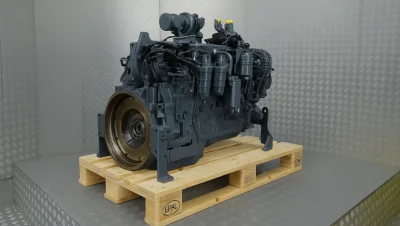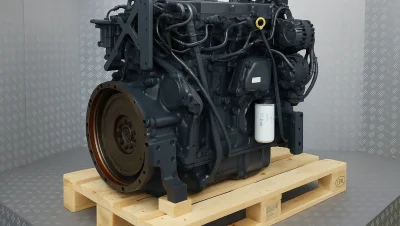


Overhaul of the Liebherr D926 TI-E A4 240 kW Engine in a Liebherr LTM 1500-8.1 Mobile Crane
The Liebherr LTM 1500-8.1 mobile crane is one of the most recognizable all-terrain machines used for steel structure assembly, power industry projects, and large industrial investments. The design of this model allows it to operate both on public roads and in demanding off-road conditions. Thanks to its high lifting capacity and advanced hydraulic system, the machine is used for the most demanding applications.
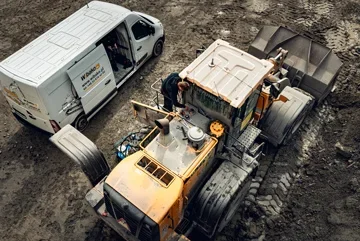
In this case, our service center received a Liebherr D926 TI-E A4 engine with an output of 240 kW, responsible for driving the crane superstructure. The power unit showed symptoms related to a malfunction in the fuel injection system. The operator reported excessive smoke emissions, uneven engine operation under load, and increased fuel consumption during crane hydraulic operations. The engine removal was carried out near Katowice, where our mobile service team performed full diagnostics and prepared the unit for transport to our headquarters in Kojszówka.
For years, Liebherr has been developing its own engine designs intended for construction machinery, mobile cranes, and off-highway equipment. The D926 TI-E A4 engine is highly regarded for its smooth operation and durability under variable loads. At the same time, it is a design that requires precise diagnostics and professional workshop facilities during overhaul.
Initial Diagnostics of the Liebherr D926 TI-E A4 Engine
After our mobile service team arrived, we began the initial diagnostics of the power unit directly in the Liebherr LTM 1500-8.1 crane. The operator reported uneven engine operation while operating the superstructure and a noticeable loss of power combined with increased fuel consumption. Heavy exhaust smoke was also present during operation under load.
In the first stage, we checked engine operating parameters, measured oil pressure, and analyzed operating temperatures. We then inspected the fuel system and verified injection parameters. At this stage, differences in fuel dosing between individual cylinders were already visible.
The next step involved a detailed analysis of the fuel injection system. We checked the tightness of fuel lines, inspected filtration components, and verified the presence of contaminants in the fuel system. After removing selected auxiliary components and performing additional tests, we confirmed the need for a complete engine disassembly.
Due to the operating characteristics of the mobile crane and the high hydraulic loads, a complete engine overhaul was recommended. Our construction machinery service team prepared a work schedule including engine removal, transport to the workshop, full inspection, and testing on an engine dynamometer.
Removal of the Engine from the Liebherr LTM 1500-8.1 Mobile Crane
The removal of the Liebherr D926 TI-E A4 engine was performed by our mobile service team near Katowice. Due to the crane’s design and limited working space, the process required proper workstation preparation and securing of all systems connected to the power unit.
We started by disconnecting the electrical installation, control wiring, and fuel system. Next, the cooling system, hydraulic lines, and intake system were secured. Special attention was paid to protecting the superstructure control components, as even minor damage to the installation could cause problems during reassembly.
The engine was removed from the machine using a crane provided by the customer. Our mechanics were responsible for preparing lifting points and safely disconnecting the unit from the drivetrain system. After removing the engine, we additionally inspected the engine compartment, mountings, and flexible hoses.
Before transport to Kojszówka, all service openings were properly secured. The intake system, fuel lines, and cooling system were protected against contamination. This allowed us to begin further diagnostics immediately after the engine arrived at the workshop.
Inspection of the Liebherr D926 TI-E A4 Engine
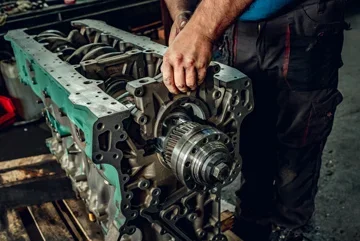
After the engine was delivered to our workshop, we began a complete disassembly of the power unit. The inspection process included evaluation of the crankshaft assembly, cylinder head, fuel system, and auxiliary components.
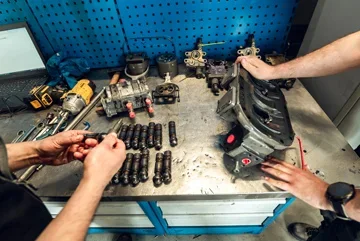
Already during the disassembly of the fuel system, signs of uneven injector operation were visible. The injectors were sent to a test bench, where incorrect fuel atomization parameters and dosing differences between individual sections were confirmed.
The crankshaft inspection included visual checks, measurement of the main journals, and inspection of oil passages. Bearings and connecting rods were also checked for signs of overheating and wear. Despite the engine’s high operating hours, the crankshaft qualified for reconditioning through grinding.
The cylinder head underwent a leak test in a heated water bath. Valve guides, valve seats, and mating surfaces were also inspected. The inspection confirmed the need for cylinder head resurfacing and replacement of selected valve train components.
We also inspected the turbocharger for axial and radial play. Additionally, the alternator, starter, and electromechanical components responsible for engine management were checked.
Reconditioning and Repair of the Liebherr D926 TI-E A4 Engine
The overhaul process began with the regeneration of the crankshaft assembly. The crankshaft was ground and then re-measured dimensionally. New main and connecting rod bearings compliant with manufacturer specifications were installed.
The connecting rods underwent geometry inspection and measurements of twist and longitudinal bending. After measurements were completed, new cylinder liners, pistons, and piston rings were installed. All components were precisely fitted according to the technical documentation of the Liebherr D926 TI-E A4 engine.
As part of the cylinder head regeneration, we resurfaced the head, replaced valve guides and valves, and machined the valve seats. The entire assembly was then subjected to another leak test. This allowed us to restore proper compression and combustion parameters.
The fuel system was sent for specialized regeneration. The injectors and injection pump were tested on a test bench. After the work was completed, injection parameters were calibrated according to manufacturer requirements.
The turbocharger was also reconditioned. Wear components were replaced and the rotor was balanced. This restored proper boost parameters and reduced the risk of future engine damage.
During engine assembly, we used new seals, hoses, and consumable components. Every stage of assembly was carried out according to the tightening torques specified by the engine manufacturer.
Testing the Liebherr D926 TI-E A4 Engine on an Engine Dynamometer
One of the most important stages of the entire process was testing on the engine dynamometer. Our company is among the few diesel engine service centers equipped with facilities enabling the testing of large power units before installation in the machine.
After the assembly was completed, the Liebherr D926 TI-E A4 engine was prepared for long-term load testing. In the first stage, the engine operated for several hours under partial load of approximately 20–30% of nominal capacity. This allows proper seating of new crankshaft assembly components and verification of operating parameters.
During testing, we continuously monitored coolant temperature, oil temperature, lubrication pressure, and combustion parameters. We also checked the tightness of all connections and turbocharger performance under varying loads.
After the initial break-in process, the engine was subjected to full load testing. The engine dynamometer allows very accurate simulation of operating conditions encountered during the use of the Liebherr LTM 1500-8.1 crane. This enables us to verify engine performance under high hydraulic loads and dynamic power demand changes.
During the tests, we also performed exhaust gas analysis and monitored fuel system parameters. This allows us to detect even minor irregularities before the engine is installed back into the machine. For the customer, this means significantly reduced downtime risk and confidence that the engine has been tested under conditions close to real operation.
The engine dynamometer also allows monitoring of parameter stability over extended periods. In the case of engines used in mobile cranes, this is extremely important because such machines often operate for many hours under heavy loads and changing weather conditions.
After all tests were completed, we carried out an additional inspection of filters, system tightness, and operating parameters after engine cooldown. Only after full compliance of all parameters was confirmed was the engine approved for installation in the crane.
Installation of the Engine in the Liebherr LTM 1500-8.1 Crane
The engine installation was carried out by our mobile service team after delivery of the unit to the customer. The installation process required precise preparation of the engine compartment and reinspection of all systems cooperating with the power unit.
Before installing the engine, we checked the condition of engine mounts, hydraulic hoses, and the electrical installation. Selected intake system hoses and cooling system components showing signs of wear were replaced. Mounting surfaces and fastening points were also thoroughly cleaned.
The engine was installed using a crane provided by the customer. Our mechanics were responsible for proper positioning of the unit and performing all connections according to service documentation. Special attention was paid to alignment and proper connection of the hydraulic systems responsible for superstructure operation.
After the mechanical installation, the electrical system, fuel system, and cooling system were connected. The systems were then bled and preliminary leak tests were carried out. Every connection was additionally checked for leaks and installation accuracy.
The first engine start-up took place in the presence of the crane operator. Our service team monitored engine operating parameters under various hydraulic loads. Test movements of the boom and auxiliary systems were also performed.
After operational testing, we conducted additional checks of temperatures, oil pressure, and fuel system parameters. Only after successful completion of all tests was the installation and machine handover protocol signed.
Post-Overhaul Engine Service
Every overhauled engine is covered by our service support. The customer received recommendations regarding the initial operating period and a schedule for future inspections.
After the first 50 operating hours, our mobile service team will inspect connections, replace filters, and evaluate engine operating parameters. This is a very important stage that allows verification of engine behavior after the initial operating period under load.
Further inspections are carried out every 250 operating hours or at least every 3 months. Regular service maintenance helps maintain high reliability of the power unit and reduces the risk of costly failures.
Machines Using the Liebherr D926 TI-E A4 Engine
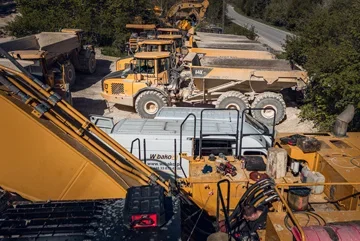
The Liebherr D926 TI-E A4 engine is used in many construction machines and off-highway applications. The unit is utilized in mobile cranes, material handling machines, and selected industrial equipment manufactured by Liebherr.
Engines of this series are valued for their durability and ability to operate under heavy loads. At the same time, they require regular servicing and professional diagnostics, especially in machines operating continuously.
Summary of the Liebherr D926 TI-E A4 Engine Overhaul
The comprehensive overhaul of the Liebherr D926 TI-E A4 engine in the Liebherr LTM 1500-8.1 mobile crane restored full machine performance and eliminated issues related to the damaged fuel injection system.
Thanks to the use of an engine dynamometer, we were able to thoroughly test the unit before installation in the machine. This approach significantly reduces the risk of recurring failures and allows the customer to return the crane to operation more quickly.
We PROVIDE comprehensive Liebherr diesel engine service, overhaul of construction machinery power units, and mobile service for self-propelled cranes. Our construction machinery service team performs engine removal and installation directly at the customer’s site, then transports the units to our headquarters in Kojszówka.
Internal links:
Liebherr Engine Service
WIBAKO Engine Dynamometer
Mobile Crane Service
Construction Machinery Engine Overhaul
Liebherr D926 TI-E A4 Engine Overhaul
Need an overhaul of a Liebherr D926 TI-E A4 engine or service for a Liebherr LTM 1500-8.1 mobile crane? We PROVIDE comprehensive repairs, engine dynamometer testing, and mobile construction machinery service.
Parts in our shop
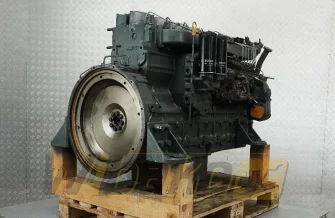 used
Engine Liebherr D926 TI-E A2
used
Engine Liebherr D926 TI-E A2
 new
Zestaw naprawczy silnika Liebherr D926 A5 2 ORINGI 9884512 / 9279060 / 7382094
1 889.93 EUR
new
Zestaw naprawczy silnika Liebherr D926 A5 2 ORINGI 9884512 / 9279060 / 7382094
1 889.93 EUR
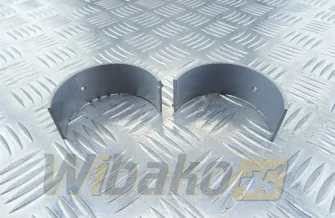 new
Rod bearings STD wbk D904/D914/D924/D906/D916/D926 9271819-1PC
22.77 EUR
new
Rod bearings STD wbk D904/D914/D924/D906/D916/D926 9271819-1PC
22.77 EUR
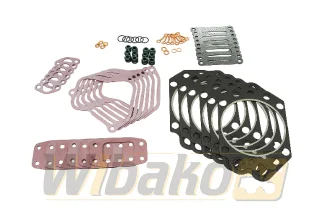 new
Gasket set upper engine Wibako D926 G-926143-K
211.76 EUR
new
Gasket set upper engine Wibako D926 G-926143-K
211.76 EUR