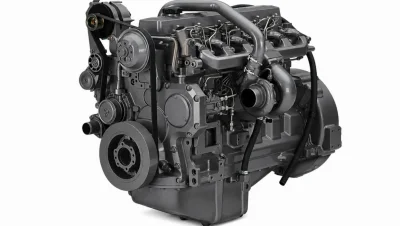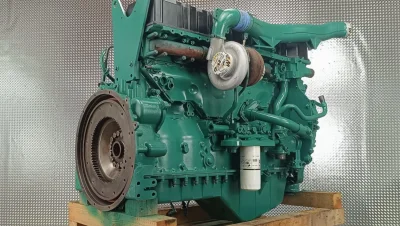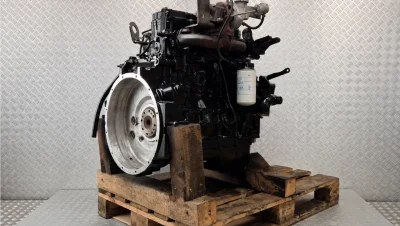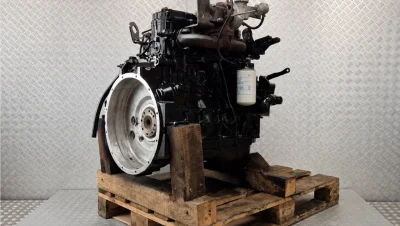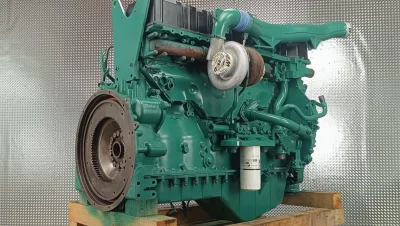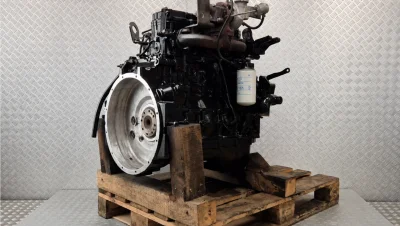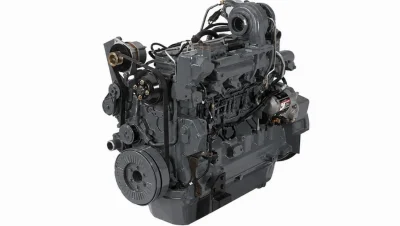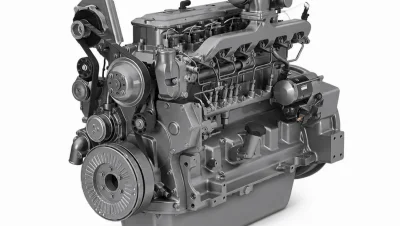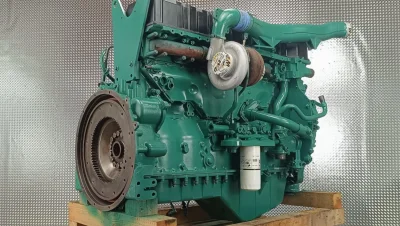


Volvo D7D engine overhaul in a Volvo L120E wheel loader - comprehensive service and testing on the WIBAKO engine dynamometer
The Volvo L120E wheel loader has been used for many years in aggregate quarries, recycling plants, sawmills, transshipment terminals, and municipal enterprises. The design of this machine was developed for intensive operation, high efficiency, and low fuel consumption. One of the most important elements responsible for its reliability is the six-cylinder Volvo D7D engine – a turbocharged diesel unit with a capacity of approximately 7 liters, equipped with wet cylinder liners and an electronically controlled injection system. This engine was designed for high torque even at low engine speeds, which is perfectly suited for loader operations.
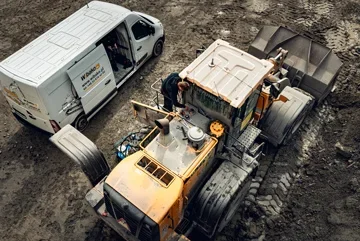
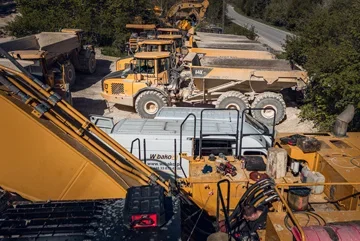
An engine from a Volvo L120E loader operating near Katowice was delivered to our service center. The operator reported a gradual loss of power, increased oil consumption, and heavy blue smoke when working under load. Our mobile service team carried out an initial diagnosis, including compression pressure measurement, operating parameter analysis, and intake system inspection. The results indicated significant wear on the crank-piston system. After agreeing on the scope of work with the owner, we removed the power unit using a crane provided by the customer and transported the engine to our headquarters in Kojszówka.
Removal of the Volvo D7D engine from the Volvo L120E loader
We began the removal by disconnecting the electrical system, fuel lines, cooling system, air intake, and exhaust system. All lines and cables were properly labeled to ensure full compliance with the manufacturer's documentation during reassembly.
Next, the hydraulic pump, auxiliary drive clutch, and other components cooperating with the power unit were disconnected. After securing all parts, the engine was lifted out of the compartment using the customer's crane and prepared for transport. This method of performing the work reduces the risk of damaging the installation and significantly shortens the machine's downtime.
Engine inspection after delivery to the workshop
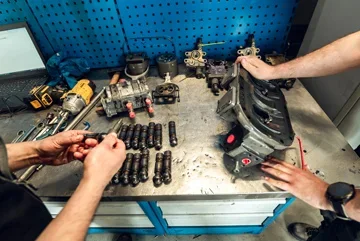
After thoroughly washing the unit, we began a full evaluation. The engine was disassembled down to the last bolt, and all components were measured in accordance with the service documentation.
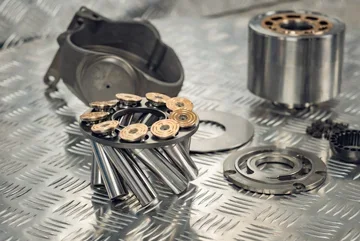
We confirmed significant wear on the cylinder liners, pistons, and piston rings. Crankshaft measurements indicated that regrinding was necessary. The connecting rods were checked for twist, straightness, and bore dimensions. The cylinder head underwent a leak test in a heated water bath, as well as an inspection of the guides, seats, and valves. We also verified the camshaft, turbocharger, oil pump, injection pump, and injectors.
Regeneration and rebuilding of the Volvo D7D engine
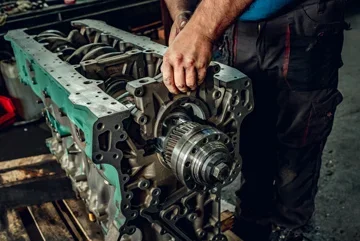
The overhaul began with machining the crankshaft and preparing the engine block. New cylinder liners, a complete set of pistons, rings, main and connecting rod bearings, and a complete set of seals were installed. All assembly clearances were verified using specialized measuring tools.
The cylinder head was resurfaced, and the valve guides, valves, and valve stem seals were replaced. After completing the work, another leak test was performed. The fuel system underwent regeneration, including testing the injection pump on a test bench and checking the operating parameters of the injectors.
The turbocharger, alternator, starter, and other auxiliary components were also inspected. All parts that did not meet the requirements were replaced or regenerated. The final assembly of the engine was performed according to the manufacturer's tightening torques and service procedures.
Testing on the engine dynamometer
One of the most important stages of every overhaul performed by WIBAKO is testing the power unit on an engine dynamometer. Thanks to this, the customer receives an engine verified even before its installation in the machine.
After the first start, we monitor oil pressure, coolant temperature, oil temperature, combustion parameters, and the tightness of all systems. The engine then runs for a minimum of 16 operating hours under a load of approximately 20-30% of its rated power. This allows the mating components to break in properly after the overhaul.
After completing the break-in period, further series of tests are carried out with gradually increased load up to nominal values. We verify the stability of operating parameters, boost pressure, operating temperatures, response to sudden load changes, and the uniformity of operation across all cylinders. Additionally, potential leaks and the behavior of the lubrication system are monitored.
Having our own engine dynamometer represents a huge advantage over workshops that limit themselves only to starting the engine. Thanks to these tests, we are able to detect even minor irregularities before mounting the unit in the machine, which significantly reduces the risk of re-disassembly and costly downtime for the customer. After completing all tests, we prepare documentation of the engine's operating parameters, which serves as confirmation of a properly performed overhaul.
Installing the engine in the Volvo L120E loader
Following the successful completion of the tests, our mobile service team delivered the engine to the customer and proceeded with installation. The unit was seated in the machine's frame using a crane provided by the owner. Subsequently, all fuel, hydraulic, cooling, electrical, intake, and exhaust lines were connected.
Before the first start, filters were replaced, fresh operating fluids were poured in, and the fuel system was bled. The initial startup took place in the presence of our mechanics and the machine operator. We monitored the tightness of all connections, operating temperatures, oil pressure, and the engine's response during idling and under load.
After completing the operational trials, a test drive and a series of duty cycles with full hydraulic load were carried out. Only after the successful completion of all tests was the installation report signed, and the machine was handed over for further operation.
Engine maintenance after overhaul
Every engine overhauled by WIBAKO is covered by a warranty. We recommend performing the first inspection after 50 operating hours, which includes replacing filters, checking for leaks, inspecting the connections between the engine and other components, and evaluating operating parameters. Subsequent inspections are performed every 250 operating hours, but at least once every three months.
Machines using the Volvo D7D engine
The Volvo D7D engine is used not only in Volvo L120E wheel loaders, but also in many other construction and industrial machines from Volvo, where it is valued for its durability, high torque, and smooth operation.
Summary
A comprehensive Volvo D7D engine overhaul performed by WIBAKO includes full diagnostics, professional rebuilding of all key components, testing on an engine dynamometer, and installation in the customer's machine. As a result, the owner of the Volvo L120E loader receives a proven power unit ready for many years of operation, even in the toughest working conditions.
Learn more about our projects, Volvo engine overhauls, and construction machinery service. Links to related articles and service descriptions can be placed here.
Volvo D7D engine overhaul for Volvo L120E loader
Do you need a professional Volvo D7D engine overhaul or service for a Volvo L120E wheel loader? Contact WIBAKO. We perform comprehensive repairs, removal and installation at the customer's site, and testing on our own engine dynamometer.