

Overhaul of the Cummins QSB4.5 Tier 3 Engine in a Komatsu PC160LC-8 Crawler Excavator
Introduction
The Komatsu PC160LC-8 crawler excavator is a machine designed for intensive earthmoving, demolition, and infrastructure projects. The manufacturer, Komatsu, is renowned for the high durability and performance of its machines; however, even the most reliable units require professional service after many thousands of operating hours.
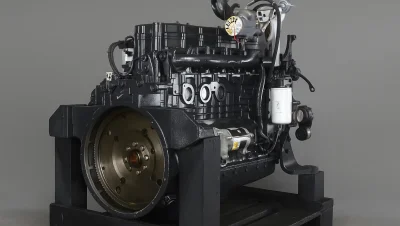
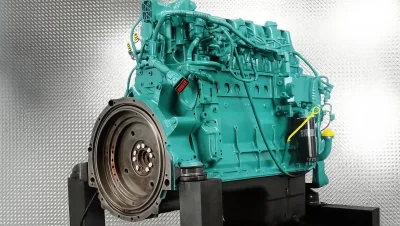
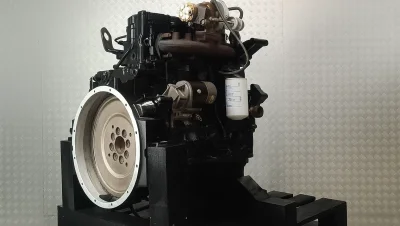
This unit utilizes the Cummins QSB4.5 Tier 3 engine (SAA4D107E-1, 86 kW), which is valued for its smooth operation, fuel economy, and high load flexibility. Despite these strengths, high mileage and operation in harsh construction conditions led to a drop in performance and a deterioration of operating parameters.
Our company received an order for a comprehensive Cummins diesel engine service, including full diagnostics, a complete overhaul, and tests on an engine dynamometer. The machine was operating in the Warsaw region, where the initial disassembly was performed using the client's crane, after which the engine was transported to our headquarters in Kojszówka.
Initial Diagnostics and Root Cause of Failure
During the initial inspection, symptoms typical of cylinder and piston wear were identified. The operator reported a loss of power, increased smoke emissions, and significantly higher engine oil consumption. Additionally, the machine struggled to maintain stable operating parameters under load.
Basic diagnostics included a compression measurement, which revealed uneven values across the cylinders. This was followed by a leak test and an endoscopic inspection of the combustion chambers. Even at this stage, excessive wear of the cylinder working surfaces and signs of blow-by were confirmed.
Oil analysis also revealed the presence of fine metallic particles, further indicating progressive wear of the piston-cylinder system.
Engine Disassembly from the Machine
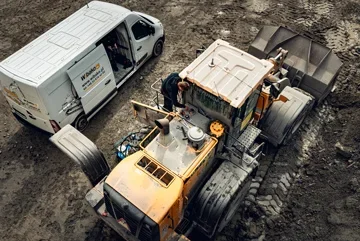
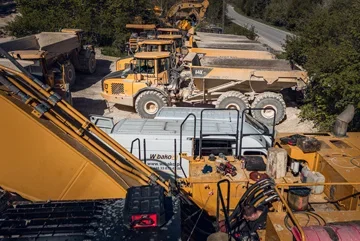
The disassembly of the Cummins QSB4.5 engine from the Komatsu PC160LC-8 excavator was carried out at the job site in the Warsaw area. The client provided a suitable crane, which allowed for the safe removal of the power unit from the machine frame.
Our service technicians began the process by securing the cooling system and disconnecting the fuel lines, electrical wiring, and intake system. Every component was properly labeled and secured for transport.
The engine was disconnected from the drivetrain and then lifted out of the engine compartment. Following disassembly, a preliminary leak check and visual assessment of the engine accessories were performed.
The unit was then transported to our facility in Kojszówka, where the full workshop verification and overhaul process began.
Workshop Engine Verification
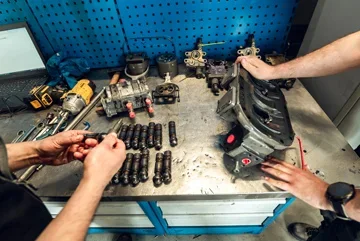
Once the engine arrived, a detailed verification was conducted. First, the crankshaft was checked for free rotation. Then, the engine was stripped down to individual components.
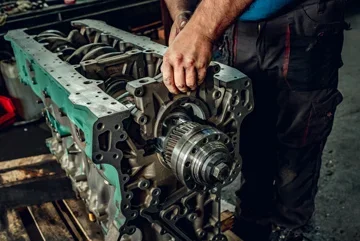
The inspection confirmed advanced wear of the cylinders and pistons. Scratches, excessive clearances, and signs of overheating were visible. Additionally, worn piston rings and reduced sealing of the combustion chambers were noted.
The crankshaft, connecting rods, and cylinder head were also verified. No cracks were detected, though the components showed signs of long-term operation.
Repair and Regeneration Process
Piston-Crankshaft System
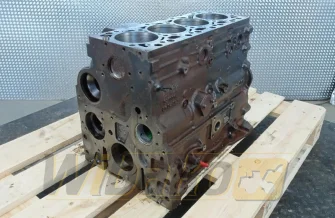
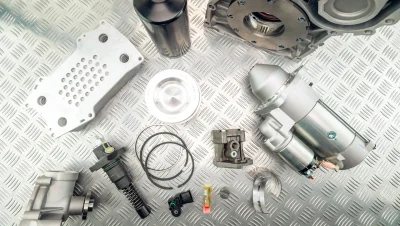
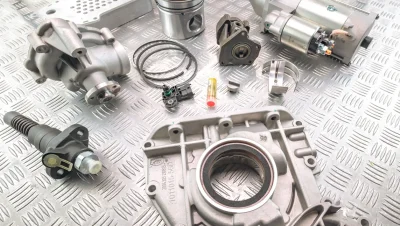
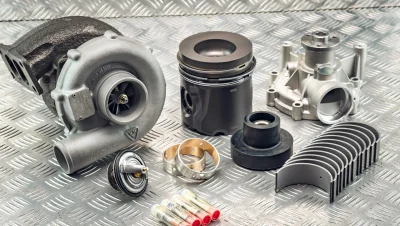
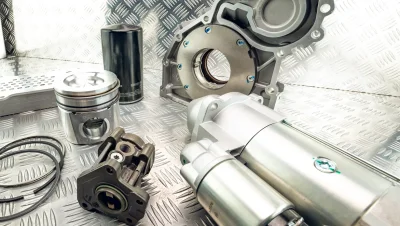
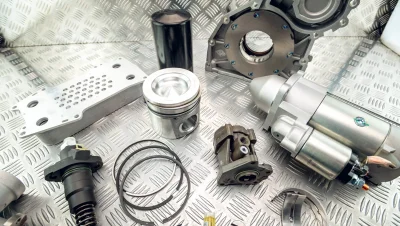
The most critical stage was the comprehensive regeneration of the piston-crankshaft system. Pistons, rings, and cylinder liners were replaced. The crankshaft underwent grinding and precise runout measurement. Connecting rods were checked for geometry and twisting.
All components were selected in accordance with Cummins manufacturer standards, ensuring full compatibility of operating parameters.
Cylinder Head
The head underwent full regeneration, including resurfacing (planning) and the replacement of valves and guides. A pressure leak test in a water bath was also performed, confirming its full functionality after processing.
Fuel System and Accessories
The injection pump and injectors were tested on a test bench. Deviations in fuel dosing were detected, so the components were regenerated. The turbocharger was checked for axial and radial play, then cleaned and prepared for reinstallation.
The alternator and starter motor underwent electrical testing and were replaced with new or regenerated units as needed.
Professional Engine Assembly
After completing all regeneration processes, the engine was assembled according to technical documentation. Every component was tightened to the correct torque, and all seals were replaced with new ones. The cleanliness of the oil and cooling systems was also strictly monitored.
Engine Dynamometer Test
Once assembled, the Cummins QSB4.5 Tier 3 engine was started and subjected to an initial no-load test. Subsequently, the break-in process began, lasting approximately 16 engine hours at 20-30% load.
The next stage was a full test on the engine dynamometer, which is a key element of our service process. Under controlled conditions, the engine was repeatedly loaded across various operating ranges, allowing for an accurate verification of its parameters.
The dynamometer allows for the simulation of real working conditions of the Komatsu PC160LC-8 excavator, enabling the detection of even the smallest irregularities. Parameters such as boost pressure, exhaust gas temperature, oil pressure, and stability under variable loads were monitored.
The test confirmed the successful regeneration of the unit and full compliance with factory specifications. The engine achieved stable power and torque characteristics.
Installation of the Engine in the Machine
The installation of the engine in the Komatsu PC160LC-8 excavator was carried out in the Warsaw region. The process involved precisely seating the unit into the machine frame using a crane, followed by the connection of all working systems.
Our mechanics installed the intake system, fuel lines, and electrical wiring. The air system piping was also replaced to ensure full tightness and optimal operating conditions for the turbocharger.
After installation, leak tests of all connections were performed, followed by the first start-up in the presence of the machine operator. The engine ran stably, without leaks or any concerning symptoms.
At this stage, the installation protocol was signed, and the machine was handed over for operation.
Post-Overhaul Maintenance
As part of our after-sales service, we recommend the first inspection after 50 operating hours. During this check, the condition of connections, system tightness, and the overall health of the power unit are verified.
Subsequent inspections should be performed every 250 operating hours or at least every 3 months. Our mobile service performs these actions directly at the client's location, minimizing machine downtime.
Summary
The overhaul of the Cummins QSB4.5 Tier 3 engine in the Komatsu PC160LC-8 excavator successfully restored the power unit's factory parameters. Thanks to the comprehensive regeneration of the piston-crankshaft system, cylinder head, and accessories, the machine has regained full operational efficiency.
The use of engine dynamometer testing allowed for precise verification of the work performed, increasing reliability for future operation. The client received a unit ready for intensive work in construction conditions.
Internal Links
Cummins QSB Engine Service
Komatsu Crawler Excavator Engine Overhaul
Engine Dynamometer - Testing and Diagnostics
Mobile Construction Machinery Service
Contact Us
Do you need a Komatsu PC160LC-8 engine overhaul or Cummins QSB4.5 service? Contact us – we perform comprehensive repairs and engine dynamometer tests.