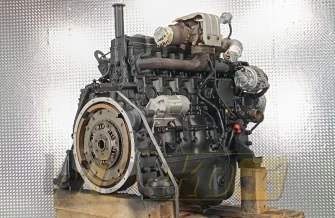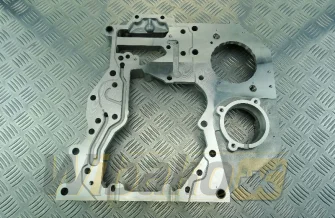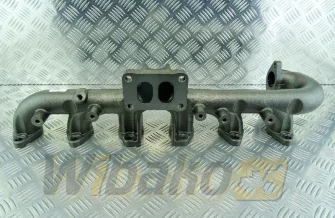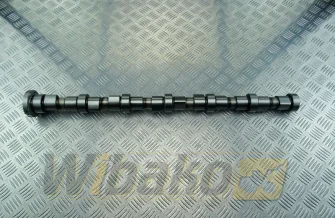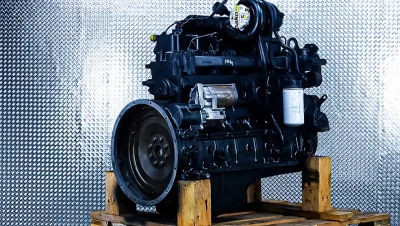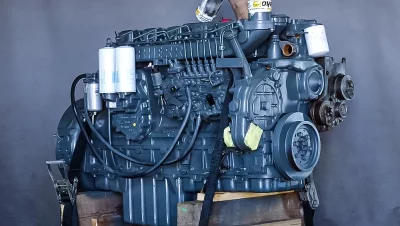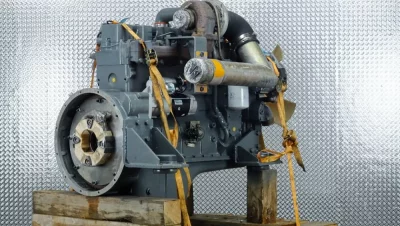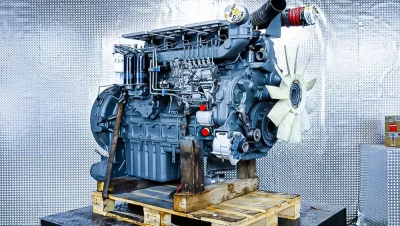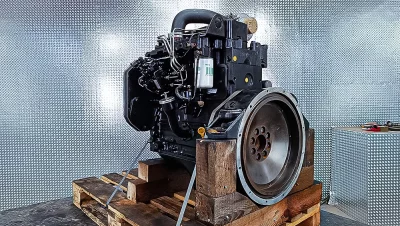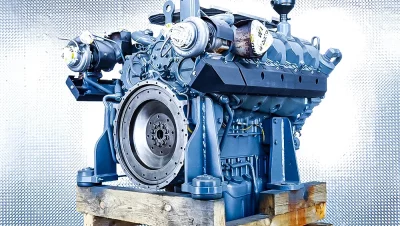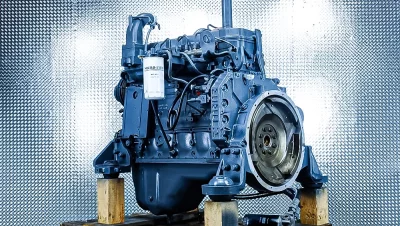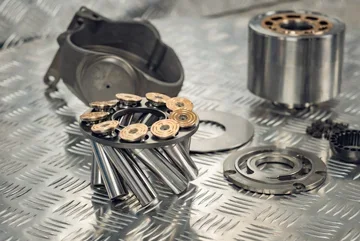


Comprehensive repair of the Cummins QSB6.7 engine in the Terex TC 240LC tracked excavator
Introduction
The tracked excavator Terex TC 240LC is a robust and versatile machine used on construction sites, in earthworks, and for heavy linear works. In this case, it was brought to our WIBAKO service due to serious problems with the power unit. The machine was operated in intense conditions in the Małopolskie Voivodeship, near Tarnów, where our mobile service conducted the initial diagnosis and disassembly of the engine.
The TC 240LC model is equipped with the highly regarded diesel engine Cummins QSB6.7 (Stage IIIA/Tier 3, 125 kW), known for its high work culture, economical fuel consumption, and great durability. The QSB series units are among the most popular solutions used in medium-sized construction machines. Despite its durability, the engine can suffer damage due to years of operation in harsh conditions.
In this case, the reason for sending the machine to the service was increased smoking, hard engine operation, and a significant increase in fuel consumption. Basic diagnosis performed by our mobile team strongly suggested damage to the injection system; however, a full verification of the unit was necessary at our headquarters in Kojszówka.
Preliminary diagnostics in the machine
During the initial inspections in the field, the Cummins QSB6.7 engine revealed characteristic symptoms of faulty injection components: uneven idle operation, increased starting dose, and excessive smoking under load. To confirm the faults, we measured the pressure on the Common Rail, analyzed the exhaust gases, and conducted a test of disabling individual cylinders.
The preliminary diagnostics showed significant deviations in the operation of the injectors and suspicion of their leakage. Due to unstable operation under load and the inability to perform accurate measurements in the field, we decided to disassemble the engine and conduct a full verification in our service workshop.
Disassembly of the engine from the Terex TC 240LC excavator
The engine disassembly was carried out by the WIBAKO team with the support of a crane provided by the client. The process included disconnecting the equipment components, electrical installation, fuel lines, cooling system, and disassembly of the intake and exhaust systems. Then, the engine mounts were removed, lifting the power unit in a manner that ensured full safety for the machine and the engine.
After separating the engine from the excavator's hydraulics, all open lines were secured to prevent contamination from entering the system. The unit was transported to Kojszówka, where detailed verification began according to the manufacturer's procedures and our service standards.
Verification of the engine at WIBAKO service
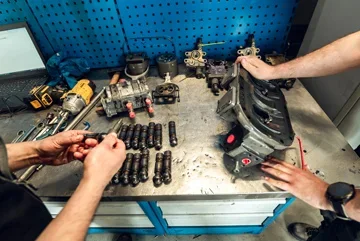
After disassembling the QSB6.7 engine into components, a detailed assessment of key subassemblies was performed. The verification confirmed the initial assumptions – the injectors showed significant deviations in operating parameters on the test bench, and one of the nozzles was completely leaking. Additionally, signs of excessive wear were noted on the cylinder liners and increased clearances on the piston rings, indicating partial loss of compression.
During the verification process, measurements of the crankshaft were also taken, oil channel inspections were conducted, the turbocharger was tested, and the condition of the high-pressure pump was checked. The turbocharger showed slight axial play, which was classified for regeneration.
Repair process of the Cummins QSB6.7 engine
Crankshaft-piston system
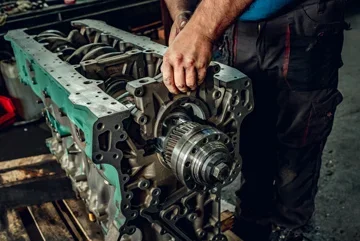
As part of the regeneration of the crankshaft-piston system, honing of the liners was performed, a complete set of pistons along with rings was replaced, new main and connecting rod bearings were installed, and the block was thoroughly cleaned. The connecting rods were inspected for twisting and possible micro-cracks.
Cylinder head
The cylinder head was thoroughly checked, a leak test was performed in a water bath, and the condition of the valve seats was assessed. As part of the regeneration, the head was planed, guides and valves were replaced, and clearances were fully adjusted according to Cummins standards.
Fuel system
The injection pump and injectors were sent to a specialized facility, where full regeneration and calibration were performed. After returning from the facility, these components were retested on our test bench.
Engine accessories
As part of additional work, the turbocharger was regenerated, the starter and alternator were checked, fuel lines with increased resistance were replaced, and sensors responsible for the operation of the unit in the electronic control system were checked.
Professional engine assembly
The engine assembly process after regeneration is one of the most important stages of the entire repair. We assembled the QSB6.7 unit in sterile conditions, paying attention to the precision of tightening moments, cleanliness of components, and proper lubrication of all moving parts. A complete set of gaskets, O-rings, lines, and mounts was replaced, and the entire engine was assembled according to the manufacturer's procedures.
During assembly, the correctness of the timing setup was checked, the tightness of the fuel and oil systems was verified, and the flow of the oil cooler and heat exchanger was checked. Each stage of assembly was documented, and after assembling the entire engine, a manual rotation test of the crankshaft was performed to ensure that there were no excessive mechanical resistances.
Test on the WIBAKO engine dynamometer
The engine dynamometer is one of our greatest assets that distinguishes us from most construction machine services. Every engine after repair undergoes a full test cycle lasting a minimum of 16 hours. This allows us to assess not only power and torque but also the stability of operating parameters.
The Cummins QSB6.7 engine was first started under light load conditions (20-30 percent of nominal power) and then gradually subjected to greater loads, simulating real working conditions of the Terex TC 240LC excavator. During the test, we monitored oil pressure, coolant temperature, pressure on the Common Rail, fuel doses, air flow, and any vibrations and deviations in operation between cylinders.
The dynamometer also allowed us to thoroughly check the behavior of the turbocharger after regeneration, the tightness of the fuel system, and the stability of pressures. Only after multiple load cycle tests did we confirm that the engine meets all standards and is ready for installation in the machine.
Installation of the engine in the Terex TC 240LC excavator
After completing the tests, the engine was transported back to the client. The installation was carried out at the machine's work site, again using the client's crane. The process included precise seating of the engine in the excavator frame, connecting the fuel system, cooling, hydraulic lines, and electrical installation.
Particular attention was paid to the tightness of the intake system and the correct arrangement of the piping. After installation, a full procedure for bleeding the fuel system was performed, along with static tests. The machine operator, assisted by our team, conducted operational tests during which we monitored the behavior of the unit under real load. After a positive assessment of the engine's operation, an installation protocol was signed.
Engine maintenance after repair
Every engine after repair is covered by WIBAKO's warranty. We recommend performing the first inspection after 50 operating hours, during which we check tightness, correctness of connections, condition of filters, and operating parameters of the unit. Subsequent inspections should take place every 250 operating hours or at least once every three months.
Application of the Cummins QSB6.7 engine
The Cummins QSB6.7 engine is widely used in construction machines of brands such as Terex, Case, JCB, Doosan, New Holland, Hyundai, and many others. Its durability and high availability of parts make it one of the most popular engines in its class.
Summary
The repair of the Cummins QSB6.7 engine in the Terex TC 240LC excavator was carried out comprehensively, with a full range of diagnostic, repair, and testing work. Thanks to the advanced engine dynamometer and the experience of our mechanics, the client received a fully functional unit, ready for long-term operation. The engine was installed according to standards, and the machine returned to work. We recommend performing the first inspection after 50 operating hours.
Professional repair of Cummins engines
Contact us to estimate the repair or diagnostics of your engine.