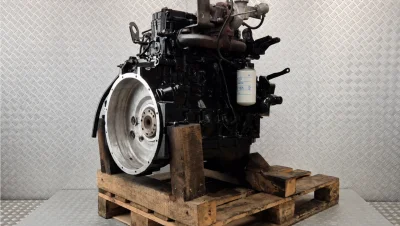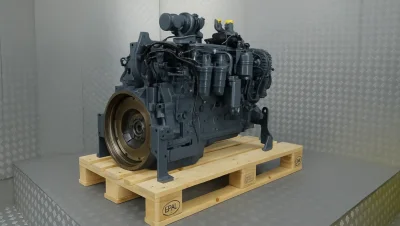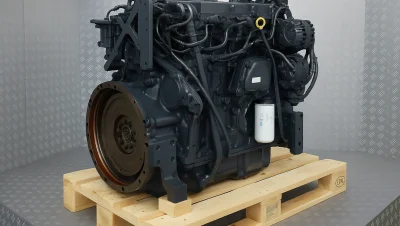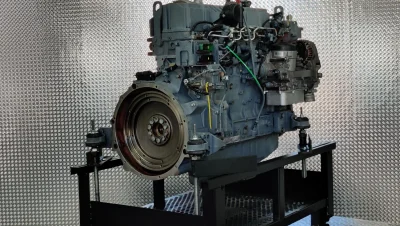


Liebherr D9408 Engine Overhaul in a Liebherr LR 1750 Crawler Crane - Comprehensive Engine Repair and Dynamometer Testing
The Liebherr LR 1750 crawler crane is an advanced machine designed for demanding lifting operations, the installation of large-scale structures and infrastructure projects. Due to the weight of the loads being lifted, the extensive hydraulic system and intensive operating conditions, the performance of the power unit directly affects the operational capabilities of the entire machine. For cranes in this class, maintaining the correct engine power, torque and operating stability is particularly important.
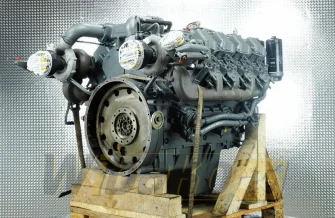
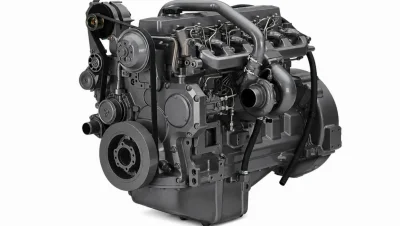
The subject of the service work described in this article was the Liebherr D9408 engine, an eight-cylinder V-type diesel power unit used in heavy Liebherr machinery. In the configuration designed for the LR 1750 crane, the engine is available in the D9408 TI-E A4 variant. It is a turbocharged, liquid-cooled engine with a rated power of 400 kW (544 HP) at 1,800 rpm and a maximum torque of 2,425 Nm at 1,000 rpm, according to the machine's technical specifications.
Such a large power unit requires appropriate technical facilities and expertise during both removal and subsequent rebuilding. At WIBAKO, we specialise in comprehensive overhauls of combustion engines used in construction machinery, cranes and industrial equipment. Our services include diagnostics, engine removal, detailed component inspection, reconditioning, professional assembly and testing on an engine dynamometer.
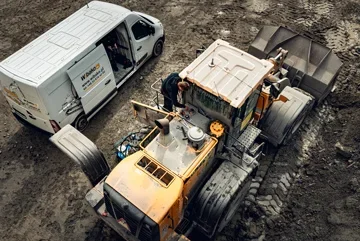
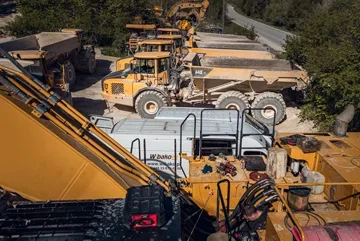
The removal and service work on the Liebherr LR 1750 crawler crane was carried out in the vicinity of Krakow, Poland. Our mobile service team travels throughout Poland, performing work directly at the customer's location. After disconnection and removal, the engine was properly secured and transported to the WIBAKO workshop in Kojszówka, where a comprehensive overhaul could be carried out under controlled workshop conditions.
Initial Diagnostics of the Liebherr D9408 Engine Before Removal from the LR 1750 Crane
We begin every engine overhaul with diagnostics carried out while the engine is still installed in the machine. This allows us to determine whether the reported symptoms actually indicate an engine fault and helps prevent unnecessary replacement of serviceable components. This is particularly important in the case of a large Liebherr LR 1750 crawler crane, where engine irregularities can affect the operation of the entire powertrain and hydraulic system.
One possible reason for requiring a comprehensive D9408 engine overhaul is wear to the crankshaft bearings and components working within the crankshaft and piston assembly. This problem can develop gradually, initially becoming noticeable through changes in oil pressure and subsequently through characteristic knocking noises coming from the lower section of the engine. In power units operating under heavy loads, even minor lubrication problems can lead to much more serious mechanical damage.
Our mechanics first carry out a basic visual inspection of the engine. We check the oil level, its visual condition, the tightness of the lubrication system and any potential leaks. Oil filters and their housings are also inspected. Particular attention is paid to the presence of metallic contaminants, which may indicate accelerated wear of cooperating components.
The next step involves measuring oil pressure while the engine is running. The recorded values must be compared with the manufacturer's specifications and the conditions under which the measurement is performed. If the pressure differs from the required values, the cause must be identified. A drop in oil pressure alone does not necessarily confirm bearing damage, which is why the diagnostics also include an inspection of the remaining lubrication system components.
During diagnostics, we pay close attention to the operating sounds of the Liebherr D9408 engine. Characteristic knocking noises may indicate excessive clearances within the crankshaft and piston assembly, although other mechanical components may also be responsible. We therefore assess the conditions under which the noise occurs, its intensity and its relationship with engine speed.
Final confirmation of the extent of the damage requires a detailed inspection after engine removal and disassembly. Only measurements of the crankshaft, inspection of the bearings and connecting rods, and examination of the remaining components allow us to determine which parts can be reused and which require reconditioning or replacement.
Removing the Liebherr D9408 Engine from the Liebherr LR 1750 Crawler Crane
Removing an engine from a Liebherr LR 1750 crawler crane is a task that requires proper technical preparation, experience and compliance with safety procedures. The D9408 is a large V8 engine with considerable weight. Depending on the configuration and equipment, the dry weight of this engine family is approximately 1,270 kg. Appropriate lifting equipment is therefore essential for carrying out the removal process.
We begin by preparing the machine for safe engine shutdown. The crane is properly secured and the engine is allowed to cool down. Our mechanics then disconnect the electrical installation, fuel lines, cooling system and engine accessories. All connections are identified to ensure that they can be correctly restored during subsequent installation.
An important part of the preparation involves securing the cooling system hoses, air intake components and other installations. Openings and disconnected lines must be protected against the ingress of dirt and foreign particles. This is particularly important for large diesel engines, where even small contaminants can damage precision fuel system components or cooperating surfaces.
Our mechanics then proceed with removing the engine mounting components. Connections to the frame and brackets are disconnected, along with components connecting the engine to the remaining machine systems. We inspect the condition of the mounts, bolts and support points. If signs of corrosion or mechanical damage are found, the connections are properly prepared for further work.
The engine itself is removed using a crane or lifting equipment provided by the customer. Our service technicians are responsible for preparing the power unit for removal, disconnecting all necessary installations, checking the mounting points and supervising the safe lifting operation. Particular attention is paid to engine stability and proper load distribution during lifting. Incorrect lifting could damage the engine housing, accessories or structural components of the machine.
After the Liebherr D9408 engine has been removed, we check that all disconnected components are accounted for and secure all openings. The engine is then prepared for transport to our workshop in Kojszówka. This is where the actual overhaul process begins, including engine disassembly, component cleaning and detailed assessment of their technical condition.
Inspection of Liebherr D9408 Engine Components at the WIBAKO Workshop
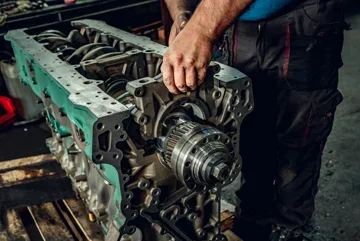
Once the engine has been delivered to our workshop, we begin a detailed inspection. In the case of the D9408 power unit, particular attention is paid to the crankshaft and piston assembly, as this is where damage associated with improper lubrication and prolonged operation under heavy loads may occur.
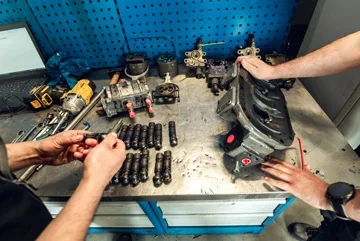
The engine is dismantled into its individual components. The cylinder heads, oil sump, timing components, pistons, connecting rods and crankshaft are removed. Individual parts are labelled and properly organised. They are then cleaned to remove residual oil, carbon deposits and other contaminants that could interfere with accurate measurements.
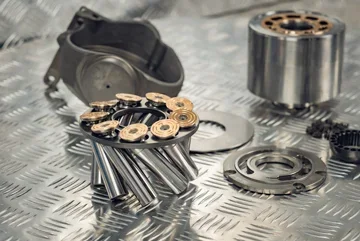
Crankshaft inspection primarily involves a visual assessment and measurements of the working surfaces. We check the main journals and connecting rod journals, including their diameters, ovality and taper. Crankshaft runout is also measured to determine whether the component has become distorted. In addition, we inspect the oil passages for blockages and contamination. If signs of overheating, cracks or excessive wear are found, further testing may be necessary.
The connecting rods are inspected separately. Our mechanics assess their visual condition, cooperating surfaces and any signs of overheating. Measurements are carried out to check twisting and longitudinal bending, as well as the weight of individual components. Connecting rod bolts are also inspected, as their condition is essential for safe engine operation after reassembly.
The main and connecting rod bearings are carefully examined for abrasion, scratches, surface changes and signs of overheating. We analyse the wear pattern, as it can provide valuable information about the cause of the damage. Uneven wear may indicate problems with crankshaft geometry, improper lubrication or incorrect assembly clearances.
We also inspect the pistons, piston rings and cylinder liners. The cylinder working surfaces are checked, their diameters are measured and any signs of seizure are assessed. We examine the piston ring grooves, piston crowns and cooperating surfaces. All measurement results are used to determine the required scope of repairs.
The Liebherr D9408 cylinder heads undergo pressure testing and an assessment of the valve seats, guides and valves. We inspect surface flatness, intake and exhaust passages and potential cracks. The pressure test involves preparing the cylinder head, applying compressed air and checking whether air bubbles appear when the component is immersed in heated water. This makes it possible to identify cracks and leaks.
The camshaft is also inspected. We examine its working surfaces, main journals and cam lobes responsible for correct valve operation. The condition of the cooperating components is checked as well. Regardless of the apparent wear level, the decision to reuse individual parts depends on the results of the measurements.
As part of the inspection, we also check the turbochargers by measuring axial and radial shaft clearances and assessing the overall condition of their components. The injection pump and injectors are inspected as well. If specialist repairs are required, the relevant fuel system components may be sent to a specialised facility for testing on appropriate test benches.
Once all measurements have been completed, we prepare the repair scope. This allows us to select the appropriate replacement parts and determine which components can be reconditioned and which must be replaced with new ones. This approach reduces the risk of leaving components with an uncertain technical condition inside the engine.
Reconditioning the Crankshaft and Piston Assembly of the Liebherr D9408 Engine
The crankshaft and piston assembly is responsible for converting the energy generated during fuel combustion into the rotational movement of the crankshaft. In the Liebherr D9408 V8 engine, all eight cylinders must operate while maintaining the correct sealing, lubrication and mechanical interaction between components. For this reason, reconditioning this part of the engine requires precise measurements and compliance with the tolerances specified by the manufacturer.
The crankshaft is prepared first. If measurements reveal journal wear and the technical condition of the component allows further use, grinding to the appropriate undersize may be possible. Once machining has been completed, the crankshaft undergoes another dimensional inspection. We also check the oil passages to eliminate the risk of contaminants remaining inside and subsequently damaging the bearings.
The connecting rods are prepared for reinstallation after their geometry and cooperating surfaces have been inspected. Components showing irregularities outside the permitted tolerances are not approved for further use. Particular attention is paid to the bearing housing bores, as their geometry affects the correct maintenance of the oil film.
Depending on the inspection results, the main and connecting rod bearings are replaced. Selecting the correct bearings requires consideration of the crankshaft dimensions and any previous repairs. During engine assembly, our mechanics check the installation clearances and correct seating of individual components. This is one of the most important stages of the rebuilding process, as incorrect clearances may cause oil pressure problems and accelerated wear of working surfaces.
The next components are the pistons, piston rings and cylinder liners. We inspect their dimensions and surface condition. Worn components are replaced with parts meeting the technical requirements of the Liebherr D9408 engine. We also check the sealing and fit of individual components to ensure the correct compression conditions.
During the assembly of the crankshaft and piston assembly, we follow the sequence and procedures specified for the particular engine. Each component must be properly prepared, cleaned and lubricated before installation. We check the freedom of movement of the mechanisms and the correct positioning of the pistons and connecting rods. Only after all connections have been inspected can we proceed with the remaining assembly stages.
Reconditioning the Liebherr D9408 Cylinder Heads
The cylinder heads of the Liebherr D9408 engine are responsible for the correct intake, exhaust and combustion processes. Their technical condition directly affects engine power, operating smoothness and combustion chamber sealing. In a large diesel engine, even minor damage can cause reduced performance and irregular operation of individual cylinders.
We begin the reconditioning process by thoroughly cleaning the cylinder heads and inspecting their condition. We check the mating surfaces, valve seats, guides and passages. Particular attention is paid to possible microcracks, which may allow coolant to enter the combustion chambers or oil passages.
Pressure testing helps identify damage that may not be visible during a standard visual inspection. After testing, we determine whether the cylinder head can be reused and what scope of reconditioning is required. The surfaces are then machined, worn valve guides and valves are replaced, and valve seats are reconditioned where necessary to ensure proper valve contact.
Once the work has been completed, we inspect the cylinder heads again. We check their tightness, surface finish and correct installation of individual components. Setting the valve clearances according to the technical documentation for the specific engine variant is also an important step. Intake and exhaust valves are checked separately because they operate under different temperature conditions.
Properly performed cylinder head reconditioning restores the correct operating conditions of the valve system and reduces the risk of compression problems. This is particularly important in the engine powering the Liebherr LR 1750 crane, where stable engine operation is essential for precise lifting operations.
Inspection of the Fuel System and Accessories of the Liebherr D9408 Engine
The efficiency of the fuel system is essential for the correct operation of the eight-cylinder Liebherr D9408 diesel engine. Proper fuel delivery and injection parameters affect engine power, fuel consumption, exhaust gas temperature and the uniform operation of individual cylinders.
As part of our service work, we inspect the injection pump, fuel lines and injectors. The injection pump can be tested on a dedicated test bench, where its operating parameters are checked. Injectors also require appropriate inspection, as incorrect operation can lead to uneven combustion, increased exhaust smoke and excessive loads on selected engine components.
If any irregularities are detected, components requiring specialist machining or repair are sent to an appropriate facility. After the repair has been completed, we check their condition and prepare them for reinstallation. We also inspect the tightness of fuel lines and connections, which are exposed to vibration and temperature changes during operation.
The turbocharger is another important component that requires inspection. In the D9408 engine, the turbocharging system supplies the cylinders with the required amount of air, allowing the engine to achieve the necessary power output. We inspect the condition of the rotor, housing, shaft clearances and oil supply and return lines. The tightness of the intake and exhaust system connections is also checked.
The alternator, starter motor, electrical installation components and remaining accessories are inspected as well. We check the condition of connections, mounts and wiring. If damage is found, individual components are repaired or replaced. This ensures that the engine can be properly prepared for starting without overlooking any important equipment.
Professional Assembly of the Liebherr D9408 Engine After Overhaul
Once all components approved for reconditioning have been repaired, we begin assembling the engine. This stage requires a high level of precision, as even correctly repaired parts cannot guarantee long and trouble-free operation if they are installed incorrectly. In the Liebherr D9408 engine, particular importance is placed on maintaining the correct clearances, tightening torques and assembly sequence.
Before assembly begins, all components are cleaned again and prepared for installation. We check the completeness of the parts, their dimensions and compatibility with the established repair scope. The crankshaft is installed in the engine block using correctly selected bearings. We then check the bearing clearances and ensure that the crankshaft rotates freely. Once the remaining components of the crankshaft and piston assembly have been installed, we inspect their positioning and mechanical interaction.
The cylinder heads are installed in the next stage. The mating surfaces must be properly prepared, clean and free from old sealing material. Assembly is carried out using new gaskets and the fastening components required by the service procedure. Bolts are tightened in the correct sequence and to the specified values for the particular engine variant.
Our mechanics also install the timing components and check that all parts are correctly positioned. The remaining fuel system components, accessories and parts responsible for lubrication and cooling are then fitted. All lines and connections are checked for correct alignment and tightness.
We pay particular attention to the intake system. In a turbocharged engine, the tightness of the air pipes is essential for achieving the correct boost pressure. We inspect the pipes connecting the turbochargers to the intake system, clamps, connectors and other components of the air piping. Damaged or excessively worn hoses should not be reused, as they may cause pressure losses and incorrect engine operation.
After installing the turbochargers and remaining accessories, we check the correct routing of oil, fuel and coolant lines. We verify that there are no areas exposed to rubbing, excessive tension or contact with high-temperature components. This is particularly important in large power units, where the number of connections and lines is considerable.
Before the first start-up, we inspect the lubrication system and prepare the unit for operation. The required operating fluids are filled, new filters are installed and all connections are checked. The preliminary inspection also includes checking the electrical installation, cooling system and control components.
Once assembly is complete, the Liebherr D9408 engine is ready for start-up and functional testing. Our objective is not only to restore the engine's performance but also to eliminate the causes of the original failure. For this reason, every assembly stage is accompanied by quality control.
Liebherr D9408 Engine Testing on the WIBAKO Engine Dynamometer
One of the most important stages of an engine overhaul is testing it on an engine dynamometer. At WIBAKO, we have a test facility that allows us to evaluate combustion engines under controlled load conditions. This means that the power unit can be checked before it is reinstalled in the Liebherr LR 1750 crane. This is a significant advantage when rebuilding large industrial engines, as it allows us to assess their performance under conditions much closer to actual operation than a simple unloaded start-up.
Dynamometer testing is not limited to checking whether the engine starts and maintains its speed. During the test, we analyse its behaviour under different operating conditions, monitor operating parameters and check its response to gradually increasing loads. This allows us to assess whether the repaired components are working correctly together and whether the unit is ready for further operation.
After mounting the engine on the dynamometer, we prepare all the necessary installations. The fuel system, cooling system, lubrication system and equipment required for correct start-up are connected. Before starting the test, we check operating fluid levels, connection tightness and the correctness of all installations. The engine must be properly prepared before any load is applied.
The post-overhaul running-in process begins under light operating conditions. For a minimum of 16 operating hours, the engine runs at approximately 20-30% of its rated load. This stage is particularly important because it allows new and reconditioned components of the crankshaft and piston assembly to bed in correctly. During this period, we monitor operating stability, oil pressure, temperature and engine behaviour while maintaining the specified load conditions.
During the initial testing phase, our mechanics pay particular attention to any deviations from the correct operating parameters. Coolant and oil temperatures, lubrication pressure and fuel system performance are monitored. We also inspect connection tightness and check for potential leaks. If any irregularities occur, the test is appropriately interrupted or adjusted to prevent engine damage.
After the initial running-in period has been completed, and provided that the engine maintains the correct operating parameters, we begin testing at higher loads. The load is increased gradually, and the engine is subjected to successive operating cycles. This allows us to check how the Liebherr D9408 responds to changing conditions and whether it can maintain stable performance.
Oil pressure monitoring is particularly important during the test. The lubrication system must provide the correct operating conditions for the crankshaft bearings, connecting rods and other mechanical components. We also monitor operating temperature to assess the efficiency of the cooling system. Any irregularities in this area could lead to accelerated component wear or another overheating incident.
Another important aspect is engine behaviour when the load changes. In machines such as the Liebherr LR 1750, the engine works together with an extensive powertrain and hydraulic system. Changes in power demand are a natural part of crane operation, which is why it is important to check whether the engine responds steadily and shows no signs of irregular operation.
We also inspect the intake and boost systems. We check the tightness of the pipes, turbocharger operation and the stability of the parameters as the load increases. Leaks in this area may reduce combustion efficiency and limit the engine's ability to achieve the required power output.
During testing, we also monitor the exhaust system and engine behaviour in terms of smoke emissions. Excessive smoke, unstable engine speed or unusual noises may indicate irregularities requiring further diagnostics. If any such symptoms occur, we analyse their cause before allowing the engine to continue testing.
An important part of the test is checking parameter stability during prolonged operation. An engine cannot be assessed solely on the basis of a short start-up, as some problems only become apparent after reaching operating temperature or during prolonged operation under load. For this reason, we monitor the engine throughout successive operating cycles and compare the recorded values with the requirements for the particular engine variant.
The WIBAKO engine dynamometer allows us to detect irregularities before the engine is reinstalled in the machine. This means that any necessary adjustments can be made in the workshop without having to remove the engine from the crane again. It reduces the risk of additional downtime and allows us to prepare the power unit more thoroughly for demanding operating conditions.
After testing has been completed, we assess all recorded parameters and the overall technical condition of the engine. If the unit passes the test successfully, it is prepared for transport and reinstallation. Dynamometer testing is an important part of our overhaul process because it allows us to verify the quality of the work and assess engine performance before it returns to demanding operating conditions.
Reinstallation of the Liebherr D9408 Engine in the Liebherr LR 1750 Crawler Crane
After successfully completing the dynamometer tests, the Liebherr D9408 engine is prepared for transport and reinstallation in the Liebherr LR 1750 crawler crane. This is another stage where precision and proper machine preparation are essential. Our mobile service team carries out engine installations and removals directly at customers' locations, including work involving large specialist machines.
Before installation begins, our mechanics inspect the engine compartment, mounting points and structural components. We check the support points, mounting surfaces and connections linking the engine to the remaining machine systems. If wear or damage to the mounts was identified during the earlier removal process, it must be addressed before the reconditioned engine is installed.
A crane or lifting equipment provided by the customer is used to lower the engine into the engine compartment. Our service technicians prepare the engine for lifting, check its mounting points and supervise the entire lowering operation. Due to the dimensions of the D9408 engine and the limited installation space in the LR 1750, particular care is required. The unit must be positioned correctly to avoid contact with structural components and machine accessories.
Once the engine has been positioned correctly, our mechanics proceed with installing the mounts. We check the alignment of the unit, the fit of the brackets and all connections to the remaining components. The parts connecting the engine to the powertrain are then installed. All connections are completed in accordance with the installation procedures and specified tightening parameters.
The next stage involves restoring all installation connections. Fuel lines, cooling system hoses, lubrication lines and electrical connections are reconnected. Particular attention is paid to the correct routing of the lines to ensure that they are not exposed to rubbing, twisting or excessive tension. In the case of cooling system and air intake pipes, we inspect their condition and compatibility with the connectors and remaining system components.
For a turbocharged engine, the tightness of the intake system is particularly important. During installation, we therefore inspect the air piping, the lines connecting the turbochargers to the remaining system components and all clamps and connections. Leaks in the intake system could reduce boost efficiency and affect engine performance. We also inspect exhaust connections and turbocharger oil lines.
After reconnecting the fuel system, it is prepared for start-up. We verify that all connections are correct and check the tightness of the fuel lines. The cooling system is also inspected, the required coolant is added and the correct installation of all hoses is checked. In the case of the lubrication system, we ensure that the engine has been prepared in accordance with the post-overhaul start-up procedure.
Before starting the engine, we carry out a complete inspection of the installation. We check engine mounts, electrical connections, fuel lines, coolant hoses, oil lines and intake pipes. Operating filters are replaced, and all required fluid levels are checked. Only after these operations have been completed can we proceed with the first start-up attempt.
The first start-up is supervised by our mechanics. We monitor engine behaviour, idle stability, oil pressure and operating temperature. We check for unusual noises, vibrations or leaks. The operation of the accessories and the correct interaction between the engine and the machine's systems are also inspected.
An important part of the acceptance process is carrying out functional tests with the crane operator. This allows us to assess engine behaviour during actual machine operations. The operator activates individual crane functions while our service technicians monitor the engine's response to changing power demand. We check engine stability during hydraulic operations and monitor operating parameters under different working conditions.
During these tests, we also pay close attention to the tightness of all connections. We check whether oil, fuel or coolant leaks appear during operation. Mounts, hoses and accessories are inspected, as some irregularities may only become visible after reaching operating temperature and being exposed to vibration.
Once the tests have been completed successfully and correct engine operation has been confirmed, an installation report is prepared. The document confirms that the work has been completed and that the necessary checks have been carried out after start-up. This provides the customer with confirmation of the installation and the tests performed.
Inspection of the Liebherr D9408 Engine After the First 50 Operating Hours
Completing the overhaul and reinstalling the engine does not mark the end of the service process. Every power unit that has undergone comprehensive reconditioning requires appropriate maintenance during the initial operating period. This also applies to the Liebherr D9408 engine installed in the LR 1750 crane.
After the first 50 operating hours, we recommend having the engine inspected by the WIBAKO service team. Our mechanics can travel directly to the customer and carry out the inspection at the machine's operating location. This is not limited to a standard filter replacement, but also includes a detailed assessment of the engine following its initial operating period.
During the inspection, we check the oil level and condition, replace the required filters and inspect the tightness of the lubrication, cooling and fuel systems. We also verify hose connections, accessory mounts and components that may have loosened or require additional attention during the first operating hours.
We check oil pressure, operating temperature and the overall behaviour of the engine. Intake pipes, turbocharger connections and exhaust system components are inspected as well. If any irregularities are detected, additional diagnostics can be carried out to determine the scope of the necessary service work.
After the initial inspection, we recommend carrying out subsequent maintenance every 250 operating hours, but no less frequently than once every three months. Regular servicing helps maintain the correct engine operating parameters and reduces the risk of more serious failures. This is particularly important for crawler cranes, where downtime can cause delays to costly construction projects.
Liebherr D9408 Engine - Applications in Heavy Construction Machinery
The Liebherr D9408 is an eight-cylinder V-type diesel engine designed for applications requiring high power and substantial torque. This power unit belongs to the Liebherr engine family used in heavy construction and industrial machinery. The D9408 TI-E variant features turbocharging and liquid cooling.
According to the technical specifications of the D9408 engine family, the unit has a displacement of 17.18 litres, a cylinder bore of 135 mm and a piston stroke of 150 mm. Eight cylinders arranged in a V configuration provide the performance required by machines with high power demands. In the Liebherr LR 1750 crawler crane, the D9408 TI-E A4 variant delivers 400 kW of rated power at 1,800 rpm and a maximum torque of 2,425 Nm at 1,000 rpm.
Engines from this family are primarily associated with heavy-duty applications where the ability to operate under prolonged load is essential. In addition to adequate power output, correct interaction between the engine, hydraulic system, cooling system and other machine components is also important.
In the Liebherr LR 1750, the engine provides the power required by the extensive hydraulic drive system. The unit works with a system of pumps responsible for operating the individual crane functions. For this reason, an overhaul must take into account not only the engine's own parameters but also its accessories and the components working together with the machine's systems.
Proper servicing of the D9408 engine requires knowledge of large diesel engine construction and access to suitable measuring equipment. At WIBAKO, we carry out overhauls of engines used in Liebherr machinery, as well as power units from other manufacturers, including Deutz, Cummins, Caterpillar, Perkins, Yanmar and Volvo.
If the Liebherr D9408 engine experiences a loss of power, oil pressure problems, excessive smoke or unusual operating noises, it is worth carrying out diagnostics before a more serious failure occurs. Early repairs can limit the extent of damage and help return the machine to operation sooner.
Comprehensive Liebherr Engine Overhauls at WIBAKO - Summary
Overhauling the Liebherr D9408 engine used in the LR 1750 crawler crane requires a combination of mechanical expertise, accurate measurements and appropriate technical facilities. In the case of such a large power unit, a comprehensive approach covering all the main engine systems is essential. Simply replacing worn parts is not enough if the work is not preceded by identifying the cause of the failure and thoroughly assessing the remaining components.
At WIBAKO, we provide a complete overhaul process that includes diagnostics, engine removal from the machine, transport to our workshop, component inspection, reconditioning, assembly and testing on an engine dynamometer. After completing the repair, we also provide engine reinstallation at the customer's location and check its operation during the first start-up.
One of our key advantages is the ability to test engines under load before they are reinstalled in the machine. Our engine dynamometer allows us to check parameter stability, temperature, oil pressure and engine behaviour under different operating conditions. This enables us to assess the quality of the work more accurately and reduce the risk of problems occurring after installation.
Our experience includes servicing engines used in excavators, wheel loaders, cranes, crawler cranes, articulated dump trucks and other specialist machines. We carry out both comprehensive overhauls and repairs of individual components. We also provide mobile service, allowing engine removal and installation to be performed directly at the machine's operating location.
Every engine after overhaul is covered by a warranty, and our service team can carry out further inspections and maintenance. We particularly recommend an inspection after the first 50 operating hours, followed by regular maintenance every 250 operating hours, but no less frequently than every three months.
If you are looking for specialist Liebherr engine servicing, need a D9408 engine overhaul or require engine diagnostics for heavy construction machinery, contact WIBAKO. We provide comprehensive services covering diesel engine repairs, component reconditioning, dynamometer testing and mobile service throughout Poland.
Explore our other projects and services related to construction machinery servicing, combustion engine parts and Liebherr engine overhauls.
Liebherr D9408 Engine Overhaul - Contact WIBAKO
Need a Liebherr D9408 engine overhaul or servicing for your LR 1750 crawler crane? We provide comprehensive diesel engine repairs, mobile service, engine reinstallation and load testing on our engine dynamometer.