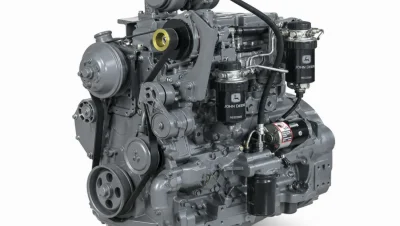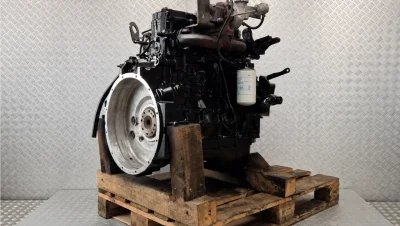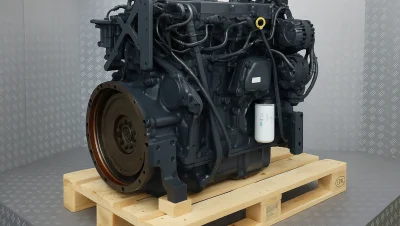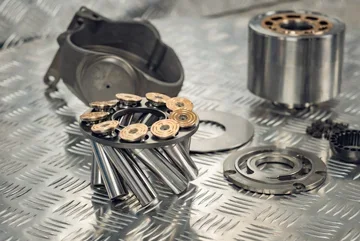


John Deere 6068HT080 Engine Overhaul in a John Deere 1570 CWS Combine Harvester
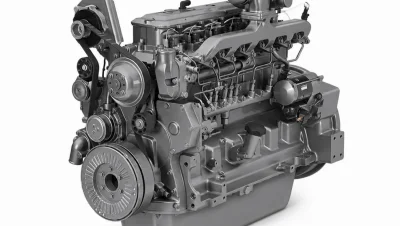
John Deere 1570 CWS is a high-performance combine harvester equipped with a six-cylinder John Deere 6068H diesel engine with a displacement of 6.8 litres. For this model, the engine is specified with a power output of approximately 255-262 hp, while the power unit works with the machine's drive system during intensive harvesting operations.
The condition of the engine has a direct impact on the ability to use the full performance of a combine harvester. An engine failure during the harvest season may result not only in the need for an overhaul, but also in machine downtime at a time when every working hour is important. For this reason, diagnostics of the John Deere 6068HT080 engine should include not only basic operating parameter checks, but also an assessment of the mechanical components, lubrication system, cooling system, cylinder head, crankshaft-piston system and engine accessories.
In the described case, the reason for sending the John Deere 6068HT080 engine for overhaul was natural operating wear. Gradual deterioration of engine parameters is particularly important in a combine harvester because the engine operates under considerable load for long periods. Increased oil consumption, reduced performance, changes in engine operation or gradually increasing exhaust smoke may indicate that further operation requires more detailed diagnostics.
We carry out work on the engine as part of comprehensive John Deere diesel engine service. Depending on the scope of work, this may include diagnostics in the machine, engine removal, transportation of the engine to our headquarters in Kojszówka, disassembly and verification of components, overhaul, reassembly and testing on an engine dynamometer. This approach makes it possible to assess the engine before it is installed back into the combine harvester.
Initial Diagnostics of the John Deere 6068HT080 Engine
Before removing the engine, diagnostics are carried out while the unit is still installed in the machine. This is an important stage of the overhaul because it makes it possible to identify the symptoms occurring during operation and plan the subsequent verification process. In the case of the John Deere 6068HT080, the first step is to assess how the engine starts, how it operates at idle and how it behaves when the load is increased.
Our mechanics check basic engine operating parameters, paying attention to oil pressure, operating temperature, cooling system operation and exhaust smoke characteristics. Possible oil or coolant leaks are also inspected, as well as the condition of engine accessories. When an engine has gradually lost its performance, it is also important to compare its current operation with the symptoms previously reported by the machine operator.
When natural wear of the crankshaft-piston system is suspected, compression measurements and cylinder leakage checks may be important. If necessary, an endoscopic inspection can also be carried out. This makes it possible to inspect cylinder and piston surfaces without immediately starting a complete engine disassembly.
Diagnostics in the machine do not complete the assessment process. If the results and symptoms indicate that an overhaul is required, the engine is prepared for removal. Only a detailed inspection of the individual components after disassembly makes it possible to determine the actual scope of the repair.
Removing the Engine from the John Deere 1570 CWS Combine
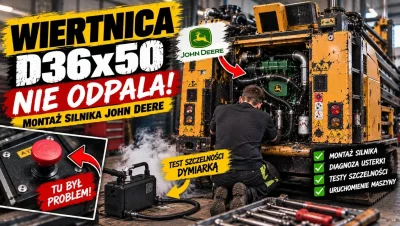
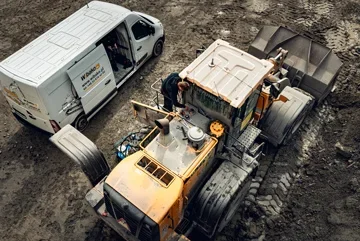
Removing an engine from a combine harvester requires proper preparation of the machine. The power unit is connected to numerous installation systems and components, so all connections must be properly identified and disconnected before the engine can be removed. Our service performs engine removal and installation as part of mobile service operations.
When removing the engine from an agricultural machine, a crane provided by the customer is used. Before lifting begins, our mechanics secure the work area and disconnect components that could interfere with the safe removal of the engine. Mechanical connections, hoses and engine accessories connected to the combine's systems are disconnected.
Particular attention is paid to the cooling system. Hoses and connection components are secured against damage and contamination. The same applies to the air intake system. Once the air hoses have been disconnected, their ends should be protected so that contaminants cannot enter the system during further work.
The next stage is disconnecting the engine mounting components. Before lifting the unit, all mounting points and connections to the machine's systems are checked. Only after confirming that the engine has been completely disconnected can it be safely removed using the crane.
After removal, the John Deere 6068HT080 engine is prepared for transportation to our headquarters in Kojszówka. Detailed verification of the unit begins there. This solution allows the overhaul to be carried out in workshop conditions, followed by testing on an engine dynamometer before the engine is installed back into the combine.
John Deere 6068HT080 Engine Verification in the Workshop
Once the engine arrives at our workshop, detailed verification begins. If the condition of the unit before removal does not allow the cause of the problem to be clearly determined, the first step is to check whether the crankshaft can be rotated. If possible and safe, the possibility of starting the engine and checking its basic operating parameters is then assessed.
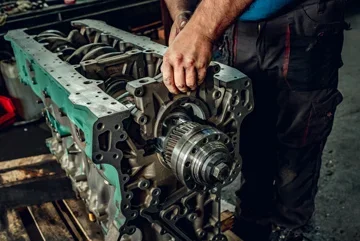
When an engine is classified for overhaul, it is disassembled into individual components. The parts are washed and inspected by our mechanics as the disassembly progresses. This makes it possible to identify signs of wear, overheating, seizure or other damage that may have contributed to the deterioration of the engine's performance.
One of the most important parts of the verification process is the crankshaft-piston system. The crankshaft, connecting rods, pistons, rings, cylinder liners and bearings are inspected. The crankshaft is visually checked for signs of wear, overheating and possible damage. Measurements of crankshaft runout and journals are also carried out, together with an inspection of the oil passages.
Connecting rods are visually inspected for wear, cracks, twisting and longitudinal bending. Their bolts are also checked. Pistons and cylinder liners are assessed for wear, while piston rings are inspected to determine their condition and suitability for further use.
The cylinder head is also inspected. Valve seats, guides, clearances and the general condition of the head are checked. A pressure-tightness test is an important part of this process. The cylinder head is immersed in heated water while compressed air is introduced into the appropriate passages. Escaping air can reveal leaks and possible cracks.
The camshaft is also inspected. Our mechanics assess its visual condition and carry out measurements relating to wear of the main journals and cam lobes. Engine accessories are checked as well, including the turbocharger, where axial and radial play is inspected.
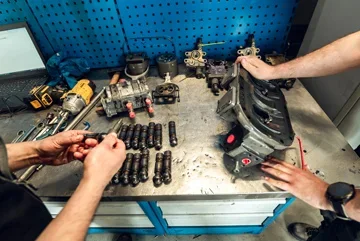
Depending on the fuel system configuration, components responsible for fuel delivery may also be checked. Components that can be tested on a test bench are inspected to determine their operating parameters. This may include the injection pump, which can be tested on a dedicated test bench.
Overhaul of the Crankshaft-Piston System
After completing the measurements, the scope of work on the John Deere 6068H engine can be determined. In the case of natural operating wear, particular attention is paid to the crankshaft-piston system. These components gradually wear during many hours of operation under load.
If measurements show that the permissible values have been exceeded, the appropriate components are repaired or replaced. The crankshaft may require grinding if the condition of its journals indicates that this is necessary. Bearings are selected according to the measurements carried out. The surfaces working with other lubrication system components are also checked.
Piston inspection includes an assessment of their surfaces, crowns and areas working with the piston rings. In the case of significant wear, these components should not be retained merely because they can still operate. The purpose of an overhaul is to restore the correct working conditions of the components rather than simply remove one visible symptom.
Cylinder liners are also inspected. Their condition directly affects combustion chamber sealing, oil consumption and the ability to achieve the correct compression parameters. After the relevant measurements have been completed, it is possible to determine which components can be reused and which require replacement.
During assembly of the crankshaft-piston system, all components are installed according to the applicable technical requirements. Particular attention is paid to correct positioning and inspection of the connections. In an overhauled engine, replacing worn parts alone is not sufficient. Proper execution of all assembly procedures is equally important.
John Deere 6068HT080 Cylinder Head Reconditioning
The cylinder head is responsible for the proper operation of the combustion chamber and the correct functioning of the valves. Its condition affects engine performance, cylinder sealing and stable operation. Therefore, during the John Deere 6068H overhaul, the cylinder head is carefully inspected before a decision is made about its further use.
Depending on the degree of wear, cylinder head reconditioning may include resurfacing, replacement of valve guides and replacement of valves. Valve seats and clearances are checked. Particular attention is paid to cylinder head tightness because a crack that is not visible at first glance can cause problems during subsequent operation.
After the work has been completed, the cylinder head is inspected again. Only a properly verified component can be used during engine assembly. This approach is particularly important for an engine that will later operate in a combine harvester for many hours under significant load.
Fuel System and Engine Accessory Inspection
The John Deere 6068H overhaul is not limited to replacing components of the crankshaft-piston system. The accessories that affect the correct operation of the power unit are also inspected during the work.
The turbocharger may be checked, including its axial and radial play. Electrical and electromechanical components such as the starter motor and alternator are also inspected. Depending on their technical condition, individual components are repaired, reconditioned or replaced.
The fuel system also requires detailed assessment. Components that can be tested on a test bench are checked for their operating parameters. This applies, for example, to the injection pump. Proper preparation of the fuel system affects combustion quality, starting performance, engine output and exhaust smoke.
After the work is completed, all components are reinstalled in the engine. Our mechanics pay attention to correct hose routing, proper connections and system tightness. At this stage, it is also important to maintain cleanliness during assembly because contamination can negatively affect the lubrication or fuel system.
Professional Assembly of the John Deere 6068HT080 Engine
Once the reconditioning and verification of the individual components have been completed, engine assembly begins. This is the stage where all measurements and repair work carried out previously must be correctly reflected in the final construction of the power unit.
The engine is assembled using verified components. Our mechanics inspect each stage of assembly, paying attention to the correct installation of components, connections and cooperation between the individual parts. In the case of the crankshaft-piston system, maintaining the appropriate assembly values is particularly important.
During assembly, we also pay attention to components that may have worn during operation independently of the main engine components. Appropriate seals are replaced, while components requiring reconditioning are prepared before installation. The aim is to prepare a complete engine rather than carry out only a partial overhaul.
After assembly, the John Deere 6068HT080 engine is prepared for starting. The basic systems and all connections are checked. The unit can then be subjected to testing on an engine dynamometer. This is one of the most important stages of the entire process because it makes it possible to verify the behaviour of the overhauled engine outside the machine.
Testing the John Deere 6068HT080 Engine on an Engine Dynamometer
An engine dynamometer allows the engine to be tested under load before it is installed in the John Deere 1570 CWS combine. This is an important part of the overhaul process because simply starting an engine without load does not provide a complete picture of its behaviour during actual operation.
After the overhaul, the engine is started and prepared for dynamometer testing. The first stage of the test is performed at relatively low load. According to the adopted procedure, the engine operates for a minimum of 16 hours at approximately 20-30% of its nominal load. This allows the behaviour of the engine after the overhaul to be monitored under controlled conditions and its basic operating parameters to be observed.
During this stage, stability of operation, temperature, oil pressure and cooling system behaviour are monitored. The engine is also observed for possible leaks. Because the unit is operating under controlled workshop conditions, our mechanics can continuously monitor its behaviour.
Operation at partial load is also important for the running-in process of components that have been replaced or reconditioned. An overhauled engine should not immediately be treated as a unit that has already accumulated thousands of operating hours. Gradually increasing the load allows the behaviour of the components to be monitored under different operating conditions.
If the engine maintains its basic operating parameters during the initial testing period, the next stage of the test begins. The load is gradually increased until the engine is repeatedly operated at higher power ranges. This makes it possible to check whether the engine responds correctly to changes in load and whether its parameters remain stable.
Dynamometer testing also makes it possible to assess the engine under conditions much closer to those encountered during actual combine operation. The John Deere 1570 CWS operates for extended periods during harvesting, and the engine must provide sufficient power to drive the various systems of the machine. Testing the unit under load therefore provides more diagnostic information than simply allowing it to run at idle.
The dynamometer also reduces the risk associated with installing an engine that has not been properly tested beforehand. If any irregularities appear during testing, they can be addressed while the engine is still in the workshop. This helps avoid situations in which a problem is only discovered after the engine has been installed in the combine.
During testing, the engine is repeatedly subjected to different load conditions. Its response to changes in operating conditions is monitored, allowing our mechanics to assess the stability of operation after the overhaul and the correct functioning of the systems working with the engine.
Dynamometer testing is therefore not simply a start-up test, but an integral part of the quality control process. Only after completing the successive testing stages can the engine be prepared for reinstallation in the machine.
Installation of the Overhauled Engine in the John Deere 1570 CWS
After the dynamometer test has been completed, the John Deere 6068HT080 engine is prepared for installation back into the combine. Installation is carried out using a crane provided by the customer. Before the unit is introduced into the engine compartment, the mounting points and installation area are inspected.
The engine is positioned in the machine while maintaining the correct alignment with the mounting points. Our mechanics pay attention to the correct positioning of the unit and its interaction with the other components. Mechanical and installation connections are then completed.
Reconnecting the cooling system is an important part of the installation. Hoses are inspected for their technical condition and worn components are replaced when necessary. Connections must be made in a way that ensures the tightness of the system. The same inspection applies to intake hoses and components responsible for delivering air to the engine.
Exhaust system connections, oil lines, fuel lines and the electrical installation are also checked. Each connection must be completed correctly because even a minor leak can affect subsequent engine operation. Before the first start, all components disconnected during removal are inspected.
Preparing the machine for start-up also includes replacement of the appropriate filters and completion of the procedures required before the first start. Once the engine has been started, our mechanics observe its operation and check for leaks of operating fluids.
An important part of the installation process is testing the machine together with its operator. The engine may operate correctly under workshop conditions, but once installed in the combine, it is necessary to check the cooperation between the engine and the other machine systems. Therefore, further operational tests are carried out after start-up.
Our service technicians observe the engine during subsequent operations and check its response to changing load conditions. The connections between the engine and the other components are also inspected. Particular attention is paid to operating temperature, system tightness and correct engine behaviour when the load is increased.
A positive test result allows the installation process to be completed. After confirming correct engine operation and the absence of leaks, an installation report is prepared. The customer therefore receives not only an overhauled engine, but also confirmation that the installation work and post-installation tests have been completed.
Engine Service After the Overhaul
The John Deere 6068HT080 overhaul is completed once the engine has been correctly started and tested, but proper post-overhaul service is important for further operation. The first inspection should be carried out after 50 operating hours from engine start-up.
The 50-hour inspection is performed by our service team. It is not limited to changing filters. Our mechanics inspect the general condition of the accessories and connections between the engine and the other systems of the combine. Correct operation of the engine is checked, as well as areas where leaks may have appeared during normal operation.
After the first inspection, subsequent service inspections should be carried out every 250 operating hours, but not less frequently than every three months. Regular maintenance makes it possible to detect irregularities earlier and reduce the risk of a more serious failure.
John Deere 6068HT080 - Engine Applications
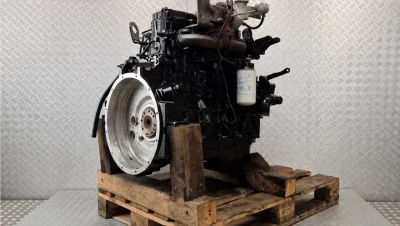
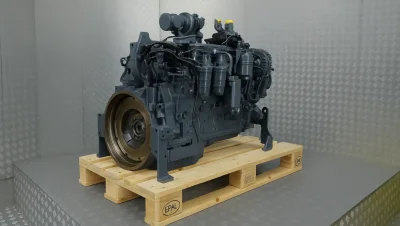
The John Deere 6068HT080 is a six-cylinder diesel engine with a displacement of approximately 6.8 litres, used in John Deere machines, including combine harvesters. In the case of the John Deere 1570 CWS, technical sources identify the 6068H engine with six cylinders and turbocharging with charge-air cooling.
Engines from the 6068 family are also used in other John Deere machines, which is why accurate engine identification is important when ordering parts or planning an overhaul. The designation 6068 alone may not always be sufficient to select the correct components. The engine version, serial number and machine configuration may also be relevant.
For this reason, before starting work, it is useful to provide the service team with the engine number, machine serial number or a photograph of the identification plate. This makes it easier to identify the exact engine version and prepare the appropriate scope of work.
John Deere Engine and Agricultural Machinery Service
An overhaul of a John Deere 6068HT080 engine requires a combination of diagnostics, mechanical expertise, detailed component verification and inspection of the assembled engine. In the case of agricultural machinery, the time required to complete the work is also important because a combine failure may occur during the most intensive period of the harvesting season.
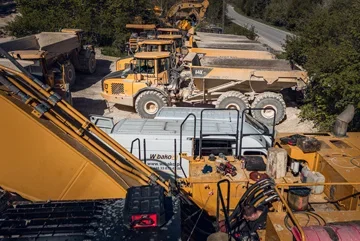
Our service performs engine removal and installation as well as repairs of diesel engines. As part of our mobile service, our mechanics can travel to the customer, carry out diagnostics and remove the engine. Once transported to Kojszówka, the engine can undergo an overhaul and testing on an engine dynamometer.
This comprehensive process combines work performed directly on the machine with detailed workshop verification. As a result, the overhaul does not end with replacing components, but also includes checking the technical condition of the engine and its behaviour under load.
Summary of the John Deere 6068HT080 Engine Overhaul
An engine overhaul in a John Deere 1570 CWS combine harvester involves much more than simply replacing worn components. In the case of the John Deere 6068H, proper diagnostics before removal, detailed verification of the components after disassembly, correct repair procedures and testing of the completed unit are all important stages.
In the case of natural operating wear, particular attention is paid to the crankshaft-piston system, while the cylinder head, camshaft, fuel system, turbocharger and other accessories are also inspected. This makes it possible to determine the actual scope of the repair and prepare the engine for further operation.
An important element of the entire process is the engine dynamometer test. Testing under load makes it possible to check the behaviour of the overhauled unit before it is installed back into the combine. The engine initially operates at lower load and, after its basic parameters have been confirmed, is repeatedly tested at higher load ranges.
After installation in the John Deere 1570 CWS, further tests are performed together with the machine operator. Connections, system tightness and engine behaviour during operation are checked. After the tests have been successfully completed, an installation report is prepared.
The first post-overhaul inspection is recommended after 50 operating hours. Subsequent inspections should be carried out every 250 operating hours, but not less frequently than every three months. This type of maintenance makes it possible to monitor the condition of the overhauled engine and respond to potential irregularities at an early stage.
Related Services and Information
More information about machine service, diesel engine overhauls and repairs and engine dynamometer testing can be found in the other materials prepared by WIBAKO.
If you need diagnostics, an overhaul or installation of a John Deere engine, it is useful to provide the machine model, serial number and information from the engine identification plate before contacting our service team. Such information makes it easier to correctly identify the engine and prepare the appropriate scope of work.
Contact us
Do you need an overhaul of a John Deere 6068H engine or service for a John Deere 1570 CWS combine harvester? Contact us - we provide comprehensive diagnostics, repairs, engine removal and installation, as well as engine dynamometer testing.