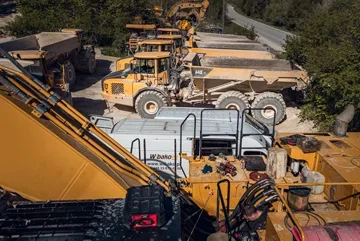
Volvo D7D Engine Overhaul in a Volvo EC240B Crawler Excavator - Comprehensive Engine Repair
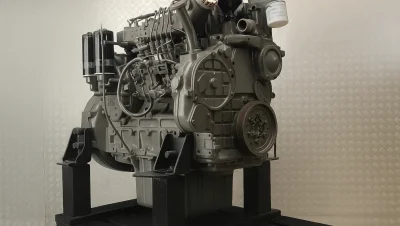
The Volvo EC240B crawler excavator is a machine designed for intensive operation in earthmoving, construction, roadworks and material handling applications. Its design focuses on efficient performance under demanding working conditions, where both hydraulic system efficiency and engine reliability are essential. The excavator is powered by the Volvo D7D diesel engine, which provides the power and torque required to perform demanding construction tasks.
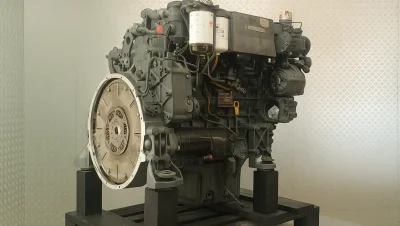
The Volvo D7D is a six-cylinder diesel engine with a displacement of approximately 7.1 litres, used in various construction machinery models manufactured by Volvo. Depending on the configuration and version, the engine delivers a rated output of approximately 125 kW at 2,000 rpm. The unit features turbocharging and liquid cooling, and its design is adapted to operation under variable loads. In the Volvo EC240B excavator, engine performance has a direct impact on the efficiency of the entire working system.
In the case described here, the engine was sent for overhaul due to a gradual loss of power, accompanied by increased engine oil consumption and irregular performance under load. These symptoms indicated possible wear of the crankshaft-piston assembly, particularly the pistons, piston rings and cylinder liners. Rather than limiting the repair to replacing individual components, we decided to carry out a comprehensive inspection of the engine and perform all necessary overhaul work.
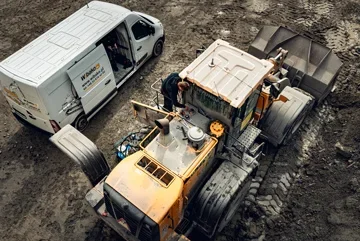
The work on the Volvo EC240B began with diagnostics at the machine's operating location near Katowice, Poland. Our service team then organised the engine removal using a crane provided by the customer. The removed unit was transported to the WIBAKO workshop in Kojszówka, where we carried out a detailed inspection of its components, engine repairs, reassembly and testing on our engine dynamometer.
Initial Volvo D7D Engine Diagnostics Before Removal from the EC240B
Before starting the removal process, it was essential to confirm that the loss of performance in the Volvo EC240B was caused by the engine's technical condition rather than a fault in another machine system. In crawler excavators, symptoms such as slower working movements, reduced digging force or delayed operator response do not always indicate a direct engine problem. Machine performance also depends on the proper operation of hydraulic pumps, control valves and other components of the working system.
First, we carried out a basic inspection of the Volvo D7D engine. We checked the engine oil level, coolant condition, visible connection points and the general condition of the engine accessories. Particular attention was paid to engine behaviour during acceleration and changes in load. Increased oil consumption was another important indication which, combined with the loss of power, could suggest deteriorating cylinder sealing.
The next stage involved inspecting the intake and exhaust systems. Leaking air hoses, restricted airflow or incorrect turbocharger operation can cause symptoms similar to internal engine wear. Therefore, before deciding to remove the engine, we needed to rule out basic problems associated with supplying air to the cylinders.
We then checked the engine's operating parameters. Particular attention was paid to engine oil pressure, operating temperature and engine behaviour under load. Monitoring these values helps determine whether the engine can continue operating safely or whether there is a risk of further internal damage.
As wear of the crankshaft-piston assembly was suspected, an important part of the diagnostics involved assessing cylinder sealing and compression pressure. Reduced compression may indicate worn piston rings, cylinder liner surfaces or other components responsible for maintaining proper combustion chamber sealing. The results of the initial inspections indicated that a detailed mechanical examination of the Volvo D7D engine was necessary.
After completing the initial diagnostics, we decided to remove the engine from the Volvo EC240B excavator. This approach allows all major components to be thoroughly inspected in workshop conditions and makes it possible to determine the actual scope of the required overhaul work.
Removal of the Volvo D7D Engine from the Volvo EC240B Crawler Excavator
Removing an engine from construction machinery requires proper preparation of the work area and strict adherence to the correct service procedures. In the case of the Volvo EC240B, particular attention must be paid to access to the engine compartment, securing the electrical installation and preparing the unit for safe removal from the machine frame.
The removal work was carried out by WIBAKO service technicians at the customer's operating location near Katowice, Poland. A crane provided by the customer was used to lift the engine out of the machine. Before lifting, it was necessary to disconnect the electrical installation, fuel lines, cooling system components and all other connections between the engine and the machine structure.
First, we secured the work area and prepared the engine for disconnection from the remaining systems. We then removed the intake pipes and air system components, cooling system connections and fuel lines. Individual components were properly protected against contamination and mechanical damage. This is particularly important for hoses and pipes whose interiors must remain free from dust, sand and other contaminants that could subsequently enter the engine systems.
After disconnecting the installation and accessories, we proceeded to remove the engine mounting bolts. We also checked the engine connections with other components, including mounting elements and drive connections. Only after confirming that all hoses, wires and mounts had been disconnected did we prepare the engine for lifting.
The Volvo D7D engine was properly secured and lifted out of the engine compartment using the crane. During this operation, particular care was taken to maintain the correct position of the unit and protect nearby structural components and accessories from damage. After removal, we also inspected the accessible mounts and connections that might require additional attention during reinstallation.
Once the removal process was completed, the engine was prepared for transportation to our headquarters in Kojszówka. There, we began the actual overhaul process, which involved dismantling the engine into individual components, thoroughly cleaning them and carrying out a detailed technical inspection.
Inspection of Volvo D7D Engine Components at the WIBAKO Workshop
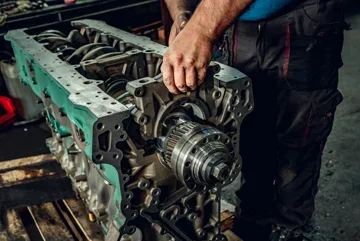
After the Volvo D7D engine arrived at our workshop, we began a comprehensive inspection. This is one of the most important stages of an engine overhaul because only after dismantling the unit can the actual wear of individual components be assessed and the necessary repair work determined. In an engine that has operated for many years in a crawler excavator, both natural wear and damage caused by prolonged operation under heavy loads must be considered.
The engine was dismantled into individual components, which were then thoroughly cleaned. Removing accumulated dirt and deposits allows us to examine working surfaces more accurately and identify scratches, signs of overheating and other damage that might not be visible before cleaning.
Particular attention was paid to the crankshaft-piston assembly. Wear of cylinder liners, pistons and piston rings can lead to deteriorating cylinder sealing, increased crankcase blow-by and excessive oil consumption. These were precisely the types of symptoms that had formed the basis of the initial Volvo D7D engine diagnostics.
During the inspection of the cylinder liners, we assessed the condition of their working surfaces, looking for scratches, uneven wear and other irregularities. We also carried out measurements to determine the degree of wear and whether individual components could be reused. In the case of the pistons, we checked the working surfaces, piston ring grooves and any signs of overheating or mechanical damage.
We also inspected the piston rings, whose correct operation directly affects cylinder sealing, oil consumption and the maintenance of proper compression pressure. Worn or damaged rings can allow engine oil to enter the combustion chamber, resulting in increased exhaust smoke and reduced engine performance.
Another component inspected was the crankshaft. We carried out a visual examination of its working surfaces, checked the main and connecting rod journals and measured their diameters. It was also important to check crankshaft runout, signs of overheating and potential surface damage. We inspected the oil passages to ensure they were clear, as contamination can restrict lubrication and accelerate bearing wear.
The connecting rods were inspected for cracks, deformation, signs of overheating and wear on the surfaces that work with the crankshaft. We also carried out the necessary geometric measurements. The condition of the connecting rods is essential for the correct operation of the entire crankshaft-piston assembly, so they cannot be reused without a prior technical assessment.
The Volvo D7D cylinder head was inspected separately. We checked the condition of the valve seats, valve guides, valves and the cylinder head surface. A pressure test was also carried out to detect potential cracks and leaks in the coolant passages. During this procedure, the cylinder head is immersed in heated water while compressed air is supplied to the appropriate passages. Escaping air bubbles make it possible to identify leaking areas.
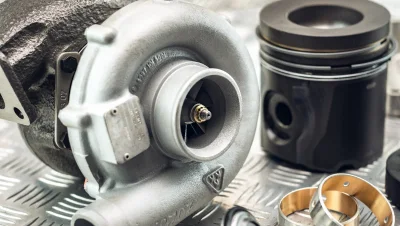
The inspection also covered the turbocharger, engine accessories and other components affecting correct engine operation. We checked the turbocharger shaft for axial and radial play, inspected the connections and assessed the overall condition of the components. This allowed us to determine which parts required reconditioning or replacement and which could be reused.
After completing the inspection, we had a comprehensive picture of the engine's technical condition. We confirmed the need for repairs to the crankshaft-piston assembly. Based on the measurement results, we established the scope of the overhaul and prepared the engine for the next stage: component reconditioning and reassembly.
Volvo D7D Engine Reconditioning and Repair
Overhauling the Volvo D7D engine requires precise execution of all procedures involved in preparing and assembling its components. For engines used in crawler excavators, simply restoring the ability to start the engine is not enough. The objective is to achieve correct operating parameters, proper sealing, adequate oil pressure and stable performance during prolonged operation under load.
The scope of repairs was determined based on the measurements and inspection of individual components. Particular attention was paid to the parts responsible for cylinder sealing and proper lubrication of moving components. All parts intended for reuse had to meet the technical requirements applicable to this engine model.
Volvo D7D Crankshaft-Piston Assembly Repair
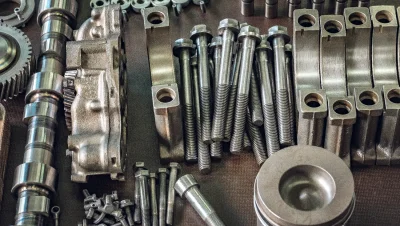
The main area of work was the crankshaft-piston assembly, as its wear was responsible for the symptoms observed before the overhaul. First, we prepared the engine block and the surfaces where the cylinder liners are installed. We inspected their condition and dimensions before preparing the components for installation in accordance with the required technical specifications.
In the Volvo D7D engine, the correct condition of the cylinder liners directly affects combustion chamber sealing, fuel combustion efficiency and engine oil consumption. Replacing worn components helps restore the correct operating conditions between the pistons and cylinder surfaces. During installation, particular attention was paid to proper liner seating and maintaining the required dimensional parameters.
Next, we prepared the pistons and piston rings. The rings seal the space between the piston and the cylinder liner and control the amount of oil remaining on the cylinder surface. Their correct fit and installation are essential for achieving proper compression and reducing blow-by into the crankcase.
An important part of the work also involved inspecting and preparing the crankshaft. We checked the condition of the main and connecting rod journals and the surfaces that work with the bearings. The crankshaft must maintain the correct geometry and work properly with the remaining components. Any dimensional deviations can lead to inadequate lubrication, increased operating temperatures and accelerated engine wear.
Before assembly, we also inspected the main and connecting rod bearings. Their purpose is to provide suitable operating conditions for moving components while maintaining the correct oil film. During assembly, it was particularly important to maintain the specified bearing clearances and thoroughly clean all oil passages.
After preparing the individual components, we proceeded with assembling the crankshaft-piston system. Each stage was carried out in the correct sequence and with the required precision. We checked the proper seating of components, their interaction and the free movement of the mechanisms. The accuracy of these operations has a significant impact on the engine's durability after the overhaul.
Cylinder Head Reconditioning
At the same time, we carried out work on the Volvo D7D cylinder head. This component is responsible for the correct exchange of gases in the cylinders, combustion chamber sealing and heat dissipation. Its condition affects the combustion process, engine output and the stability of the power unit.
We began the cylinder head reconditioning process by thoroughly cleaning it and preparing it for further work. We then inspected the surface, valve seats and valve guides. Particular attention was paid to the pressure test, which helps identify potential cracks and leaks in the internal passages.
As part of the cylinder head reconditioning, we machined the mating surface and prepared the valve system. Depending on the degree of wear, cylinder head repairs may require replacing valve guides, valves or other cooperating components. Maintaining the correct geometry and installation parameters is essential, as even minor irregularities can cause sealing problems.
After completing the reconditioning work, we inspected the cylinder head again and prepared it for installation on the engine block. Particular attention was paid to surface cleanliness, proper preparation of the mating area and the use of suitable sealing components. Cylinder head installation must be carried out in accordance with the specified sequence and tightening torque values for the particular Volvo D7D engine version.
Fuel System and Engine Accessories Inspection
During the overhaul, we also inspected the fuel system, which is responsible for delivering the correct amount of fuel to the cylinders. Proper operation of this system is essential for achieving correct combustion parameters, stable engine performance and reduced excessive smoke emissions.
We checked the components responsible for supplying fuel to the engine and inspected the condition of the pipe connections. Components requiring specialist diagnostics can be tested at an external facility equipped with the appropriate testing equipment. This makes it possible to assess the operating parameters of fuel injection system components more accurately.
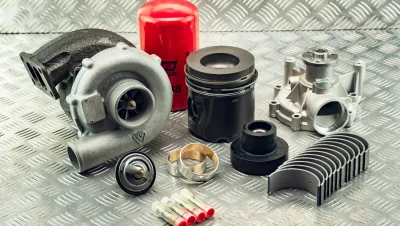
We also inspected the turbocharger, which supplies the engine with the required amount of air. Its condition is particularly important in an engine operating under heavy loads, as incorrect boost pressure can limit engine output and negatively affect combustion. The inspection includes checking the turbocharger shaft for axial and radial play and assessing the overall condition of the assembly.
In addition to the turbocharger, we assessed the condition of the alternator, starter motor and other electrical and mechanical accessories. Inspecting these components is important because their failure can make starting difficult or cause incorrect engine operation after installation in the machine.
All components intended for reuse were prepared for installation, while parts that did not meet the technical requirements were classified for repair or replacement. This comprehensive approach helps reduce the risk of having to remove the engine from the machine again due to a component that could have been inspected during the overhaul.
Professional Volvo D7D Engine Assembly
After completing the reconditioning work and preparing all the components, we proceeded with assembling the Volvo D7D engine. This stage requires a high level of precision because correct engine operation after an overhaul depends not only on the quality of the parts used but also on the way they are installed.
Before assembly, we once again checked the cleanliness of the engine block, oil and coolant passages and all mating surfaces. Even small contaminants can negatively affect lubrication and accelerate the wear of newly installed components. For this reason, every component must be properly prepared before installation.
First, we assembled the crankshaft-piston components, checking the correct positioning of the cylinder liners, pistons, piston rings and connecting rods. We then installed the prepared crankshaft together with the correctly selected bearings. During these operations, we checked the bearing clearances and ensured that all moving components were positioned correctly.
The next stage involved installing the cylinder head and the remaining mechanical components. All connections were completed in accordance with the technical requirements. Particular attention was paid to sealing, correct component positioning and accurate tightening of the mounting bolts.
After assembling the main mechanisms, we installed the engine accessories and prepared the lubrication system, cooling system and fuel supply components. We then inspected the connections and checked that all components had been installed correctly. The completed engine was prepared for starting and further workshop testing.
Volvo D7D Engine Testing on the WIBAKO Engine Dynamometer
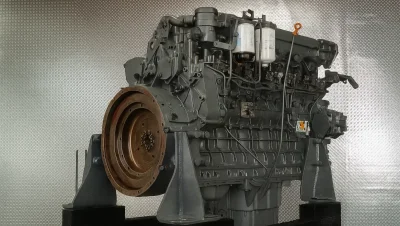
One of the most important stages of the Volvo D7D overhaul is testing the engine on an engine dynamometer. At WIBAKO, we have a test facility that allows us to start and test diesel engines under controlled load conditions. This enables us to assess engine performance before it is reinstalled in the Volvo EC240B excavator.
An engine dynamometer is an important addition to the standard overhaul process. Simply starting an engine and confirming that it runs at idle does not provide sufficient information about its actual condition. An engine may operate correctly without load while showing irregularities when the demand for power increases. Dynamometer testing allows us to check the engine under significantly more demanding conditions.
After preparing the Volvo D7D engine for testing, we connected it to the dynamometer. Before starting, we checked the basic connections, system preparation and parameters required for safe testing. The first start is carried out with particular care. We monitor oil pressure, temperature and engine behaviour during the initial operating phase.
For engines that have undergone a comprehensive overhaul, we do not immediately apply full power. The first stage of testing involves a running-in period under light load conditions. The engine operates for at least 16 engine hours at approximately 20-30% of its rated load. This period allows the cooperating surfaces to bed in correctly and provides an initial assessment of engine performance during prolonged operation.
During this stage, we do not simply observe whether the engine maintains its speed. We regularly monitor operating temperature, oil pressure and parameter stability. We also check the tightness of connections and observe whether any leaks of operating fluids occur. Any irregularities must be investigated before proceeding to the next testing stage.
After the initial running-in period, provided the engine maintains the correct operating parameters, we proceed with tests at higher loads. We gradually increase the dynamometer load and monitor how the engine responds to changing operating conditions. We check speed stability, the performance of the lubrication and cooling systems and the engine's ability to maintain the required parameters during prolonged operation.
Repeated increases and decreases in load allow us to assess how the engine responds to changing power demands. This is particularly important for engines installed in crawler excavators. During earthmoving operations, the engine does not work under constant conditions. The load changes depending on the task being performed, ground resistance, hydraulic system demand and the simultaneous operation of several working functions.
During testing, we primarily monitor engine oil pressure and operating temperature. These are fundamental parameters that directly affect safe operation. Incorrect oil pressure may indicate lubrication system problems or improper clearances between cooperating components. Excessive temperature, in turn, may suggest problems with heat dissipation or incorrect cooling system operation.
We also pay close attention to engine tightness under load. Workshop conditions allow us to inspect accessible connections, seals and accessories in detail. This makes it possible to identify potential leaks before the engine is delivered to the customer. This is particularly important for the Volvo EC240B, as access to certain components becomes more limited once the engine is installed in the engine compartment.
Dynamometer testing also allows us to evaluate engine performance across different speed ranges. We check whether the unit responds correctly to changes in load and whether there are any unusual vibrations, noises or unstable operating conditions. Correct engine behaviour throughout the entire test is an important part of assessing the quality of the completed overhaul.
It is worth emphasising that dynamometer testing is not merely a final formality. It is a practical quality control stage that allows us to verify the results of our mechanics' work and assess engine performance before the unit is returned to service. In many cases, only testing under load reveals irregularities that cannot be observed during a short unloaded start-up.
After completing the tests, we carried out another assessment of the Volvo D7D engine's technical condition. We checked its tightness, operating parameters and behaviour during subsequent load tests. The successful test results allowed us to prepare the engine for transportation and reinstallation in the Volvo EC240B crawler excavator.
Installation of the Reconditioned Volvo D7D Engine in the Volvo EC240B Excavator
After completing the overhaul and successfully passing the dynamometer tests, the Volvo D7D engine was prepared for reinstallation in the EC240B excavator. Engine installation is just as important as the repair work itself. Even a properly reconditioned engine will not operate as expected if mistakes are made during installation, such as incorrect mounting, improper hose connections or inadequate preparation of the machine's remaining systems.
WIBAKO carries out engine removal and installation directly at customers' locations. Our mobile service operates throughout Poland, meaning that machine owners do not need to arrange transportation of the entire machine to our workshop. In the case of the Volvo EC240B, the installation work was carried out near Katowice, using the previously prepared work area and a crane provided by the customer.
Before installation, we inspected the engine compartment and prepared all mounting points. We assessed the condition of accessible connections, mounting components and hoses that had previously been disconnected during removal. Particular attention was paid to the cleanliness of the mounting surfaces and the condition of components that work together with the engine.
The engine was properly secured and lowered into the engine compartment using a crane. During lowering, we carefully monitored its position to prevent damage to hoses, structural components and accessories located nearby. Once the engine was positioned correctly, we proceeded with installing the mounts and mechanical connections.
An important stage involved correctly seating the engine on its mounts and checking its position in relation to the remaining components. We then completed the drive connections and installed the accessories that required reinstallation. All operations were carried out in the correct sequence to prevent hose tension and incorrect positioning of individual components.
The next stage involved connecting the fuel system. We checked the condition of the fuel lines and their connections before preparing the system for the first start-up. Cleanliness of the fuel supply components was particularly important, as contaminants entering the fuel system can negatively affect engine performance and damage precision components.
We then proceeded with installing and connecting the cooling system. We checked the condition of the hoses, connections and components responsible for coolant circulation. We replaced or prepared any components requiring attention and verified their correct positioning. After completing the connections, the system was prepared for filling and bleeding in accordance with the service procedure.
We also devoted considerable attention to the intake system. Air pipes and connections between the air filter, turbocharger and other system components must provide adequate sealing. Leaks in this area can cause incorrect engine operation, reduced power output and boost pressure problems. Therefore, we inspected the pipework, clamps and connections, preparing any components requiring replacement where necessary.
After connecting the electrical installation, we checked the condition of the connectors and wiring. We ensured that all connections had been completed correctly and that the wiring was properly protected against contact with hot engine components and moving machine parts. We also checked the connections of the alternator, starter motor and components responsible for monitoring engine operating parameters.
Before the first start-up, we checked the operating fluid levels, prepared the lubrication system and inspected all accessible connections. We installed the necessary filters and ensured that the engine compartment was ready for safe operation. The initial inspection also included checking that no tools or loose components had been left near the engine.
The first engine start-up was supervised by our service technicians. During the initial operating phase, it was particularly important to monitor oil pressure, temperature and engine stability. We also observed the operation of the cooling, fuel and intake systems. We checked for oil, fuel and coolant leaks and verified that all connections remained properly sealed.
After the initial start-up, we proceeded with a more detailed inspection of engine operation in the excavator. The machine operator participated in the tests and was able to assess engine response to changes in load during typical working operations. Together, we evaluated engine behaviour during acceleration and operation of the hydraulic system.
We carried out machine function tests, including the operation of individual working functions and monitoring engine performance while they were being used. It was particularly important to check whether the engine maintained stable speed during simultaneous operations and whether any unusual changes in temperature or oil pressure occurred.
After completing the tests, we inspected the hose connections, mounts and system tightness once again. We checked whether any new leaks had appeared during operation and whether all accessories were functioning correctly. Only after the engine and machine had passed the tests successfully did we consider the installation complete. The work was confirmed with an installation report.
This installation procedure helps reduce the risk of problems caused by incorrect engine connections following an overhaul. Our objective is not only to supply a fully operational engine but also to ensure that it works correctly with the machine in which it will continue to operate.
Volvo D7D Engine Maintenance After Overhaul
A comprehensive Volvo D7D engine overhaul does not end with restarting the engine and returning the Volvo EC240B excavator to operation. Proper maintenance during the initial operating period is equally important. Newly reconditioned components require suitable operating conditions, regular inspections and adherence to maintenance intervals.
After an overhaul, we recommend carrying out the first service inspection after 50 engine hours. This is an important stage during which our mobile service team visits the customer again and checks the engine under actual operating conditions. We do not limit this inspection to changing filters and engine oil. We also check hose connections, mounts, system tightness and the general condition of the engine accessories.
Replacing filters after the first 50 engine hours helps remove any contaminants that may have appeared during the initial operating period. At the same time, we check for irregularities related to the bedding-in of cooperating surfaces. Monitoring oil pressure, temperature and connection tightness allows us to assess whether the engine is maintaining the correct operating parameters.
For subsequent maintenance, we recommend inspections every 250 engine hours, but at least once every 3 months. Regular servicing helps maintain the engine's technical condition and allows potential problems to be detected at an early stage. Systematic inspections are particularly important for machines operating in demanding environments such as quarries, construction sites and material handling facilities.
WIBAKO provides not only diesel engine overhauls but also ongoing maintenance services. Thanks to our mobile service teams, we can carry out inspections directly at the machine's operating location. This helps minimise downtime and ensures proper monitoring of the engine throughout its further service life.
Volvo D7D Engine - Applications in Construction Machinery
The Volvo D7D belongs to a family of diesel engines used in construction machinery requiring suitable power output and durability under intensive operating conditions. Its six-cylinder design, approximately 7.1-litre displacement and turbocharging make it suitable for various Volvo excavator models and other construction equipment.
One of the machines equipped with this engine is the Volvo EC240B crawler excavator. Depending on the engine version and machine configuration, the specifications may vary. In selected EC240B versions, the D7D engine delivers approximately 125 kW of rated power, with maximum torque of around 735-750 Nm. These parameters are important during demanding earthmoving operations, where the engine must provide sufficient power reserves.
The Volvo D7D engine family has also been used in other construction machines, including selected crawler excavator models and specialised variants. However, when selecting a replacement engine or spare parts, it is essential to verify the exact engine designation, version and machine serial number.
When overhauling or purchasing a Volvo D7D engine, all technical specifications must be verified. Individual versions may differ in accessories, installation configurations and construction solutions. For this reason, selecting parts and components should always be based on the engine number or information from the identification plate.
Comprehensive Volvo Engine and Construction Machinery Service - WIBAKO
The Volvo D7D engine overhaul in the EC240B excavator demonstrates the importance of a comprehensive approach to repairing power units used in construction machinery. At WIBAKO, we carry out work covering diagnostics, engine removal, component inspection, reconditioning, assembly, dynamometer testing and engine reinstallation in the machine.
Our services include diesel engine repairs for numerous manufacturers, including Volvo, Deutz, Cummins, Caterpillar, Perkins, Kubota, Yanmar and Liebherr. We also specialise in servicing engines used in excavators, wheel loaders, backhoe loaders, articulated dump trucks, crushers and other off-highway machinery.
We have workshop facilities that allow us to carry out comprehensive engine overhauls, as well as an engine dynamometer used to test units after repairs. Our mobile service performs engine removal, installation and maintenance directly at customers' locations throughout Poland. This allows us to support machines operating on large construction sites, in industrial facilities and in aggregate quarries.
When engine problems occur, it is not always necessary to transport the entire machine to a workshop. We can remove the engine at the customer's location, transport it to our headquarters in Kojszówka, carry out the necessary repairs and reinstall the unit once the overhaul has been completed. This solution allows us to focus on repairing the engine without requiring transportation of the entire excavator.
If your Volvo EC240B excavator is experiencing a loss of power, increased oil consumption, starting problems or other worrying symptoms, it is worth carrying out a detailed diagnosis before a more serious failure occurs. An overhaul performed at the right time can limit the extent of damage and help restore the engine's correct operating parameters.
Summary - Volvo D7D Engine Overhaul in a Volvo EC240B Excavator
A comprehensive Volvo D7D engine overhaul helps restore the performance of the power unit used in the Volvo EC240B crawler excavator. Proper diagnostics, detailed component inspection and precise repair work are essential for engine durability and reliable operation.
As part of this project, we removed the engine at the machine's operating location, transported it to the WIBAKO workshop, inspected its mechanical components, repaired the crankshaft-piston assembly, reconditioned the cylinder head, checked the accessories and reassembled the unit. We then carried out engine dynamometer tests, including an initial running-in period and subsequent tests under gradually increased loads.
After successfully completing the tests, the engine was transported back to the customer and reinstalled in the Volvo EC240B excavator. We reconnected the electrical installation, cooling system, fuel system and intake system before testing the machine with the operator. The final stage involved checking system tightness and confirming that the engine was operating correctly.
After completing the overhaul, we recommend carrying out the first service inspection after 50 engine hours. Our mechanics will check the engine condition, replace the required filters and inspect all important connections. Subsequent maintenance should be performed every 250 engine hours, but at least once every 3 months.
WIBAKO provides comprehensive diesel engine servicing, engine overhauls and mobile construction machinery service. Thanks to our own engine dynamometer, we can test engines before reinstallation, while our extensive service facilities allow us to repair power units from numerous manufacturers and used in various types of machinery.
Volvo D7D Engine Overhaul - Volvo Crawler Excavator Service
Does your Volvo EC240B excavator require engine repairs? WIBAKO provides comprehensive Volvo D7D engine overhauls, engine dynamometer testing and mobile engine removal and installation throughout Poland. Contact us and leave your engine repair in the hands of experienced specialists.