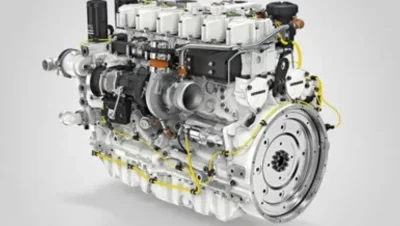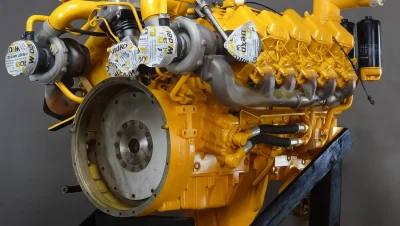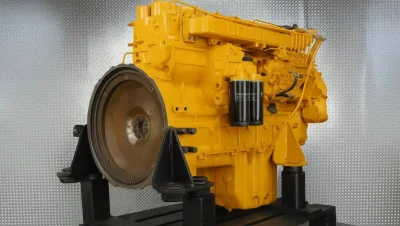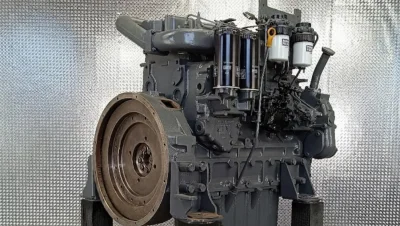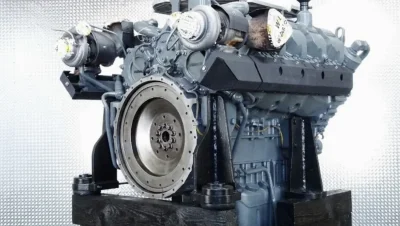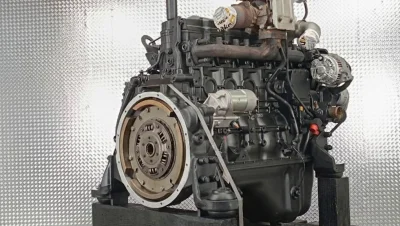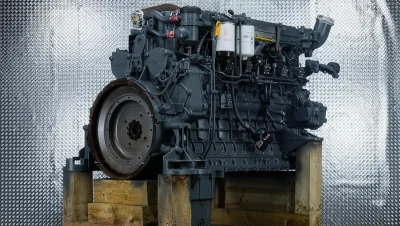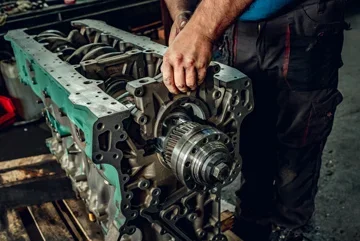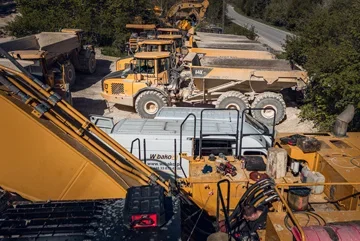



This is the second stage of the engine overhaul for a Liebherr LTM 1080 mobile crane. In previous episodes we showed the breakdown call-out and the engine teardown. This time: dyno testing, the engine's return to the machine, the first start-up and a road test.
Dyno: about 30 hours of operation under load
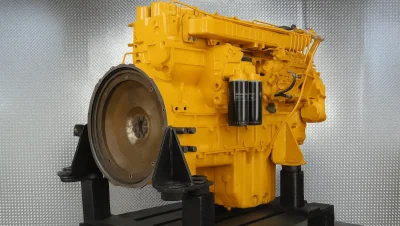
After workshop testing the engine went onto the dyno. Every engine has to be firmly anchored to the floor and connected to air (initially short-circuited, later through the intercooler), exhaust, water, fuel, crankcase breather and a whole range of measuring sensors. After the first start we check the basics – speed, oil pressure, temperature – and then gradually increase the load.
The engine spends about three days on the dyno, i.e. 20–30 hours of actual running. During this time it is run in and tested across the full load range, up to maximum. We still recommend treating it a little more gently during the first hours in the machine.
Installation in the crane
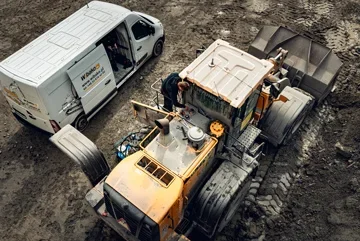
On site the engine bay turned out to be dirty – and after start-up it would be hard to tell a new leak from an old one. So first we cleaned the bay with a pressure washer. Next steps:
- alternator and starter fitted while the engine was still suspended – it is very tight down below,
- the shaft driving the hydraulics and the propshaft to the gearbox – bolts cleaned and secured with thread locker,
- engine mounts pre-tightened with an impact wrench, then by hand with a long ratchet,
- a new gasket under the hydraulic pump, with the mating faces thoroughly cleaned and degreased,
- fuel lines (supply and return) secured so nothing can chafe – once the coolers are in, there is no access to them,
- cooler pack, cylinder head bleed lines, hydraulic hoses and intake pipes.
First start-up and testing
Engine oil was filled from an IBC through the filter opening, new coolant was added, and the cooling and fuel systems were bled. After fitting the computer in the cab, the engine started without problems – from both the lower and upper cabs, with oil pressure and charging. As a check we added about 5 litres of oil (the external filters took some of it) and checked the gearbox level in the position stated on the dipstick: neutral, idle, approx. 80°C.
As is often the case with cranes, disconnecting the batteries reset the superstructure computer's calibration and it reported a rope error. After recalibration and unlocking, all functions worked, and the road test confirmed the machine was ready for work.
Takeaways
- A dyno lets us run in the engine and test it under full load before it goes into the machine.
- A clean engine bay makes checking for leaks after an overhaul easy.
- When installing an engine in a crane, plan the order – some ancillaries are easier to fit before the engine goes onto its mounts.
- After disconnecting power, expect to recalibrate the crane electronics.
Learn more about our combustion engine overhauls.
Watch the repair video: Will the Engine Go Back Into the Crane? First Start After the Overhaul – Liebherr LTM 1080