

The final drive is a component most people only think about when oil appears on the sprocket or the excavator starts whining and pulling to one side. It is one of the most heavily loaded components of a crawler excavator. A failure puts the machine out of action, and the repair can be expensive. Below we explain how a final drive is built, how to recognise wear, how to maintain it, and when a rebuild makes sense versus buying a used or new unit.
What a final drive is and how it works with the travel motor
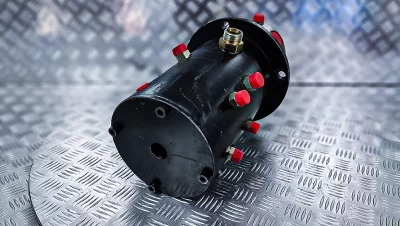
The final drive, also called the travel reduction gearbox, is a speed-reducing gear unit. It is mounted between the hydraulic travel motor and the track sprocket. The hydraulic motor, usually an axial piston design, runs at high speed but with limited torque. The final drive reduces the speed by a factor of several dozen and increases torque in the same ratio. This is what allows a machine weighing dozens of tonnes to climb slopes, counter-rotate on the spot and overcome ground resistance.
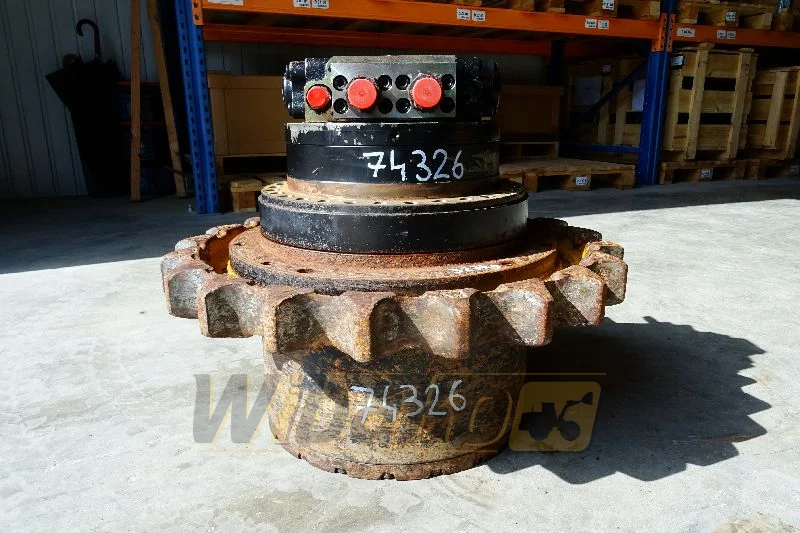
In practice, the travel motor and final drive form a single drive unit. The motor housing, or the area between the motor and the gearbox, typically contains:
- a parking brake – a multi-disc brake applied by springs and released by oil pressure,
- a brake valve (counterbalance valve) – prevents the machine from running away uncontrollably on a slope,
- on many models, a two-speed travel system – changing the angle of the motor's swashplate.
That is why diagnosis must always establish whether the problem lies in the mechanical or the hydraulic part.
Design of a crawler excavator final drive
Planetary gearbox
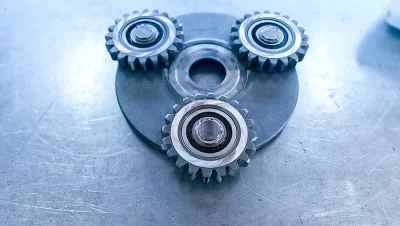
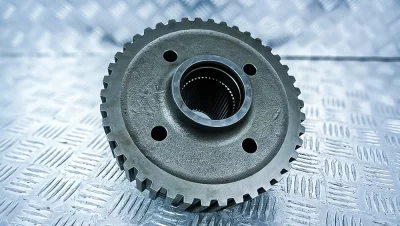
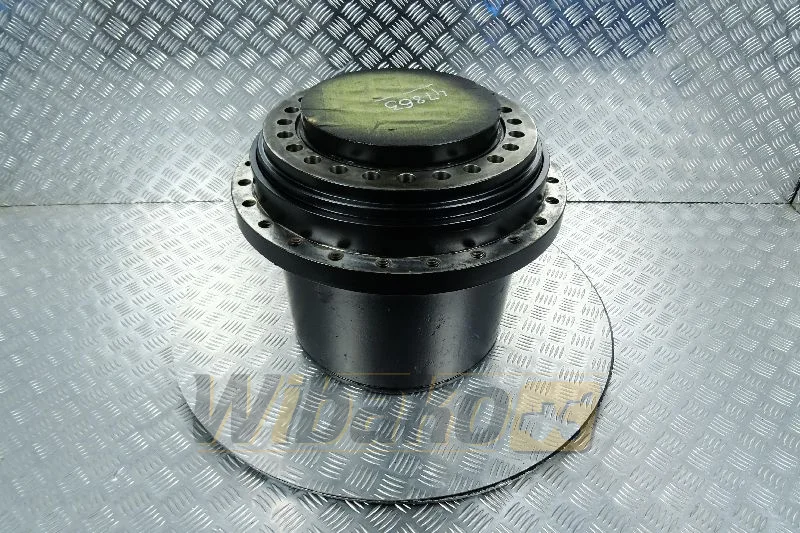
Crawler excavators almost always use a planetary gearbox, usually with two or three stages. Each stage consists of a sun gear, several planet gears mounted on a carrier and a ring gear with internal teeth. The ring gear is usually part of the rotating housing, to which the sprocket is bolted. A planetary gearbox packs a high reduction ratio into a compact housing and spreads the load over several gear meshes at once.
Bearings
The housing rotates on large bearings, usually tapered roller or angular contact bearings. They carry the drive torque as well as the radial and axial forces from track tension, impacts and turning. Play in the main bearings is one of the most common causes of further damage. The housing starts to wobble, the seal loses contact and the gear teeth run on their edges.
Floating seal
Between the stationary part bolted to the frame and the rotating housing there is a floating seal (face seal, duo-cone type). It consists of two precisely lapped metal rings pressed together by rubber rings (O-rings). The seal keeps oil in and mud, sand and water out. It is very durable but sensitive to incorrect installation, overheating, wire or rope wrapped around it, and bearing play.
Symptoms of a worn final drive
- Oil leaking at the sprocket – most often a damaged floating seal. Running with low oil quickly ends in seized bearings and gears.
- Noise – whining, humming or rhythmic knocking while travelling. Whining usually indicates worn gear teeth or bearings, knocking points to chipped teeth or damaged planet gears.
- Metal particles in the oil – a small amount of fine metallic dust on the magnetic plug is normal. Flakes, fragments and grains mean progressive bearing or gear damage.
- Housing overheating – one final drive is noticeably hotter than the other side after the same working time.
- Machine pulling to one side and loss of tractive force – the final drive may be the cause, but just as often it is a worn travel motor (internal leakage), a partially applied parking brake or a problem with the control valve or the swivel joint.
- Rising oil level or discoloured oil – usually a sign that the travel motor shaft seal is leaking and hydraulic oil is getting into the gearbox. Milky oil means water.
Even a new final drive can fail quickly if the cause of the first failure is not eliminated. We described such a case in the article New final drive and another failure? Here's why – Wacker Neuson ET18. Before replacing the unit, check the travel motor, system pressures, case drain leakage and track tension.
Oil changes and routine checks
A final drive does not need much, but what it does need has to be done regularly:
- Level check – park the machine on level ground and rotate the sprocket so that the plugs are in the position shown in the manual (usually the drain plug at the bottom and the level plug on the horizontal axis). The oil should reach the edge of the level hole.
- Oil change – according to the manufacturer's manual. The first change is usually after the running-in period, then at fixed operating-hour intervals. Use gear oil of the grade and viscosity specified by the manufacturer. Do not substitute hydraulic or engine oil.
- Inspect the magnetic plug – at every oil change. It is the cheapest diagnostics there is.
- Keep the seal area clean – remove wrapped wire, plastic film and packed mud. When working in water and mud, check more often whether the oil has emulsified.
- Correct track tension – an overtightened track overloads the final drive bearings and accelerates their wear.
Rebuild, used or new final drive
The choice depends on the condition of the unit, the age of the machine and how long it can afford to stand idle.
- A rebuild makes sense when the housing, ring gear and carriers are intact, and the wear is in the bearings, floating seal, planet gears or sun gears. After disassembly, all parts are inspected, worn ones replaced and the bearing preload set. It is worth checking the travel motor at the same time. You can read more about this in our article on hydraulic pump and motor overhauls.
- A used final drive is a sensible compromise for older machines and when getting back to work quickly matters. Check the housing play, the condition of the seal, the appearance of the oil and particles on the magnetic plug, and make sure the part number matches.
- A new final drive is the option when the housing or ring gear is cracked, the gearbox has seized, or the rebuild cost approaches the price of a new unit. Also consider it for machines in heavy use, where predictability counts.
How to select the right final drive for your excavator
The machine model alone is not enough, because manufacturers changed suppliers and gearbox versions within the same series. Before ordering, prepare:
- the part number from the nameplate of the final drive and travel motor (if the plate is illegible, take photos of the housing and castings),
- the machine model and serial number and the undercarriage version (e.g. LC, NLC, HD),
- the reduction ratio and travel motor specifications: displacement, single or two-speed, brake type,
- mounting dimensions: number and spacing of the bolt holes to the frame and the sprocket, pilot diameter and position of the hydraulic ports,
- whether you need a complete unit (with motor) or the gearbox only.
If in doubt, send us this data and photos, and we will help confirm compatibility before the final drive goes into the machine.
Final drives for Liebherr, Volvo, Komatsu, Hitachi and Atlas
In the drivetrain section of the WIBAKO shop you will find final drives for crawler excavators from popular brands. Examples include the Liebherr R944 excavator final drive FAT400P073, the Liebherr R924 excavator final drive, the Volvo EC240LC excavator final drive and the Volvo EC210LC excavator final drive. Our range changes depending on the availability of new and used parts. If you are looking for a final drive for Komatsu, Hitachi, Caterpillar, Doosan, or a final drive and travel motor for Atlas and cannot see the right item, contact us. Give us the part number and machine model, and we will check supply options or assess whether your current unit can be repaired.
You can also have the final drive replaced by our service team. When fitting parts bought from WIBAKO, the labour rate is PLN 190 net per hour, and travel to the machine is charged at PLN 3 net per km both ways. During removal it is worth assessing the condition of the sprocket, travel motor and seal straight away, so that the new or rebuilt unit does not have to work with the same problems as the previous one.
Frequently asked questions
What is a final drive on an excavator?
The final drive, also called the travel reduction gearbox, is a planetary gearbox between the hydraulic travel motor and the track sprocket. It reduces motor speed and multiplies the torque needed to move the machine.
How can I tell if a final drive is damaged?
Typical symptoms are oil leaking at the sprocket, whining or knocking while travelling, metal flakes on the magnetic plug and an overheating housing. Pulling to one side can also be caused by a travel motor or brake fault, so proper diagnosis is needed.
What oil goes into an excavator final drive?
Gear oil of the grade and viscosity specified in the machine manufacturer's manual. Hydraulic oil or engine oil should not be used.
Can a final drive be rebuilt?
Yes, if the housing, ring gear and carriers are intact. In that case the worn bearings, floating seal, planet gears or sun gears are replaced. With a cracked housing or a seized gearbox, a used or new unit is usually more cost-effective.
What information is needed to select a final drive?
The part number from the final drive and travel motor nameplate, the machine model and serial number, the undercarriage version and the mounting dimensions. If the nameplate is illegible, send us photos of the housing and castings and we will help confirm compatibility.