Repairs of Liebherr Hydraulic Pumps and Motors
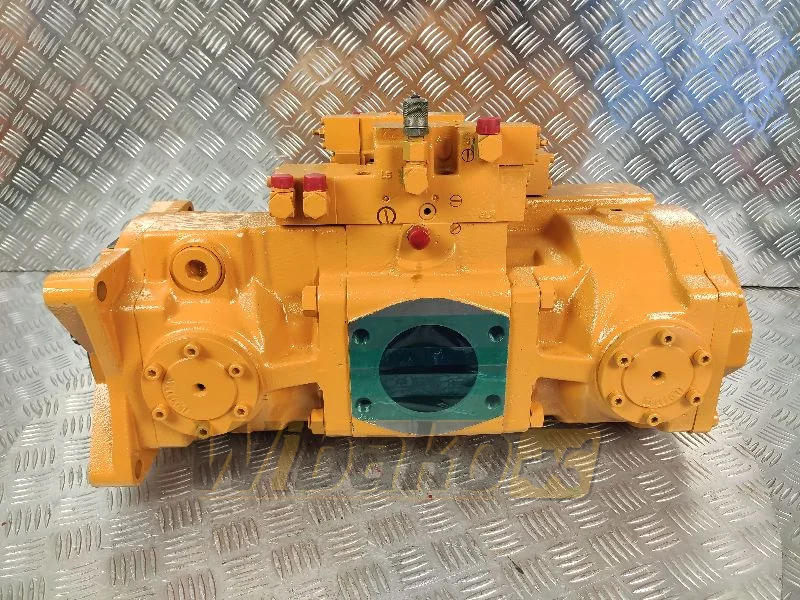
The hydraulic pump is the heart of every Liebherr excavator, wheel loader or crane, while the hydraulic motor turns its power into travel and swing motion. When either of these assemblies fails, the machine stops. WIBAKO has been working as an independent Liebherr service provider for over 35 years, and the repair and overhaul of Liebherr hydraulic pumps and hydraulic motors has been one of our core activities since the company was founded. On this page we explain which series we work on, how to recognise a fault, what an overhaul involves and when a repair makes more sense than a new part.
Liebherr series we overhaul
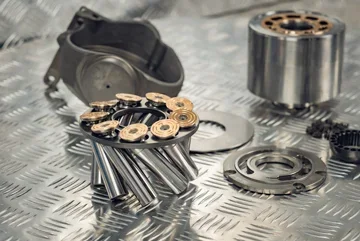
Liebherr manufactures a large share of its hydraulic components in-house. Typical designs are swashplate-type axial piston units, built as variable displacement pumps and as fixed or variable displacement motors.
LPVD, LPV, DPVD, DPVO, DPVP pumps
- LPVD (e.g. LPVD045, LPVD064, LPVD075, LPVD90, LPVD100, LPVD107, LPVD125, LPVD140, LPVD150) – axial piston variable displacement pumps used in current and mid-generation excavators, often in double or tandem configuration with power and load-sensing control.
- LPV (LPV130, LPV150, LPV165) – variable displacement pumps, used among others for travel drives and larger machines.
- DPVD, DPVO, DPVP (e.g. DPVO 165, DPVPO 108) – older series still in service in many Liebherr excavators. For a real-world example, see our report Overhaul of a DPVO 165 from a Liebherr A316.
FMF, FMV, LMF, LMV hydraulic motors
- FMF (FMF032, FMF045, FMF064, FMF100, FMF165, FMF250, FMF280) – fixed displacement motors, often used in swing drives and auxiliary drives.
- FMV (FMV64, FMV075, FMV100, FMV165) – variable displacement motors, typically found in travel drives.
- LMF / LMV (LMF45, LMF64, LMF125, LMV90, LMV100, LMV125, LMV140) – newer-generation fixed and variable displacement motors.
Can't find your model in the list? Send us the nameplate data – we handle many other variants as well.
Symptoms: how do you spot a faulty Liebherr hydraulic pump?
Wear in an axial piston unit usually develops gradually. Typical warning signs include:
- Loss of power and slow movements – the boom and bucket respond sluggishly, especially when the oil is warm. The cause is usually internal leakage at the valve plate, pistons or slippers.
- Unusual noise – whining, whistling or rattling points to cavitation, bearing damage or worn slippers.
- Hydraulic overheating – increased internal leakage turns power into heat; the oil gets hot faster than usual.
- Increased case drain flow from the housing and pressure in the case drain line.
- External leaks at the shaft seal or housing seals.
- Metal particles in the return or case drain filter – a clear signal to shut the machine down before secondary damage spreads through the whole system.
A faulty Liebherr hydraulic motor shows similar signs: the machine travels only to one side or weakly, the swing drive turns jerkily, or the motor runs hot. However, not every loss of power is down to the pump – control valves, regulators or cylinders can also be to blame, as our case "No power" on a Menzi Muck A91 shows.
Diagnostics before removal
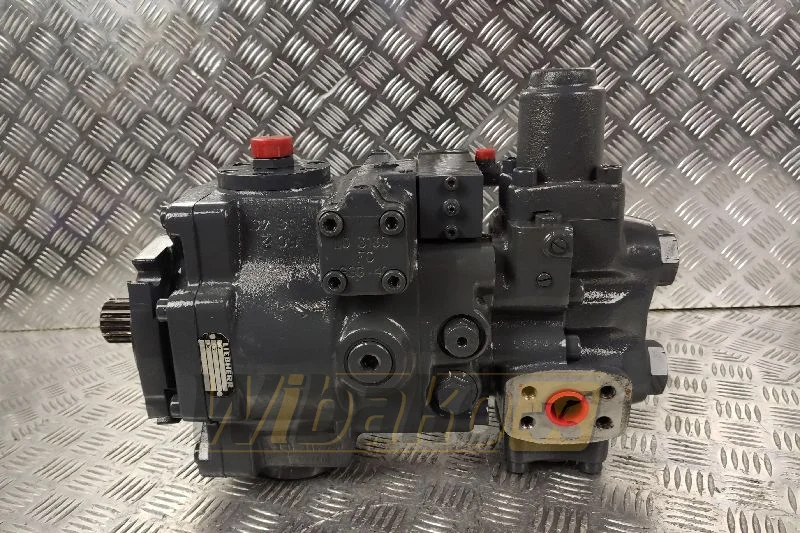
Before a pump is removed, it pays to carry out targeted checks on the machine:
- Measuring working, pilot and charge pressure at the test ports.
- Measuring case drain flow from the pump or motor housing under load.
- Checking the filters for metal particles and wear debris, with oil analysis if needed.
- Checking the controls (power regulator, load sensing, proportional valves) and the electrical actuation.
This shows whether the pump or motor really is the cause – and whether a Liebherr hydraulic pump repair is sufficient or other components are affected too.
The overhaul process at WIBAKO
- Intake and initial inspection – recording the model, serial number and damage pattern.
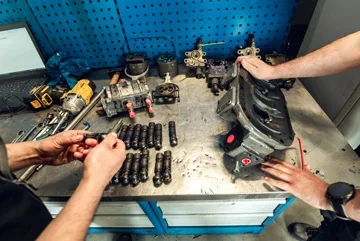
- Disassembly and cleaning – complete strip-down into individual parts.
- Measurement and assessment – we check the pistons and cylinder bores, slippers, retainer plate, valve plate, swashplate, bearings, shaft and regulator.
- Quotation – you receive the scope of work for approval before we proceed.
- Reconditioning or replacement – lapping of sealing surfaces, replacement of the rotating group, bearings, seals and wear parts.
- Assembly and adjustment – reassembly, setting of regulators and flow rates.
- Test bench check – load testing with verification of pressure, flow and leakage under conditions close to real operation.
- Installation – on request, we refit the unit to the machine.
Rebuild or new part?
A full overhaul of a Liebherr hydraulic pump is economically viable in most cases, as long as the housing and main components are not structurally damaged. Problem cases include cracked housings, heavy scoring on the swashplate bearings or a completely destroyed rotating group with secondary damage – in such cases we compare the cost of repair, an exchange unit and a new part with you.
Exchange units
When the machine needs to be back at work quickly, a reconditioned exchange pump or motor can cut downtime. We can check on request whether a unit is currently available for your model (e.g. LPVD or FMF032). You will also find many parts in our new and used Liebherr parts section.
What does the cost depend on?
There is no flat rate, because the cost depends on the actual damage. The key factors are:
- size and type of the pump or motor,
- extent of the damage (just seals and bearings or the complete rotating group),
- condition of the regulator and any adjustment work required,
- removal and refitting on the machine and any secondary damage in the system.
You receive the binding scope of work as a quotation after the inspection.
Shipping your unit to us
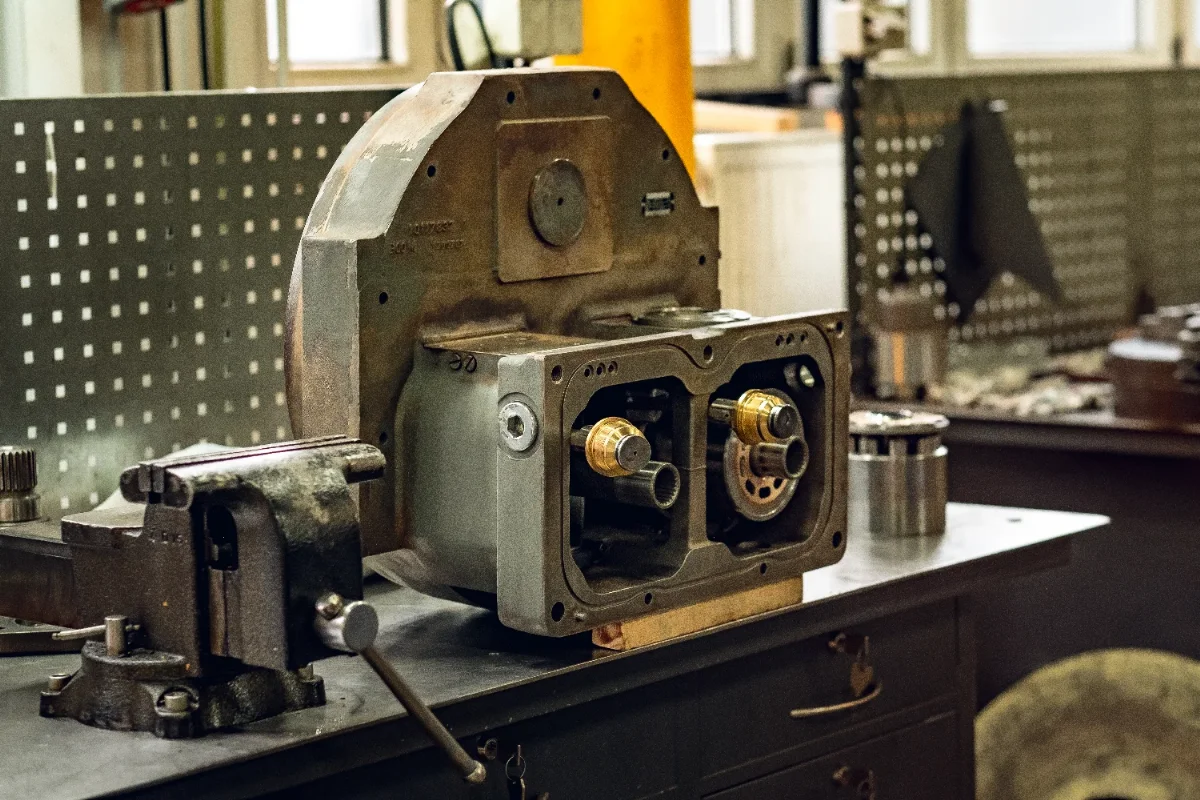
Customers from outside Poland can send us the removed pump or hydraulic motor. Practical tips for shipping:
- drain the oil and seal all ports with plugs or caps,
- secure the unit on a pallet and protect the shaft and regulator against impacts,
- include the nameplate data, machine model and a short description of the fault.
Important after installation
Even the best overhaul won't last if the root cause remains in the system. After a pump failure, the tank and lines should be flushed, all filters changed and the oil replaced. Before the first start-up, the pump or motor housing must be filled with clean oil – running dry destroys bearings and slippers within seconds. Our report Hydraulic overhaul on a Liebherr L564 shows how extensive such follow-up work can be. For further machine services, see Liebherr excavator repair and service.
We also service units from other manufacturers – see our full offer for hydraulic motor repair and pump overhauls.
Suspect a fault in your Liebherr hydraulic pump or hydraulic motor? Contact us with the nameplate data and a description of the symptoms – we will advise you on diagnostics, overhaul and shipping.
The hydraulic system is just one element – our comprehensive Liebherr machine service also covers engines, drivetrains and the repair of excavators, loaders and cranes.
Frequently asked questions
Can a Liebherr hydraulic pump be repaired instead of buying a new one?
In most cases yes, as long as the housing and main components are not structurally damaged. With a cracked housing or a completely destroyed rotating group with secondary damage, we compare the cost of repair, an exchange unit and a new part.
Which Liebherr hydraulic pumps and motors do you overhaul?
We work on, among others, the LPVD, LPV, DPVD, DPVO and DPVP pump series as well as FMF, FMV, LMF and LMV hydraulic motors. Other variants are checked based on the nameplate data.
How do I recognise a faulty Liebherr hydraulic pump?
Typical signs are loss of power and slow movements with warm oil, whining or rattling, rapid overheating of the hydraulic oil and increased case drain flow. Metal particles in the return or case drain filter are a signal to shut the machine down immediately.
Can I ship a removed pump to you from abroad?
Yes. Drain the oil, seal all ports and secure the unit on a pallet. Include the nameplate data, machine model and a short description of the fault.
What should be done after installing an overhauled pump?
The tank and lines should be flushed, all filters changed and the oil replaced. Before the first start-up, the pump or motor housing must be filled with clean oil, as running dry immediately damages bearings and slippers.