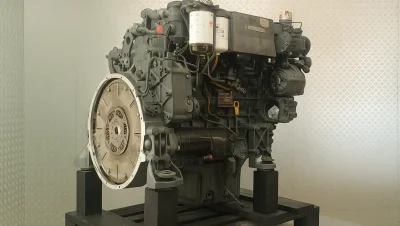
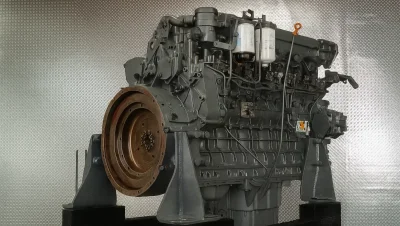
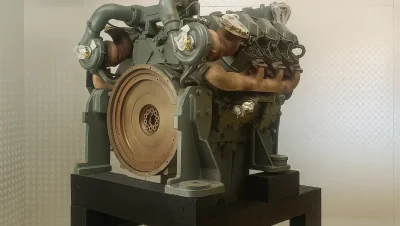
Liebherr D936 A7 Engine Overhaul in a Liebherr PR 746 Crawler Dozer
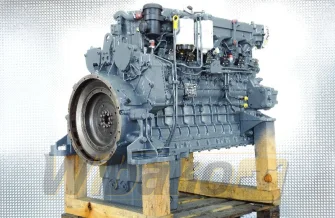
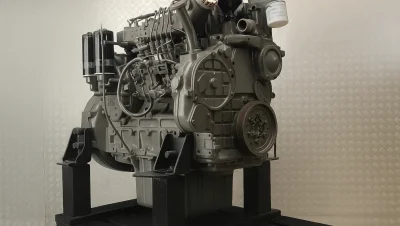
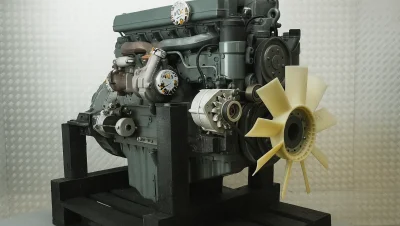
The Liebherr PR 746 crawler dozer is a machine designed for intensive earthmoving operations, land levelling, soil displacement and ground preparation on large construction sites. In these applications, the engine must deliver consistent performance, sufficient power and reliability during prolonged periods of heavy loading. The machine can be equipped with the Liebherr D936 A7, a six-cylinder diesel engine with a displacement of approximately 10.5 litres, featuring an electronically controlled Common Rail fuel injection system and turbocharging with charge air cooling.
Operating a crawler dozer in demanding conditions gradually wears engine components. High loads, dusty environments, long working cycles and changing thermal conditions can affect the condition of the crankshaft and piston assembly, cylinder head, lubrication system and auxiliary equipment. One of the symptoms requiring detailed diagnostics is a gradual loss of power accompanied by increased engine oil consumption and exhaust smoke. Ignoring these warning signs may lead to more extensive damage and significantly higher repair costs.
When internal engine wear is suspected, the appropriate solution is to carry out diagnostics followed by a detailed inspection of the engine after removal. At WIBAKO, we provide comprehensive Liebherr engine overhauls for construction and industrial machinery. We determine the scope of work based on measurement results and the actual condition of individual components. This approach makes it possible to identify which parts can be reused and which require repair, reconditioning or replacement.
For this case, the starting point is a scenario involving progressive wear of the cylinders and pistons in the Liebherr D936 A7 engine. Such wear can reduce combustion chamber sealing, lower compression pressure, increase blow-by gases entering the crankcase and raise oil consumption. However, the actual cause must be confirmed through appropriate measurements and engine disassembly. The following sections describe the individual stages of comprehensive engine servicing for a Liebherr PR 746 crawler dozer.
Initial Diagnostics of the Liebherr D936 A7 Engine Before Removal
Before starting an engine overhaul, it is important to determine whether the observed symptoms genuinely indicate mechanical wear inside the power unit. A loss of power in a crawler dozer does not always mean that a complete overhaul is necessary. Similar symptoms may result from fuel supply problems, restricted airflow, a malfunctioning turbocharger or faults in electronic systems. We therefore begin diagnostics with basic checks that help narrow down the possible causes.
The first step is to collect information about the machine's operating conditions, previous repairs, maintenance history and the circumstances in which the problem occurred. It is important to establish whether the engine lost power gradually or suddenly, whether oil consumption increased and whether starting difficulties have appeared. For machines operating under heavy loads, we also determine whether the loss of performance occurs at idle, when engine speed increases or primarily during intensive earthmoving operations.
Next, we check the engine oil level, its visible condition and the state of the filters. We also inspect the coolant level, the tightness of hoses, the condition of intake connections and any visible signs of leakage. The inspection includes charge air pipes, turbocharger connections and exhaust system components. Leaks or restricted airflow can affect engine performance, so these potential problems must be ruled out before considering a costly overhaul.
We then verify the available engine operating parameters. Depending on the engine version and diagnostic capabilities, this may include reading stored fault codes, checking fuel system operating parameters and examining sensor readings. The Liebherr D936 A7 uses an electronically controlled Common Rail injection system, so diagnostics should also consider the control system and the components responsible for fuel delivery. However, a fault code reading alone does not establish the cause of a problem and must be interpreted alongside other test results.
If the symptoms indicate reduced cylinder sealing, we perform available compression pressure measurements or other tests to assess the condition of the components responsible for combustion. Where appropriate, a borescope inspection can also be useful. It allows us to examine visible wear marks, surface damage and unusual deposits inside the cylinders without immediately dismantling the entire power unit.
If the results confirm suspected mechanical wear and other potential causes do not explain the symptoms, we proceed with engine removal and a detailed workshop inspection. Only after disassembly and the necessary measurements can the actual scope of the overhaul be established reliably.
Removing the Engine from the Liebherr PR 746 Machine
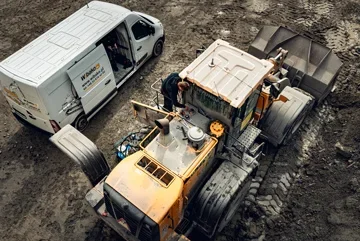
Removing the engine from a Liebherr PR 746 crawler dozer requires careful preparation of the work area and a planned sequence of operations. Due to the weight of the power unit, limited space in the engine compartment and numerous connections to other machine systems, the process should be carried out by experienced mechanics. We perform engine removal using a crane provided by the customer, following applicable safety procedures and the requirements for the specific machine model.
Before work begins, the machine is secured against accidental starting. Our mechanics prepare the work area, check access to the mounting points and determine the safest way to extract the engine from the compartment. The necessary electrical components, cables and auxiliary equipment connections are then disconnected to allow the engine to be removed freely. Particular attention is paid to identifying and labelling disconnected pipes and electrical connectors to simplify subsequent installation and reduce the risk of mistakes.
The next stage involves preparing the systems connected to the engine. Depending on the design and scope of removal, we secure the cooling system connections, air intake, exhaust system and fuel supply lines. Properly protecting open pipes and connections reduces the risk of contaminants entering systems that must remain clean during subsequent operation. We also inspect the condition of hoses, clamps, brackets and other components whose wear could cause problems after the engine has been reinstalled.
Once the necessary connections have been disconnected, the mechanics prepare the engine for lifting. The lifting points and associated equipment are checked to ensure that the load can be transferred safely. The engine is gradually released from its mounts and then extracted from the engine compartment using the crane. During lifting, we monitor the engine's position, its clearance from structural components and the routing of any remaining hoses to avoid damaging either the engine or the machine.
After removing the engine, we inspect the accessible components in the engine compartment. We check the mounts, hoses, connections, visible signs of leakage and areas where contaminants may have accumulated. This inspection is important because the compartment must be properly prepared before the overhauled engine is reinstalled. If any component raises concerns, it is included in the subsequent inspection before the dozer is restarted.
The removed engine is properly secured and prepared for transport to the WIBAKO workshop in Kojszówka, Poland. Our workshop facilities allow us to carry out detailed inspections, dismantle the unit and perform measurements that cannot be completed fully at a construction site. This enables repair work to be carried out in a controlled environment with access to appropriate measuring equipment and specialist workshop facilities.
Workshop Inspection of Liebherr D936 A7 Engine Components
Once the engine has arrived at our workshop, we begin a detailed assessment of its technical condition. The purpose is to confirm the cause of the failure and determine which components can be reused and which require repair, reconditioning or replacement. The scope of inspection depends on the initial diagnostic findings, visible damage and the condition of individual components after removal.
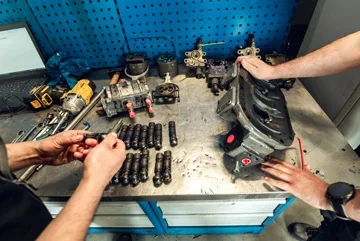
Before dismantling the engine, we carry out an external inspection and check the available identification information. Where possible, we assess the condition of auxiliary equipment, the tightness of connections and visible signs of previous repairs. The unit is then dismantled into individual components. Parts requiring further assessment are organised accordingly, while components intended for measurement are thoroughly cleaned. Removing deposits and oil residue is necessary to ensure that surface inspections and dimensional measurements are reliable.
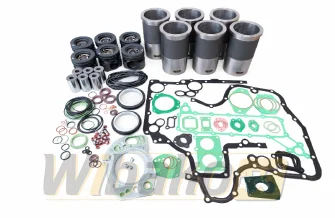
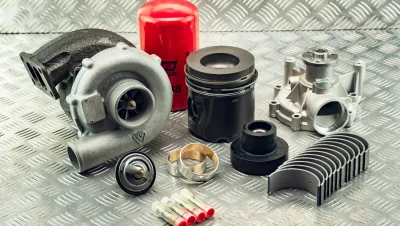
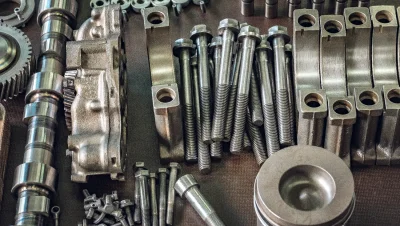
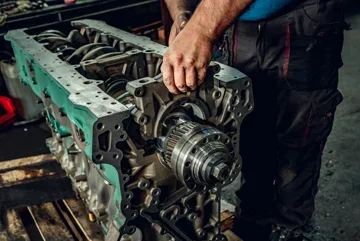
When cylinder and piston wear is suspected, particular attention is paid to the crankshaft and piston assembly. We inspect the condition of the pistons, piston rings, cylinder liners and bearings. We look for scratches, signs of overheating, uneven wear and other evidence of abnormal operating conditions. Dimensional measurements are also performed to determine whether individual components remain within the permissible limits specified for the relevant engine version.
The crankshaft is inspected separately. We assess its surface condition, main and connecting rod journals, and oil passages. Depending on its condition, we measure crankshaft runout and journal dimensions. The connecting rods are also checked for cracks, signs of overheating, deformation and the condition of the surfaces that work with the bearings. These measurements help determine whether the components can be reused or whether further repair work is necessary.
The cylinder head is inspected for sealing integrity and the condition of valve seats, guides and valves. We examine the mating surfaces, visible damage and signs of overheating. Depending on the inspection results, a pressure or leak test is performed. If the cylinder head is suitable for reconditioning, the necessary work can be planned, including surface machining, replacement of worn valve guides and valves, and preparation of the component for reassembly.
We also inspect the components responsible for engine lubrication and cooling. The available oil passages, mating surfaces and components that may have contributed to accelerated wear are examined. If metal particles or other contaminants are found, we investigate their possible source and assess their potential impact on the remaining components. Removing visible contamination alone is not sufficient if the underlying cause has not been identified.
The fuel system is another important area of inspection. The Liebherr D936 A7 uses an electronically controlled Common Rail system, so its components must be assessed with the characteristics of this technology in mind. Depending on the symptoms and diagnostic results, the injectors and other fuel supply components may require inspection. Components requiring specialist testing are sent to an appropriate facility equipped with a test bench.
We also inspect the turbocharger, intake pipes and auxiliary equipment. The turbocharger is checked for excessive play and visible signs of damage. The starter motor, alternator and accessible electrical components are also assessed. Not every component necessarily requires repair, but its condition should be established before the overhaul is completed. This reduces the risk of a fault unrelated to the repaired mechanical components occurring after the engine has been reinstalled.
Once the inspection is complete, we determine the scope of work. This allows us to prepare a list of the parts and services required for the overhaul. A reliable quotation can only be provided after the actual condition of the engine has been established. This approach helps avoid replacing serviceable components unnecessarily while reducing the risk of leaving worn parts that could compromise the durability of the repair.
Repairing the Crankshaft and Piston Assembly in the Liebherr D936 A7 Engine
The crankshaft and piston assembly converts the energy generated during fuel combustion into the rotational movement of the crankshaft. Its condition directly affects engine power, efficiency, oil consumption and operating stability. In the Liebherr D936 A7 engine, which is used in a heavy crawler dozer, maintaining proper cylinder sealing is particularly important because the engine must withstand prolonged operation under varying loads.
If the inspection confirms wear in the crankshaft and piston assembly, the scope of repair is determined based on measurement results. We check the condition of the pistons and piston rings, assess the cylinder liner surfaces and verify the dimensions of the mating components. If wear exceeds the permitted limits, components are qualified for replacement or appropriate machining, provided that the design and technical documentation for the specific engine variant allow it.
Worn piston rings can reduce combustion chamber sealing, increase blow-by and cause excessive oil consumption. Damaged or excessively worn cylinder surfaces also affect piston and ring operation. We therefore assess the entire assembly rather than focusing on a single component. Only after establishing the dimensions of the interacting parts can an appropriate repair solution be selected.
The connecting rods and bearings are also inspected. Wear on bearing surfaces may be associated with inadequate lubrication, contaminated oil or prolonged operation. During the overhaul, we assess whether these components retain the required dimensions and geometry. If damage is found, we determine the appropriate repair scope and replace any parts that do not meet the required specifications.
The crankshaft is examined for journal condition, runout and potential surface damage. If necessary, it may undergo machining, provided that the technical requirements for the specific engine variant permit it. After machining, all interacting components must be dimensionally compatible because incorrect clearances can lead to inadequate lubrication, increased temperatures and accelerated wear.
Before assembly, the components are cleaned again and prepared for installation. Particular attention is paid to the cleanliness of the oil passages and the surfaces that will operate under heavy loads. During assembly, components are selected to match the specific engine version. Proper preparation of the crankshaft and piston assembly is one of the most important stages of an overhaul because it affects cylinder sealing, engine durability and the operating parameters assessed during subsequent testing.
Reconditioning the Liebherr D936 A7 Cylinder Head
The cylinder head is responsible for proper gas exchange, combustion chamber sealing and the interaction of the valves with the other engine components. Its condition significantly affects starting performance, smooth operation and engine output. During an overhaul of the Liebherr D936 A7, the cylinder head is carefully inspected to determine whether it can be reused after reconditioning.
After removal and cleaning, we inspect the cylinder head surfaces and assess the valve train components. Valve seats, guides, valves and mating surfaces are checked. Particular attention is paid to signs of overheating, cracks and deformation. Depending on the inspection results, a leak test is performed to identify damage that may not be visible during a standard visual inspection.
If the cylinder head is suitable for reconditioning, the scope of work is selected according to the identified wear. This may include surface machining, replacement of valve guides, replacement of valves and appropriate preparation of valve seats. All operations must comply with the dimensional and geometric requirements for the relevant component. The aim is not merely to improve the appearance of the part but to restore the conditions required for correct operation after reassembly.
After reconditioning, we inspect the prepared cylinder head again. We check the surfaces and components that will interact with the remaining engine parts. A properly prepared cylinder head reduces the risk of sealing problems and incorrect valve operation. This is particularly important in an engine intended for a machine that operates for many hours under demanding conditions.
Inspecting the Fuel System and Engine Auxiliary Equipment
In addition to mechanical components, the fuel system and auxiliary equipment must also be inspected during an overhaul of the Liebherr D936 A7 engine. The engine uses a Common Rail system in which electronic control of fuel quantity and injection timing affects combustion, performance and operating smoothness. Problems in this area can cause starting difficulties, uneven running, excessive smoke and reduced engine performance.
The scope of fuel system inspection depends on the symptoms reported before removal and the diagnostic results. We check the condition of accessible components and connections and, where necessary, arrange specialist testing of injectors or other components that require a test bench. During engine assembly, we pay particular attention to system cleanliness because contaminants can adversely affect the precision components of the high-pressure fuel system.
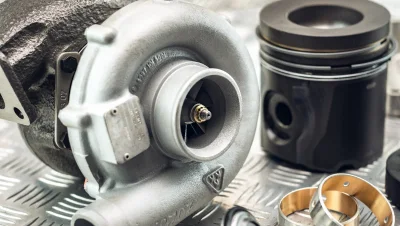
The turbocharger is also inspected. We assess its condition, play and visible signs of damage, as well as the oil supply and return pipes where these fall within the scope of the work. Leaks in the intake system or turbocharger damage can affect the amount of air supplied to the cylinders and therefore influence engine performance and combustion conditions. The turbocharger must consequently be assessed as part of the complete engine system.
We also check the starter motor, alternator, accessible electrical connections and auxiliary equipment. If necessary, additional inspections are carried out or individual components are qualified for repair. During reassembly, we verify that pipes and connectors are routed correctly and secured against abrasion, excessive vibration and contact with hot components.
Before completing the overhaul, we also inspect the accessible lubrication and cooling system components. The engine must have the correct conditions for heat dissipation and oil delivery to the interacting surfaces. Even a properly executed mechanical overhaul may not provide the expected durability if the original cause of the damage remains within the lubrication, cooling or fuel supply system.
Professional Assembly of the Liebherr D936 A7 Engine
After inspection and preparation of all components, we proceed with engine assembly. This stage requires precision, the correct sequence of operations and compliance with the technical requirements for the specific Liebherr D936 A7 variant. Each component must be prepared for installation, and all mating surfaces must be thoroughly cleaned. Residual contaminants, metal particles or incorrectly prepared connections can cause problems during the first engine start.
Work begins with preparing the engine block and crankshaft and piston assembly. Before installation, we check the cleanliness of the oil passages, surface condition and dimensional compatibility of the components. The crankshaft, connecting rods, pistons and other parts are assembled in accordance with the technical documentation. Required clearances and connection parameters are checked during installation, and fasteners are tightened according to the relevant procedures. This helps reduce the risk of incorrect component positioning and premature wear.
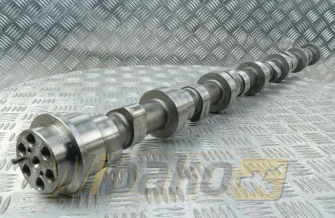
The remaining mechanical components and the prepared cylinder head are then installed. Correct positioning of seals, proper preparation of mating surfaces and accurate fastening are particularly important. During valve train assembly, we inspect the components responsible for correct valve operation. Adjustments and assembly procedures are performed in accordance with the requirements for the specific engine variant, without substituting specified technical values with arbitrary settings.
Once the main components have been assembled, the engine auxiliary equipment is installed. This includes the fuel, lubrication, cooling, intake and exhaust system components, along with other parts included in the overhaul. During pipe installation, we pay particular attention to routing, the condition of sealing surfaces and secure fastening. Pipes must not be twisted, excessively tensioned or routed in a way that exposes them to abrasion against other components.
An important part of preparing the engine for starting is checking the lubrication and cooling system connections. We verify that the pipes are correctly connected, the mounts are complete and the sealing components have been installed properly. Depending on the work performed, we also inspect the fuel system connections and charge air pipes. The aim is to prepare the unit for testing without risks arising from assembly errors or overlooked leaks.
Before the first start, we check that the assembly is complete and prepare systems that require filling or bleeding in advance. Filters included in the service scope are replaced, and the relevant operating fluids are replenished according to the requirements for the specific engine. We also inspect the electrical connections, mounting points and intake system. Only after these checks have been completed can the engine proceed to the testing stage.
A professional engine overhaul does not end with assembling the components. Equally important are quality control, checking that all auxiliary equipment is correctly installed and preparing the engine for further operation. At WIBAKO, we pay close attention to these details because correct assembly affects both the safety of the first start and the long-term durability of an engine operating in demanding construction conditions.
Testing the Liebherr D936 A7 Engine on an Engine Dynamometer
One of the important stages of the overhaul process is testing the engine on a dynamometer. Testing before reinstalling the engine in the machine makes it possible to assess its behaviour under controlled conditions without using the entire dozer for preliminary verification. At WIBAKO, we use an engine dynamometer to test overhauled units, extending quality control beyond a standard workshop start-up.
The Liebherr D936 A7 is a six-cylinder engine with a displacement of approximately 10.5 litres, equipped with turbocharging and an electronically controlled Common Rail injection system. Proper assessment of this type of engine requires consideration of its design, control system and operating conditions specified for the particular version. Reference parameters must be selected using technical data applicable to the specific engine variant and configuration. Values should not be transferred directly between engine versions intended for different applications.
After preparing the engine for testing, we verify that it is ready to start. We check the connections, operating fluid levels, engine mounting and condition of the available auxiliary equipment. The engine is then started and monitored during operation. At the initial stage, it is important to verify that the engine starts correctly, maintains stable speed and does not exhibit unusual symptoms. Mechanics monitor noises, vibration, visible leaks and the available operating parameters.
For overhauled engines, testing begins with operation under a light load. The adopted procedure provides for at least 16 operating hours under light-load conditions, corresponding to approximately 20-30% of the rated load. This stage allows the interacting surfaces to bed in gradually while the engine's behaviour is monitored under controlled conditions. Operating parameters and overall stability are observed throughout the test. Any unusual deviations must be investigated before proceeding to the next stage.
After the initial operating period has been completed and the engine's behaviour has been confirmed as satisfactory, further tests can be carried out at higher loads. The load is increased gradually, and the engine is checked under different operating conditions specified by the test procedure. The aim is to assess its response to changing loads, parameter stability and the correct operation of the systems responsible for fuel delivery, lubrication and cooling. Any irregularities identified during testing can then be investigated before the engine is installed in the dozer.
During testing, particular attention is paid to oil pressure and operating temperature readings, as well as the engine's response to changes in load. Depending on the available equipment and measurement capabilities, operating performance, including power and torque, may also be analysed. The results must be interpreted against the specifications for the particular engine, its configuration and the conditions under which the test was performed. A single reading is not sufficient to assess the entire overhaul.
The dynamometer also allows us to observe whether the engine responds correctly to gradually increasing loads and whether symptoms indicating mechanical problems or auxiliary equipment faults appear. If unusual noises, unstable parameters or other concerning symptoms occur, the test must be stopped and the cause investigated. This makes it possible to identify potential problems before installing the engine in the machine, when access to many components is easier.
Dynamometer testing does not, however, replace inspection after installation in the target machine. The Liebherr PR 746 has its own cooling, intake, exhaust and control systems, as well as systems that interact with the engine. Operating conditions after installation differ from those on a test stand, so the connections and engine performance must also be checked in the machine. A successful dynamometer test is an important stage of quality control, but it should be supplemented by start-up checks and operational testing.
After testing, we analyse the collected information and assess whether the engine meets the requirements established for the procedure. The test results provide an additional basis for evaluating overhaul quality. The ability to test the engine under load before installation in the dozer is a significant advantage of comprehensive engine repair because it reduces the risk of discovering certain problems only after the entire machine has been restarted.
Installing the Overhauled Engine in the Liebherr PR 746 Crawler Dozer
After the overhaul has been completed and the engine has passed the required tests, the unit is prepared for reinstallation. We carry out this work as part of our construction machinery service, taking into account the conditions at the machine's location. Depending on the repair arrangements and the availability of suitable equipment, our mechanics perform the installation at the customer's site using a crane provided by the customer. Before work begins, the area must be prepared to allow the engine to be safely positioned inside the engine compartment.
Before lifting the engine, we check its transport preparation, the completeness of the auxiliary equipment included in the installation and the condition of the mounting points. We also verify that the engine compartment has been properly prepared following removal. Any remaining contamination should be removed, and hoses, brackets and mounts inspected for visible damage. This preparation helps reduce the risk of problems during positioning and makes it easier to route all connections correctly.
The engine is gradually lowered into the compartment using the crane. During this operation, the mechanics monitor its position and maintain clearance from structural components and other equipment. Once the unit is correctly positioned, the mounts are secured and tightened according to the technical requirements. The engine must be installed correctly because improper positioning can cause additional stress, vibration or difficulties when fitting auxiliary equipment.
The next stage involves connecting the pipes and associated components. We restore the cooling, lubrication, fuel supply, air intake and exhaust connections. The electrical installation and relevant control connectors are also connected. Each connection is checked against the available documentation and the labels applied during removal. Particular attention is paid to pipes routed near hot components or exposed to vibration while the dozer is operating.
Once the pipes have been connected, we inspect their routing and fastening. Clamps, brackets, connectors and visible seals are checked. Pipes must not be twisted or excessively tensioned, and all connections must remain leak-free under normal operating conditions. If any component shows signs of wear that could compromise safe operation, its replacement should be considered before starting the engine. Additional checks at this stage reduce the risk of having to dismantle auxiliary equipment again after a leak develops.
Before starting the engine, we prepare systems that require filling and check operating fluid levels. Filters included in the service scope are replaced, and the systems are prepared in accordance with the technical requirements for the specific engine variant. We also inspect electrical connections, battery condition and the available starting system components. Before the first start, the entire assembly is visually inspected to ensure that no hoses remain disconnected and no components require additional securing.
The first start is supervised by our mechanics. Once the engine is running, we check its behaviour, available operating readings and the tightness of the connections. We monitor the cooling, lubrication, fuel supply and intake systems. We also check for unusual noises, excessive vibration or other symptoms that could indicate a problem. If any irregularities occur, their cause must be established before the machine is returned to service.
After the initial inspection, functional tests are carried out on the machine. Together with the operator, our mechanics check the dozer's operation under conditions that allow the engine's response to changes in speed and load to be assessed safely. We verify operating stability and engine behaviour during the subsequent stages of testing. It is also important to check that the connections and auxiliary equipment remain leak-free once the engine reaches operating temperature. If the tests are satisfactory and no irregularities are identified, installation can be completed and a work completion report prepared.
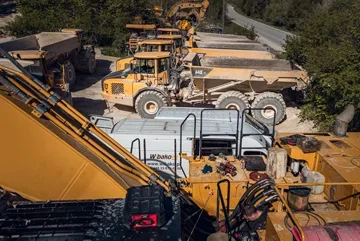
WIBAKO also provides mobile construction machinery servicing throughout Poland. If a repair requires engine removal, the unit can be transported to our headquarters in Kojszówka for workshop repairs and dynamometer testing. Once the overhaul is complete, we arrange the next stage of service according to the agreed scope, including reinstallation and verification of engine operation in the machine.
Post-Overhaul Engine Maintenance and the 50-Hour Inspection
Proper maintenance after an overhaul is important for the durability of the repaired power unit. Even if the engine has been assembled correctly and has passed dynamometer testing, the first operating hours require monitoring of its technical condition and operating parameters. This is particularly important for the Liebherr PR 746 crawler dozer, whose engine may operate under substantial loads for extended periods.
After installation, we recommend following the operating procedures specified for the particular engine and using the appropriate service materials. The operator should monitor operating readings, pay attention to unusual noises and check for visible leaks. Any concerning symptoms should be reported promptly. A quick response makes it possible to investigate the cause before it develops into more serious damage.
The first inspection should be carried out after 50 operating hours from the engine's initial start. At WIBAKO, we recommend that this inspection be performed by our mechanics. The service is not limited to replacing filters. It also includes assessing the general condition of the engine, checking its connections to other machine components and verifying whether leaks or other irregularities have appeared during operation.
During the service visit, we inspect accessible pipe connections, mounts and auxiliary equipment. We check for visible signs of engine oil, coolant or fuel leakage. If necessary, we analyse symptoms reported by the operator and verify engine operation under machine operating conditions. An early inspection is important because certain problems may only become apparent after a period of use, even if the initial start-up and acceptance tests were completed successfully.
After the first inspection, regular maintenance should continue in accordance with the manufacturer's requirements and the agreed service schedule. We recommend subsequent inspections every 250 operating hours, but at least once every three months. The scope of work should be adjusted to the machine's condition, operating environment and technical documentation. When the machine operates in dusty environments, under heavy loads or in particularly demanding conditions, additional attention may be required for the intake, cooling and lubrication systems.
Regular maintenance helps identify irregularities at an early stage and reduces the risk of further failures. For the owner of a Liebherr PR 746 crawler dozer, this means more predictable operation and better control over the machine's technical condition. As part of our WIBAKO service, we can carry out inspections and checks on overhauled engines according to the scope agreed with the customer.
The Liebherr D936 A7 Engine in Construction Machinery
The Liebherr D936 A7 is a six-cylinder diesel engine with a displacement of approximately 10.5 litres. Depending on the version and configuration, it may feature a Common Rail system, turbocharging and charge air cooling. This type of engine is designed for applications requiring high efficiency and the ability to operate for extended periods. Specific power ratings, exhaust aftertreatment systems and control arrangements depend on the engine variant and the machine in which it is installed.
In the Liebherr PR 746 crawler dozer, the engine works in conjunction with the drive system and the machine's other systems. During earthmoving operations, it must respond appropriately to changing loads and maintain stable operating parameters. Its technical condition therefore affects not only whether the dozer can be started but also its ability to perform the required tasks.
Engines from the D936 family are used in various industrial and machinery applications. However, this does not mean that every version is directly interchangeable with another. Before selecting parts or starting an overhaul, the engine designation, serial number, auxiliary equipment configuration and technical requirements of the particular machine must be verified. This is especially important for electronic systems, fuel supply components and equipment responsible for meeting emissions requirements.
WIBAKO carries out repairs and overhauls of diesel engines used in construction machinery from various manufacturers. For Liebherr engines, we determine the scope of work based on diagnostics and the actual technical condition of the unit. Correct component identification and thorough inspection before starting repairs make it possible to prepare a solution tailored to the specific application.
Summary of the Liebherr D936 A7 Engine Overhaul
An engine overhaul in a Liebherr PR 746 crawler dozer should cover the entire process, from initial diagnostics, removal and component inspection through repairs and dynamometer testing to reinstallation in the machine. When cylinder and piston wear is suspected, a detailed inspection of the crankshaft and piston assembly is particularly important. At the same time, the cylinder head, fuel system, lubrication, cooling and auxiliary equipment must not be overlooked because all these components affect the correct operation of the power unit.
At WIBAKO, we focus on diagnostics and measurements that establish the actual scope of repair. Testing on an engine dynamometer makes it possible to assess the unit under controlled conditions before reinstallation. We then inspect the engine after installation, check the tightness of connections and carry out functional tests. This approach allows the engine to be assessed at several stages of the overhaul process rather than limiting quality control to the initial start-up.
Maintenance after the repair is equally important. The recommended inspection after 50 operating hours makes it possible to check the engine after its initial period of operation, inspect connections and replace the required filters. Subsequent inspections should be carried out every 250 operating hours, but at least once every three months, taking into account the manufacturer's recommendations and operating conditions.
If the engine in your Liebherr PR 746 crawler dozer is losing power, consuming excessive oil, producing smoke or showing other concerning symptoms, professional diagnostics are a good starting point. WIBAKO provides comprehensive diesel engine servicing, engine overhauls, dynamometer testing and post-repair maintenance. Our mobile service operates throughout Poland, while repairs requiring workshop facilities are carried out at our headquarters in Kojszówka.
For more information about our services, visit the WIBAKO website. You can also explore our services for construction machinery servicing and diesel engine overhauls.
Contact Us
Need a Liebherr D936 A7 engine overhaul or servicing for your Liebherr PR 746 crawler dozer? Contact WIBAKO. We provide comprehensive diesel engine repairs, diagnostics, engine dynamometer testing, installation and mobile service throughout Poland.