On an excavator, the undercarriage is the component that wears fastest and accounts for the largest share of operating costs. Rollers, idlers and the track chain wear with every metre travelled and every counter-rotation on the spot. The good news is that wear can be measured before something cracks or the track comes off on site. Below we explain what the undercarriage consists of, what to measure and how, and when it makes sense to replace a single component or the complete set.
What an excavator undercarriage consists of
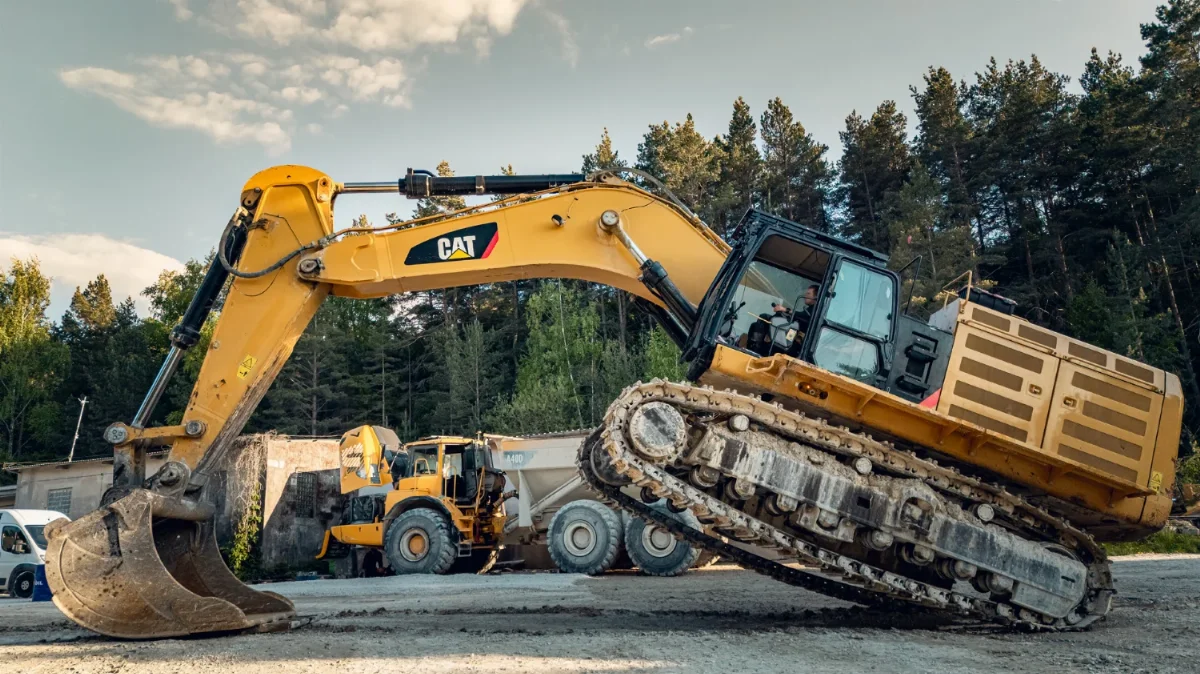
All undercarriage components work together, so wear on one speeds up wear on the others. On a typical crawler excavator, these are:
- Track frame: the load-bearing structure carrying the rollers, idler and track adjuster.
- Track rollers (bottom rollers): transfer the machine's weight to the chain. They have a tread and guide flanges, are usually lubricated for life with oil and sealed with face seals.
- Carrier rollers (top rollers): support the upper strand of the track so it does not sag and strike the frame.
- Front idler: guides the chain at the front of the undercarriage and, together with the track adjuster (grease cylinder with recoil spring), maintains correct track tension.
- Sprocket (drive sprocket or segments): transfers torque from the final drive to the chain. You can read more about the drive itself in our article Excavator final drive – design, signs of wear, rebuild or replacement.
- Track chain: links joined by pins and bushings, with track shoes bolted on.
How to measure excavator undercarriage wear
Take measurements on a cleaned undercarriage, as mud and stones distort the results. Compare readings with the nominal values and wear limits from the machine or parts manufacturer's documentation. Only then do you know what percentage of the service life has already been used. It is worth keeping a simple log: date, operating hours, readings. The rate of wear tells you more than a single measurement.
Chain pitch
A track chain does not stretch – it wears internally: the pin wears inside the bushing and the pitch increases. Measure the distance between pin centres over several links (e.g. 4 sections) with the track tensioned, and divide by the number of sections. Also check the outside diameter of the bushings where they engage the sprocket, and the link height from the rail to the shoe contact surface. A low link rail means the rollers are running on an ever smaller diameter.
Track rollers and carrier rollers
Measure the tread diameter with a caliper or gauge and compare it with a new roller. Check flange height, end play (lever the roller with a pry bar) and any oil traces on the face. A leak indicates a damaged seal, and a roller without oil will seize quickly. Carrier rollers that have stopped turning develop flat spots on the tread. Replace such a roller immediately, as it destroys the links.
Front idler and sprocket
On the idler, assess the tread, centre flange, play on the shaft and seal tightness. Sprocket teeth should have a symmetrical, rounded profile. Pointed teeth, teeth worn to one side or hook-shaped teeth are a sign that the sprocket and chain no longer match.
Track tension
Drive the machine forward a short distance and stop without braking with the track. The easiest way to measure tension is to lift the track with the boom: measure the sag of the lower strand between the frame and the shoe at the lowest point and compare it with the operator's manual. To tighten the track, pump grease into the adjuster valve with a grease gun. To slacken it, open the valve by a small angle. Never unscrew the valve completely and never stand in line with it, as the grease in the adjuster is under high pressure.
Symptom – cause – action
The most common warning signs worth noticing during daily maintenance:
- Track comes off when turning – track too slack, worn roller or idler flanges, leaking track adjuster. Check tension and adjuster sealing, measure the flanges.
- Track loses tension after a few days – the adjuster cylinder seal or valve is leaking. The adjuster needs repair or replacement; simply pumping in more grease will not help.
- Knocking and clattering while travelling – worn sprocket teeth, excessive chain pitch, loose shoes. Measure the pitch and retighten the shoe bolts.
- Oil traces on a roller or idler – damaged face seal. Replace or rebuild the component before it seizes.
- Uneven wear on one side – working mainly on slopes, turning in one direction, bent frame or misaligned chain. Check the geometry and change working practices.
- Cracked link or shoe – overload, working on rock, excessive track tension. We show what such a repair looks like in practice in our article How to repair a damaged track? Doosan DX 225LC excavator.
Why the undercarriage wears faster than it should
The rate of wear depends mostly on how the machine is operated, and only then on parts quality. The most common mistakes:
- Track tensioned too tight: loads on pins, bushings and wheels increase, and wear can multiply.
- Mud, clay and stones packed in the undercarriage: act as extra tension and as an abrasive. Clean the undercarriage at the end of each shift, especially in winter, as frozen mud locks the rollers.
- Long travel distances and high speed: an excavator is not a transport vehicle. Use a low-loader for longer distances.
- Reversing and sharp counter-rotation: increase wear on bushings, sprocket teeth and flanges.
- Shoes too wide for hard ground: act as a lever on links and bolts.
- Neglected lubrication of attachments and slewing ring does not affect the undercarriage directly, but reflects the general standard of maintenance. Central lubrication can help.
Rebuild or replace the complete set
The basic rule: mating components should have a similar degree of wear. A new chain on a worn sprocket quickly takes on its profile and loses service life. Conversely, a new sprocket on a worn chain will knock and wear unevenly. That is why the chain and sprocket are usually replaced together, while rollers and idlers are replaced according to measurements.
Replacing a single component is justified when one part fails and the rest are in good condition, e.g. a seized carrier roller or a leaking idler. When measurements show that most components are approaching their wear limits, it pays to replace the complete set in one go rather than part by part during repeated downtime. Rebuilding (hardfacing roller and idler treads, replacing seals) makes sense for large, expensive components with an undamaged body. Whether it pays off in a specific case is best discussed after measurements.
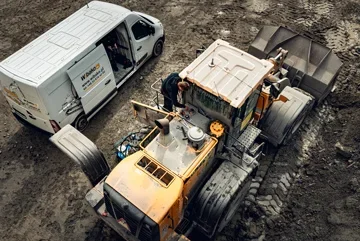
We also replace undercarriage components in the field, at the customer's site. Guide rates: mechanic's labour PLN 230 net per hour, PLN 190 net when fitting parts bought from WIBAKO, travel PLN 3 net per km (charged both ways).
Selecting crawler undercarriage parts
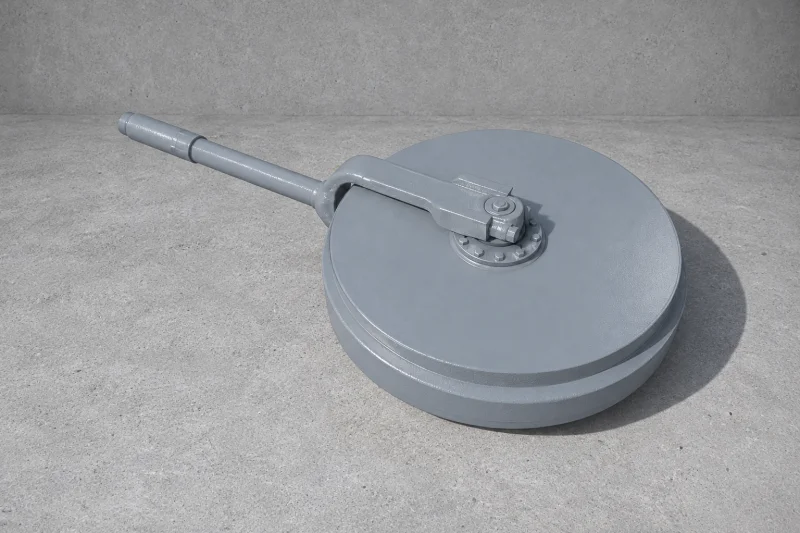
Undercarriage parts are selected for the specific machine, not just its weight class. When ordering, have ready:
- the make, model and serial number of the machine (e.g. Liebherr R 914, CAT 330C, Komatsu PC210), as different undercarriage versions exist within one model,
- the part number from the current component, if legible,
- for the chain: pitch, number of links, type (sealed and lubricated or dry) and shoe width,
- for the idler: diameter, width, mounting method and type of track adjuster.
In our construction machinery parts shop you will find new and used undercarriage components, including complete assemblies, e.g. a complete undercarriage for the HSW TD-25E dozer. If you cannot find an idler or rollers for your machine in the shop, send us the model, serial number and photos of the parts. We will help you select the right component or advise on the scope of replacement based on measurements.
Frequently asked questions
How do I select an idler for a Liebherr, CAT or Komatsu excavator?
You need the exact machine model and serial number, ideally also the part number from the current component. Within a single model, e.g. Liebherr R 914 or CAT 330C, there are different undercarriage versions that differ in idler diameter, tread width and mounting.
How do I check track tension on an excavator?
Drive the machine forward a short distance, lift the track with the boom and measure the sag of the lower strand between the frame and the shoe. Compare the result with the value in the operator's manual. Tension is adjusted by pumping grease into the track adjuster or carefully opening the valve.
Can I replace only the track chain without the sprocket?
Yes, but a new chain on a worn sprocket wears noticeably faster because the pitches of the components no longer match. With advanced wear, it usually pays to replace the chain together with the sprocket or segments.
Why does the track come off an excavator?
The most common causes are a slack track, a leaking track adjuster, worn roller or idler flanges and damaged track guides. Travelling across a slope with sharp turns also contributes.
How often should a crawler undercarriage be inspected?
Check cleanliness and tension regularly during daily maintenance, especially when ground conditions change. Measurements of pitch, rollers and idlers are best taken at scheduled services and recorded, so you can track the rate of wear.