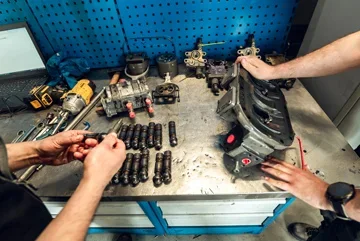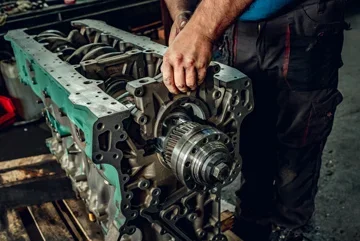


Pins, bushings and the slewing ring bearing work under huge loads, often in mud, dust and water. When they run short of grease, wear accelerates: play develops in the attachment linkage, bores go oval and bushings seize, and the repair ends in line boring and re-bushing. A central lubrication system for an excavator or wheel loader is designed to prevent this: it delivers small doses of grease automatically, during operation, to every connected point. Below we explain how such a system is built, what types exist, what goes wrong with it and how to maintain it.
Why central lubrication and which points it serves
Grease in a pivot joint does more than reduce friction. A fresh shot pushes dirt and water out of the joint and forms a sealing collar at the edge of the bushing. With manual greasing once per shift, the joint gets a lot of grease at once, which is gradually squeezed out, so by the end of the shift it is running almost dry. A central system doses little but often, so the lubricating film stays constant.
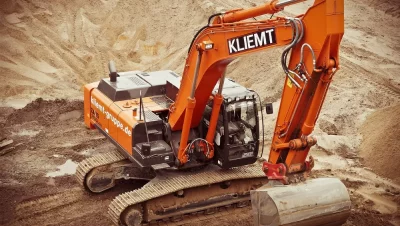
On a crawler or wheeled excavator the system typically serves:
- the boom foot pins and boom cylinder pins,
- the stick (arm) pins and stick cylinder pins,
- the bucket linkage (links, rocker, bucket cylinder pin),
- the slewing ring bearing and, on some versions, the slewing ring gear teeth,
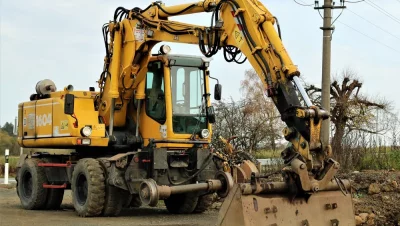
- on wheeled excavators, additionally the outrigger and dozer blade pivots and the steering knuckles.
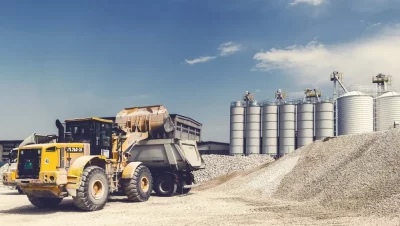
On a wheel loader the typical points are the articulation joint, steering cylinder pins, lift arms and Z-bar or parallel linkage, bucket pins and the oscillating axle bearings. The pins of the bucket itself or the quick coupler are often connected via a separate line or left for manual greasing – it is worth checking how this is done on your machine.
System types: progressive and single-line
Progressive system
The progressive system is the most common on construction machinery. The pump delivers grease to a main divider block, which feeds secondary dividers at groups of lubrication points. In a progressive divider the pistons operate in sequence: each subsequent stroke is only possible once the previous piston has pushed its dose to its outlet. The advantage is easy monitoring – if the sensor or indicator pin on one piston moves, the whole divider is working. The drawback: a single blocked outlet stops the entire divider and every point downstream of it.
Single-line system
In a single-line system the pump builds pressure in one main line, to which injectors (metering valves) are connected at each point. Once the set pressure is reached, the injectors deliver a fixed dose, then a relief valve vents the pressure and the injectors recharge for the next cycle. One blocked point does not cut off the others, but it is harder to detect which point is not receiving grease. Large mining machines also use dual-line systems.
Manufacturers
The market is dominated by Willy Vogel and Lincoln systems (both brands now belong to the SKF group), as well as Groeneveld and Beka. Liebherr fits its excavators and loaders with factory central lubrication of its own design or based on components from these manufacturers. On Volvo machines you will find both factory and retrofitted systems, most often Lincoln or Groeneveld. So when replacing parts, what matters is not the make of the machine but the manufacturer and type of the pump and dividers.
System design
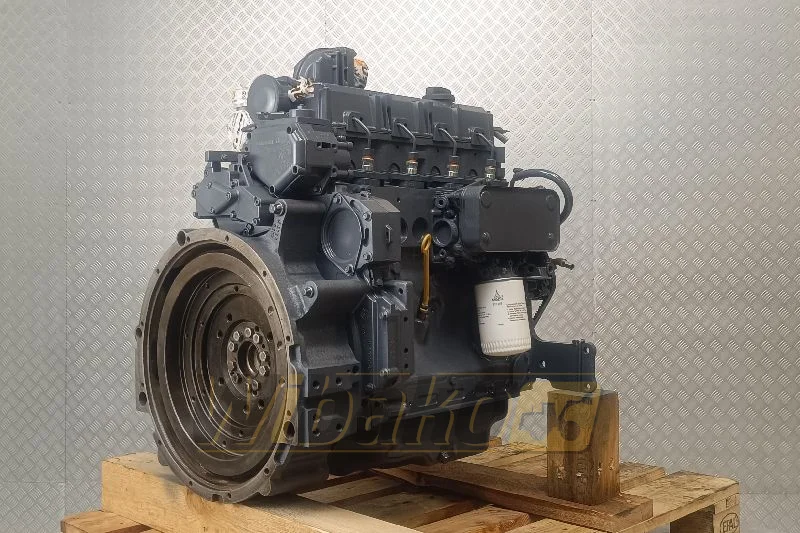
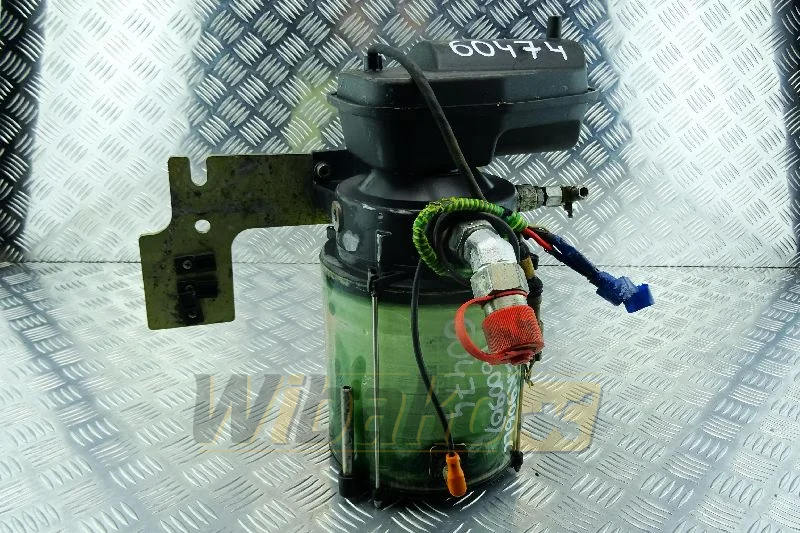
- Pump with reservoir – usually electric, 12 or 24 V, with a stirring paddle and one or more pump elements. It has a pressure relief valve and a filler fitting.
- Dividers – progressive piston blocks or injectors in a single-line system.
- Lines – rigid or flexible main lines and feed lines to the points, with fittings screwed in place of the grease nipples.
- Controller – a separate timer or a function in the machine's computer; it sets the pump run time and pause time and often counts cycles only while the engine is running. It may have a low-level grease sensor and a cycle sensor on the divider.
Complete kits for specific machines are available in our shop, e.g. central lubrication for the Liebherr R924C excavator, kit for the Liebherr R906LC, Liebherr R904C central lubrication or Liebherr system 10354210. If you are not sure whether a kit fits your machine, send us the model and serial number – we will check.
Common faults and symptoms
Air in the system
The most common cause is letting the reservoir run empty or filling it from the top with a spatula, trapping air bubbles. The pump runs but does not build pressure, and the pins are dry. Solution: fill through the filler fitting with a filter, and after the reservoir has run empty, bleed the pump element and the main line by loosening the line at the divider until grease flows out free of bubbles.
Blocked divider
A typical symptom in a progressive system: grease escapes from the pump's pressure relief valve and none of the points downstream of that divider is lubricated. The cause may be a crushed line, a seized pin, contaminated grease or grease that is too stiff in winter. To diagnose it, loosen the divider outlets one by one and trigger a cycle – if the divider starts moving after a particular outlet is opened, the problem lies downstream of it. A blocked block must be dismantled and flushed or replaced.
Dry pins even though the pump runs
Apart from the two causes above, check for: broken or chafed lines (especially on the moving sections near the bucket), damaged fittings, incorrect controller settings after a module replacement and a worn pump element. It is a good habit to check daily for a fresh collar of grease at the bushing edges. If it is missing at the boom foot or the slewing ring, treat it as a warning sign – you can see what long-term neglect of a slewing ring leads to in our article on a worn slewing ring in a Liebherr A906.
Electrical faults
The pump does not start: blown fuse, corroded connector, faulty timer or pump motor. Check this by forcing a cycle with the test button and then measuring the voltage at the pump connector.
Grease selection and seasonal maintenance
Central systems require grease with good pumpability. In summer NLGI 2 greases are usually used, in winter NLGI 1, and at low temperatures or in long installations even NLGI 0 or 00 – always in line with the pump and machine documentation. For heavily loaded pins, EP greases with solid lubricant additives are chosen, provided the system manufacturer approves them. Do not mix greases with different thickeners (e.g. lithium with calcium or polyurea) – they can form hard deposits and block the dividers.
Before winter it is worth switching to a softer grease, shortening the pause between cycles and inspecting the lines. In spring – a post-season inspection, replacement of damaged lines and a check that no point is blocked. When replacing pins or bushings, always check that the lubrication channels in the new parts are clear.
Manual vs. central lubrication – costs
Manual greasing means anywhere from ten minutes to well over half an hour of downtime per day and the risk of skipping hard-to-reach points such as the boom foot. A central system requires a one-off purchase and installation, after which it only needs topping up with grease and periodic checks. Grease consumption is often similar or lower, because the doses are small and regular. The biggest saving, however, lies in service life: pins and bushings are replaced less often and the attachment stays within play tolerances for longer. Remember that central lubrication does not replace inspections – a faulty, unmonitored system can do more damage than a grease gun in the operator's hand.
Installation and service
Installing a kit requires routing the lines so they are not crushed at full attachment travel, wiring the electrics correctly and setting the controller for the operating conditions. If the system on your machine is not working or you want one fitted, contact us – we carry out diagnostics and repairs on machines of various makes, including Volvo excavator and loader service.
Frequently asked questions
Can central lubrication be retrofitted to an older excavator that did not have it?
Yes, the system can be retrofitted. The pump, dividers and lines must be matched to the number of lubrication points, and the lines routed so they are not crushed at full attachment travel. It is easiest when a dedicated kit is available for the specific machine model.
What grease should be used in an excavator central lubrication system?
The grease must pump well. Typically NLGI 2 is used in summer and NLGI 1 or softer in winter, always in line with the pump and machine documentation. Greases with different thickeners should not be mixed, as they can block the dividers.
Why is grease escaping from the central lubrication pump's relief valve?
In a progressive system this usually means a blocked divider or a blocked line downstream of it, e.g. due to a seized pin, a crushed line or grease that is too stiff. The blockage is located by loosening the divider outlets one by one during a forced cycle.
Do Vogel parts fit the central lubrication on Liebherr and Volvo machines?
That depends on which system is installed on the specific machine, not on its make. Before ordering parts, identify the manufacturer and type of the pump and dividers, ideally from the rating plate or the part number.
What should I do if the central lubrication pump runs but the pins are dry?
The most common causes are air in the system after the reservoir ran empty, a blocked divider, a broken line or a worn pump element. Bleed the pump and main line, then check that the dividers and feed lines to the points are clear.