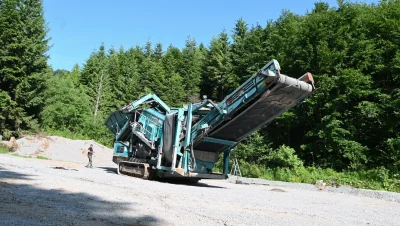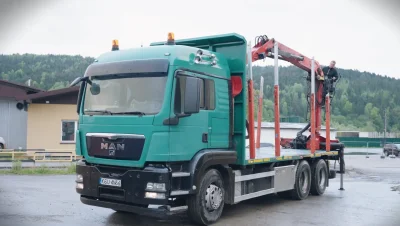


Don't let a lack of power slow down your work.
Lack of power in your excavator? Find out how to quickly diagnose the problem.
-
Phone
+48 33 870 42 00
Call us -
WhatsApp
+48 532 161 000
Message on WhatsApp -
E-mail
biuro@wibako.pl
Send an e-mail
Why Does the Machine Lack Power? A Guide for Operators and Machine Owners
A drop in performance, "choking" under load, or a slow response to joystick movements are some of the most frustrating problems in daily equipment operation. A lack of proper power in construction or agricultural machinery directly translates into schedule delays and a drastic increase in fuel consumption costs. Crucially, the problem does not always lie with the internal combustion engine itself. The complex design of modern machinery means that a drop in strength can result from a failure in attachments, electronics, or the hydraulic system. The key to a quick return to work is precisely locating the source of the problem.
Two Fault Filters: Engine or Hydraulic Problem?
Before proceeding with a detailed diagnosis, the nature of the power drop should be tentatively determined:
- Engine power drop: The power unit noticeably loses RPMs, chokes, smokes (black, white, or blue), or runs unevenly, even when the machine is not performing any heavy working movement.
- Hydraulic system problem: The engine runs smoothly and maintains correct RPMs, but the arms, bucket, or tracks move slowly, and the hydraulic pump makes unusual noises or violently overloads and "chokes" the engine until it stalls.
Most Common Causes of Power Loss in Machinery
By analyzing mechanical and hydraulic failures, four main reasons responsible for a machine losing its factory power can be identified:
1. Fuel System Issues (Clogged filters, weak pump)
A diesel engine requires a powerful and precise dose of clean fuel under high pressure. If the fuel filters (pre-filter or main) are contaminated or there is paraffin/water in the lines, the injection system will not receive the appropriate amount of diesel. A weakening supply pump or worn injectors that cannot maintain the required pressure in the fuel rail can also be to blame.
2. Lack of Air and Turbocharging Faults (Turbocharger, intake)
Oxygen is essential to burn fuel. An extremely clogged air filter, a cracked pipe connecting the turbocharger to the intercooler, or damage to the turbo itself (e.g., rotor wear or seized variable geometry) mean the engine receives too little air. The result is an immediate, drastic drop in power, usually accompanied by thick black smoke from the exhaust pipe.
3. Hydraulic System Failure (Worn pump, relief valves)
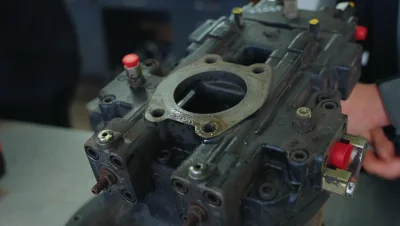
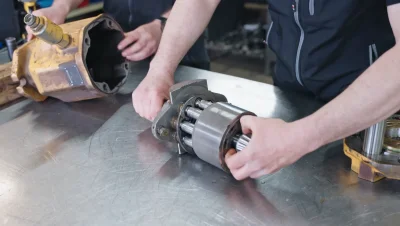
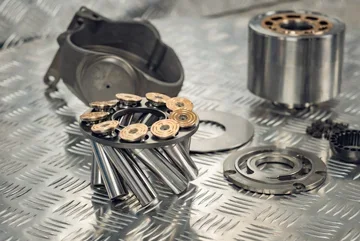
A machine may have a working engine, but it will not translate that into working force if the hydraulic system is inefficient. A worn hydraulic pump (internal leaks and loss of piston tightness) does not generate adequate working pressure at high oil temperatures. Another problem can be misadjusted or damaged relief valves (main safety valves) that release oil pressure back into the tank too early.
4. Electronics and Limp Mode (Sensors, SCR/DPF system)
Modern equipment is packed with control electronics. Damage to key sensors (e.g., MAP boost pressure sensor, rail fuel pressure sensor) or a fault in the exhaust aftertreatment system (clogged DPF filter, AdBlue/SCR dosing failure) causes the engine computer (ECU) to immediately enter the so-called emergency mode (Limp Mode). Power is then electronically limited by up to 50% to protect components from destruction.
Quick Symptom Verification – Reference Table
The table below will help the operator to initially link the machine's behavior with a potential source of failure:
| Fault Symptoms | Engine Behavior | Hydraulic System Status | Probable Cause |
|---|---|---|---|
| Machine weakens as the oil warms up | Runs smoothly, does not lose RPMs | Movements become slow and less precise | Hydraulic pump wear or inappropriate oil viscosity |
| Engine stalls or drops RPMs drastically when moving the bucket | Chokes, can emit black smoke | Makes loud, metallic noises under load | Seized hydraulic pump control (no displacement reduction) or clogged intake filter |
| No power immediately after starting, no smoking | Runs softly but does not reach maximum RPMs | Normal, but lacks ultimate traction force | Clogged fuel filters or supply pump failure (low pre-pressure) |
| Error / check engine light is on the dashboard | Power rigidly limited across the entire range | Operates correctly, but very slowly | Electronic limp mode (defective sensor or clogged DPF/EGR system) |
What to Do When a Machine Loses Power?
In order to eliminate the simplest and cheapest faults, it is worth conducting a basic inspection before calling the service team:
- Replace the filters: Absolutely start by replacing the fuel filters and checking and cleaning the air filter element.
- Check the intake tightness: Inspect the intercooler hoses for cracks, scuffs, and correct tightening of the hose clamps.
- Check the oil temperature: Verify whether the drop in hydraulic power is not directly linked to the overheating of the hydraulic oil (radiator failure).
Remember! Working on a choking or electronically limited engine drastically overloads the crank-piston and thermal systems, which can quickly lead to burnt valves or failure of the entire Common Rail injection system.
Top-Tier Engine and Hydraulic Diagnostics – Trust Wibako
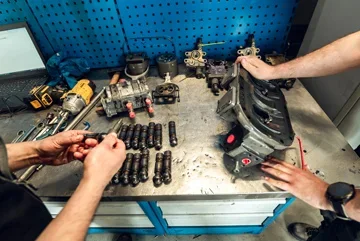
Determining the exact cause of power loss in a modern machine requires simultaneous testing of engine parameters (using diagnostic computers) and hydraulic system parameters (by hooking up professional flow meters and pressure gauges). Attempts to randomly replace parts without accurate measurements generate huge and unnecessary costs. When your machine refuses to cooperate, a visit to a specialist is necessary.
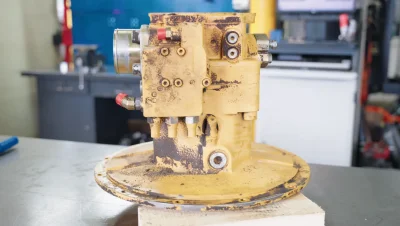
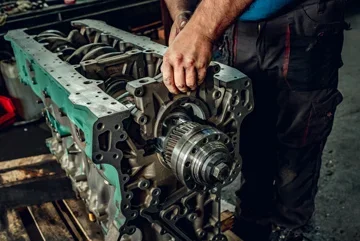
At Wibako, we offer a comprehensive, professional approach to diagnosing power drops. We have specialized service facilities and mobile teams of engineers prepared to service advanced construction and agricultural machinery based on components from world leaders such as Liebherr, Deutz, Perkins, Caterpillar, Cummins, and Kubota. Regardless of whether the problem lies in the precise control electronics, the injection system, or requires regeneration of the main hydraulic pump – Wibako specialists will precisely locate and eliminate the fault at its root. Choose professionalism and restore your machine to its full factory power!