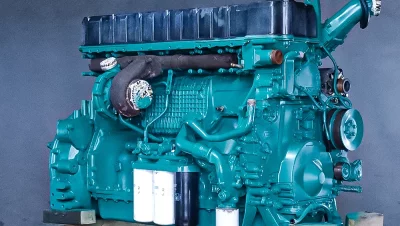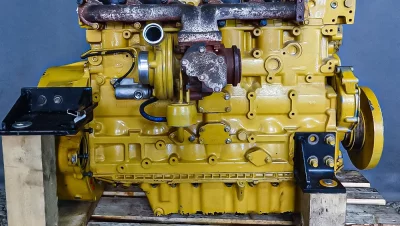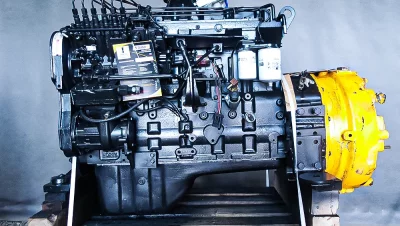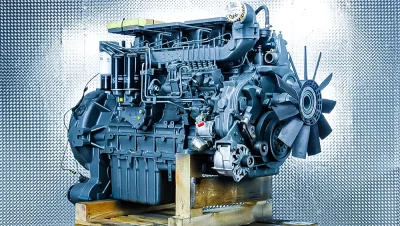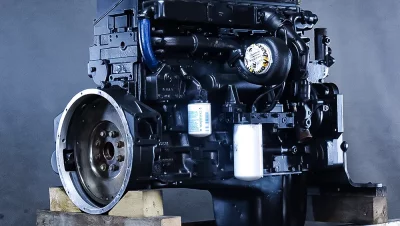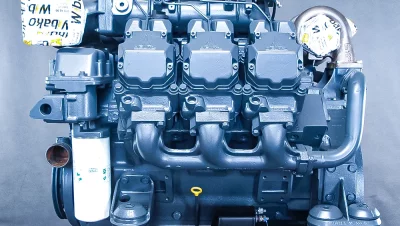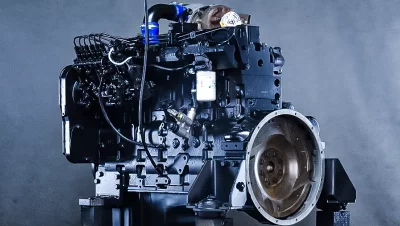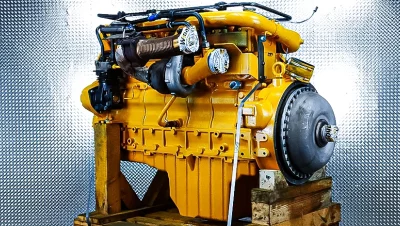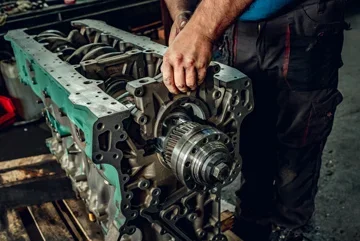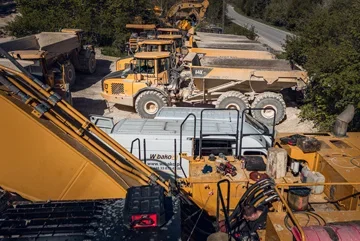


Overhaul of the Liebherr D936 A7 Engine in a Liebherr L 566 Wheel Loader
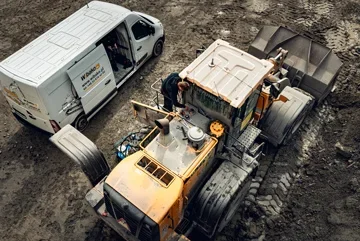
The Liebherr L 566 wheel loader is a machine used for heavy material handling operations, aggregate mining, recycling plants, and large infrastructure projects. This model is valued for its high breakout force, efficient hydraulic system, and durable hydrostatic drive characteristic of the Liebherr brand. In this project, we carried out a complete overhaul of the Liebherr D936 A7 engine installed in a machine operating near Katowice. Our mobile construction equipment service team dismantled the power unit directly at the customer’s site, after which the engine was transported to our headquarters in Kojszówka.
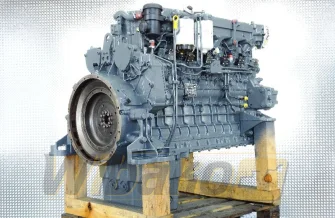
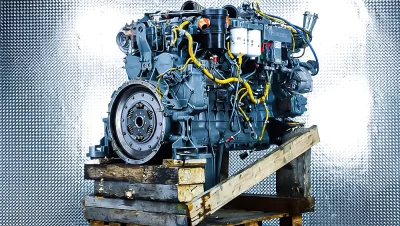
The Liebherr D936 A7 engine is a six-cylinder diesel unit used in off-highway machines operating under heavy loads. The engine is characterized by high torque at low RPM and excellent durability during long operating hours. In this case, the operator reported gradually increasing oil consumption, power loss under full load, and excessive smoke during operation. Difficult hot starts were also observed when the engine reached operating temperature.
Initial diagnostics were performed while the engine was still installed in the Liebherr L 566 wheel loader. Our mechanics carried out compression pressure measurements, engine performance analysis, and inspection of the intake and cooling systems. Additionally, an endoscopic inspection of the cylinders was performed. The results indicated excessive wear of the cylinders and pistons, causing compression loss and increased blow-by into the crankcase. To confirm the diagnosis, we also performed oil consumption analysis and inspected the crankcase ventilation system. The diagnostics confirmed the need for a complete overhaul of the Liebherr D936 A7 diesel engine.
Removal of the Liebherr D936 A7 Engine from the Liebherr L 566 Loader
The engine removal was performed by our mobile service team directly at the machine’s working site. The Liebherr L 566 wheel loader was properly prepared for service operations by securing the hydraulic system, electrical installation, and cooling system. The customer provided a crane necessary for the safe removal of the power unit from the engine compartment.
The dismantling process began with disconnecting the batteries and securing all electrical installations. Components obstructing engine removal were then disassembled, including intake pipes, the exhaust system, radiators, and fuel lines. One of the most important stages was the accurate labeling of all hoses and connections, which significantly streamlined reinstallation after the overhaul.
During dismantling, our mechanics also performed additional inspections of the cooling system tightness and evaluated the condition of the engine mounts and drive coupling. The Liebherr D936 A7 engine was then lifted using transport slings and safely removed from the machine compartment. After securing all service openings, the unit was prepared for transport to our workshop.
In the case of large wheel loaders, it is extremely important to properly protect hydraulic hoses and intake system components from contamination. Even minor debris could cause damage to the turbocharger or fuel system after restart. For this reason, every stage of the work was performed in accordance with the manufacturer’s service procedures.
Inspection and Verification of the Liebherr D936 A7 Engine
After delivering the engine to the workshop, we began a detailed verification of the power unit. The process started with rotating the crankshaft and checking axial clearances. The engine was then completely disassembled into individual components.
During disassembly, our earlier assumptions regarding excessive wear of the crank-piston assembly were confirmed. The cylinder liners showed visible signs of wear, while the pistons displayed evidence of overheating and increased blow-by. The piston rings had lost their proper sealing properties, causing compression loss and increased engine oil consumption.
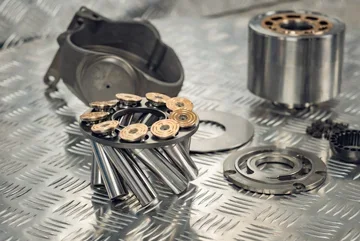
We also carried out a complete inspection of the crankshaft. This included visual inspection, measurement of the main and connecting rod journals, runout inspection, and checking the oil passages. The inspection revealed the need for crankshaft grinding and installation of new bearings.
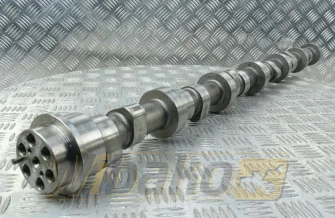
The connecting rods were measured for twisting and longitudinal bending. We also checked the condition of the connecting rod bolts and weighed individual components. The camshaft underwent inspection for wear on the lobes and bearing journals. During cylinder head verification, a pressure test in a heated water bath was performed. The cylinder head showed no cracks, but worn valve guides and burned exhaust valve seats were identified.
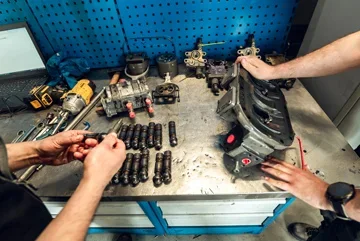
The fuel system was sent for further diagnostics. The injection pump was tested on a calibration bench, while the injectors underwent spray pattern and leak tests. Additionally, we inspected the turbocharger for axial and radial shaft play.
Reconditioning of the Crank-Piston Assembly
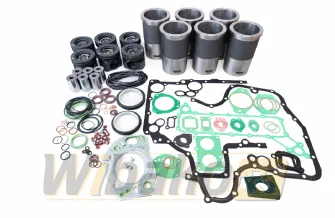
The repair of the Liebherr D936 A7 engine began with reconditioning of the crank-piston assembly. The engine block was thoroughly cleaned and prepared for installation of new cylinder liners. New pistons, piston rings, and a complete set of main and connecting rod bearings were installed.
The crankshaft underwent professional grinding, followed by geometry inspection and balancing. This allowed us to restore proper engine operating parameters and eliminate excessive vibrations.
Each component was measured before assembly according to the manufacturer’s service documentation. Particular attention was paid to correct assembly clearances and cleanliness of the oil passages. In engines used in construction machinery, even small contaminants can lead to premature wear of newly installed components.
During assembly of the crank-piston system, new mounting bolts and a complete gasket set were used. All fasteners were tightened according to the torque and angle specifications designated for the Liebherr D936 A7 engine.
Cylinder Head Reconditioning
The cylinder head underwent a complete reconditioning process. This included resurfacing the mating surface, replacing valve guides, and installing new valves. The valve seats were machined while maintaining proper sealing parameters.
After machining, we performed another pressure test on the cylinder head. This confirmed the absence of microcracks and verified the quality of the completed work. Valve stem seals were also replaced, and the valve springs were inspected.
In engines operating in wheel loaders, the cylinder head is one of the most heavily loaded components of the power unit. Machines of this type often operate continuously for many hours under high cooling system and combustion loads. Therefore, proper cylinder head reconditioning has a major impact on the long-term durability of the entire engine.
Fuel System and Auxiliary Component Repair
The fuel system of the Liebherr D936 A7 engine underwent full diagnostics and refurbishment. The injection pump was tested on a calibration bench and adjusted accordingly. The injectors received new nozzles and were calibrated according to manufacturer specifications.
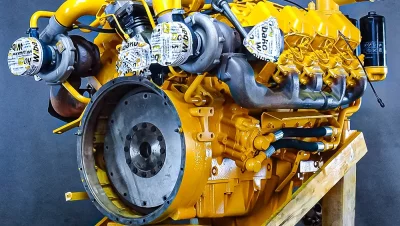
The turbocharger was disassembled and inspected for rotor wear and lubrication system tightness. During the repair process, wear components were replaced and the rotating assembly was balanced. We also inspected the exhaust manifolds, intake system, and pressure lines.
The alternator and starter motor underwent electromechanical inspection. Wear components were replaced, and load tests were performed. As a result, the customer received a fully rebuilt power unit prepared for long operating hours.
Professional Assembly of the Liebherr D936 A7 Engine
The engine assembly process was performed by experienced mechanics specializing in Liebherr diesel engine service. Every stage of assembly followed the manufacturer’s technical documentation. Particular attention was paid to proper tightening torques and correct timing adjustment.
Before closing the engine, valve clearances were checked and free rotation of the crankshaft was verified. The engine accessories, fuel system, and turbocharger were then installed. All oil and fuel lines were thoroughly cleaned or replaced.
The engine was filled with appropriate operating fluids and prepared for initial startup on the engine dynamometer. Thanks to the precise assembly process, the risk of leaks and operational issues after installation was minimized.
Engine Testing on the Dynamometer
One of the most important stages of the entire process was testing the Liebherr D936 A7 engine on our engine dynamometer. The ability to load-test the power unit before installation into the machine is a major advantage of a professional diesel engine service provider. Very few companies performing construction machinery engine overhauls have their own dynamometer capable of long-duration load testing.
After assembly, the engine was mounted on the test stand and connected to all measuring systems. The first stage involved several hours of operation under light load, approximately 20–30% of nominal capacity. The purpose of this process was proper seating of the new crank-piston components and verification of basic operating parameters.
During testing, we monitored coolant temperature, oil temperature, lubrication pressure, combustion parameters, and engine stability. Oil samples were also regularly collected to inspect for contamination or metal particles.
After the break-in stage, full-load testing began. The Liebherr D936 A7 engine was repeatedly loaded across different operating ranges, allowing us to verify fuel system performance, turbocharger operation, and stability of operating temperatures. The dynamometer also enabled precise adjustment of the injection pump parameters.
Dynamometer testing makes it possible to detect any irregularities before reinstalling the engine into the machine. In practice, this significantly reduces the risk of failure after the wheel loader is returned to service. This is particularly important in large construction machines, where repeated engine removal involves very high costs and machine downtime.
After all tests were completed, we performed a final leak inspection and replaced the filters and oil once again. The engine achieved correct operating parameters and was approved for installation into the Liebherr L 566 wheel loader. Thanks to dynamometer testing, the customer received a thoroughly verified power unit tested under conditions closely resembling real operating environments.
Installation of the Engine in the Liebherr L 566 Wheel Loader
The engine installation was once again performed at the machine’s operating site by our mobile construction equipment service team. The Liebherr L 566 wheel loader had been prepared earlier for installation of the rebuilt power unit. The engine compartment was thoroughly cleaned, and the condition of hydraulic lines, cooling systems, and mounting points was inspected.
Using a crane provided by the customer, the engine was safely positioned inside the machine compartment. Our mechanics then began reconnecting all systems and auxiliary components. Some intake hoses and exhaust mounting components were replaced. Particular attention was paid to the tightness of the intake system connections, as even small leaks could negatively affect turbocharger performance.
After reconnecting all systems, the machine was filled with operating fluids and the fuel system was bled. The next stage involved the first startup of the engine inside the machine. Our service technicians and the operator monitored engine parameters during the initial operating hours of the wheel loader.
During testing, we checked the tightness of all connections, operating temperatures, and engine response under hydraulic load. The cooling system, charging system, and cooperation between the engine and machine drivetrain were also inspected. After successful completion of the tests, an installation report was prepared and the machine was handed back to the customer for continued operation.
Thanks to our comprehensive approach, the customer received a fully operational wheel loader ready for intensive work. Our mobile service minimized downtime and ensured efficient completion of all engine removal and installation operations.
Post-Overhaul Service Support
Every rebuilt engine requires proper post-repair service support. In the case of the Liebherr D936 A7 unit, we recommended the first inspection after 50 operating hours. Our mobile service team will perform connection checks, filter replacement, and evaluation of engine operating parameters.
Subsequent inspections should be carried out every 250 operating hours, but not less frequently than every three months. Regular servicing significantly extends engine lifespan and reduces the risk of costly failures.
During inspections, we check system tightness, hose condition, turbocharger operating parameters, and the general condition of engine accessories. This ensures that the Liebherr L 566 wheel loader remains fully operational even during intensive use.
Machines Using the Liebherr D936 A7 Engine
The Liebherr D936 A7 engine is used in many Liebherr construction and industrial machines. This engine was installed in wheel loaders, material handling machines, and selected equipment operating in mines and recycling facilities.
Thanks to its large displacement and high torque output, the engine performs exceptionally well under constant load. The design was developed for long operating hours in harsh environmental conditions. Regular Liebherr diesel engine service and proper maintenance are essential for preserving engine durability.
Our workshop specializes in overhauls of Liebherr engines used in off-highway construction machinery. We perform complete engine rebuilds, cylinder head reconditioning, crankshaft grinding, fuel system repairs, and dynamometer testing.
Summary of the Liebherr D936 A7 Engine Overhaul
The complete overhaul of the Liebherr D936 A7 engine in the Liebherr L 566 wheel loader restored the machine to full operational condition and eliminated problems related to compression loss and excessive oil consumption. Thanks to accurate diagnostics, professional rebuilding, and dynamometer testing, the customer received a verified power unit prepared for many hours of reliable operation.
WIBAKO performs comprehensive diesel engine overhauls for construction machinery, including mobile service, engine removal, and installation directly at the customer’s site. Thanks to the experience of our mechanics and the ability to test engines on a dynamometer, we are able to provide high-quality repair services.
After the overhaul, the customer was informed about the need to perform the first inspection after 50 operating hours. Regular servicing and monitoring of operating parameters will help keep the Liebherr D936 A7 engine in excellent condition for thousands of additional operating hours.
Related Services:
Liebherr Engine Service
Construction Machinery Engine Overhauls
WIBAKO Engine Dynamometer
Mobile Construction Equipment Service
Liebherr D936 A7 Engine Overhaul
Do you need a Liebherr D936 A7 engine overhaul or service for a Liebherr L 566 wheel loader? WIBAKO performs complete diesel engine repairs, engine dynamometer testing, and mobile removal and installation of power units.