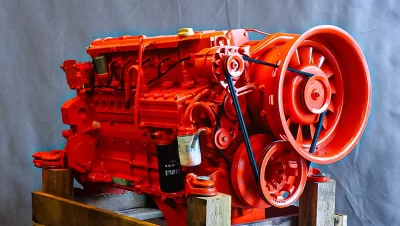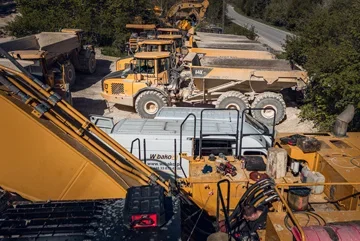


Overhaul of the Liebherr D9508 A7 Engine (450 kW) in a Liebherr LR 1300 Crawler Crane
Introduction
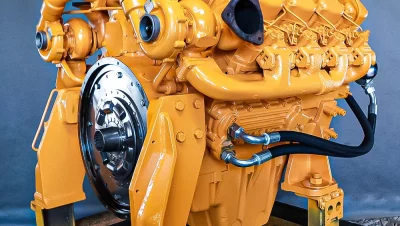
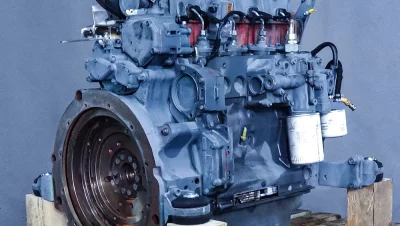
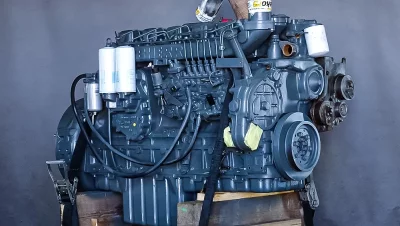
The Liebherr LR 1300 crawler crane is an advanced machine used in heavy construction and assembly work where high precision and high lifting capacity are required. For years, the manufacturer Liebherr has been providing solutions for the off-highway industry, combining robust construction with modern power units. In this case, the heart of the machine is the Liebherr D9508 A7 engine with a power output of 450 kW, which is responsible for reliable operation in difficult terrain conditions.
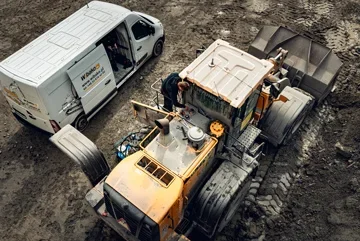
A unit of this machine arrived at our service center exhibiting symptoms characteristic of cylinder and piston wear. The operator reported increased oil consumption, a noticeable drop in power, and heavy smoke during operation under load. Our mobile service conducted initial diagnostics near Katowice, after which the engine was dismantled and transported to our headquarters in Kojszówka, where we performed a comprehensive overhaul.
Initial Diagnostics
During the first service visit, we performed basic compression pressure measurements and exhaust gas analysis. The results clearly indicated a drop in compression in several cylinders. Additionally, we used an endoscopic camera, which allowed us to look inside the cylinders and confirm the presence of scratches and excessive wear on the working surfaces.
At this stage, we decided to dismantle the engine and carry out a full verification under workshop conditions.
Engine Dismantling
The dismantling of the Liebherr D9508 A7 engine was performed at the customer's site using a crane provided by the investor. Our mechanics began by disconnecting the electrical system, fuel system, and intake and exhaust systems. We paid special attention to securing the lines and cooling system components to avoid additional damage.
Next, all mounting points of the power unit and the clutch connecting the engine to the rest of the crane's components were unscrewed. After safely removing the engine, it was prepared for transport and taken to our service base.
Component Verification
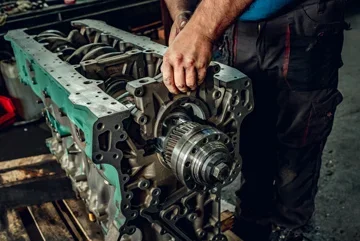
In the workshop, we began a detailed verification of the unit. The engine was stripped down to the last nut, and all components were subjected to thorough cleaning and inspection. We confirmed wear on the cylinder liners and pistons, which was consistent with the earlier diagnosis.
We also conducted:
- Verification of the crankshaft for run-out and journal wear,
- Inspection of the connecting rods for deformation,
- Head check along with a pressure leak test,
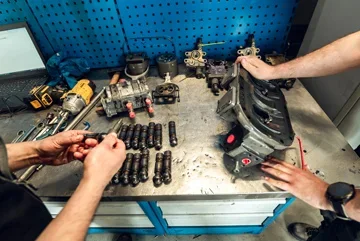
- Analysis of the injection pump and injectors,
- Inspection of the turbocharger for play.
Regeneration and Repair
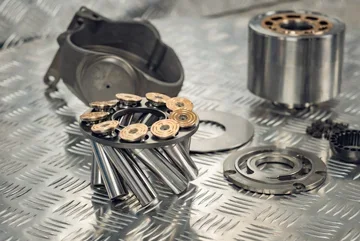
The repair process involved a comprehensive rebuild of the engine. In the crank-piston system, we replaced the cylinder liners, pistons, and rings. The crankshaft was ground, and all bearings were replaced with new ones meeting the manufacturer's specifications.
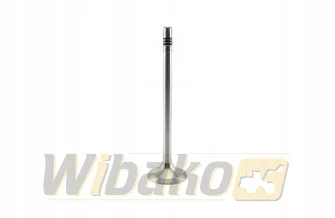
The engine head was regenerated – surface grinding was performed, and valve guides and valves were replaced. The fuel system underwent regeneration at a specialized facility, where the injection pump was calibrated on a test bench.
Engine accessories, including the turbocharger, alternator, and starter, were thoroughly checked and, if necessary, regenerated or replaced.
Engine Dynamometer Test
After assembling the engine, we conducted a test on an engine dynamometer (dyno), which is one of the key stages of our work. This allows us to check the unit before installation in the machine, significantly minimizing the risk of potential problems after installation.
The test began with operation under light load conditions at 20-30% of nominal power and lasted over 16 engine hours. During this time, we monitored all key engine operating parameters, such as oil pressure, temperature, combustion parameters, and operational stability.
The engine then underwent cyclical tests at full load, which allowed us to check its behavior under real operating conditions. The dynamometer enables the simulation of various work scenarios, which is a huge advantage compared to standard testing methods.
This gives us the confidence that the Liebherr D9508 A7 unit achieves factory parameters and is fully prepared for further operation in the crane.
Engine Installation
The engine installation was performed again at the customer's site by our mobile service. This process was carried out in accordance with rigorous service standards and included not only the physical placement of the unit but also full integration with the machine.
The engine was moved into the compartment using a crane and then secured to the appropriate mounting points. Subsequently, all systems – fuel, cooling, air intake, and electrical – were connected.
We also replaced consumables such as filters and conducted a leak test on all connections. We paid particular attention to pressure systems to rule out any leaks.
After completing the installation, we performed the first engine start-up in the presence of the machine operator. The tests included operation at various RPMs and a simulation of actual crane working conditions. Following the successful completion of the trials, an acceptance protocol was drawn up.
Post-Overhaul Engine Maintenance
After the overhaul, we recommended that the customer perform the first inspection after 50 engine hours. Our mobile service will visit the machine again to replace filters and check all connections and operating parameters.
Subsequent inspections should be performed every 250 engine hours, but no less frequently than every 3 months. This ensures long and trouble-free engine operation.
Application of the Liebherr D9508 A7 Engine
The Liebherr D9508 A7 engine is used not only in Liebherr LR 1300 crawler cranes but also in other heavy machinery, such as cranes or specialized industrial equipment. Its design is adapted to work in demanding conditions and under heavy loads.
Summary
The comprehensive overhaul of the Liebherr D9508 A7 engine restored the full efficiency of the Liebherr LR 1300 crane. Thanks to the use of professional diagnostic methods and engine dynamometer tests, the customer received a power unit that meets all manufacturer standards.
Our experience in the service of construction machinery and Liebherr diesel engines guarantees high quality of services and operational safety. We perform both stationary and mobile repairs throughout Poland.
Contact us
Do you need an overhaul for a Liebherr D9508 A7 engine or service for a Liebherr LR 1300 crane? Contact us – we perform comprehensive repairs and engine dynamometer tests.