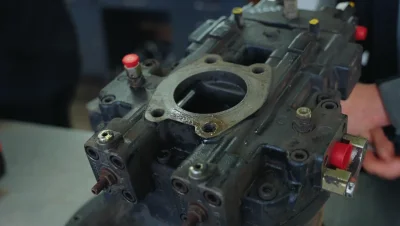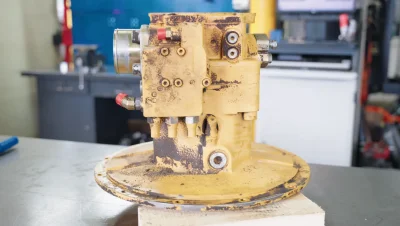
Liebherr is one of the few construction equipment manufacturers that designs and builds its own hydraulic pumps for its excavators and material handlers. In our workshop we most often see three families: the older DPVP and DPVO and the newer LPVD. All of them are variable-displacement axial piston pumps. They differ, however, in regulator versions, design details and parts availability. This matters a great deal when deciding whether to repair the pump or replace it.
Below we explain how these pumps are built and which faults occur most often. We also describe what diagnostics and a Liebherr pump rebuild involve, and what to watch out for when buying a used or replacement pump.
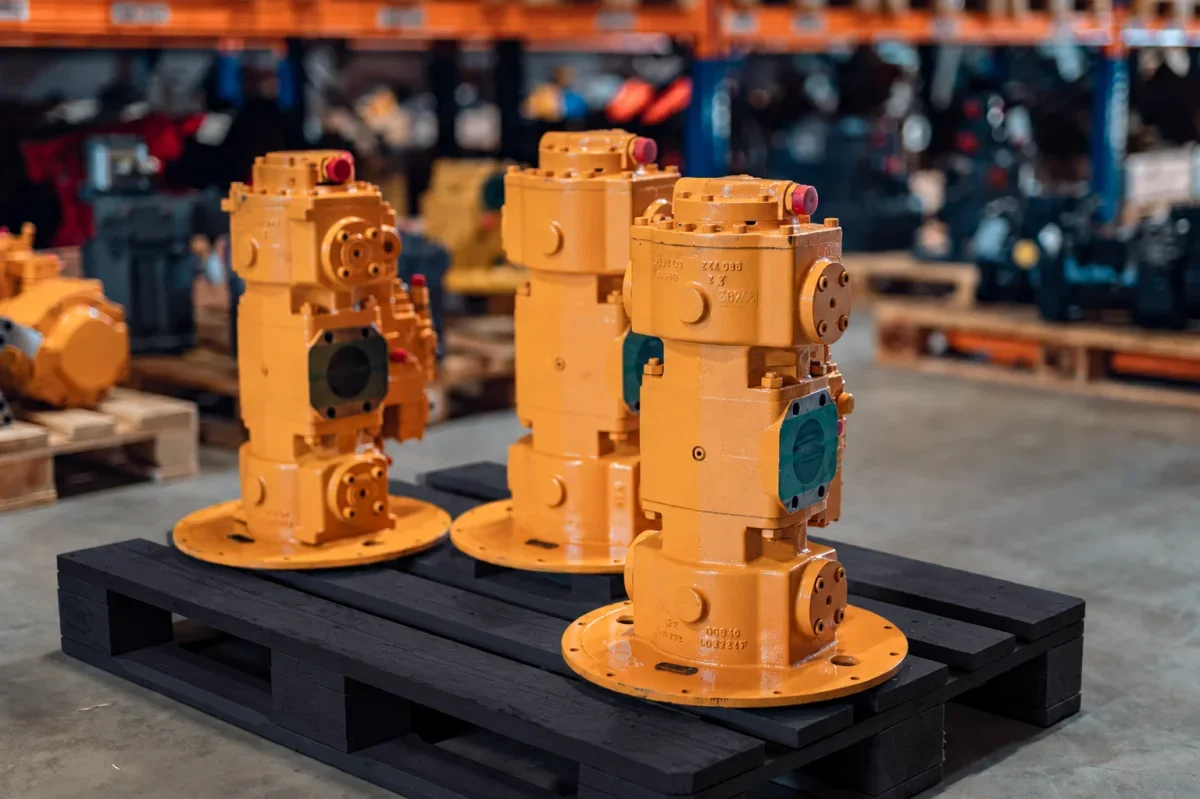
Liebherr pump families: DPVP, DPVO and LPVD
The number in the type designation usually corresponds to the displacement of the rotating group in cm³ per revolution, e.g. DPVP 108, DPVO 165, LPVD 064, LPVD 100 or LPVD 150. The higher the number, the larger the machine and the higher the flow demand.
- DPVP – an older generation of tandem pumps. Still working in many excavators in service. New units can be hard to find, so a rebuild is often the choice here.
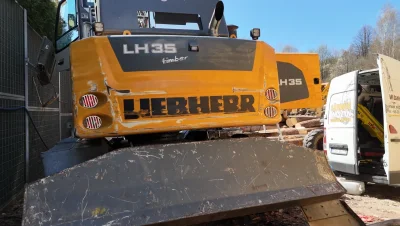
- DPVO – also an older design, found among others in wheeled excavators. One example is the DPVO 165 from a Liebherr A316 excavator.
- LPVD – the newer generation of tandem pumps, used in more recent Liebherr excavators. Available in many sizes, including exchange units marked with the AT prefix.
Always identify the pump by its nameplate and the full Liebherr part number, e.g. 9277687. The type name alone is not enough, because the same size comes in different regulator, shaft and port versions.
How a Liebherr piston pump is built
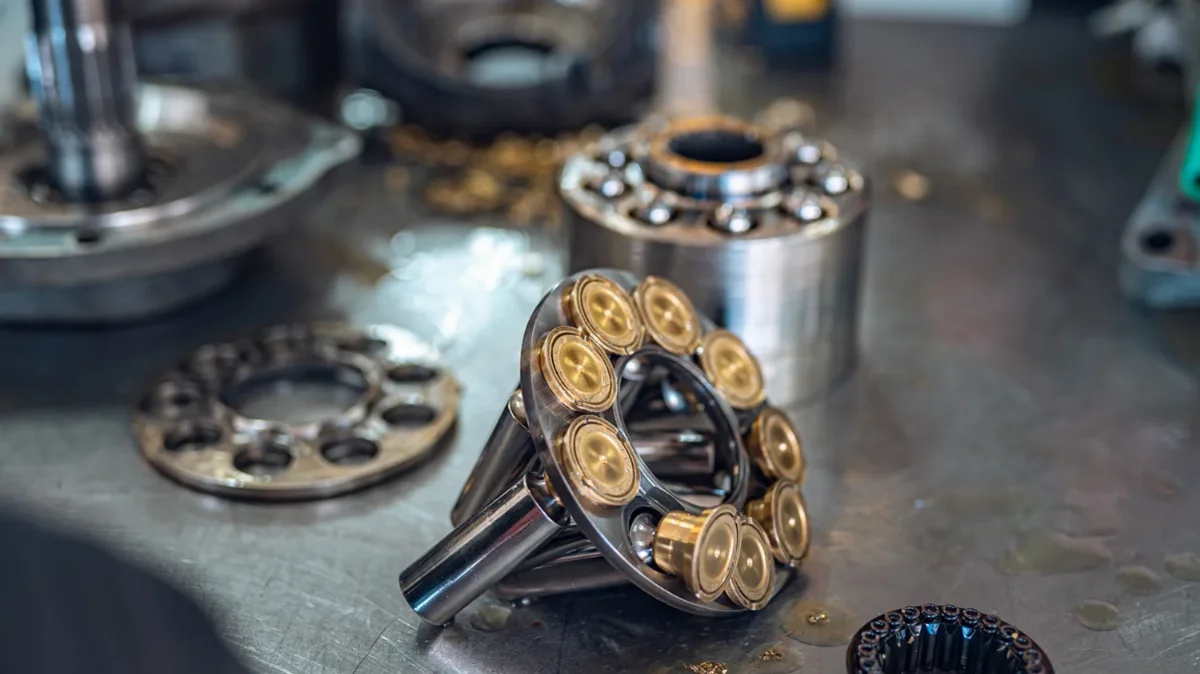
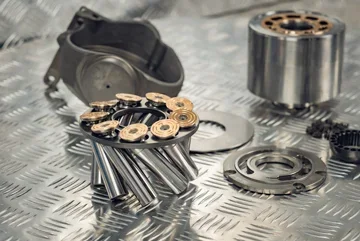
The operating principle is the same as in other swashplate axial piston pumps. The shaft turns the cylinder block with the pistons. The piston slippers bear against the inclined swashplate, so with every revolution the pistons perform a suction and a delivery stroke. The regulator changes the swashplate angle, and that angle determines the pump output.
- Cylinder block (barrel) with piston bores – its face runs against the valve plate.
- Pistons with slippers – the bronze slippers glide on the swashplate on an oil film.
- Retainer plate and ball guide – hold the slippers against the swashplate.
- Swashplate (cradle) seated in bearing shells – changes the piston stroke.
- Valve plate – separates the suction side from the pressure side; its condition determines volumetric efficiency.
- Regulator – controls the swivel angle depending on load, engine power and signals from the machine controller.
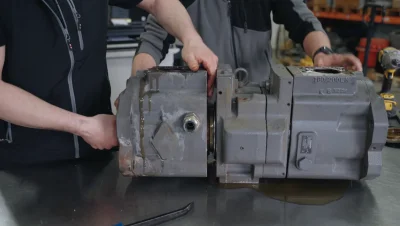
Tandem pumps have two rotating groups, often driven through a common gearbox. A gear pump supplying the pilot circuit or auxiliary consumers is often attached to the pump as well.
Common faults – symptom, cause, what to do
- Machine loses power once the oil warms up – internal leakage increases through a worn valve plate, cylinder block face or piston clearances. Measure case drain leakage and pressures with hot oil.
- One side (e.g. travel or swing) runs slower – one of the two rotating groups of the tandem pump is worn, or its regulator is faulty. Compare the pressures and flows of both sections before removing the pump.
- Whining, metallic noise – cavitation due to a restricted suction line or low oil level, air in the system, or damaged bearings. Check the suction hose, filter and venting. If you hear bearing noise, do not put off removal.
- Metal particles or bronze dust in the filter – the piston slippers, retainer plate or swashplate bearing shells are wearing. Take the machine out of service, because continued operation ends in seizure and contamination of the entire system.
- Engine bogs down under load – excessive power draw due to a malfunctioning regulator or an incorrect control signal. Check the settings, sensors and controller fault codes.
- Leak at the drive shaft – worn shaft seal, often caused by excessive case pressure with a blocked drain line or high internal leakage.
- Oil overheating – energy lost to internal leakage turns into heat. First rule out a dirty oil cooler and faulty valves, then assess the pump.
Diagnostics before removal
Removing the pump from a large excavator takes several hours. It is therefore worth confirming first that the problem really lies in the pump and not in the control valve, relief valves or control system.
- Read the fault codes and check the regulator control signals.
- Measure working pressures and pilot pressure with the oil at operating temperature.
- Measure the leakage from the pump case drain line – one of the best indicators of rotating group wear.
- Inspect the filters and take an oil sample (steel particles, bronze, water).
- Check the suction side, oil level and tank breather.
Liebherr pump rebuild – how it works
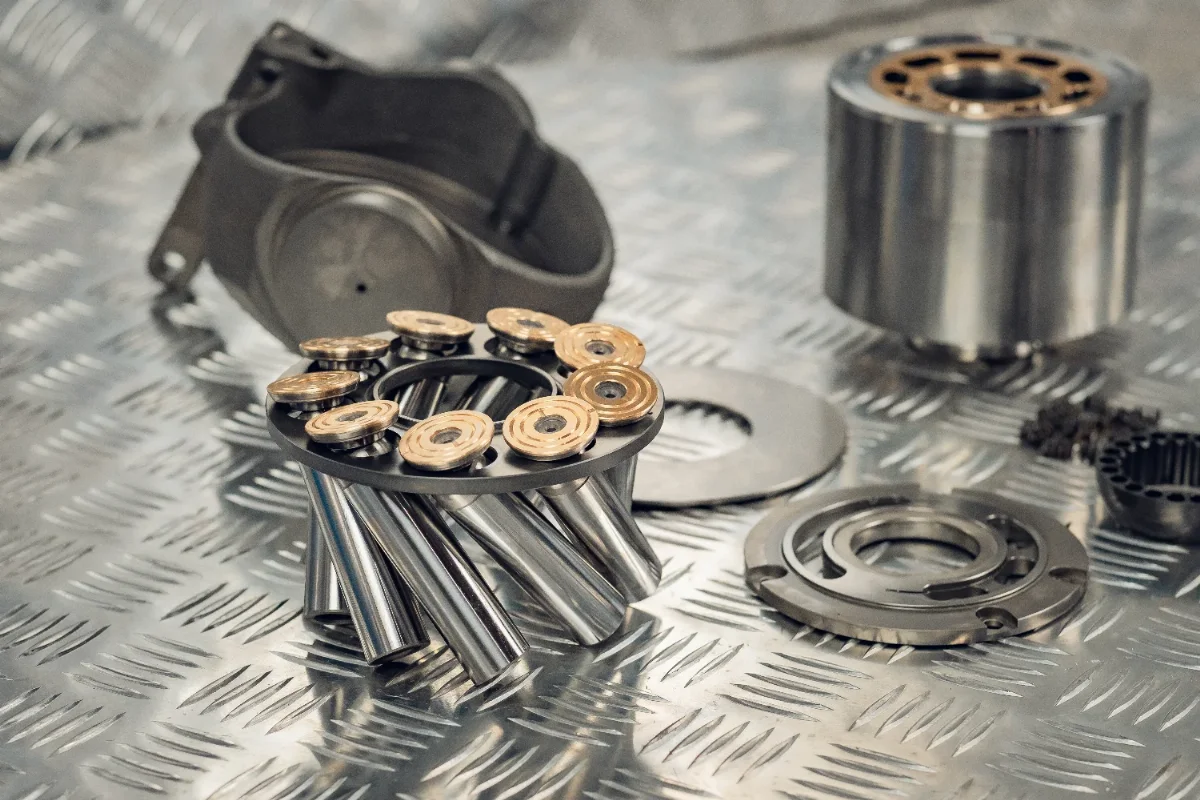
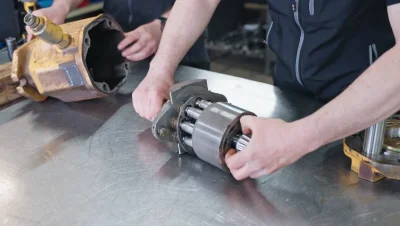
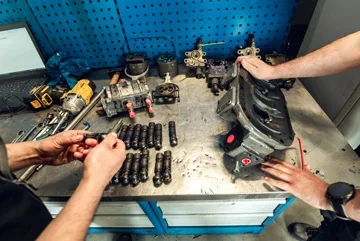
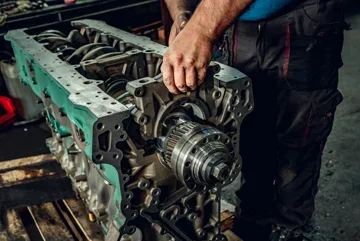
A rebuild means dismantling the pump, assessing every mating pair of components and restoring its original performance. Simply replacing the seals will not achieve that.
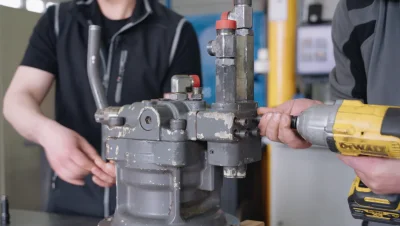
- Dismantling, cleaning and marking the parts of both rotating groups.
- Inspection: piston-to-bore clearance, slipper condition and play, flatness of the cylinder block face and valve plate, swashplate surface and bearing shells, bearings, shaft splines.
- Machining sliding surfaces that can be restored and replacing parts worn beyond limits.
- Checking the regulator, replacing seals, bearings and the shaft seal.
- Assembly and setting the regulator to match the pump version.
We have described how this works in practice in our case study on the rebuild of a DPVO 165 pump from a Liebherr A316 excavator. It shows which components wear fastest.
Rebuild or replace?
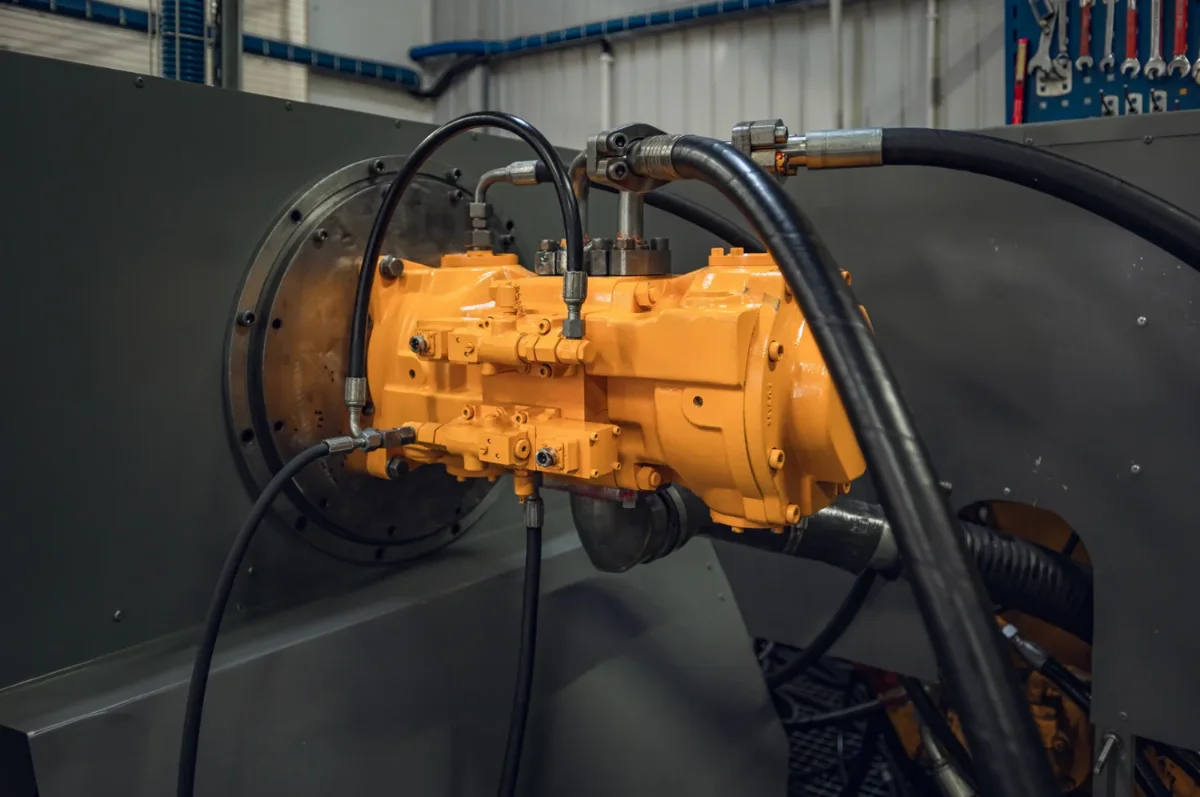
The decision depends on the inspection results and on whether rotating group parts are available for the specific version. If the housing and cylinder block are fit for further service, a rebuild keeps the original pump matched to the machine. If the pump has seized and the block or housing is cracked, replacement is often the more sensible option.
- Rebuilding your own pump – no risk of version mismatch, but the machine is down for the duration of the repair.
- Used or rebuilt pump from stock – faster return to work. However, the part number, regulator and ports must be compared carefully.
- New pump or exchange unit (AT) – the highest cost, but also certainty about its condition.
Whichever option you choose, eliminate the cause of the failure. If the pump failed due to contaminated oil, a new pump will suffer the same fate unless the system is flushed and the filters replaced.
Pump installation and first start-up
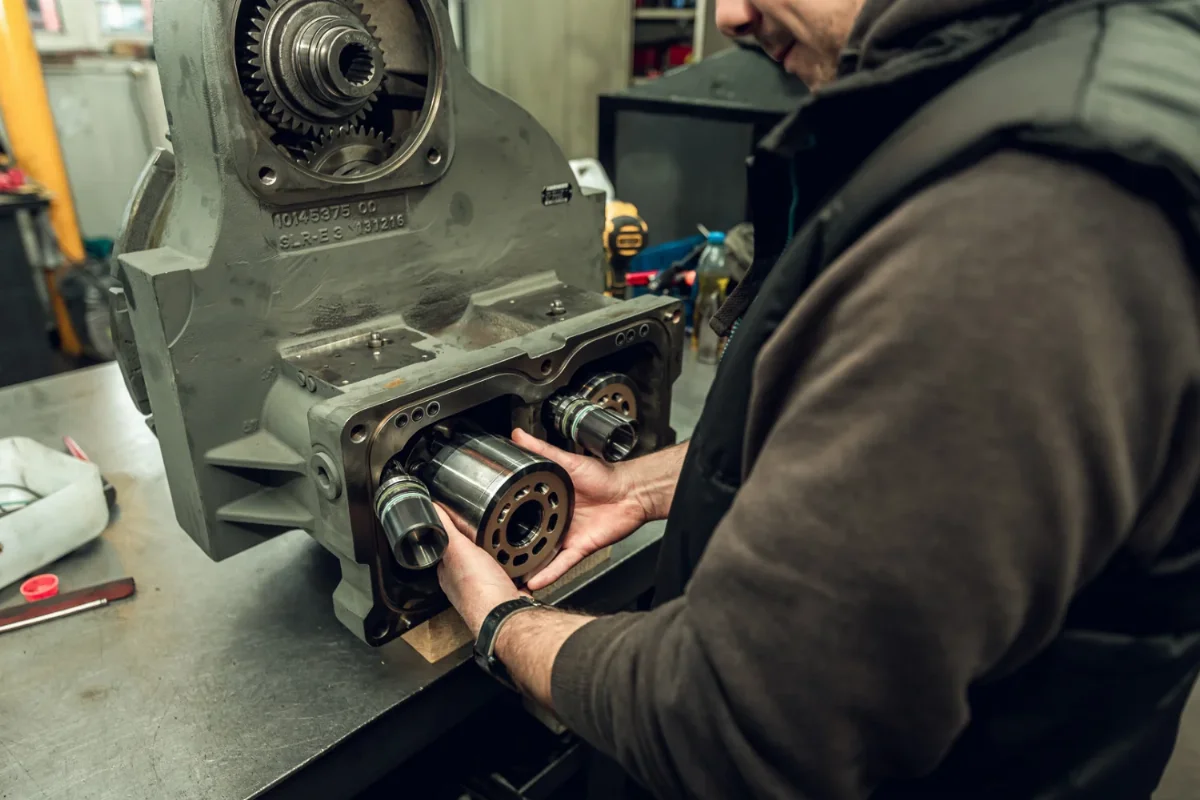
Cleanliness is key both when assembling the pump and when installing it in the machine. Ports must stay capped until the last moment, and hoses must be checked for delamination. Before start-up, fill the pump case with oil through the drain port. A dry start destroys slippers and bearings within the first seconds of operation.
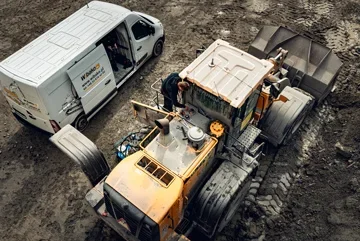
After start-up, bleed the system, check the pressures and power control, and inspect the filters after a short run. We described an example of a pump replacement at a customer site in our article on replacing the hydraulic pump in a Liebherr A924. Installation of parts purchased from WIBAKO is charged at